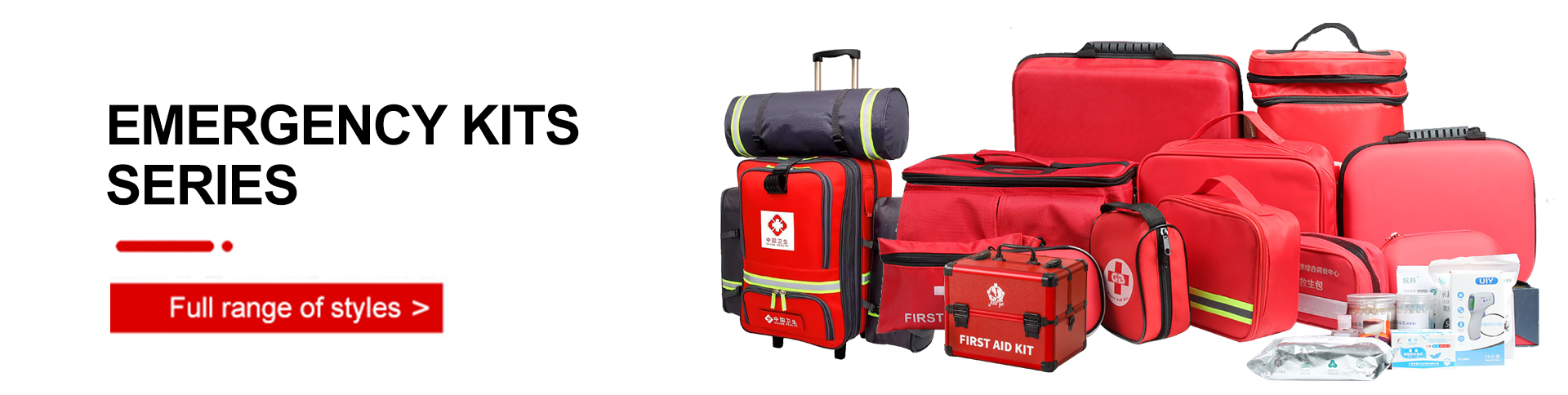

Fire Emergency Kit: Your Comprehensive Solution for Disaster Preparedness
Fire Emergency Kit is a unique product line designed to provide a complete range of essential items for fire emergencies. With its comprehensive range of products, Fire Emergency Kit caters to the diverse needs of individuals and organizations seeking to prepare for potential fire disasters. Whether you are a homeowner, a business owner, or a disaster preparedness professional, Fire Emergency Kit has everything you need to ensure your safety during a fire emergen.


Łącznie 1 strony
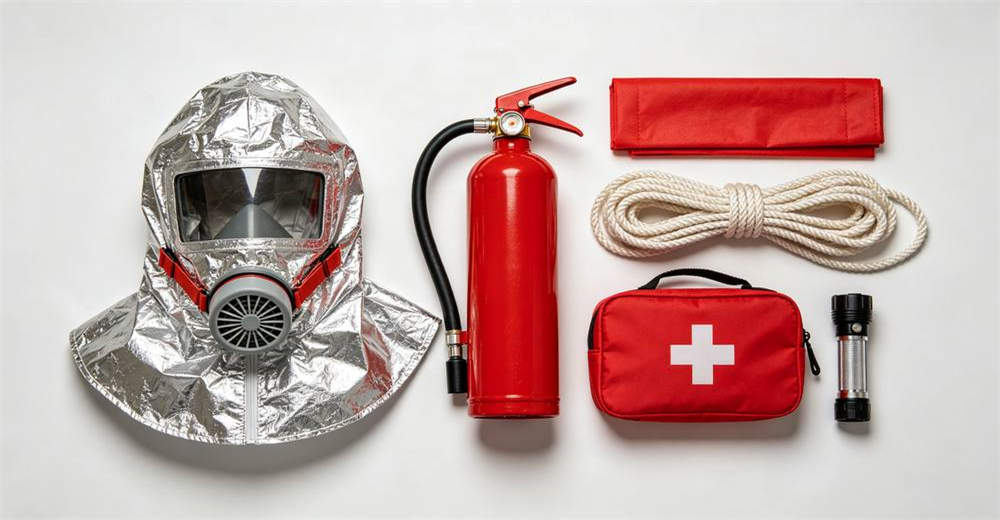
When a fire breaks out, you have about 30 seconds to react before smoke fills the room. That is why a fire emergency kit and fire escape kit — a pre-packed set of fire safety equipment including a smoke hood, fire extinguisher, escape rope and first aid supplies — is the single most important safety investment any building owner, factory manager or family can make.
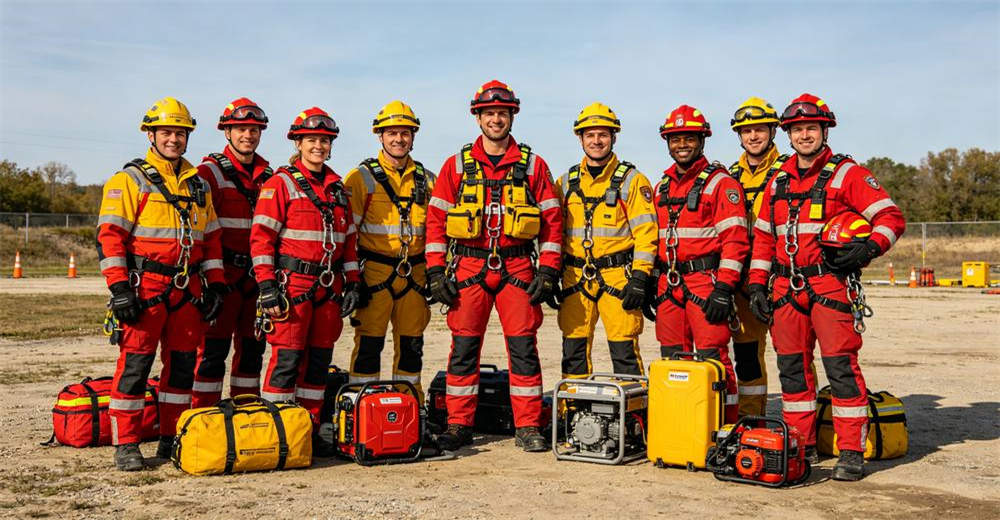
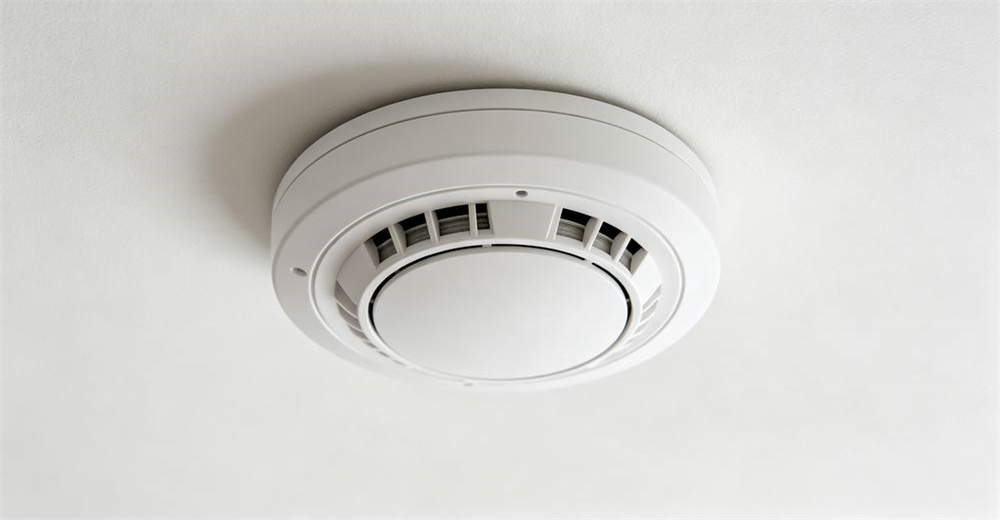
Most people think they are prepared because they have a fire alarm. But a smoke alarm only tells you there is a fire. It does not help you breathe, does not protect your hands, and does not get you out of a smoke-filled corridor. An office building fire kit does all three — it protects people, property and productivity. In this guide, we walk through everything you need to choose, configure and buy wholesale fire safety equipment that actually works when the alarm sounds.
|
Table of Contents |
|
|
1. Why Fire Emergency Kits Save Lives |
13. School and Public Building Fire Safety Kits |
|
2. Who Needs a Fire Emergency Kit |
14. Home Fire Safety Kit |
|
3. What Is Inside a Fire Emergency Kit |
15. How to Choose: Key Specifications |
|
4. Smoke Hood: The #1 Fire Safety Tool |
16. Compare Fire Emergency Kit Packages |
|
5. Escape Rope and Descender Systems |
17. Size and Wall Mount vs Fire Emergency Backpack Options |
|
6. Fire Extinguishers Explained |
18. OEM and private label and Custom Branding |
|
7. Flame Resistant Gear and PPE |
19. Certifications: EN, CE, NFPA Standards |
|
8. Emergency Lighting and Signage |
20. Fire Escape Skills Everyone Should Know |
|
9. Burn Injury First Aid |
21. Fire Response Timeline |
|
10. Fire Department Equipment Packages |
22. Common Fire Safety Mistakes |
|
11. Factory and Industrial Fire Protection |
23. Why Fire Emergency Kits Fail |
|
12. Commercial Building Fire Safety Fire Safety Emergency Kits |
24. Government Tender and Bulk Procurement |
|
|
25. Frequently Asked Questions |
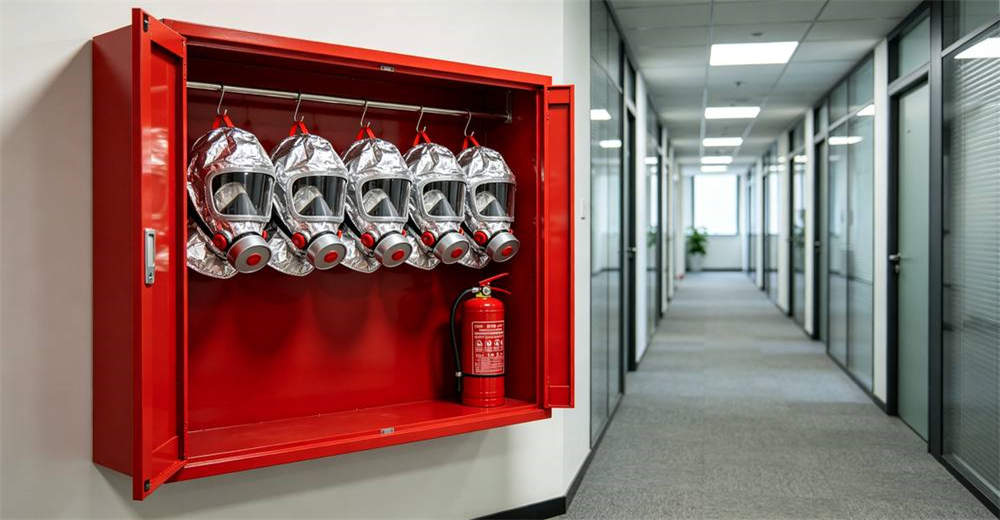
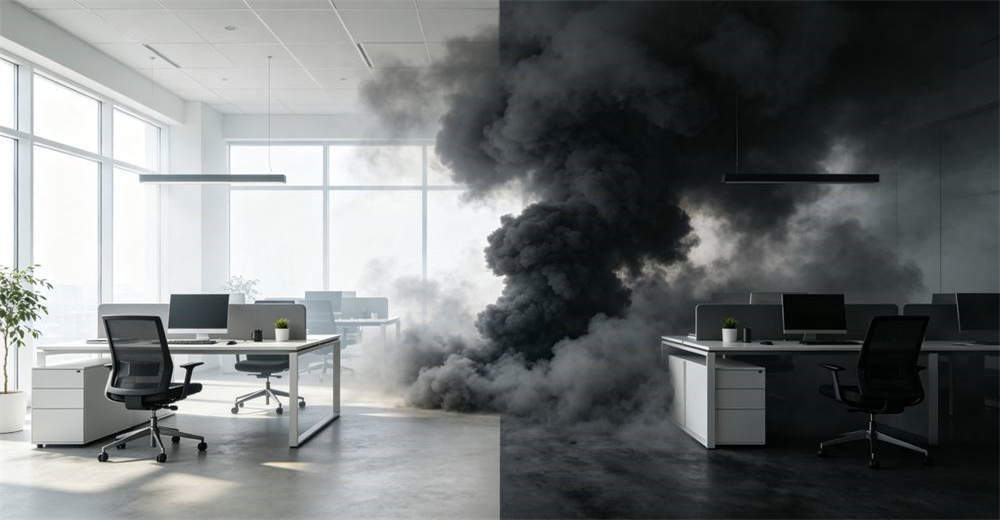
Fire is fast. A small kitchen fire can fill a room with thick black smoke in under 90 seconds. The temperature at ceiling level can reach 600°C in three minutes. But here is the statistic that every building owner needs to hear: about 80% of fire fatalities are not caused by burns. They are caused by smoke inhalation. Carbon monoxide, hydrogen cyanide and other toxic gases can knock an unconscious person out in two to three breaths.
This is why a fire emergency kit is not a luxury — it is a survival tool. A building with a working smoke alarm but no smoke hood on every floor is still a building where people may not make it to the exit. The alarm gives you a warning. The equipment gives you the means to escape through a smoke-filled corridor.
We have supplied wholesale fire safety equipment to over 40 countries, including fire departments, factory EHS teams, hotel chains and school districts. In every project, the same pattern appears: organizations that invest in proper fire escape kits report dramatically faster evacuation times and far fewer injury incidents. The ones that buy cheap, unbranded gear from unknown suppliers — they are the ones we end up replacing.
Key takeaway: Fire kills in minutes, and smoke kills in seconds. A 30-second escape window is not enough time to improvise. A pre-packed fire emergency kit at every exit and in every bedroom is the difference between walking out and being carried out.
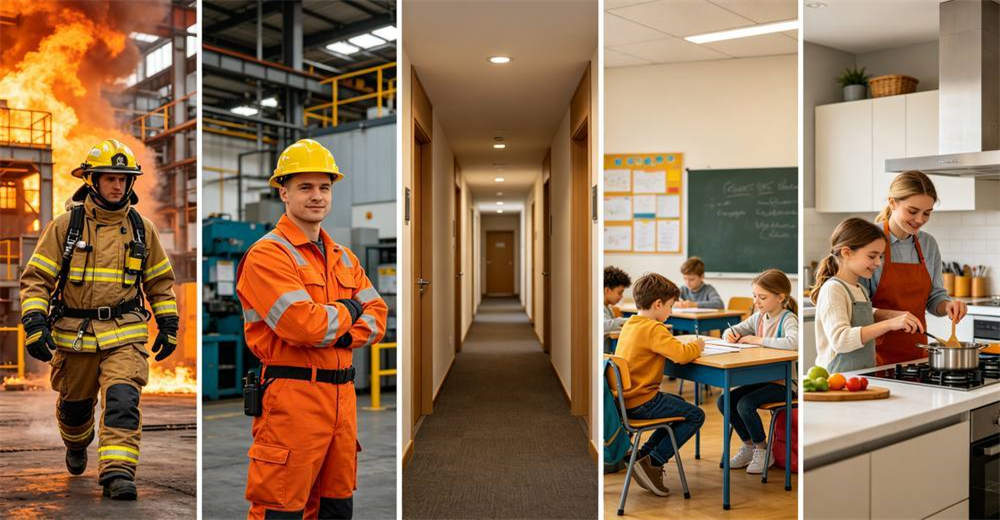
Every occupied building needs fire safety equipment, but the exact package depends on who is inside, how many floors there are, and what type of fire risk exists. The table below summarizes the main customer groups and their typical requirements. Use it to identify where your organization fits.
|
Customer Group |
Primary Risk |
Core Equipment |
Typical Budget |
|
Fire Departments |
Structure fire, search and rescue |
Structural firefighting gear, SCBA, rescue tools |
High |
|
Factories & Chemical Plants |
Electrical fire, chemical fire |
Class C/D extinguishers, heat suits, explosion-proof lights |
High |
|
Commercial Buildings & Hotels |
Smoke spread in corridors |
Wall-mounted cabinets, smoke hoods, extinguishers |
Medium |
|
Schools & Hospitals |
Evacuating children/patients |
Child-size smoke hoods, signage, first aid |
Medium |
|
Residential Homes |
Kitchen fire, electrical fire |
Smoke hood, 2kg extinguisher, blanket, alarm |
Low |
Professional fire department equipment is a different category entirely. Firefighters need structural firefighting suits rated to 1000°C, self-contained breathing apparatus (SCBA), fire boots with steel toes, helmets with face shields, and forcible entry tools. These are not consumer products — they are certified to EN 469 and NFPA 1971 standards. We supply complete firefighter gear packages, flame resistant suits and turnout coats and flame resistant hoods for municipal departments and contractor brigades.
Factory fire safety is more complex than office building safety. An industrial site may have electrical rooms, chemical storage areas, machine shops and warehouse fire risks. Each area needs different extinguishers. A lithium-ion battery storage room, for example, requires a Class D extinguisher, not a regular ABC unit. Our industrial fire safety packages are configured after a site risk assessment, and we provide the technical documentation that local fire inspectors require.
Office buildings and hotels are defined by one word: occupancy. A 15-story hotel may have 200 guests sleeping at midnight. If a fire breaks out on the 8th floor, guests cannot just run down the stairs if the corridor is full of smoke. Wall-mounted fire emergency cabinets with enough smoke hoods for the floor's maximum occupancy are the standard solution in most developed markets. We supply these cabinets in 2-person, 5-person and 10-person configurations.
Schools and hospitals have populations that cannot evacuate at full speed — children, patients, elderly residents. This means the fire safety equipment must be accessible, clearly labeled, and in child sizes where needed. We supply school fire safety kits with child-size smoke hoods and other school fire safety equipment, hospital fire evacuation kits that include stretcher evacuation straps and low-vision signage.
For a family, the essential home fire safety kit is simpler: one smoke hood per person in each bedroom, one 2kg ABC extinguisher in the kitchen, a fire blanket on the wall, and a smoke alarm in every hallway. The whole package costs less than a family dinner out. The reason most households do not have it is not price — it is awareness.
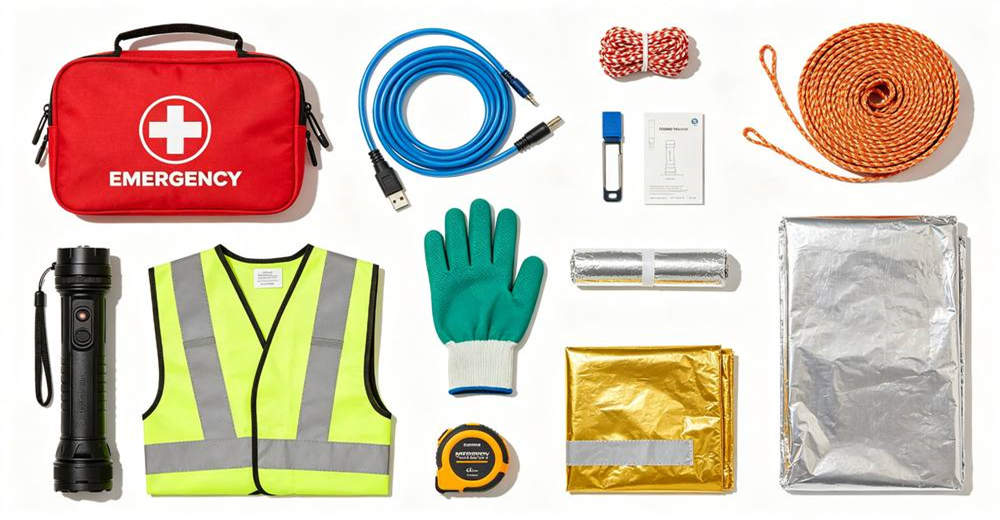
A well-configured fire emergency kit combines flotation of a different kind: not keeping you above water, but keeping you alive in air. The contents fall into six categories. Below is what each category covers and why it matters.
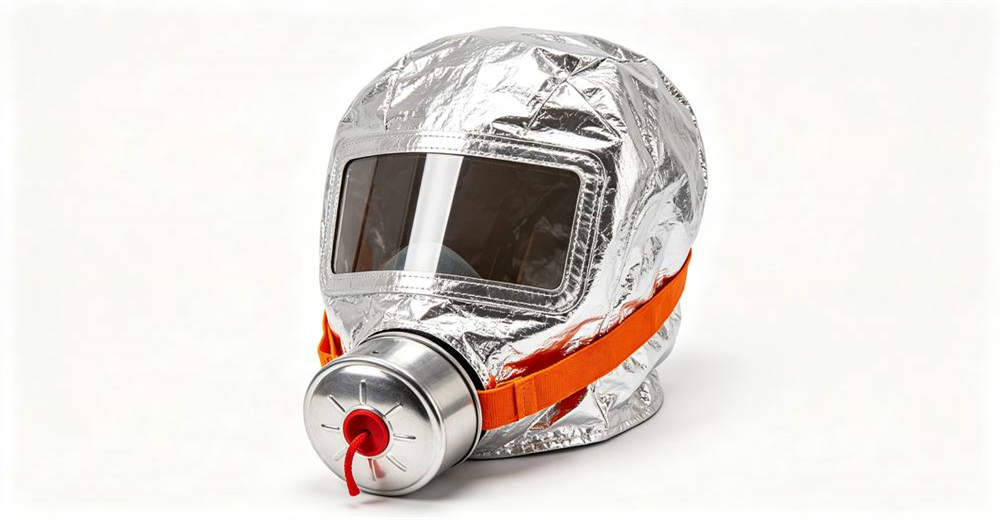
The smoke hood (also called a smoke escape mask or escape respirator) is the single most important item in any fire kit. It covers the head and face with a clear heat-resistant visor and filters toxic gases through a canister. A good hood gives the wearer 15 to 30 minutes of breathable air — enough to walk through a smoke-filled corridor to the exit. We cover this in detail in Chapter 4.
Not every fire should be fought with the same extinguisher. Class A (ordinary combustibles like wood and paper) needs water or ABC dry powder. Class B (flammable liquids) needs foam or CO2. Class C (electrical) must never be fought with water. Class K (cooking oil) needs a wet chemical extinguisher. We explain the full classification system in Chapter 6.
If the stairwell is blocked and you are above the third floor, an escape rope with a mechanical descender is the only way out. These ropes are rated to carry 100 to 150 kg and come in lengths from 10 to 50 meters. We cover selection and training in Chapter 5.
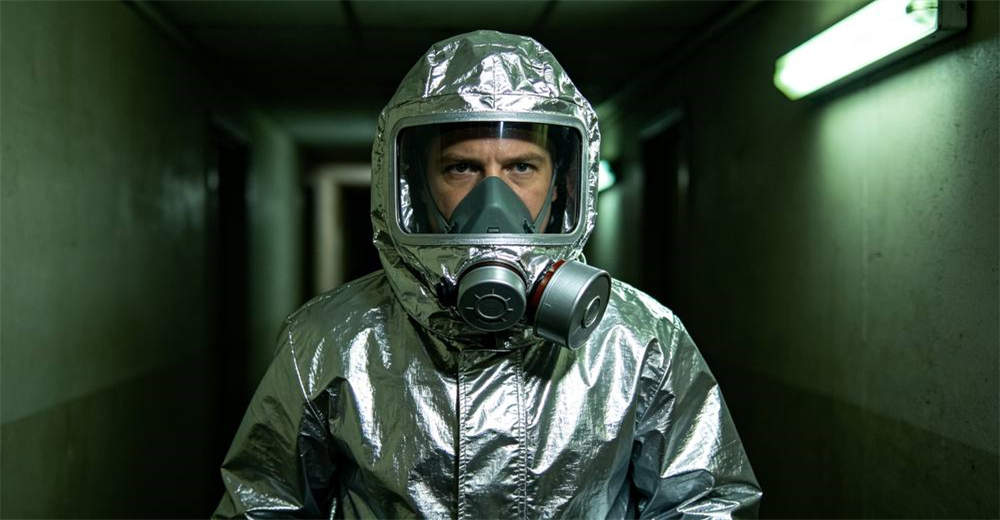
For people who may need to pass close to flames — factory workers, kitchen staff, firefighters — a flame-resistant suit, fire gloves and a fire hood are essential. These are not the same as a smoke hood; they protect the body from radiant heat while the hood protects the lungs. See Chapter 7.
In a real fire, the power goes out. Hallway lights die. Exit signs may not be visible. A rechargeable emergency flashlight with 4+ hours of runtime, an emergency whistle and a reflective evacuation bag round out the kit. We cover lighting in Chapter 8.
Even a successful evacuation can leave someone with burns, smoke irritation or panic-related injuries. A compact burn first aid kit with sterile burn dressings, saline solution and non-adherent pads is a standard inclusion. See Chapter 9.
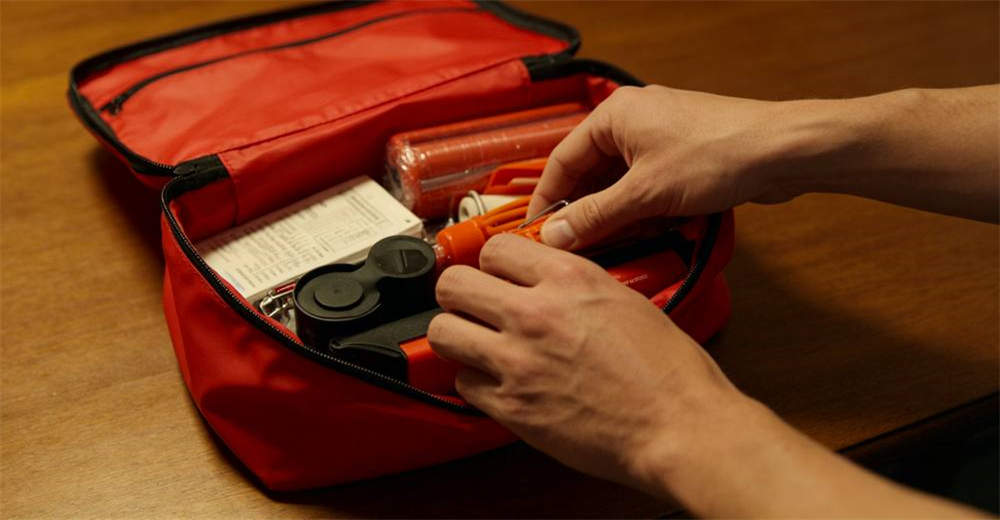
If you only buy one item from a fire safety equipment catalog, buy a smoke hood. Here is why, and how to choose one that actually works.
Fire produces smoke before it produces visible flame. That smoke contains carbon monoxide (CO), hydrogen cyanide (HCN), formaldehyde and suspended particulate matter. CO binds to hemoglobin and reduces oxygen delivery to the brain. HCN is a metabolic poison that can cause respiratory arrest in under a minute. In a real building fire, a person can lose consciousness in two to three breaths of contaminated air. A wet cloth over the nose and mouth filters some particles but does nothing against these gases. That is the gap a smoke hood is designed to close.
A typical escape hood has three parts: a clear heat-resistant visor that covers the entire head, a neck seal that prevents contaminated air from entering around the face, and a filter canister mounted at the front. The canister contains activated carbon and a particulate filter. As the wearer breathes, air passes through the filter, which removes toxic gases and particles. The visor stays clear and heat-resistant for the rated duration — typically 15, 20 or 30 minutes.
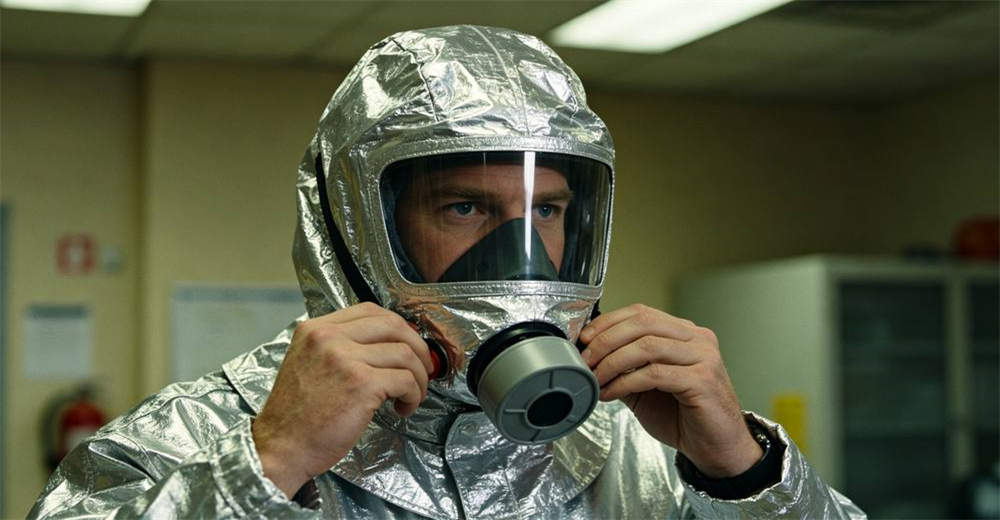
|
Specification |
What It Means |
What to Choose |
|
Filter time |
How long the hood provides breathable air |
15 min for low floors; 30 min for high-rise |
|
Gas filtration |
Which toxic gases are filtered |
Must cover CO, HCN, SO2, formaldehyde |
|
Donning time |
How long to put it on under stress |
Under 10 seconds; practice required |
|
Visibility |
Visor clarity and heat resistance |
Clear visor rated to 200°C+ |
|
Size |
Adult vs child |
Child sizes for schools and homes with kids |
|
Standard |
Certification |
CE certified and EN 403 (Europe) or NIOSH (US) |
A cheap smoke hood may look identical to a certified one from the outside — same clear visor, same shape. But the filter material inside is the difference between life and death. A no-name hood may use thin activated carbon that exhausts in five minutes instead of 15. Or the neck seal may not form an airtight fit, allowing contaminated air to leak in around the chin. We have tested budget hoods in our QC lab and seen filter breakthrough times under half the rated value. That is why we only supply hoods with a valid EN 403 certificate and batch test reports.
The standard rule is one hood per person on each floor, stored in a clearly marked wall cabinet at every exit. For a 10-story office building with 50 people per floor, that means 50 hoods per floor. For a family of four, that means four hoods — one in each bedroom, not just in the hallway. People do not always wake up and walk to the hallway in time.
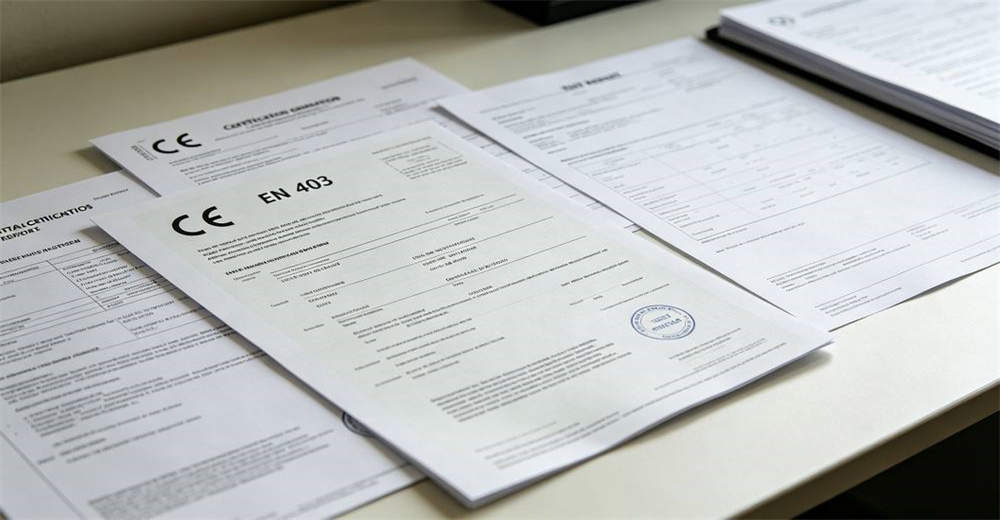
The EN 403 standard is not a single number — it is a set of eight laboratory tests that every certified hood must pass. The most important are: breakthrough time against carbon monoxide (must hold for the rated duration at 2,500 ppm), filter penetration against smoke particles (must be below 5% at 0.1 micron), visor heat resistance (must not deform at 200°C for 15 minutes), neck seal integrity (must not leak when tested with a 300 Pa pressure differential), and donning test (a trained user must put it on in under 10 seconds with eyes closed). When you compare suppliers, ask for the actual test report, not just a certificate number. A certificate without the batch report is a red flag — it may be from a different production lot than the hood you receive.
An adult smoke hood has a neck opening designed for a 40-60 cm neck circumference. A child's neck is 25-35 cm. If a child tries to use an adult hood, the neck seal cannot tighten — contaminated air leaks in around the gap, and the hood provides almost no protection. Child-size hoods have smaller visors, narrower neck seals and lighter filter canisters so a 6-12 year old can lift it. We supply child hoods in two sizes: S (ages 6-9, neck 25-28 cm) and M (ages 10-14, neck 28-32 cm). For school bulk orders, we color-code the pouches — blue for S, green for M — so teachers can grab the right size in seconds.
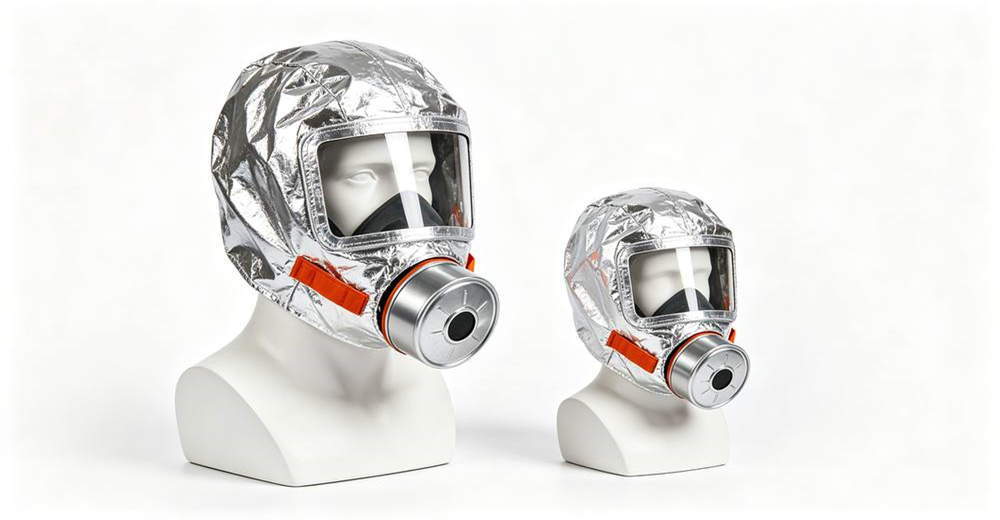
When the stairwell is smoke-logged and the elevator is shut down, an escape rope is the last option between a trapped person and the fire. These systems are simple in concept but require careful selection and hands-on training.
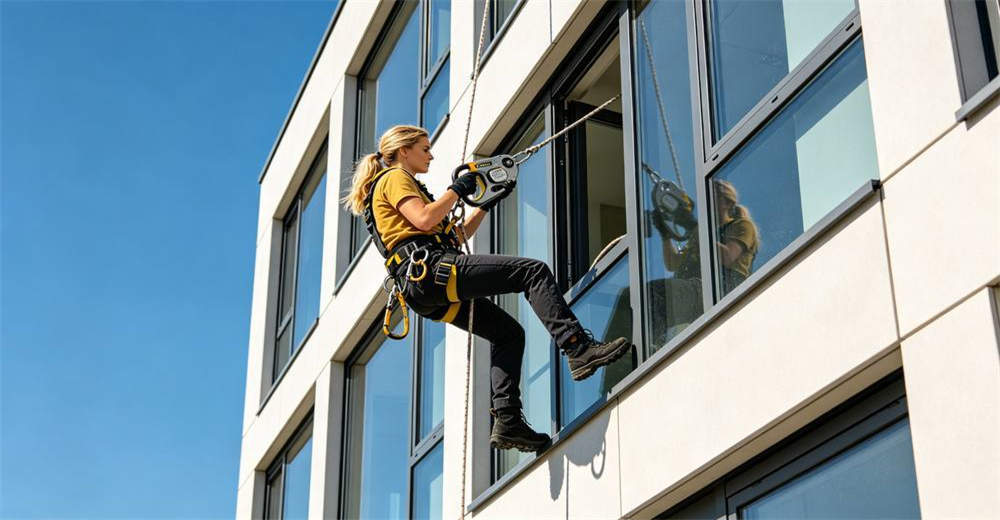
As a rule of thumb, below the third floor you can drop from a window into a safety net or onto soft ground. Above the third floor, a jump is a fatal injury. Above the 6th floor, you need a mechanical descender — not just a rope — to control your rate of descent. We recommend a certified escape rope system for any occupied building above 3 floors.
|
Feature |
Static Rope |
Mechanical Descender |
|
Best for |
Window exit, low floor |
High-rise, repeated use |
|
Load rating |
100-150 kg |
100-150 kg |
|
Descent control |
Hand-over-hand |
Auto-brake, controlled speed |
|
Training needed |
Moderate |
Minimal (once trained) |
|
Typical length |
10-30 m |
20-50 m |
An escape rope is only as good as its anchor. A properly installed system uses a wall- or floor-bolted anchor rated to 20 kN. Relying on a window frame or a radiator pipe is dangerous — those structures may fail under load. We supply complete anchor kits with heavy-duty bolts and installation instructions, and we recommend annual inspection by a qualified contractor.
We have seen buildings buy expensive descenders, store them in cabinets, and never train anyone. In a real fire, a panicking adult fumbling with an unfamiliar descender burns through the 15-minute hood rating in minutes. Every building that stocks escape ropes should run a drill at least twice a year. We provide training videos and wall posters that show the 5-step descent procedure.
A fire extinguisher is the most recognizable piece of fire safety equipment, but it is also the most misused. Using the wrong extinguisher on the wrong fire does not just fail to put it out — it can spread the fire or cause an electric shock.
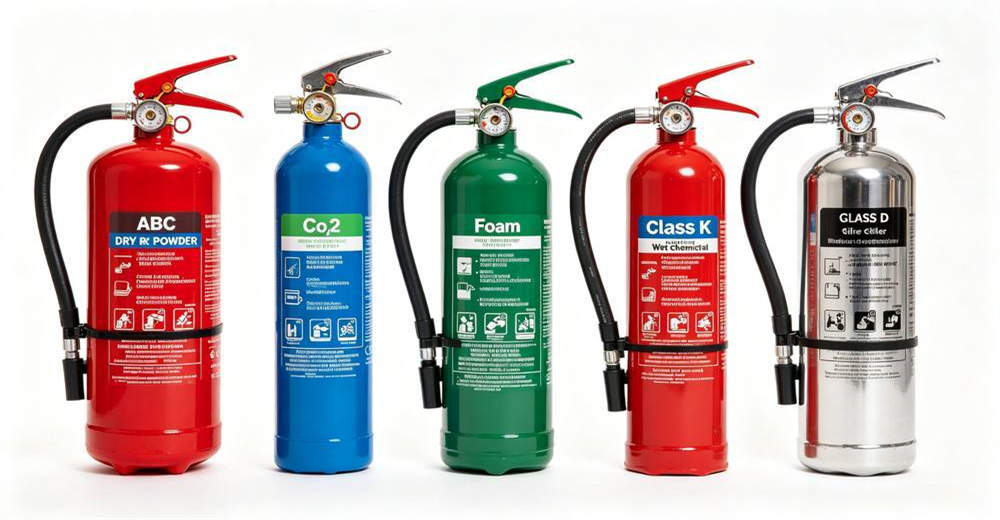
|
Class |
What Burns |
Right Extinguisher |
Never Use |
|
A |
Wood, paper, fabric, plastic |
Water, ABC dry powder, foam |
CO2 alone |
|
B |
Gasoline, oil, flammable liquids |
Foam, CO2, ABC powder |
Water |
|
C |
Electrical equipment |
CO2, ABC dry powder |
Water or foam |
|
D |
Combustible metals (magnesium, lithium) |
Special dry powder |
Water, foam, ABC |
|
K |
Cooking oil and fat (commercial kitchens) |
Wet chemical |
Water, ABC powder |
Extinguishers are rated by their extinguishing rating. A 2kg ABC unit is suitable for a small office room. A 4kg or 6kg unit is better for a warehouse or workshop. Commercial kitchens need a 6L wet chemical Class K unit. We provide a sizing chart based on room area and fuel load, and we supply all common sizes from 1kg portable to 9kg wheeled units.
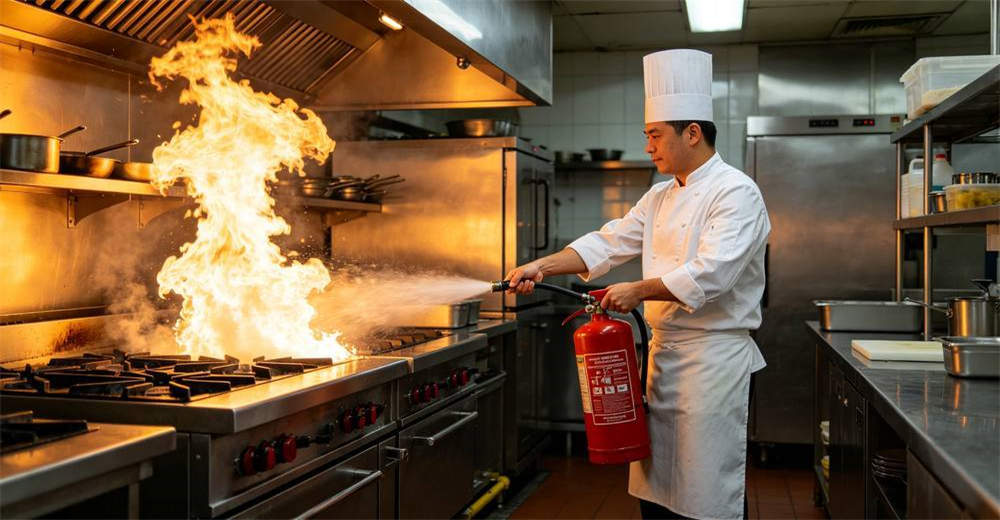
Every person in the building should know the PASS method by heart: Pull the pin, Aim at the base of the fire, Squeeze the handle, Sweep side to side. Aim at the base, not at the flames. Most untrained people aim at the top of the fire and waste the extinguisher in seconds.
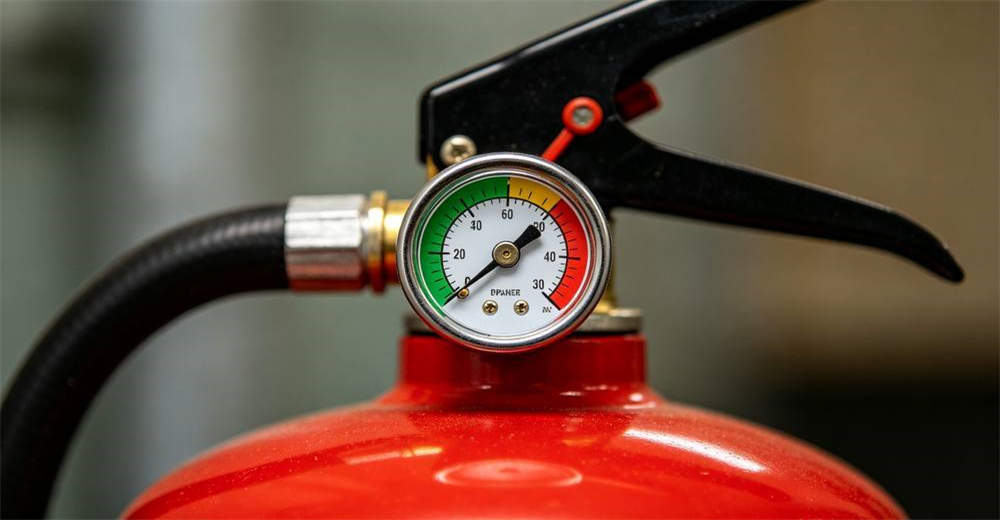
A fire extinguisher does not last forever. The pressure gauge must be in the green zone. The seal must be intact. The service date must be within the last 5 years. We supply wall brackets, inspection tags and annual service stickers as part of our wholesale fire safety equipment packages.
There is a formula for extinguisher placement, not a guess. For a light hazard area (offices, schools, churches), you need one 4kg ABC extinguisher every 2,000 square meters, and the travel distance from any point must not exceed 20 meters. For ordinary hazard (retail, warehouses, light manufacturing), drop to one per 1,000 square meters with a 15-meter travel distance. For extra hazard (chemical plants, paint shops, machine shops), one per 500 square meters with a 10-meter travel distance. These numbers come from NFPA 10 and EN 3. When we do a site survey, we measure the room area, classify the fuel load, and mark each extinguisher position on the floor plan. This is the document fire inspectors ask to see — not just "we have extinguishers."
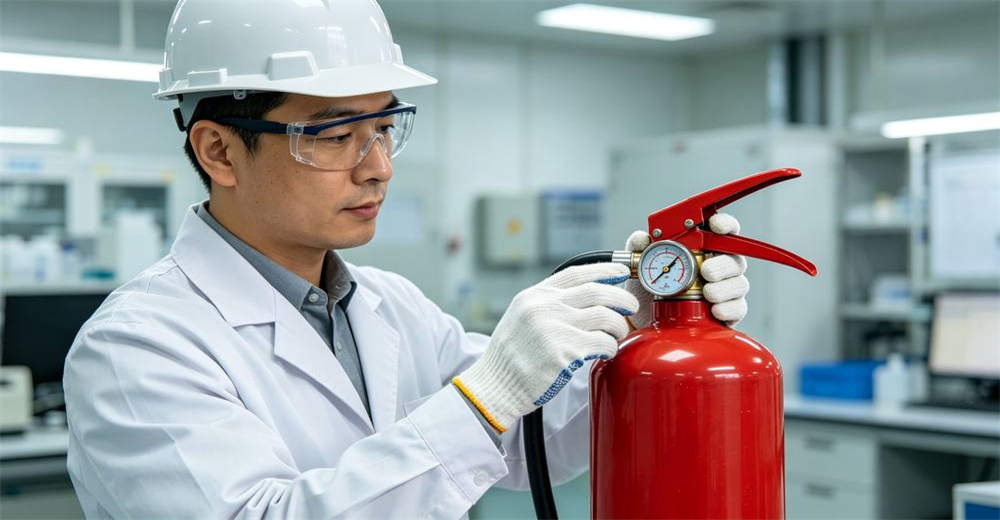
Most dry powder extinguishers have a small circular gauge on the valve. The face is divided into three zones: green (charged, ready), left red (undercharged, need refill), right red (overcharged, dangerous). A needle in the green zone means the internal pressure is correct. If the needle is in either red zone, the extinguisher must be taken out of service and serviced — do not use it. The gauge should be checked visually once a month as part of the building's fire safety log. A sticker on the cabinet records the month of each inspection. This one-minute check prevents 90% of extinguisher failures in a real fire.
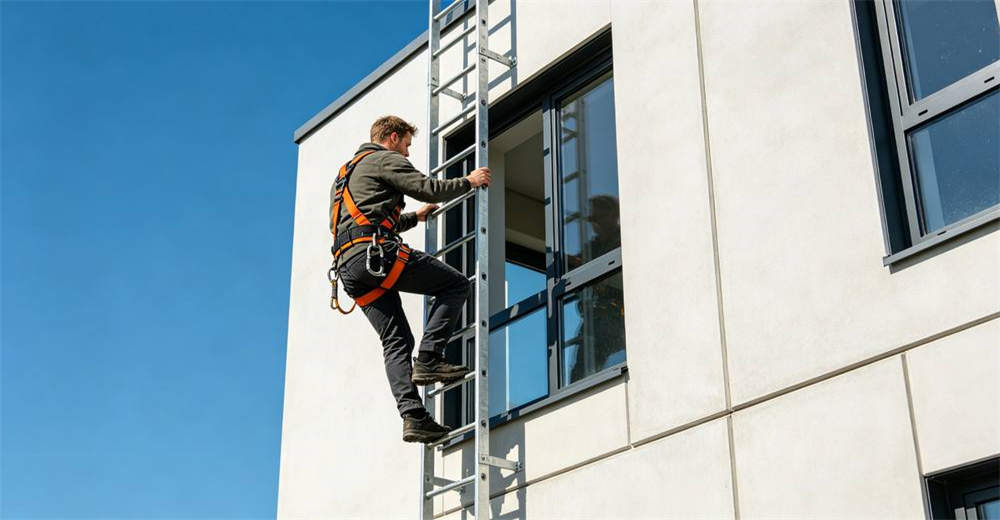
For people who may need to work near flames — factory workers, commercial kitchen staff, maintenance technicians — a smoke hood alone is not enough. They need body protection against radiant heat and direct flame contact.
A standard flame-retardant work shirt or coverall is treated with a finish that prevents the fabric from continuing to burn after the ignition source is removed. For closer work, an aluminized heat-reflective suit reflects radiant heat away and is used in foundries and furnace rooms. These suits are rated by their contact temperature — common ratings are 200°C, 500°C and 1000°C. Choose the rating that matches your work environment, not the highest rating available.
Hands are the first body part to get burned when reaching into a hot space. A pair of leather or Kevlar fire gloves rated to 300°C is standard. A fire hood covers the neck and ears under the helmet. These are smaller items but fail more often in real incidents than larger gear — because people forget they exist.
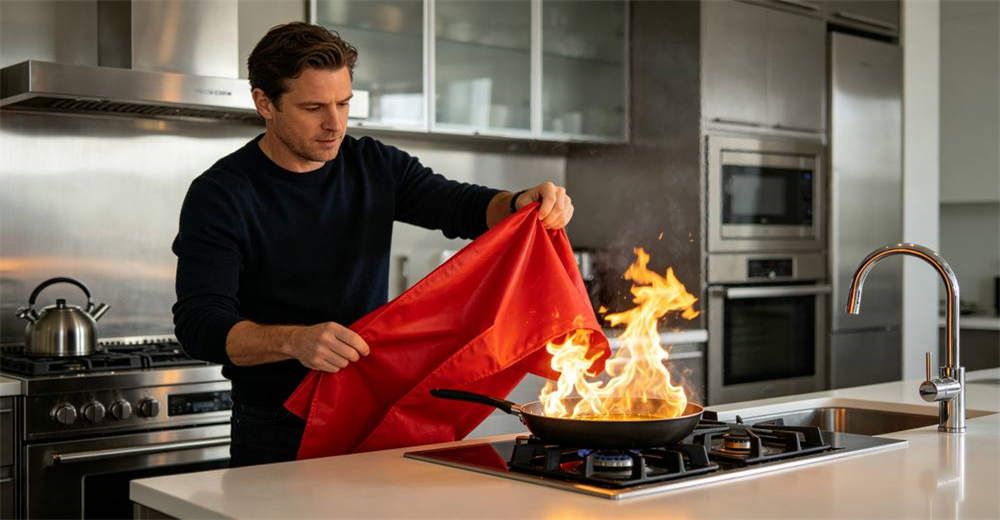
A fire blanket is one of the simplest and most effective fire safety tools available. It is a sheet of woven fiberglass or silica fabric that you drape over a small fire to smother it, or wrap around a person whose clothes are on fire. It requires no pressure gauge, no maintenance, and does not expire for 7 years. We supply blankets in 1.2m x 1.2m and 1.8m x 1.8m sizes, in wall-mounted cases.
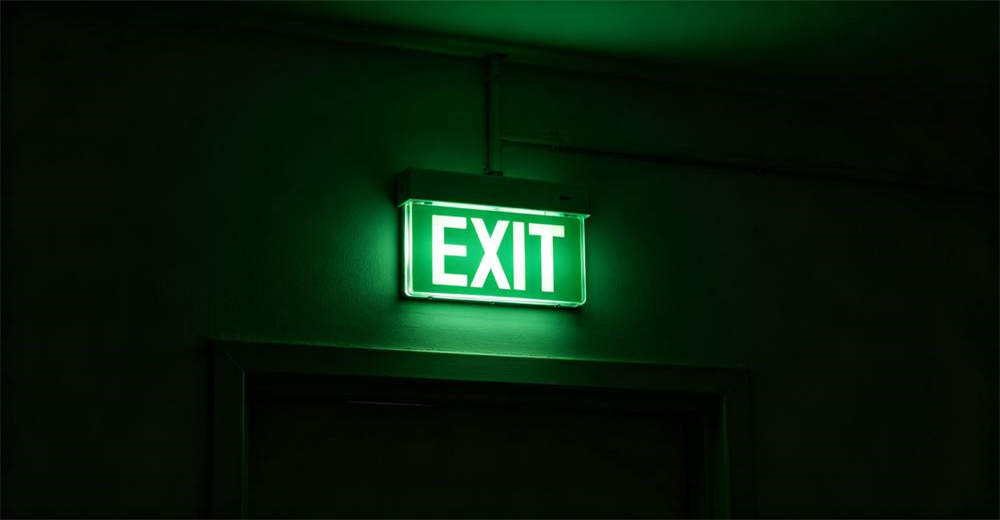
In a real fire, the power goes out within seconds. Ordinary ceiling lights die. Emergency exit signs on batteries usually kick in, but if they are expired or not maintained, you are left in darkness. A complete fire safety kit includes its own independent lighting.
In a chemical plant or oil refinery, an ordinary flashlight can become an ignition source. An explosion-proof flashlight is sealed and certified for use in hazardous areas (Zone 1 / Zone 2). It costs more than a standard LED torch but is mandatory in industrial settings.
For office buildings and hotels, a rechargeable wall-mounted emergency light with a 4-hour runtime is the standard. These stay plugged in to charge and switch on automatically when mains power fails. We supply them in single-head and double-head configurations.
Photoluminescent (glow-in-the-dark) exit signs and floor-level evacuation strips are required by code in most commercial buildings. They do not need electricity — they charge under normal lighting and glow for 8+ hours in darkness. We supply rolls of photoluminescent tape and pre-printed exit signs.
Even people who escape a fire successfully can suffer burns, smoke inhalation and panic-related injuries. A compact burn first aid kit should be part of every fire safety package.
Burns are classified by depth. First-degree burns (red skin, no blistering) are minor. Second-degree burns (blisters, painful) need sterile dressing. Third-degree burns (white or charred skin, may be numb) require immediate hospital treatment. The depth of a burn is not always obvious from looking at it — what looks like a second-degree burn can be third-degree underneath.
The single most effective first aid for a thermal burn is running cool (not ice-cold) water for 20 minutes. This stops the heat from continuing to damage tissue underneath. Do not use ice — it can worsen tissue damage. Do not apply butter, oil, toothpaste or soy sauce — these trap heat and increase infection risk. Do not pop blisters.
|
Item |
Purpose |
|
Sterile burn dressings (various sizes) |
Cover the burn, keep it clean |
|
Saline solution pods |
Gently irrigate the burn |
|
Non-adherent gauze |
Cover without sticking to the wound |
|
Cling film / plastic wrap |
Temporary covering while waiting for help |
|
PPE gloves and mask |
Protect the first aider |
|
Instruction leaflet |
Step-by-step first aid guide |
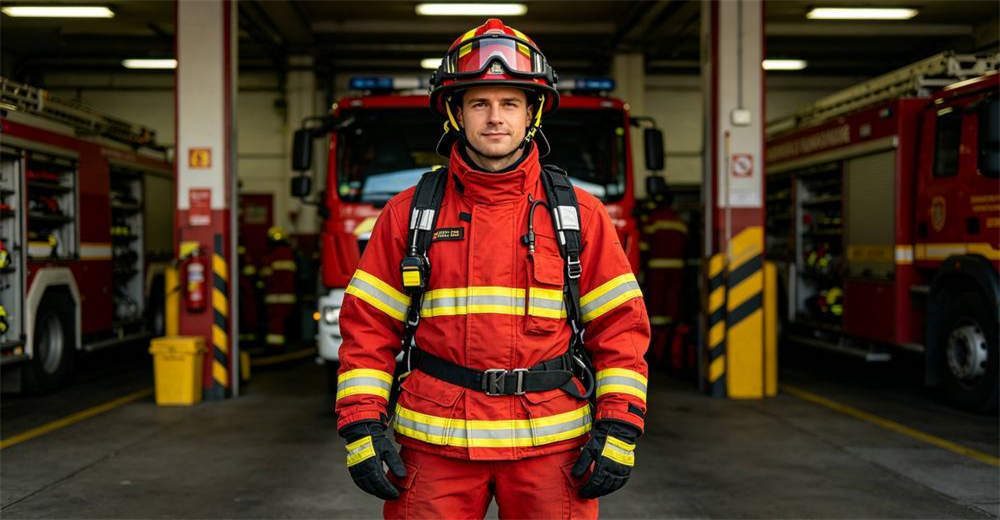
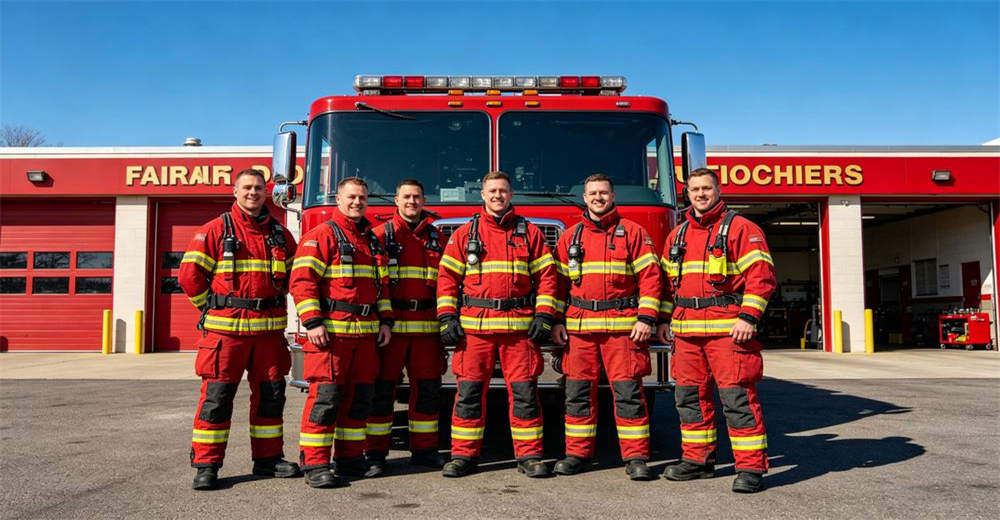
Municipal and industrial fire brigades need a different tier of equipment than commercial buildings. Our fire department equipment packages are built around a 6-person response team and include the gear they need for structural fire attack, search and rescue, and casualty care.
Each firefighter needs a full turnout kit: a coat and pants made of Nomex or Kevlar blend, a fire hood, gloves, boots with steel and composite toes, and a helmet with face shield. These are certified to EN 469 and NFPA 1971. We supply coats and pants in standard and oversize fits, with reflective trim and department markings available as OEM customization.
Inside a burning building, there is no breathable air. A self-contained breathing apparatus (SCBA) with a 6.8L carbon cylinder and a full face mask is the single most expensive piece of firefighting equipment. We supply SCBA units with 30-minute and 45-minute air durations, as well as spare cylinders and filling adapters.
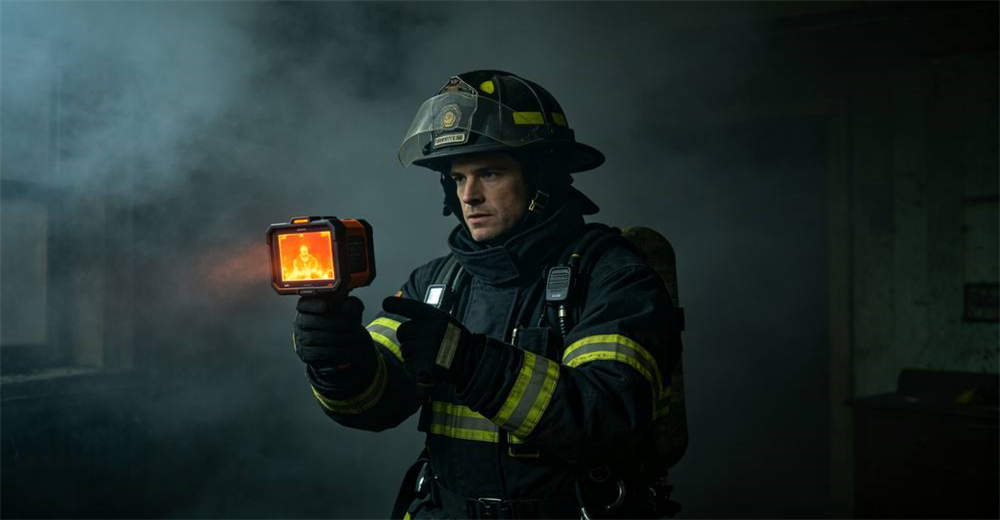
A fire team cannot wait for maintenance to show up with a crowbar. Standard forcible entry tools include a fire axe, a Halligan bar, bolt cutters and a rescue knife. For search and rescue, we supply thermal imaging cameras, gas detectors and search ropes. These are specialized items — we configure each package based on the brigade's response profile.
The most common SCBA choice question is whether to go with a 6.8L cylinder rated at 30 minutes or a 9L cylinder rated at 45 minutes. The 30-minute cylinder weighs about 4.2 kg when full and is suitable for single-engine crews doing search and rescue in office buildings. The 45-minute cylinder weighs 6.2 kg and is used by structural attack teams entering large industrial buildings where the exit may be 20+ minutes away. The trade-off is weight: every extra kilogram on a firefighter's back accumulates fatigue over a two-hour shift. We recommend mixing both — 60% 30-minute cylinders for entry teams, 40% 45-minute cylinders for RIT (Rapid Intervention Team) backup. Spare cylinders should be filled to 300 bar and stored at 20°C; a cylinder filled in 5°C weather and then moved to a 35°C fire station can over-pressurize.
A thermal imaging camera (TIC) sees heat signatures through smoke. In a smoke-filled room, a TIC lets a firefighter locate the seat of the fire in seconds instead of crawling around feeling for hot surfaces. It also lets them locate trapped people — a human body emits a clear heat signature against a wall or floor. Entry-level TICs cost around 3,000 USD; professional models with 320x240 resolution and voice recording cost 8,000+ USD. For municipal departments, we typically configure 2 TICs per engine. For factory brigades that only respond to on-site incidents, a single TIC is sufficient.
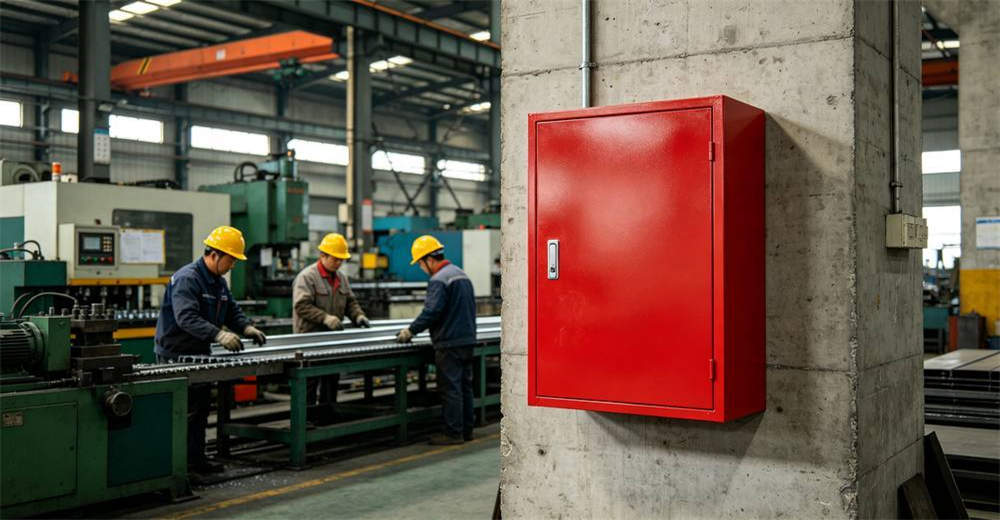
An industrial fire is not a kitchen fire. It involves heavier fuel loads, electrical equipment, chemical storage and often high ceilings. A factory needs a fire safety plan, not just a cabinet on the wall.
We work with factory EHS managers to map each area: the electrical room, the paint shop, the warehouse, the chemical storage. Each area gets its own extinguisher class, its own smoke detector type and its own evacuation plan. A lithium-ion battery storage room, for example, requires a Class D extinguisher and a water mist system — a standard ABC dry powder unit will not stop a lithium-ion battery fire.
For factories, we supply heavy-duty steel wall cabinets with glass break fronts. Each A wall mounted fire cabinet is labeled with its contents and inspection date. Cabinets are sized for 2-person, 5-person and 10-person teams, and can be fitted with an internal lock that opens with a key or a simple pull handle.
Industrial fire safety is regulated. Local fire marshals inspect extinguisher placement, smoke detector coverage and exit signage. We supply the certification documents, inspection tags and maintenance schedule that inspectors expect to see. We have supplied industrial fire protection factory fire safety packages to textile mills, food processing plants and electronics manufacturers across Asia, Africa and the Middle East.
A factory fire emergency kit is not the same as a home kit. In a factory, the fuel load per square meter is 5 to 20 times higher than an office. A textile warehouse has bales of cotton stacked 6 meters high — once that fire starts, it spreads at 3-5 meters per minute. This changes the kit design in three ways. First, every exit cabinet must have enough smoke hoods for the shift's maximum headcount, not the average. A textile mill may run 200 workers on a night shift. Second, the extinguisher size must be rated for high fuel load — a 6kg ABC unit, not a 2kg. Third, the factory needs a designated assembly point outside the fence, with a headcount board. We have seen factories with 200 workers and only 12 extinguisher units — that fails inspection on the first visit. Our factory packages start at one extinguisher per 50 workers, plus one wall cabinet per exit.
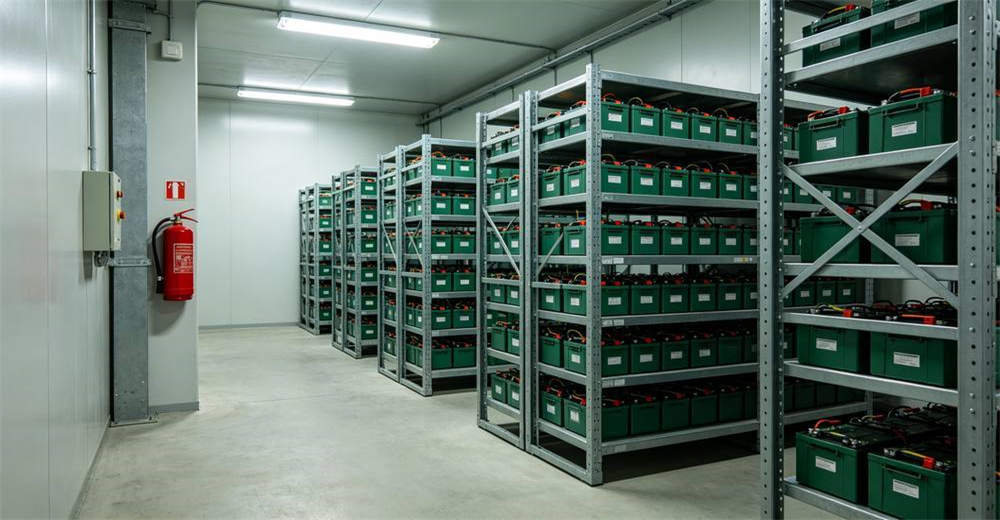
One of the fastest-growing industrial fire risks is the lithium-ion battery storage room. Whether it is a solar battery bank, an EV charging station, or a server room with UPS batteries, these rooms burn differently from ordinary fires. A damaged lithium-ion cell can enter thermal runaway at 150°C and self-ignite. Once started, it cannot be extinguished with water or ABC powder — it needs large volumes of water to cool the cell below 80°C, and even then it may re-ignite. For these rooms, we recommend: a dedicated Class D extinguisher, a water mist system (not a sprinkler), explosion-proof lighting, and a temperature alarm set at 45°C. We supply a complete lithium-ion fire safety package with all four components.
An office building or hotel is a place where people are not fully awake, are not familiar with the layout, and may include visitors from out of town. The fire safety solution has to work for all three.
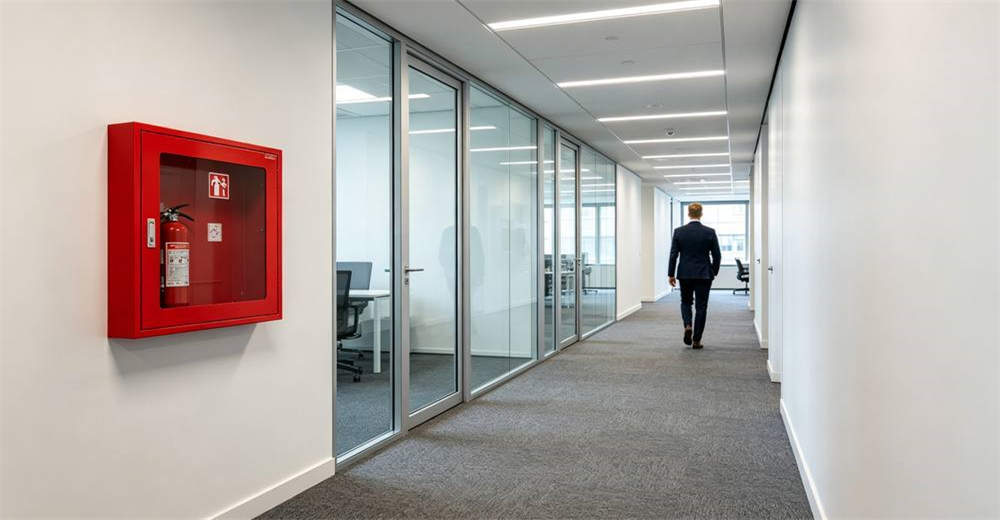
The standard commercial building layout is one wall cabinet per exit, sized to the maximum occupancy of the floor. A typical 5-person cabinet contains 5 smoke hoods, one 4kg ABC extinguisher, one fire blanket and one rechargeable torch. For a 20-floor building with 50 people per floor, that is 20 cabinets with 5 hoods each.
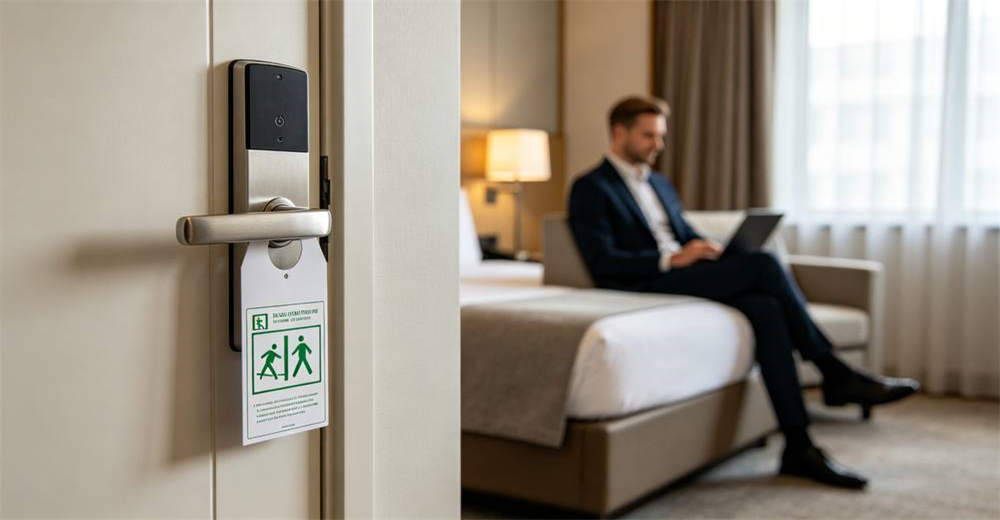
Hotels have an extra challenge: guests do not know the building. In-room cards show the evacuation route, and wall cabinets are visible from the corridor. We supply hotel-specific packages with multi-lingual instruction cards and branded door hangers that show the nearest exit.
A commercial building cannot buy a fire kit and forget about it. Hoods expire. Extinguishers need pressure checks. Torch batteries die. We supply a maintenance schedule and can provide annual inspection stickers as part of our bulk fire safety supplier service.
When we talk to building managers about commercial fire safety, the conversation usually starts with one question: "How many hoods do I need per floor?" The answer depends on the building's occupancy classification. For an office building (Class B, light hazard), the rule is one hood per occupant per floor, with a minimum of 5 hoods per exit cabinet. For a retail mall (Class A, ordinary hazard), it is one hood per 1.5 square meters of floor area — not per person, because retail occupancy fluctuates. For a hospital or nursing home (I-2), it is one hood per bed plus one per staff member on duty. We have done the math on over 80 commercial buildings, and the most common mistake is buying for average occupancy instead of maximum occupancy. A floor that averages 20 people may have 60 people during a emergency preparedness and office fire drill or a company event. Buying 20 hoods means 40 people are left without protection.
Hotels have a unique commercial fire safety challenge: guests are sleeping. They may not hear the alarm. They may be disoriented when they wake up. And they do not know the building. Our hotel packages include three extra items that office buildings do not need: door hanger evacuation cards (printed with the room's floor and nearest exit), a small flashlight in each bedside drawer (not just in the corridor), and a voice evacuation system (pre-recorded instructions in English, Mandarin and the local language). We have supplied these packages to 3-5 star hotel chains across Southeast Asia and the Middle East.
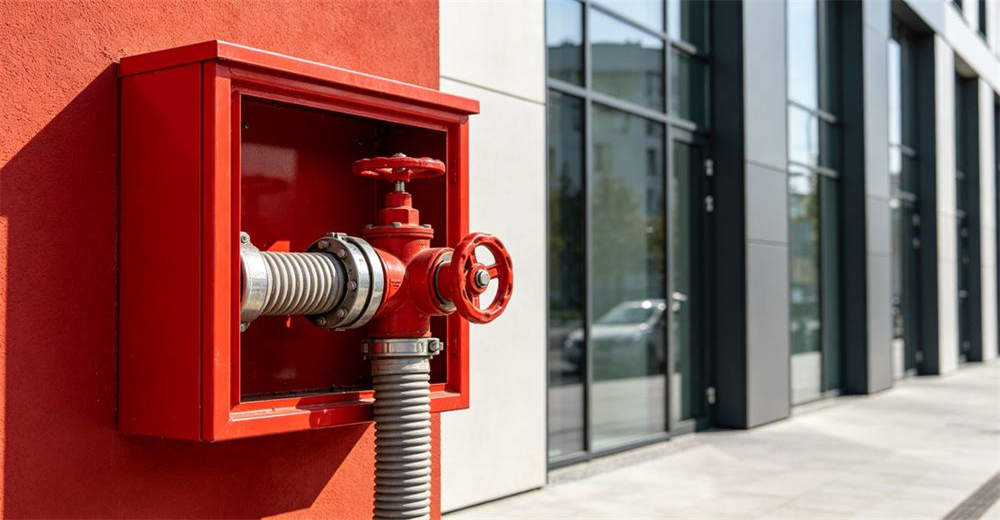
Schools and hospitals have a population that moves more slowly and includes people who may not be able to read English signs. Their fire safety kits need to be simple, accessible and in the right sizes.
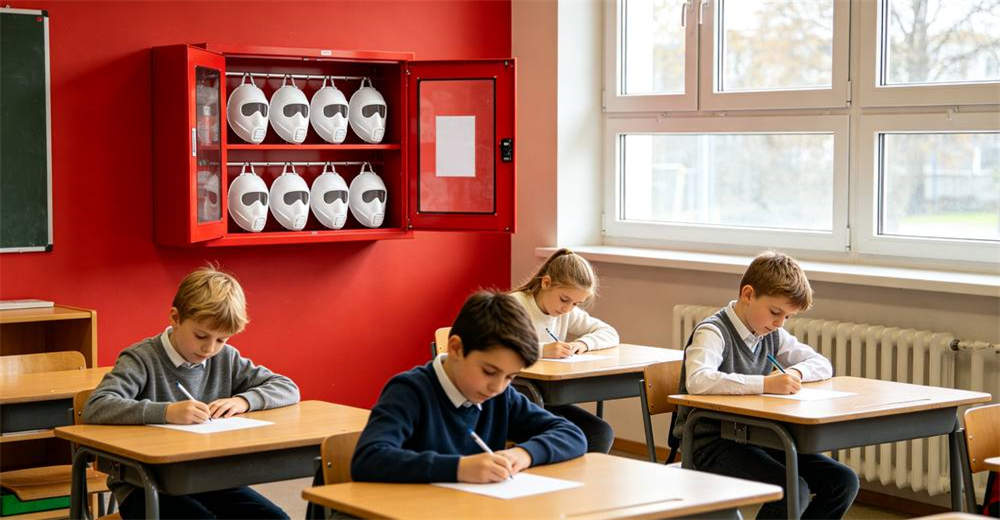
An adult smoke hood will not seal on a child's head. For schools, we supply child-size hoods in S and M sizes, clearly color-coded so teachers can grab the right one. We also supply wall brackets that mount at child eye level.
For hospitals and nursing homes, we supply evacuation chairs, stretcher evacuation straps and portable oxygen kit brackets. These are not consumer items — they are used by trained staff to move immobile patients down stairs.
Schools run fire drills at least twice a year. Our cabinets are designed to open quickly, and the contents are packed in a standard order so a teacher can grab and go without thinking. We also supply drill posters and teacher instruction cards.
A residential fire safety kit is simpler than a commercial one, but the logic is the same: have the right tool, in the right place, in working order.
A basic home fire kit has five items: one smoke alarm on every floor, one smoke hood per family member in each bedroom, one 2kg ABC extinguisher in the kitchen, one fire blanket by the stove, and one rechargeable torch in the bedroom drawer. The whole package costs less than a family dinner, yet fewer than 10% of homes in most markets have all five.
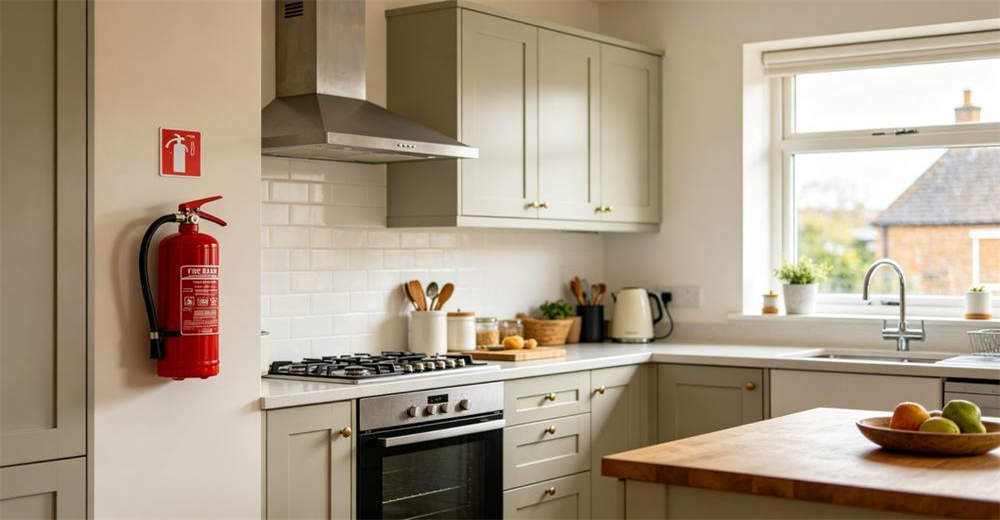
The extinguisher goes in the kitchen, mounted on the wall near the exit — not under the sink where you cannot reach it during a fire. The fire blanket goes on the wall by the stove. The smoke hoods go in each bedroom, not in the hallway. The torch goes in the bedside drawer. Access is the whole point.
Homes with elderly residents need extra smoke alarms and a bedside torch with large buttons. Homes with children need child-size hoods and a labeled evacuation plan posted on the fridge. Homes with a garage or workshop need a Class D extinguisher if lithium-ion batteries are stored on chargers overnight.
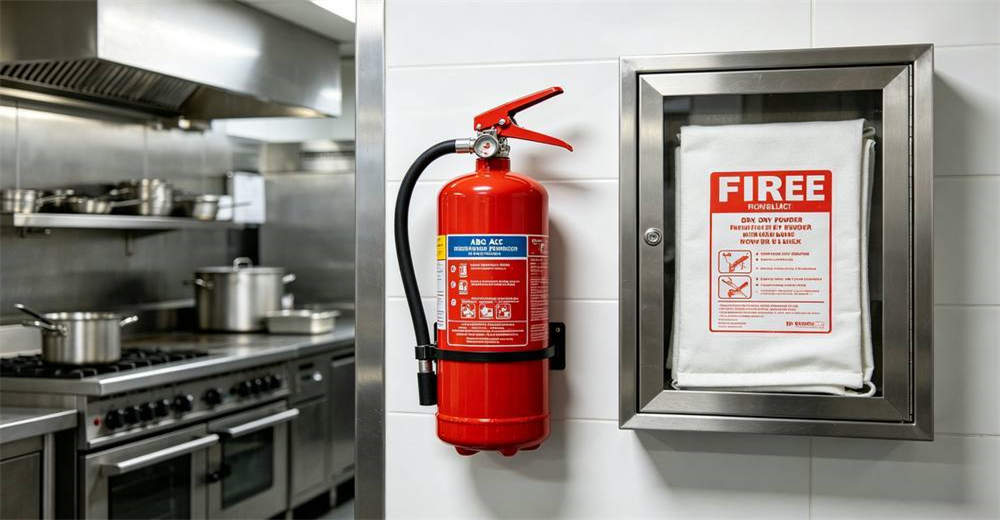
Below is a quick-reference table of the eight specifications that matter most when comparing fire emergency kit options. Use it when evaluating competing suppliers.
|
Specification |
Why It Matters |
What to Look For |
|
Smoke hood filter time |
Determines how long you have to escape |
15 min minimum; 30 min for high-rise |
|
Extinguisher class |
Wrong class makes the fire worse |
Match to fuel type in the room |
|
Escape rope rating |
Determines safe descent weight |
100 kg minimum; 150 kg for two-person use |
|
Certification |
No certificate = no proof it works |
EN 403, EN 3, CE, or NFPA |
|
Cabinet material |
Determines durability in harsh environments |
Steel for industrial; ABS for office |
|
Weight |
Heavier is harder to carry during evacuation |
Under 5 kg per person kit |
|
Shelf life |
Expired gear fails in a real fire |
Check expiry dates on every item |
|
Price per person |
Total cost for a building of 100+ people |
Compare complete kit price, not single items |
We stock three standard package tiers, configured for different customer groups. All three include EN-certified items and a wall-mount cabinet.
|
Feature |
Essential Kit |
Professional Kit |
Industrial Kit |
|
Smoke hoods |
2 pcs, 15 min |
5 pcs, 20 min |
10 pcs, 30 min |
|
Fire extinguisher |
1 x 2kg ABC |
1 x 4kg ABC + 1 x 2L foam |
2 x 6kg ABC + Class D |
|
Escape rope |
None |
10 m, 100 kg |
20 m, 150 kg + descender |
|
Fire blanket |
1 x 1.2m |
2 x 1.2m |
2 x 1.8m |
|
Torch |
1 LED torch |
2 rechargeable |
2 explosion-proof |
|
Burn kit |
Basic |
Standard |
Advanced |
|
Best for |
Home, small office |
Office floor, school |
Factory, warehouse, high-rise |

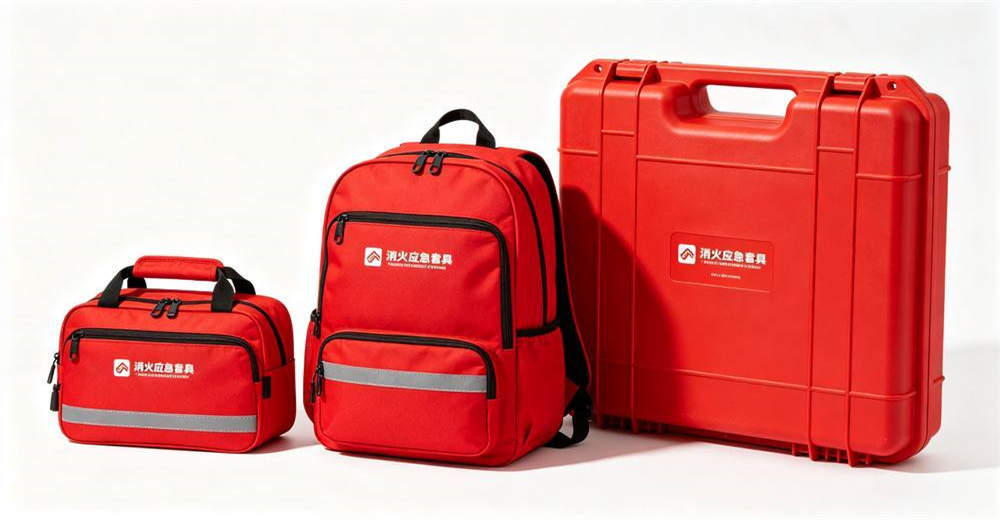
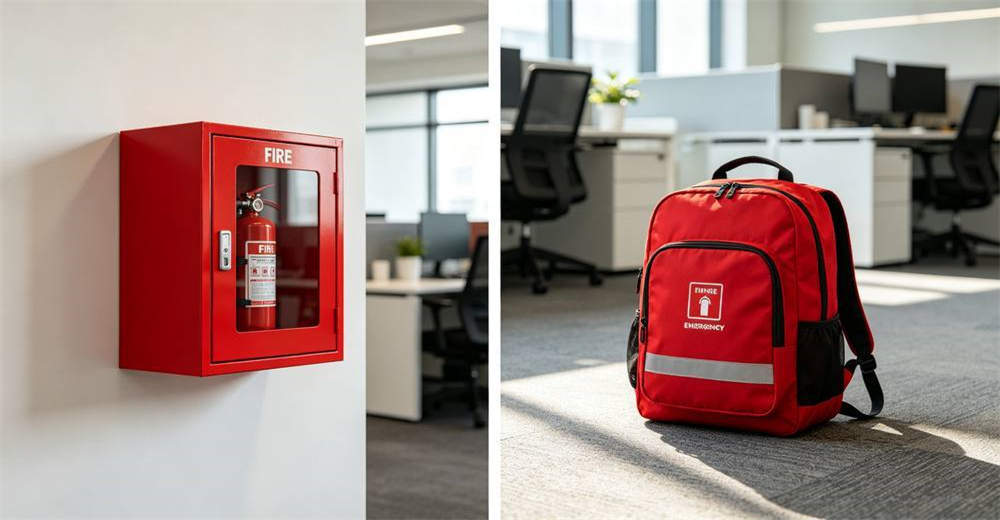
A fire emergency kit is not a single product — it is a system. The same contents can be delivered in three physical formats, and the right format depends on where the kit lives.
The cabinet is the standard for commercial buildings and factories. It is fixed to the wall, clearly labeled, and visible from a distance. Cabinets come in steel (industrial) or ABS plastic (office). The front is usually glass or a clear plastic window so you can see the contents without opening the door.
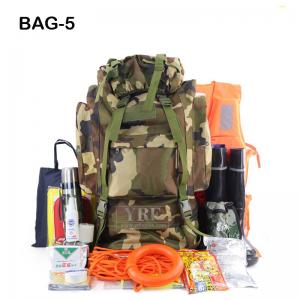
A portable fire kit bag is used in homes, vehicle car emergency kits and mobile work sites. It is a waterproof backpack with organized pockets. The same contents as a cabinet kit, but you can carry it to where the fire is — or grab it on the way out.
For open-plan offices, a small desk drawer kit (one smoke hood, one fire blanket, one alarm) gives every employee immediate access without walking to the corridor. We supply these as bulk packs of 10, 20 and 50.
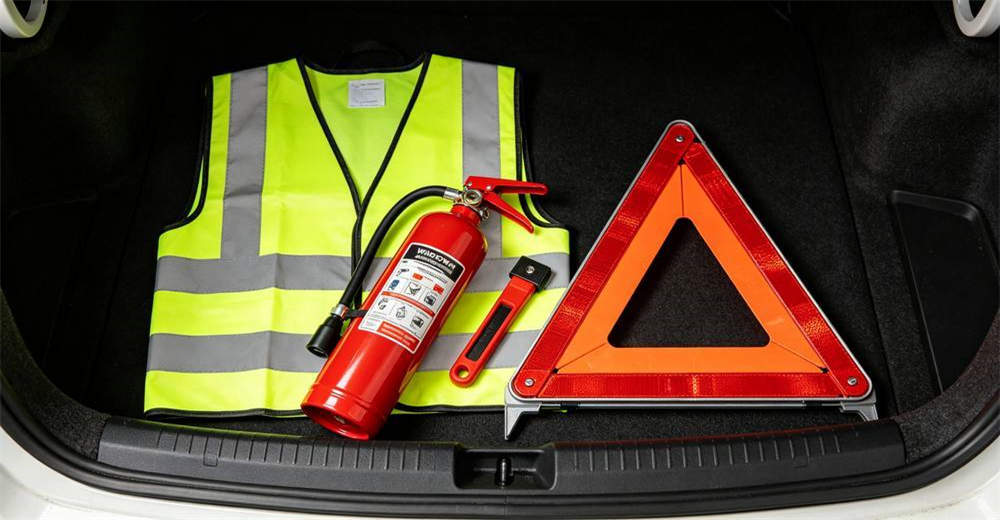
We are a manufacturer and wholesale fire safety supplier with OEM experience. We can produce custom branded fire kit packages with your logo, your color scheme and your content list.
Custom options include: printing your logo on the cabinet, embroidering the smoke hood storage pouch, printing multi-lingual instruction cards, and configuring the inside contents to your specific BOM. MOQ for custom branding is typically 100 kits. Lead time is 30-45 days. As a bulk supplier and exporter, we have done OEM programs for hotel chains, government procurement projects and regional fire safety distributors.
Fire safety is one product category where certifications are not optional marketing copy — they are legal requirements in most markets. Here are the main standards you will see.
Every item we supply comes with a valid certificate. We do not sell unbranded, no-certificate gear at the bottom of the price list. When a fire marshal or government tender evaluator asks to see documents, we provide them in the same quote cycle.
|
Standard |
Applies To |
What It Covers |
|
EN 403 |
Smoke escape hoods |
Filter time, gas penetration, visibility |
|
EN 3 |
Portable fire extinguishers |
Performance, marking, pressure |
|
EN 1869 |
Fire blankets |
Flame spread, thermal protection |
|
EN 469 |
Firefighter protective clothing |
Heat resistance, tear strength |
|
NFPA 10 |
Portable fire extinguishers (US) |
Placement, maintenance, rating |
|
CE marking |
General product safety (EU) |
Conformity assessment for sale in EU |
Equipment alone is not enough. In a real fire, training is what turns a cabinet on the wall into an escape. Here are the skills every building occupant should know.
The procedure is simple: break the plastic seal, open the neck seal, pull the hood over your head, pull the drawcord tight around the neck, and check that the visor is clear. Practice this at home once. In a real fire, you will be panicking, the room will be dark, and your hands may be shaking. Muscle memory is what gets it on in 10 seconds instead of 30.
Never open a door in a fire without touching it first. Feel the doorknob and the top of the door with the back of your hand. If it is warm or hot, there is fire on the other side — stay in the room and seal the door with wet towels. If it is cool, open it slowly and be ready to close it if smoke comes in.
Smoke rises. Clean breathable air is within 30 to 60 centimeters of the floor. If the corridor is filled with smoke, drop to your hands and knees and crawl. Keep one hand on the wall so you know where you are going.
If you cannot get out, get to a room with a window and a phone. Call the fire department. Seal the door with wet towels. Wave a bright cloth or a flashlight out the window. Do not hide in a closet or under a bed — firefighters are trained to look there, but you need to be visible and audible.
Despite what we just said about not taking elevators, some people do get in before the alarm is clear. If the elevator stops between floors during a fire, do not try to pry the doors open. Press the emergency call button and tell the dispatcher which floor you are between, which direction you were going, and how many people are in the car. Cover your nose and mouth with a sleeve. Do not lie on the floor — in a fire, hot air rises, but smoke can layer at any height. Sit with your back against the wall and conserve air. Firefighters are trained to rescue elevator cars; they will reach you. Prying the doors open yourself can drop you into a smoke-filled elevator shaft.
If you are trapped in a room with closed door and wet towels around the gap, sit low — within 60 cm of the floor. This is where the cleanest air will be. Face the door, not the window, because firefighters search from the stairwell side. Keep your shoes on. If you have a phone, keep it on silent but leave it on. Do not burn through your battery talking on the phone; send a text with your location and update only when there is news. These small details are the difference between being found in 10 minutes and being found in 40.
A fire does not unfold in slow motion. Understanding the timeline tells you what equipment you need at each stage.
|
Time |
What Happens |
What You Need |
|
0-30 sec |
Alarm sounds; decide: fight or flight |
Clear head, extinguisher at hand if small fire |
|
30 sec-3 min |
Smoke fills corridor; visibility drops |
Smoke hood, low-crawl position |
|
3-10 min |
Reach exit or window; may need rope |
Escape rope, anchor point, door test |
|
10-30 min |
Firefighters arrive; search and rescue |
Meeting point, headcount, burn first aid |
|
24 hours+ |
Aftermath; injuries, emotional support |
First aid follow-up, documentation |
After supplying wholesale fire safety equipment for over a decade, we see the same mistakes repeated in almost every market. These are the most dangerous ones.
A wet cloth filters some particles and cools the air slightly. It does not filter carbon monoxide, hydrogen cyanide or other toxic gases. In a real fire, a wet towel will not save you from inhalation injury. A certified smoke hood will.
Water conducts electricity. Pouring water on an electrical fire can electrocute you. Water also spreads burning oil — the oil floats on top and splatters. Use CO2 for electrical fires, wet chemical for cooking oil fires.
In a fire, the power can fail at any moment, trapping you in the elevator. Elevator shafts also act as chimneys, filling with smoke. Always use the stairs. Every commercial building code requires stairwells to be fire-rated.
A door that looks cool can have fire on the other side. Always touch the doorknob and the door surface first. If it is warm, do not open it.
An extinguisher that was last inspected in 2018 may have lost pressure, may have a broken seal, or may have been discharged by someone playing with it. Check the gauge once a year. Replace every 5 years.
A fire emergency kit that sits in a cabinet and is never inspected is a false sense of security. These are the most common reasons kits fail when they are needed.
A smoke hood in a cabinet is useless if nobody in the building knows how to put it on in 10 seconds. We have seen expensive high-rise escape systems bought and installed, then no drill was ever scheduled. In a real alarm, people panic and fumble. Training turns equipment into survival.
A cabinet locked in a janitor's closet. A fire extinguisher under a pile of boxes. A smoke hood in a drawer that is stuck. Access matters more than specification. In a real fire, you have seconds, not minutes, to reach the gear.
Smoke hood filters degrade over 5-10 years. Extinguisher pressure drops. Torch batteries die. A kit that was bought in 2015 and never touched is not a safety system — it is a collection of expired plastic and steel.
Most buildings have extinguishers but no smoke hoods. Extinguishers only work on small, contained fires. If the fire has already spread, the extinguisher is not the solution — escaping through the smoke is. A kit with only an extinguisher is a half-kit.
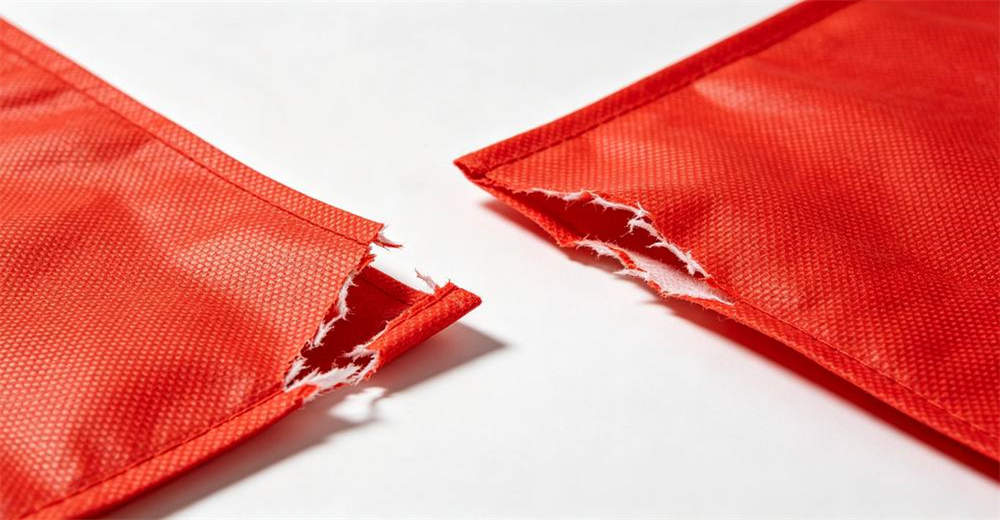
This is the one we see most often. A procurement team buys the cheapest smoke hood on Alibaba, puts it in a cabinet, and checks the compliance box. In a real fire, that hood may leak, the visor may cloud over, or the filter may run out in five minutes. The cheapest hood on the market is the most expensive one you will ever buy.
There is a reason fire safety equipment is not just a compliance box — it affects insurance premiums and claims. Commercial property insurance policies in most markets require a documented fire safety system: extinguisher placement records, annual inspection tags, drill logs. If a fire happens and the insurer finds that extinguishers were past their service date, or smoke hoods were expired, they can deny the claim or reduce the payout. We have seen this happen. One hotel client had a small kitchen fire; the insurer investigated and found that 60% of their extinguishers were over 7 years old. The claim for 120,000 USD in smoke damage was reduced by 40% because the fire safety system was not maintained. Proper documentation — certificates, inspection logs, drill records — is not just about compliance. It is about being able to prove you did your duty when the insurer asks.
The worst failure is not a broken extinguisher. It is a building that thinks it is safe when it is not. This happens when a procurement manager checks a box: "we have fire extinguishers, we have smoke alarms." They feel safe. They stop doing drills. They stop inspecting. Then a real fire happens, and they discover the extinguisher has no pressure, the alarm batteries are dead, and nobody remembers where the exit key is. False confidence kills more people than no equipment at all, because no equipment forces you to take the threat seriously. We tell every client the same thing: the cabinet on the wall is only 30% of the solution. The other 70% is drills, inspections, and training.
We support government procurement and institutional bulk orders for fire safety equipment. This includes tender documentation, technical specifications, certification packages and scheduled delivery.
When you send us a tender, we respond with: a complete quotation line by line against your BOM, copies of all required certificates (CE, EN, test reports), factory audit documentation, and a lead-time plan. We have supplied to municipal fire departments, public school systems and national disaster relief agencies. For orders above 500 kits, we can provide phased delivery and on-site training support.
Most certified smoke hoods have a shelf life of 5 to 10 years from manufacture, depending on the model. The expiry date is printed on the bag. We recommend a visual inspection once a year and a full replacement on schedule. Do not wait until the expiry date has passed — filter performance degrades gradually before that.
Yes. A fire blanket is designed exactly for this. Wrap the person tightly, roll them on the ground, and call emergency services. Do not let the person run — running feeds oxygen to the flames.
A 5-story building is approximately 15 to 18 meters. Choose a 20-meter rope with a mechanical descender. Always add 2 to 5 meters for the knot and anchor. Do not skimp on length — a rope that is 2 meters too short is as useless as no rope at all.
Yes. We ship by sea, air and express courier to over 40 countries. Fire extinguishers are classified as dangerous goods for air freight — we handle the documentation and packaging requirements. Lead time for a 500-kit order is typically 30-45 days by sea.
Our MOQ for custom branding (your logo on the cabinet, pouch and instruction card) is 100 kits. For fully customized contents (your own BOM), the MOQ is 300 kits. Lead time is 35-50 days.
A dry powder extinguisher does not expire like food, but its performance degrades over time. The powder inside can compact into a solid block after 5-7 years, which means when you squeeze the handle, nothing comes out — or what comes out is a single plug of powder. The internal pressure can also leak through the valve seal over time. We recommend inspecting the pressure gauge every year, weighing the extinguisher every 3 years (if it is 10% lighter than the stamped weight, it has lost pressure), and replacing the whole unit after 10 years. Refilling an 8-year-old extinguisher is false economy; the casing may also be corroded internally.
Standard EN 403 hoods are designed for smoke and toxic gases from combustion. They are not designed to protect against a CO2 flood suppression system, which floods a room with 100% carbon dioxide to extinguish a fire. If your building has a CO2 suppression system in a server room or machinery space, you need a separate egress plan — alarm 30 seconds before discharge, clear signage, and a dedicated breathing apparatus for that room. Do not rely on a standard escape hood in that scenario.
Both are designed for cooking oil fires, but they work differently. A fire blanket smothers the fire by cutting off oxygen; it works on a small pan fire but is useless if the fire has spread to the exhaust hood or ductwork. A Class K wet chemical extinguisher sprays an alkaline solution that saponifies the oil (creates a soapy layer on top) and cools the grease below ignition temperature. It works on larger fires and on hood fires. Best practice is to have both: a blanket by the stove for pan fires, and a Class K extinguisher near the kitchen exit for larger incidents. A Class K extinguisher must be serviced by a certified technician every 6 years, not just visually inspected.
A car fire is a different scenario from a building fire. A smoke hood is designed for low oxygen but breathable air (17-20% oxygen); in a car fire, the oxygen level can drop faster because the car is a small enclosed space. A 15-minute hood may only give you 3-5 minutes in that environment. If you keep one in the car, treat it as a last-resort escape tool, not a primary safety device. Better car fire safety is: a small 1kg extinguisher under the driver's seat, a window breaker and seatbelt cutter keychain, and practice opening the hood from outside if it jams.
We supply wholesale fire safety equipment to fire departments, factories, hotels and schools in over 40 countries. Send us your BOM or building size, and we will send a configured quotation within 24 hours.
 |

|
Przyjazne linki :
prawa autorskie © Custom Disaster - Relief Bedding: Tents, Sleeping Bags, Blankets Wszelkie prawa zastrzeżone
profesjonalny zespół do obsługi !