Kategorie
Last updated: November 8, 2026
Battery vs Engine Hydraulic Pump: Rescue Power
Source Guide
Battery and engine driven hydraulic pumps both power rescue tools, but they suit different jobs. Every battery vs engine driven hydraulic pump decision starts with the job. Battery driven hydraulic pumps run clean and quiet indoors. Engine driven hydraulic pumps run long hours in the field. This guide compares runtime, weight, noise, cost and maintenance, then matches pump to team.
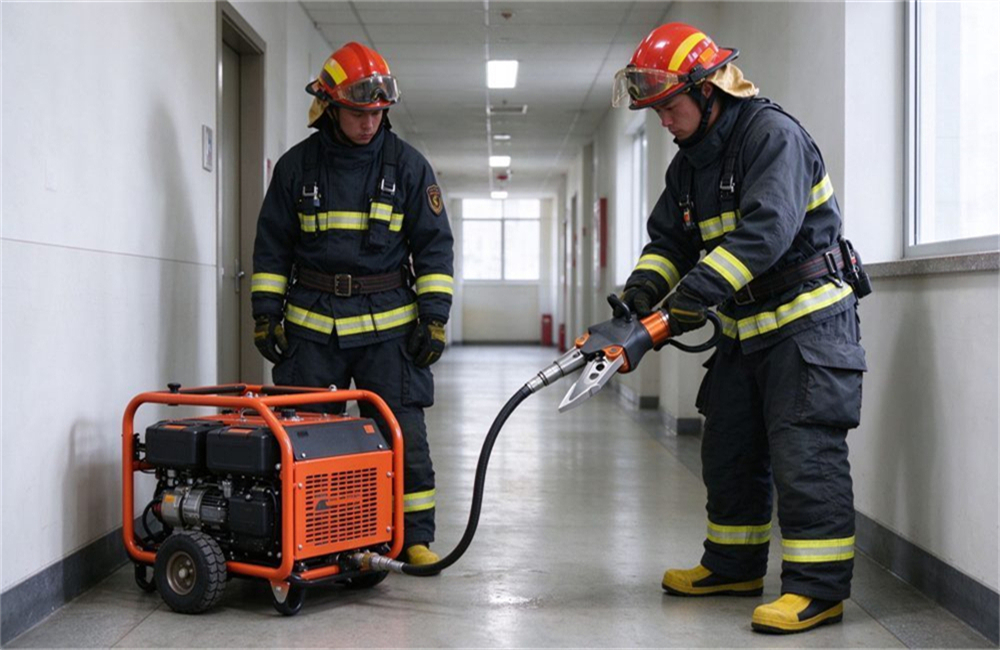
Table of Contents
Runtime and Power Output
Weight and Portability
Noise and Emissions
Maintenance and Fuel Cost
Which Pump Suits Which Team
Total Cost of Ownership
FAQ
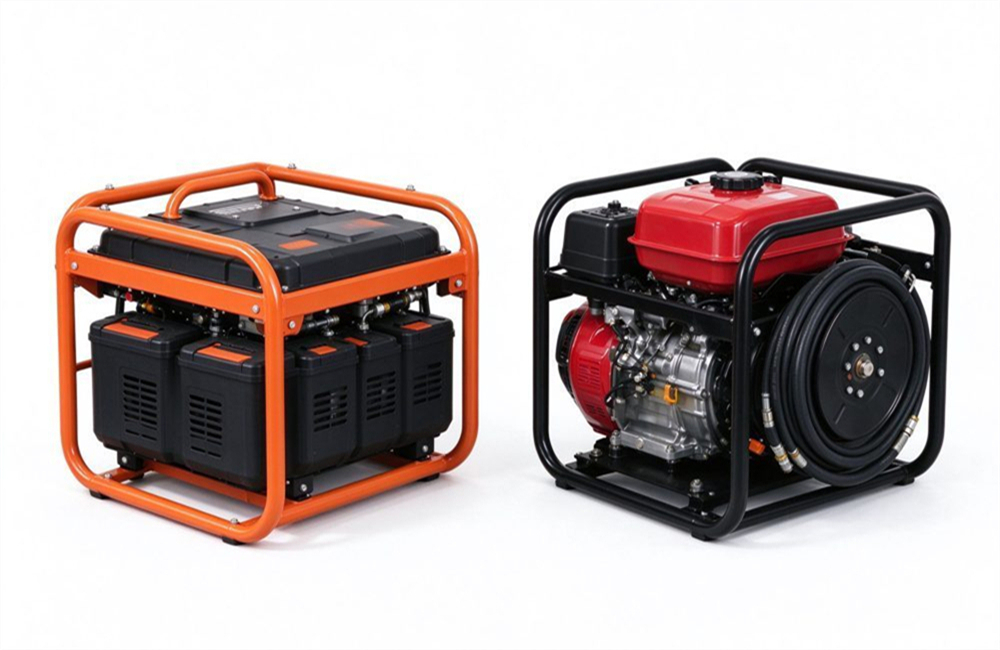
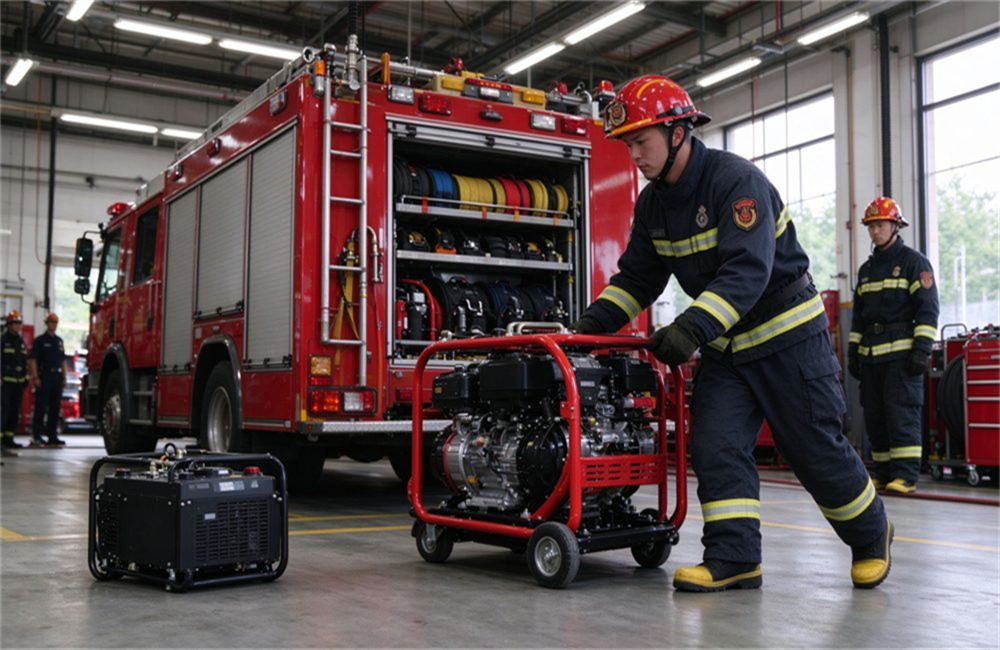
This line-up shows both pump families side by side: a compact battery hydraulic power unit, a petrol driven hydraulic pump and a diesel hydraulic pump. Each one drives the same rescue tools, but the right choice changes with the job site, shift length and noise limit.
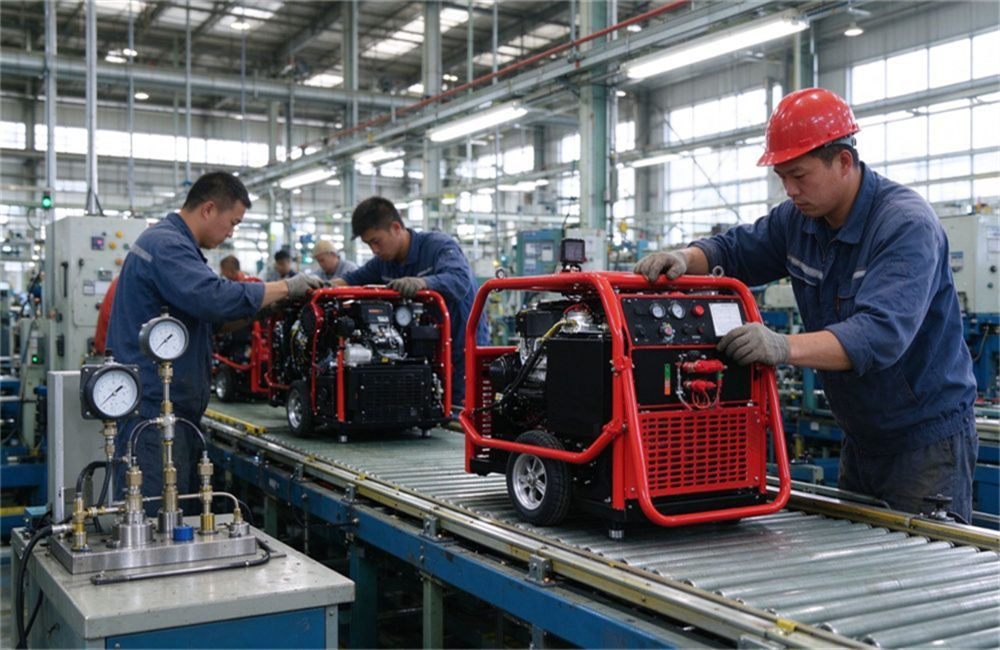
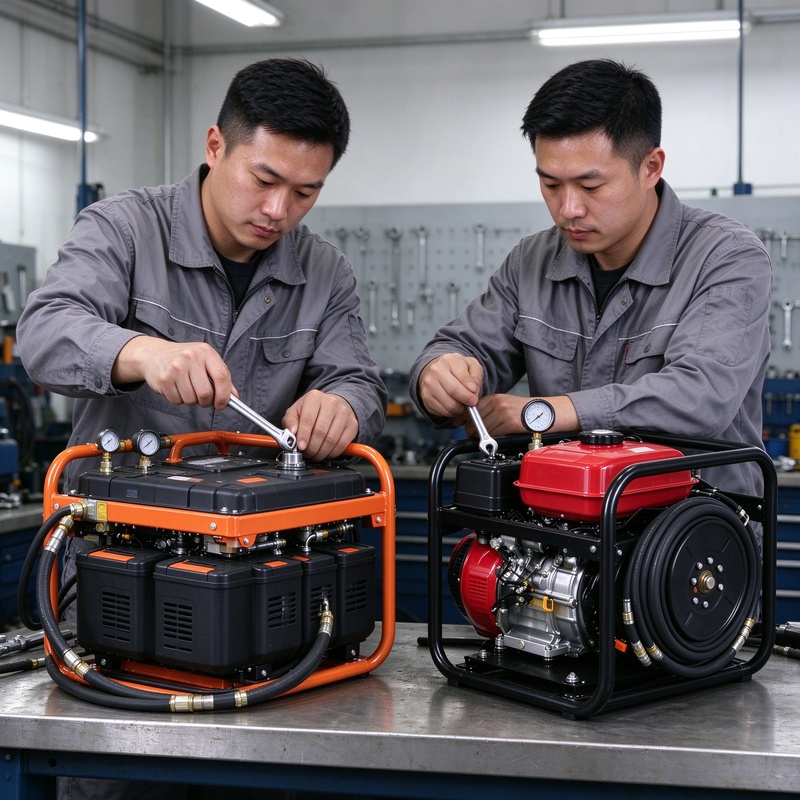
Every power unit passes assembly and pressure testing before dispatch. Frames are welded, valves are set and each unit runs a full cycle under rated pressure. That discipline keeps failure rates low when the pump finally works inside a rescue scene.
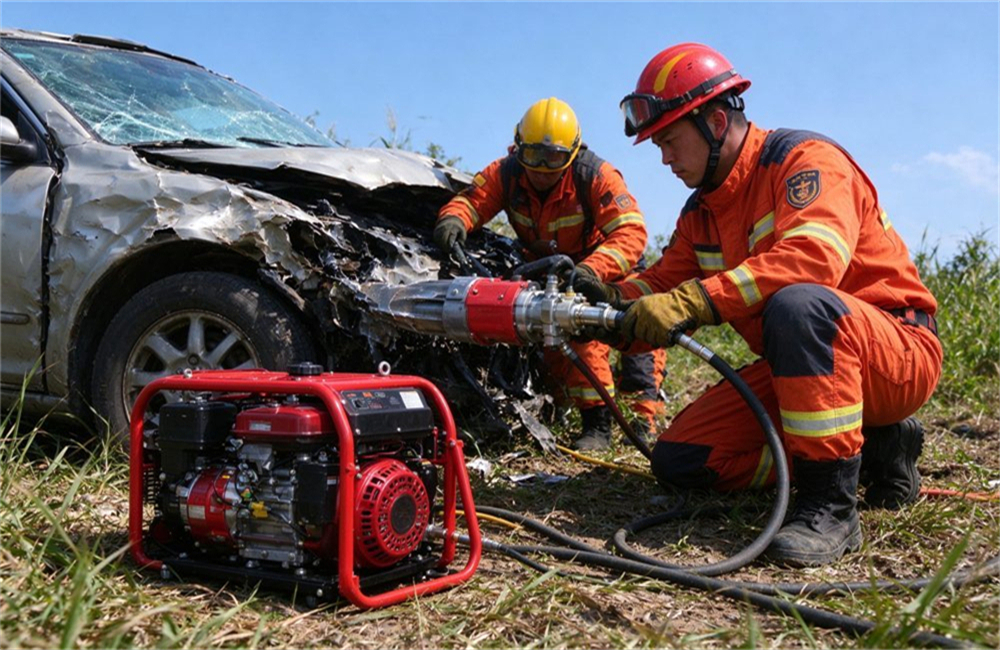
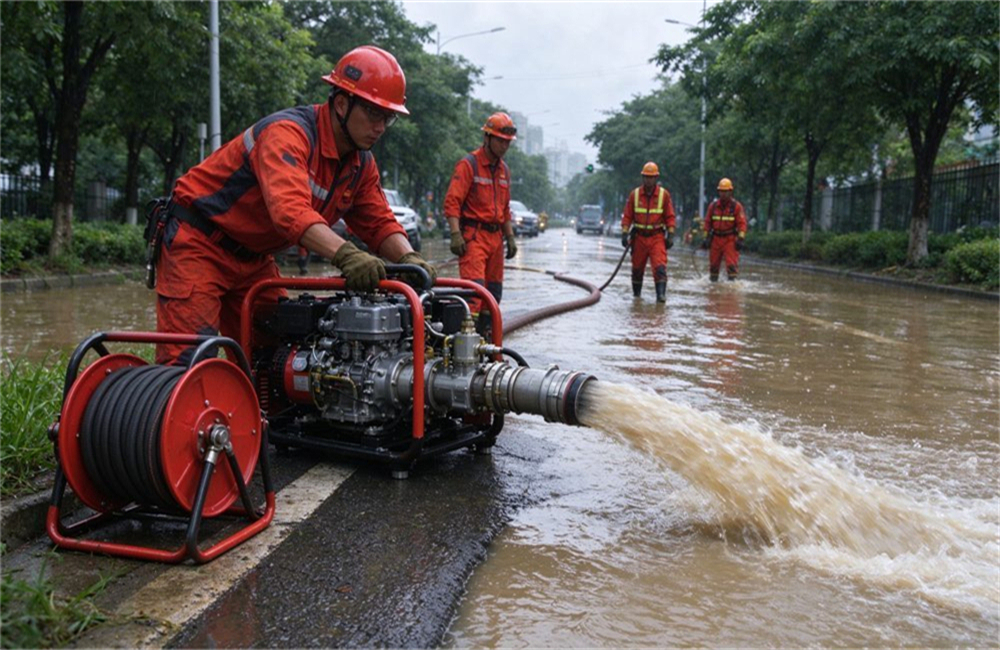
In open terrain, an engine driven hydraulic pump works for hours without charging. A single fuel fill powers cutter, spreader, ram and combi tool shifts through a full vehicle extrication or flood response, with no battery to swap and no outlet in sight.
Battery packs and fuel tanks decide how long a team can work. Lithium packs charge fast and swap in seconds. Fuel tanks refill in minutes but carry engine noise and exhaust. The choice is a balance of runtime, weight and working environment.
Use a battery driven hydraulic pump for short, quiet, indoor tasks. This battery vs engine driven hydraulic pump rule covers most calls. Use engine power for long outdoor shifts. Match the pump to the mission, not to habit. The rest of this guide gives exact numbers, cost models and a simple decision tree for every rescue team.
A portable power unit that runs rescue tools from rechargeable lithium packs. It produces no exhaust, runs at 55 to 62 dB and weighs 12 to 25 kg, which makes it the first choice for indoor, hospital and high-rise work.
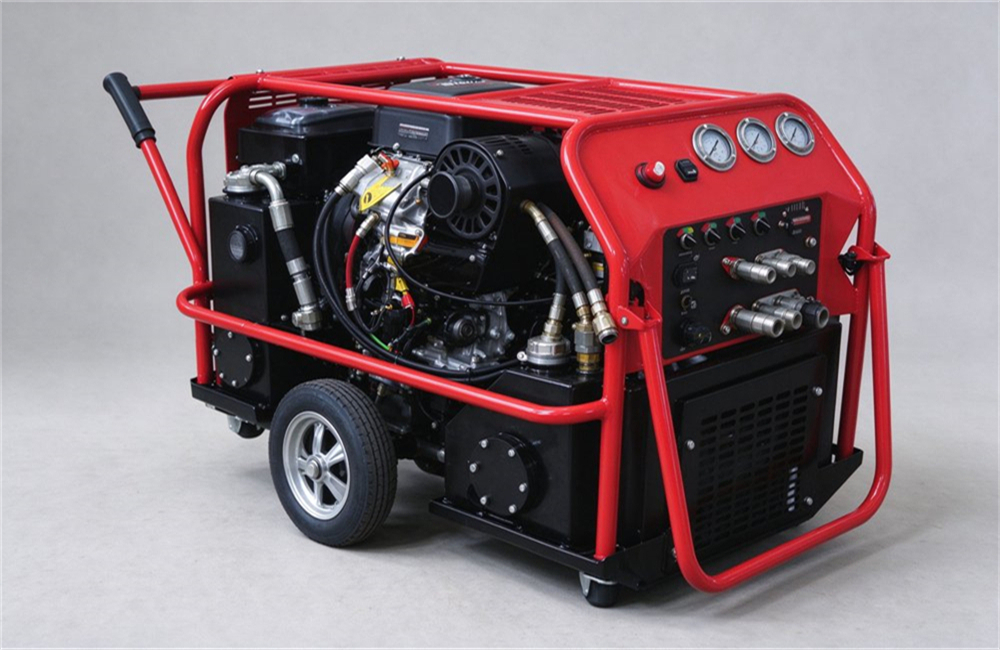
A petrol or diesel power unit that runs rescue tools from fuel. Maintenance and fuel cost run higher for engine units. It delivers high flow for long outdoor shifts, weighs 70 to 245 kg and runs at 85 to 95 dB, which makes it the workhorse of flood and extrication operations. Noise and emissions decide whether a pump can run indoors.
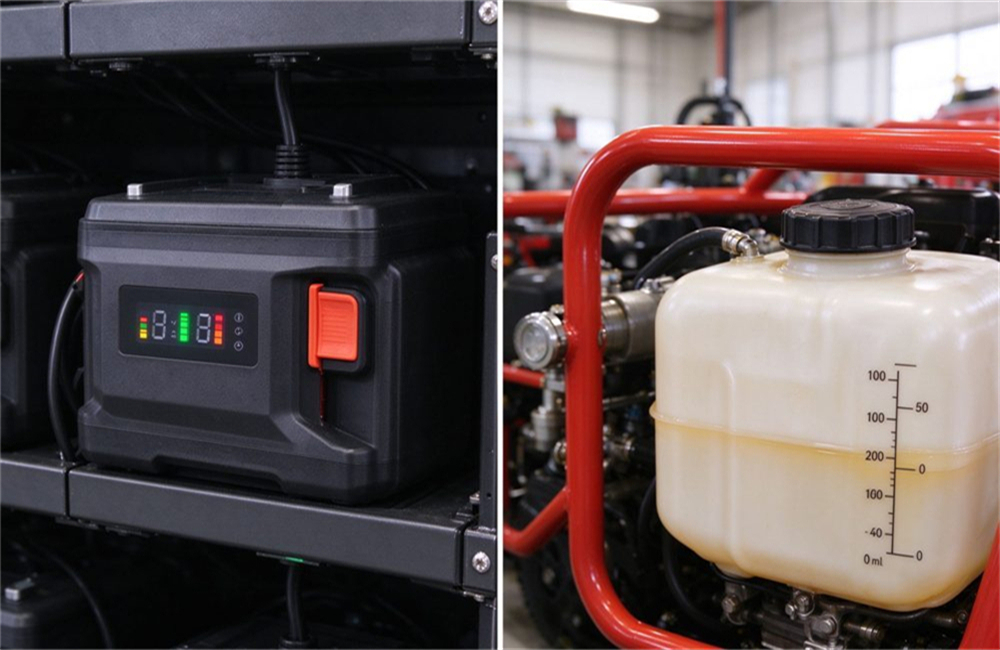
This comparison covers the three power sources behind rescue tools: battery packs, engine driven hydraulic pumps and mains electric units. The battery vs engine driven hydraulic pump question splits indoor and outdoor calls. It is written for procurement officers, station chiefs and rescue team leaders who must choose once and choose well.
The facts here come from rated specifications and field practice. Numbers follow the standard ranges of each family, because exact values vary by model. Use this guide as the frame, then confirm the final data against the supplier sheet.
Runtime is the first question rescue teams ask. Noise and emissions rank next on every comparison sheet. A pump that stops mid-cut can cost a life. Both pump families deliver full rated flow, but their energy limits are very different.
Engine driven hydraulic pumps run as long as fuel lasts. That is the core of the battery vs engine driven hydraulic pump runtime split. A 20 to 35 hp petrol unit runs six to ten hours on one tank. Diesel units run even longer at continuous load. Refuel takes five minutes and work resumes. That is why engine pumps dominate long flood and extrication operations.
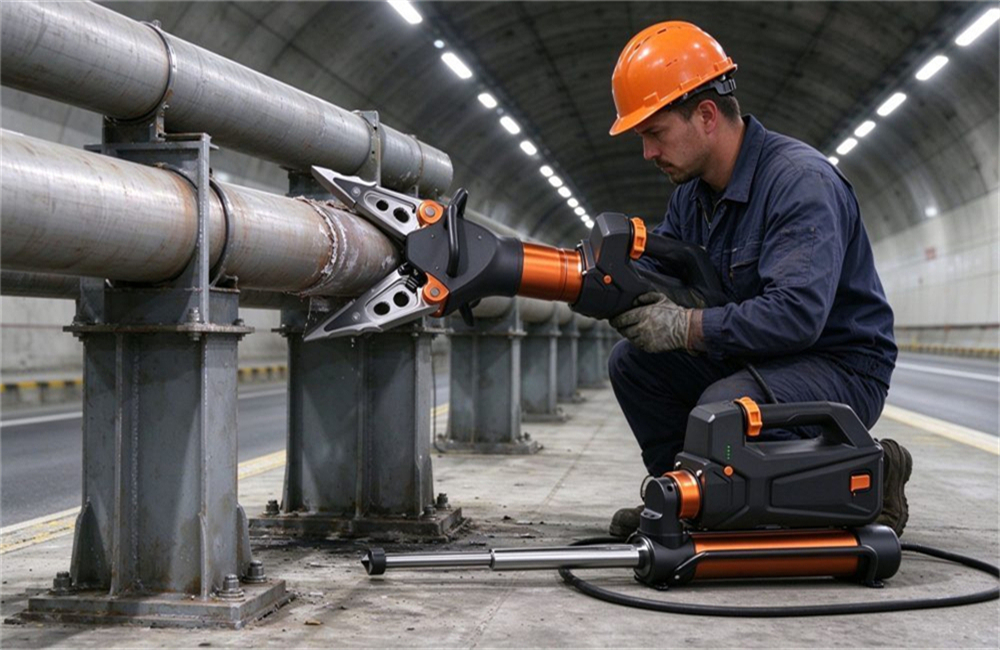
Battery powered hydraulic pumps run 45 to 90 minutes per pack under load, depending on flow and tool type. Two spare packs extend the shift to three or four hours. Chargers top a pack in 40 to 60 minutes, so a small rotation keeps the team working.
Runtime depends on the tool, not just the pack. Runtime and power output numbers must be read together. A cutter under full load draws more current than a spreader at partial stroke. Teams should rate runtime with their heaviest tool, not with an empty test.
Modern lithium packs show state of charge and remaining minutes on the display. The operator plans the next swap instead of guessing. This simple feature removes most mid-task power failures.
A 7.5 kW electric power unit with mains power runs indefinitely This battery vs engine driven hydraulic pump guide starts with runtime numbers.. It is not battery limited, but it needs a wall outlet, a generator or a truck inverter. For tunnel, hospital and industrial sites this is rarely a problem.
Mains units record very low sound pressure Read this battery vs engine driven hydraulic pump comparison before signing a PO., around 52 dB, and zero exhaust. Construction crews run them all day near a supply point. Utility teams use them for pipe work and plant maintenance.
Working pressure must match the hydraulic system Every battery vs engine driven hydraulic pump decision starts with the mission profile. of the tools a pump drives. Two pressure classes dominate rescue hydraulics. High-pressure tool systems run at about 63 MPa, or 630 bar, which suits compact battery driven hydraulic pumps and high-pressure manual pumps.
Medium-pressure power units run at 155 to 195 bar The battery vs engine driven hydraulic pump table lists runtime, weight and noise. and feed twin-hose tools, water pumps and continuous operations. Compare pressure only inside the same tool family.
Flow rate decides tool speed Teams that finish this battery vs engine driven hydraulic pump page order with confidence.. Engine driven hydraulic pumps output 20 to 80 litres per minute at system pressure. Compact battery driven hydraulic pumps output 1.5 to 3.5 litres per minute at tool pressure, because the pump sits close to the cutter and spreader. Match the flow class to the tool, not to the power badge.
In this battery vs engine driven hydraulic pump comparison, engine power wins on flow for heavy work. For precise, short operations, battery power wins on pressure and control. the table below shows the full comparisonison.
Flow classes decide the tool speed This battery vs engine driven hydraulic pump guide answers the common buying questions.. Twenty litres per minute drives one cutter at working pace. Forty litres drives two tools or one heavy tool at full speed. Eighty litres feeds a water pump at the same time.
Battery driven hydraulic pumps sit in the low flow class by design; the battery vs engine driven hydraulic pump class split starts here. They trade raw speed for portability and silence. Teams that cut one pillar at a time rarely notice the difference.
Engine driven hydraulic pumps cover the mid and high flow classes in the battery vs engine driven hydraulic pump comparison. A twin-hose pump runs a cutter on one circuit and a ram on the other. The same unit powers a dewatering pump in flood work.
Write the mission profile before buying The battery vs engine driven hydraulic pump numbers decide which unit rides on the truck.. A fire brigade counts extrication minutes per week. A flood team counts hours per event. The numbers point to one family immediately.
Battery driven hydraulic pumps win when tasks are short and frequent. Engine driven hydraulic pumps win when tasks are long and continuous. Mains units win when a power point is guaranteed.
Mixed fleets are not indecision This battery vs engine driven hydraulic pump guide starts with runtime numbers.. They are the correct answer for teams that face both indoor quick cuts and outdoor long shifts. Budget for one of each, not two of the same.
Rescue doctrine in many countries now pairs a battery driven hydraulic Read this battery vs engine driven hydraulic pump comparison before signing a PO. pump with an engine driven hydraulic pump on the same appliance. The first responder carries the battery driven hydraulic pump. The crew brings the engine driven hydraulic pump behind.
A one-hour vehicle extrication suits either pump Every battery vs engine driven hydraulic pump decision starts with the mission profile.. The engine driven hydraulic pump idles between cuts and burns fuel the whole time. The battery driven hydraulic pump runs only during actual cutting, which extends effective runtime.
A six-hour flood operation favours engine power in the battery vs engine driven hydraulic pump decision. Continuous pumping needs fuel, not a charging cycle. Teams carry jerry cans and rotate operators while the diesel unit never stops.
Mains power in a tunnel means zero exhaust risk. Every battery vs engine driven hydraulic pump decision note records this.. One outlet, one unit, zero fumes and zero refuel stops. The crew works the full shift without touching the power source.
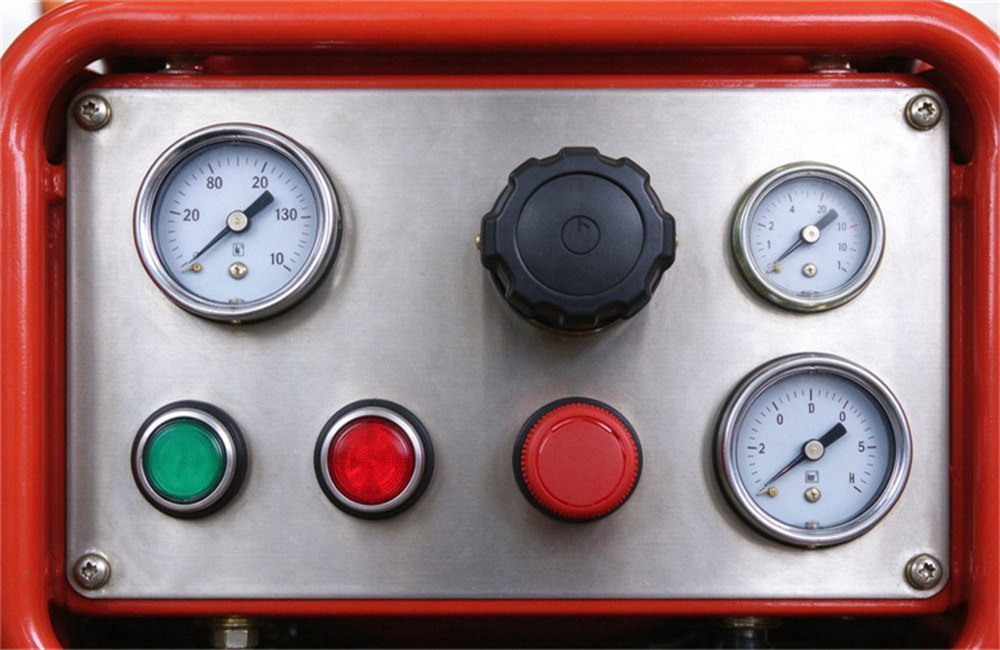
Cold changes both families The battery vs engine driven hydraulic pump table lists runtime, weight and noise.. Lithium capacity drops below about minus ten degrees. A pack that runs ninety minutes at twenty degrees may run sixty minutes at minus ten. Spare packs kept warm on the truck restore the gap.
Engine driven hydraulic pumps start harder in cold. Petrol units need a cold-start choke and warm-up time. Diesel units may need glow plugs or winter fuel grade. Once warm, they hold rated power far below freezing.
For winter regions, teams plan around the weakest link Teams that finish this battery vs engine driven hydraulic pump page order with confidence. of the battery vs engine driven hydraulic pump fleet. Battery crews rotate warm packs. Engine crews protect fuel and batteries. Both solutions work, but the plan must exist before the call.
Long flood work rarely ends in one charge. A diesel hydraulic pump with a base tank runs through the night.. A diesel pump drains a basement for ten hours while a battery driven hydraulic pump clears the first floor in the first hour. The pairing is deliberate: battery for speed, engine for endurance.
Count the longest single task, add a safety margin This battery vs engine driven hydraulic pump guide answers the common buying questions. and multiply by two. That is the runtime you need. Battery teams add packs. Engine teams add fuel. Mains teams add an extension supply.
Log every shift The battery vs engine driven hydraulic pump numbers decide which unit rides on the truck.. Runtime records expose weak packs, heavy tools and wrong sizing long before a failure. A simple log sheet prevents most mid-rescue power surprises.
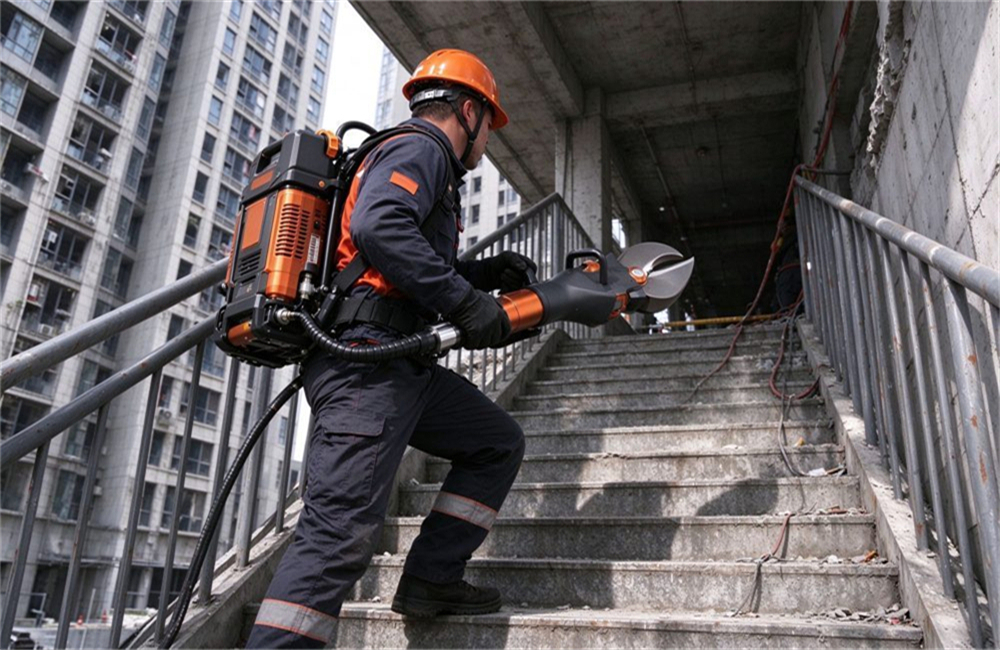
Weight decides who carries the pump and how far This battery vs engine driven hydraulic pump guide starts with runtime numbers.. A rescue scene is rarely next to the truck. Portability affects deployment time, crew size and fatigue across a long shift.
Battery powered hydraulic pumps weigh 12 to 25 kg complete with battery. One operator carries the pump and one tool to the point of operation. No hoses, no fuel, no warm-up. Deployment takes under two minutes.
Backpack battery driven hydraulic pumps weigh 15 to 20 kg Read this battery vs engine driven hydraulic pump comparison before signing a PO. and free both hands. The operator climbs stairs, crosses rubble and enters confined spaces with the pump on their back. This is the lightest full-power option for high-rise and tunnel work.
Engine driven hydraulic pumps weigh 70 to 245 kg, the battery vs engine driven hydraulic pump weight answer. Small petrol units weigh around 110 kg. Large twin-hose units weigh over 200 kg. They travel on wheels or a truck bed, then stay near the vehicle.
Hoses carry the power instead of the operator Every battery vs engine driven hydraulic pump decision starts with the mission profile.. A 10 to 20 metre twin hose reaches the tool while the pump stays at the truck. For vehicle extrication this layout is standard and practical.
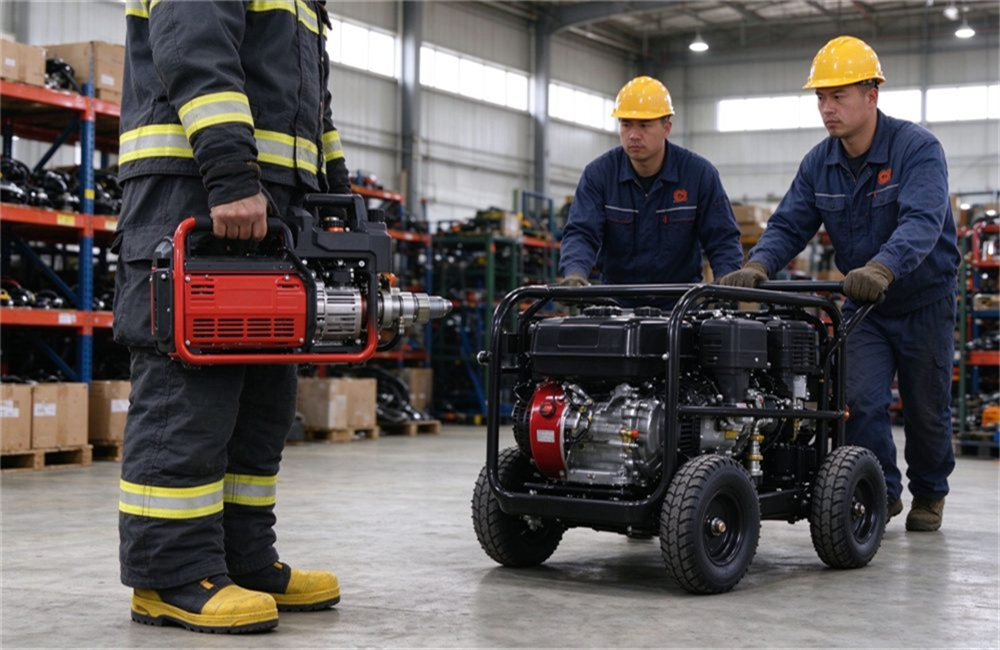
Engine driven hydraulic pumps fit into dedicated rescue truck compartments with slide trays and tie-down points. Battery pumps store in a tool case with packs, charger and spare blades. Storage volume differs by roughly four to five times.
Weight distribution matters on the truck The battery vs engine driven hydraulic pump table lists runtime, weight and noise.. A 200 kg pump changes the axle load and affects off-road travel. A 20 kg battery kit travels in any compartment and lifts out by one person.
A battery kit travels in a foam case Teams that finish this battery vs engine driven hydraulic pump page order with confidence. with the pump, two packs, a charger and a tool. Total volume fits a car boot. The team arrives with everything in one carry.
An engine kit needs the pump, fuel, oil, hoses, a wheel kit and a tool box. It fills a trailer or a truck compartment. Every job starts with a loading plan.
Air freight changes the maths This battery vs engine driven hydraulic pump guide answers the common buying questions.. A 20 kg battery kit ships easily. A 200 kg engine driven hydraulic pump needs a pallet and a crane. For global aid programmes, weight decides delivery speed.
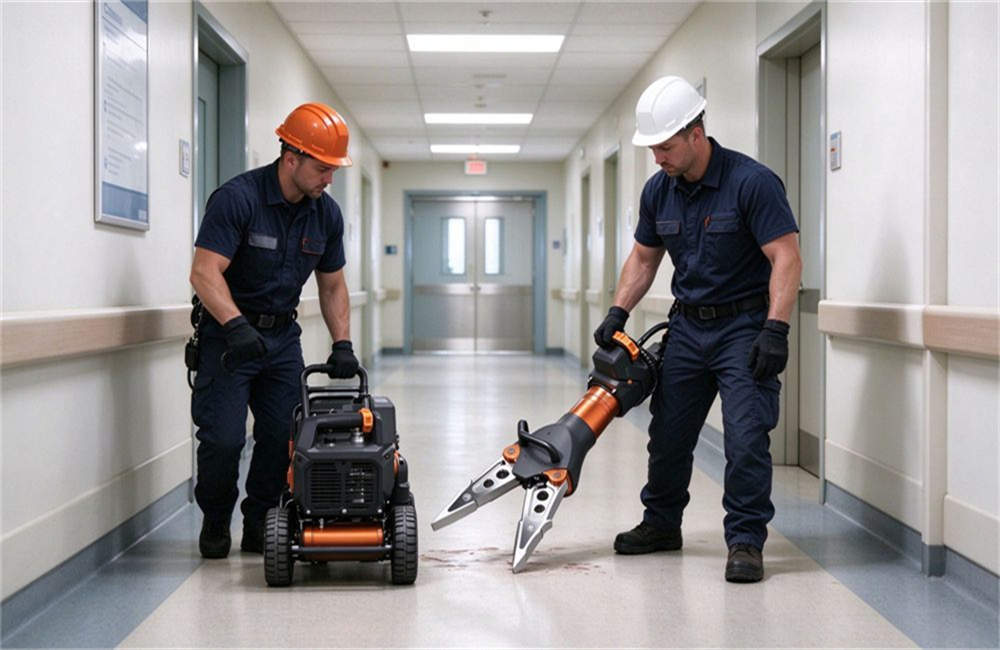
Manual handling rules set weight limits for every crew. The battery vs engine driven hydraulic pump table weighs both families against that limit. The battery vs engine driven hydraulic pump numbers decide which unit rides on the truck.. A 25 kg lift is a two-person task in many workplaces. A 245 kg unit needs a truck and a ramp. Choose the weight your team can actually move.
Fatigue compounds across a shift This battery vs engine driven hydraulic pump guide starts with runtime numbers.. Carrying a heavy pump once is fine. Carrying it into the fourth stairwell is different. Light gear keeps operators effective at hour six.
Age and training of the crew matter too. Every battery vs engine driven hydraulic pump order form asks this first.. This battery vs engine driven hydraulic pump guide puts the crew before the brand.. Volunteer brigades and mixed-age teams benefit from the lowest practical unit weight. Battery kits keep every member deployable.
Battery driven hydraulic pump deployment runs under two minutes Read this battery vs engine driven hydraulic pump comparison before signing a PO.. Lift the case, fit the pack, connect the tool and cut. There is no choke, no warm-up and no hose run to the truck.
Engine driven hydraulic pump deployment runs five to eight minutes. Position the pump, check fuel and oil, start the engine, let it warm and run hoses to the scene. Well-drilled crews cut this down, but the steps stay.
In the first minutes of a rescue, a battery driven hydraulic pump reaches Every battery vs engine driven hydraulic pump decision starts with the mission profile. the victim sooner. This alone changes the decision for high-rise and crowded indoor scenes.
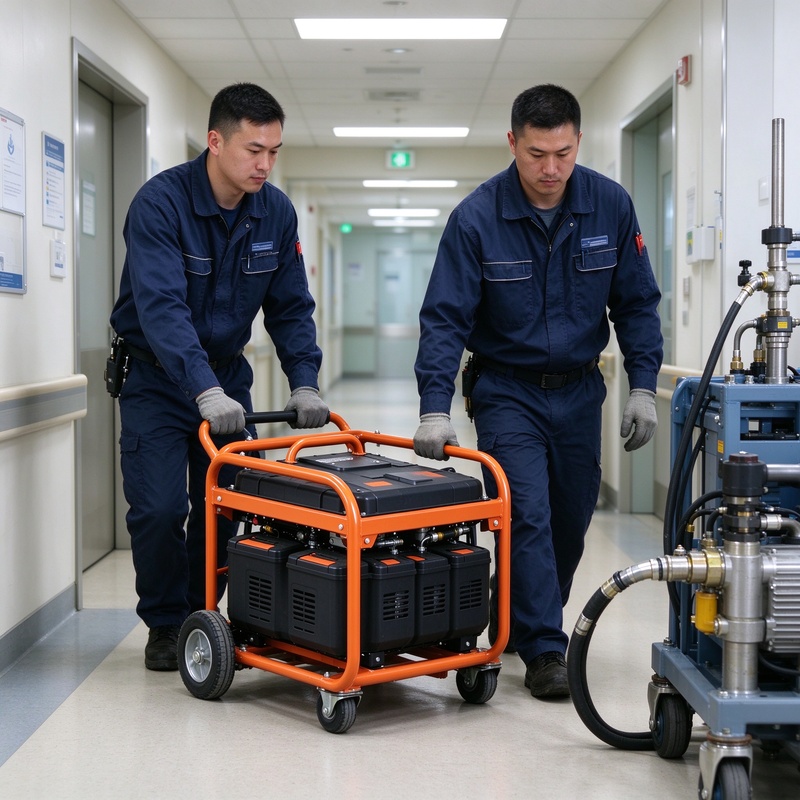
High-rise rescues are decided on stairs and lifts. A 20 kg battery driven hydraulic pump climbs with one operator. A 110 kg engine driven hydraulic pump needs four carriers or a lift and a route plan.
Rope teams hoist gear to roofs and bridge decks. Noise and emissions rules then matter as much as runtime. The battery vs engine driven hydraulic pump table lists runtime, weight and noise.. A battery driven hydraulic pump fits a cargo net. An engine driven hydraulic pump needs a crane or a motorised winch. Weight is not a comfort issue, it is a route issue.
Fire towers, parking structures and factories above ground all reward light gear. Teams that train for vertical work choose battery as the default and engine only where a truck ramp exists.
Quick couplers shorten every changeover Teams that finish this battery vs engine driven hydraulic pump page order with confidence.. A standard flat-face coupler clicks in without tools and seals with no spill. Keep a spare coupler set with each pump so a damaged fitting never stops a shift.
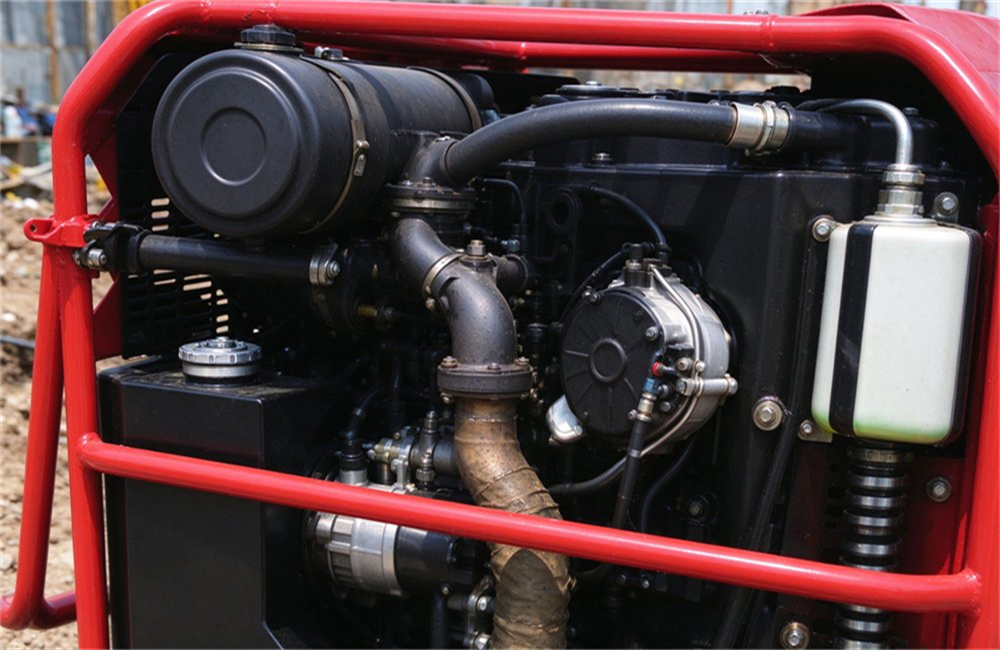
A wheel kit turns a heavy engine driven hydraulic pump This battery vs engine driven hydraulic pump guide answers the common buying questions. into a rolling unit for flat ground. A backpack frame turns a battery driven hydraulic pump into hands-free gear. Both options should be quoted with the pump.
Quick-release hose couplers speed every layout The battery vs engine driven hydraulic pump numbers decide which unit rides on the truck.. Couplers add small weight but save minutes on every connect. Standard 3/8-inch flat-face couplers keep one spare set in the case.
Weight rule in a battery vs engine driven hydraulic pump decision: battery for stairs, high-rise and confined spaces; engine for roadside, flood and long operations where a truck can park.
Noise and exhaust are invisible limits on where a pump can work. Every hydraulic rescue pump for fire teams spec sheet lists these limits in its appendix.. Hospitals, schools, tunnels and night operations all have noise rules. Indoor air quality matters just as much.
A battery driven hydraulic pump runs at 55 to 62 dB at the operator ear. That is quieter than a normal conversation. No exhaust, no fumes, no carbon monoxide risk. It works safely inside buildings, stairwells and vehicles.
An electric power unit with mains power runs even quieter. The SD13-30 type unit records 52 dB sound pressure. It is the silent option for hospitals and industrial plants.
Petrol and diesel pumps run at 85 to 95 dB. Operators need hearing protection. The exhaust must point away from the work area, and the pump cannot run inside an enclosed space without ventilation.
Carbon monoxide is the real hazard. Engine exhaust near an intake or inside a structure is life-threatening. Teams must position the pump outdoors or downwind and use gas detectors in confined scenes.
Night rescue near residential areas often bans engine driven hydraulic pumps. Hospitals cannot accept fumes near patient wards. Shopping malls and subways restrict both noise and exhaust during business hours.
Quiet pumps change strategy. A battery driven hydraulic pump lets crews enter first, assess and start cutting before the truck even arrives. The first minutes of a rescue are exactly when quiet deployment matters.
Position the pump downwind of the scene. Check doors and vents behind the unit. Start with a one-metre clear zone on the exhaust side.
Use a gas detector when the scene is enclosed or semi-enclosed. Carbon monoxide rises silently. A detector costs less than one ambulance call.
Log the exhaust direction for every setup. Teams that standardise the position remove a recurring safety decision from each shift.
Hospital rescues forbid exhaust near patients and oxygen lines. Battery driven hydraulic pumps run beside a bed without risk. This single case often justifies the first battery purchase.
Tunnels and subways restrict combustion engines for ventilation reasons. A battery driven hydraulic pump works on a platform while the train system keeps running above, one reason the battery vs engine driven hydraulic pump debate leans battery indoors.
Shopping centres and airports close sections when exhaust appears. Quiet electric power lets crews work during operating hours instead of waiting for closure.
Night work changes the noise calculus. A residential street at 2 am cannot host a 90 dB pump for long. Battery driven hydraulic pumps run the whole cut cycle below normal speech volume.
Some cities write quiet-hour rules into rescue contracts. Teams that can silence the power source win approval for night access to malls, stations and apartment towers.
Lighting also differs. Battery driven hydraulic pumps carry integrated work lights that follow the operator. Engine driven hydraulic pumps rely on scene lighting and cast long shadows from the unit itself.
Noise is measured in dB at the operator position, usually one metre from the unit. Engine driven hydraulic pumps commonly record 85 to 95 dB at this point. Battery pumps record 55 to 62 dB.
Tenders in Europe and the Gulf increasingly set a maximum sound level for indoor work. A quiet unit becomes a compliance advantage, not just an operator comfort.
Engine exhaust needs outdoor air flow. Teams place the pump at least two metres from doors and intakes. Wind direction is checked before starting.
Battery and mains units carry no ventilation rule. They run inside stairwells, lifts and patient areas where an engine driven hydraulic pump is simply not allowed, the clearest battery vs engine driven hydraulic pump rule.
Emissions rule in the battery vs engine driven hydraulic pump comparison: battery and electric for indoor and sensitive sites; engine for open outdoor sites where ventilation and distance are easy to manage.
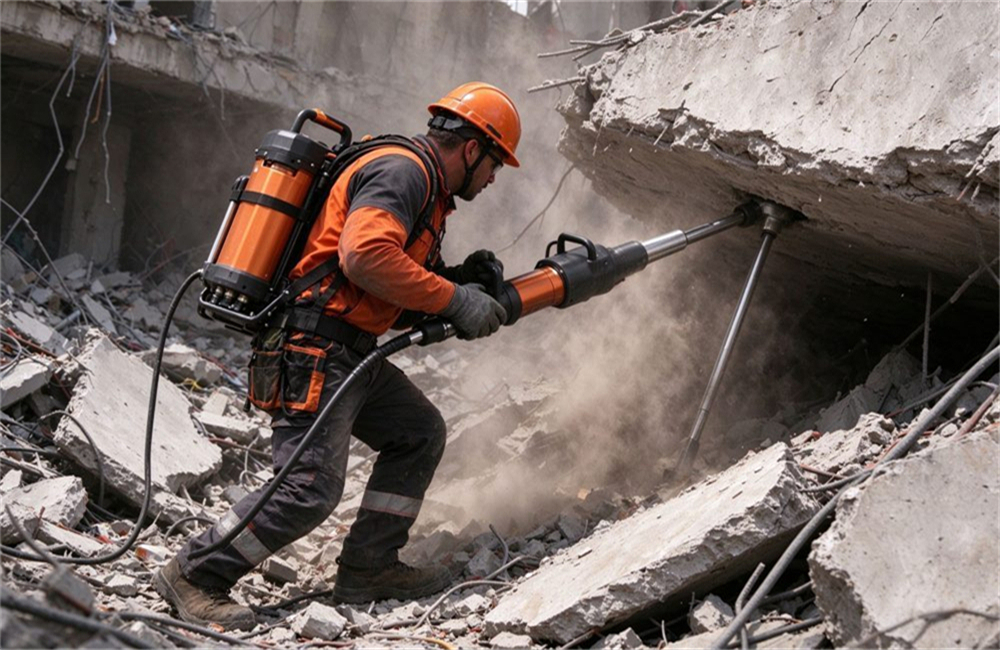
Maintenance cost is the quiet budget killer. A pump that looks cheap on paper can eat a year of savings in engine service, fuel and spare parts.
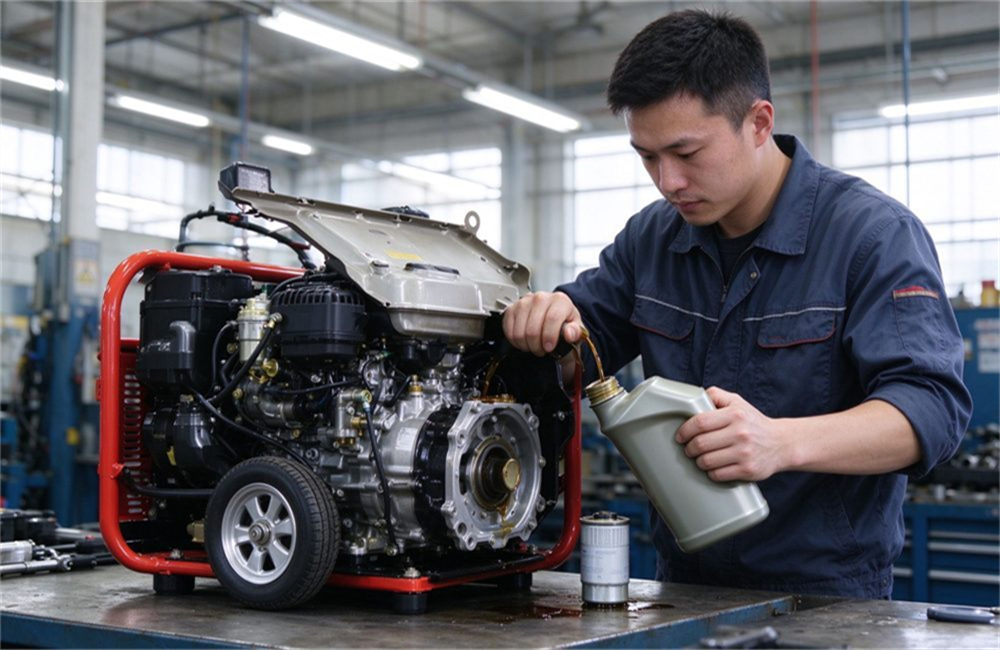
Engine driven hydraulic pumps need oil changes, air filters, fuel filters, spark plugs and winter fuel care. A petrol unit needs service every 100 to 200 hours. Diesel units need fuel filters, injector checks and cold-start care.
Fuel is a running cost with no end. A 20 hp pump burns roughly 2 to 4 litres per hour. A long flood operation burns 50 to 100 litres per day. At remote sites, fuel logistics becomes part of the plan.
Battery powered hydraulic pumps need almost no daily service. Charge the pack, check the oil level, wipe the couplers. There is no fuel, no filter, no spark plug and no exhaust system to maintain.
The battery itself is the main cost. A lithium pack lasts 500 to 1000 charge cycles, or about two to four years of daily use. Replacement cost is planned, not sudden, when the pack is tracked.
Electricity is far cheaper than fuel. A full charge costs a few cents or yuan. The same work on petrol costs five to ten times more in energy alone. Over a year, the gap is significant.
Engine driven hydraulic pumps force fuel storage decisions. Petrol needs approved containers, fire-safe cabinets and rotation to avoid stale fuel. Diesel needs winter-grade handling. Sites with strict rules pay more for storage.
Battery driven hydraulic pumps store anywhere a tool case fits. Chargers run on standard mains. No flammables, no fumes, no storage permits. For hospitals, tunnels and airports this removes an entire compliance layer.
Engine driven hydraulic pump service lands at fixed hours. Oil every 100 to 200 hours, filters with it, plugs every season. Each service takes the pump off duty for a day or more.
Battery service lands at pack replacement only. The hydraulic side still needs a yearly pressure check and oil top-up. Total service hours per year are a fraction of engine hours.
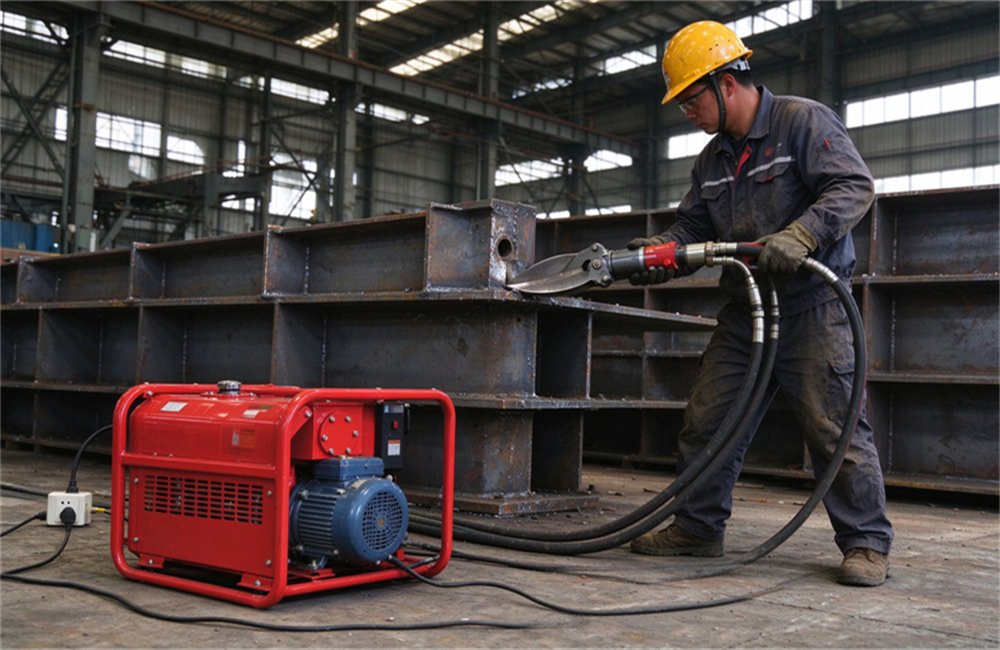
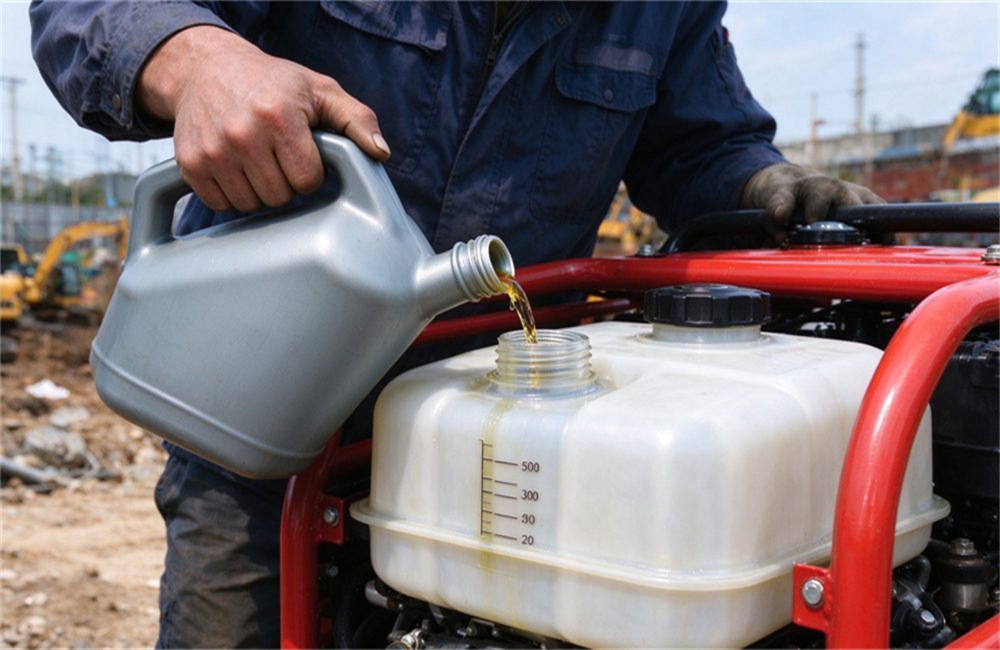
Both families share the hydraulic oil duty. Check the level weekly, top up with the specified grade and change it per the service schedule. Contaminated oil is the main pump killer.
Filter changes protect the pump core. Engine driven hydraulic pumps change filters with every oil service. Battery driven hydraulic pumps change filters on the hydraulic circuit at the yearly service.
Log oil grade and change date on the unit sticker. This small habit keeps warranty valid and service predictable for both families.
Engine service needs trained mechanics and stocked filters; the battery vs engine driven hydraulic pump service gap is the charger. Remote stations wait days for parts. Battery service needs a charger, a pack and basic electrical care.
Order spares with the first purchase. Filters, couplers, hoses and one spare pack cover most failures. A five-year parts list belongs in the delivery contract. Maintenance and fuel cost are budgeted line items, not surprises.
Warranty response time varies by region. Confirm the supplier stocks parts locally and quotes a response window. This line saves weeks when a pump fails mid-season. Total cost of ownership runs five years on one sheet.
Winter maintenance protects both families in any battery vs engine driven hydraulic pump fleet. Engine driven hydraulic pumps need winter fuel, battery checks and heated storage to avoid frozen oil and dead packs.
Battery driven hydraulic pumps benefit from a simple habit: store packs warm and at a partial charge. Deep discharge in cold storage is the main cause of early pack failure.
Engine driven hydraulic pumps need a running schedule in deep cold. A weekly warm-up prevents stuck valves and stale fuel. Log the date, runtime and fuel grade for each unit.
Engine driven hydraulic pumps need trained operators. Cold starts, choke, fuel mix and exhaust placement are all learned skills. New crew members need supervised hours before solo use.
Battery driven hydraulic pumps match a phone-like workflow. Charge, swap, go. Training time drops sharply, which matters for volunteer brigades and multi-trade construction crews.
Cost rule: battery driven hydraulic pumps cost more up front, less to run. Engine pumps cost less up front, more to run. Teams that work daily should calculate a five-year total, not a one-time purchase price.
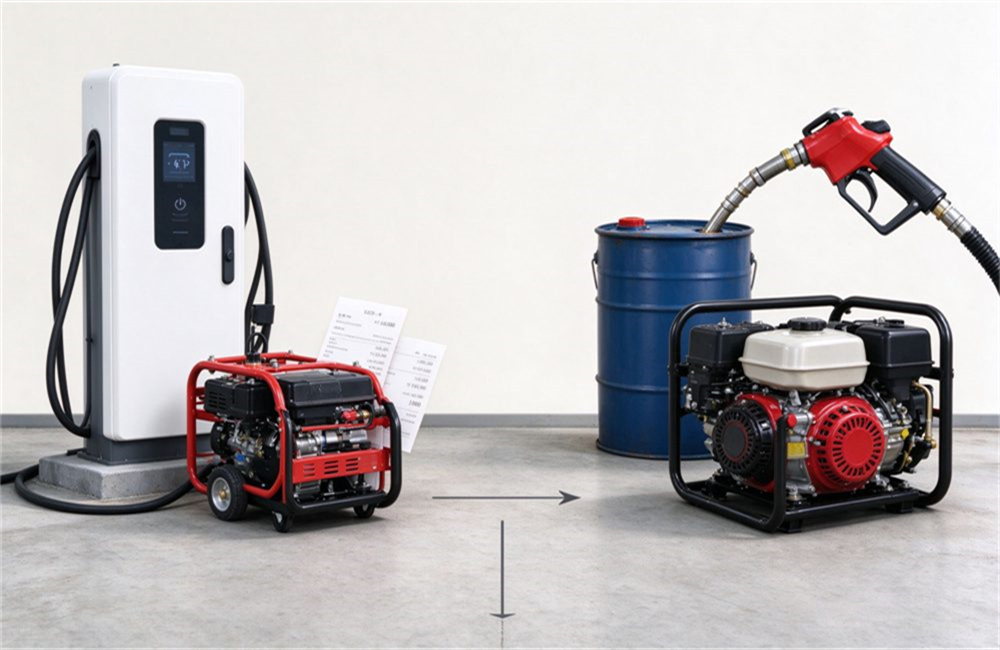
The best pump matches the mission profile. A fire department, a rescue team and a construction crew face completely different runtimes, sites and budgets. Use the decision tree and matching table below.
Question one: does the team work long hours with no power source? Then an engine driven hydraulic pump, such as a mid-range petrol unit, is the reliable choice.
Question two: does the team work indoors, in tunnels or near patients? Then a battery driven hydraulic pump or an electric unit, such as a compact lithium unit, keeps noise and fumes at zero.
Question three: does one operator need to deploy fast with light gear? Then a manual pump or a backpack battery driven hydraulic pump fits a single responder on foot.
Question four: does the team face all these situations? Then run a mixed fleet. Keep one engine driven hydraulic pump for long operations and one battery driven hydraulic pump for indoor and rapid response.
Fire brigades run vehicle extrication, high-rise and structural work. Most brigades choose one engine driven pump on the rescue truck plus one battery driven hydraulic pump for indoor first response. This combination covers both loud long jobs and quiet short jobs.
Station charging changes the habit. A charger rack by the appliance bay keeps battery packs topped and ready. Crews return from a job, dock the packs and record runtime in the log.
USAR and urban rescue teams cross rubble, enter confined spaces and work at night. Backpack battery driven hydraulic pumps and light electric units fit their profile. A small petrol pump backs up long demolition and lifting tasks.
International teams often standardise on battery for the first 60 minutes of a rescue, then bring engine power for sustained excavation. This two-phase model is now common in urban search and rescue doctrine.
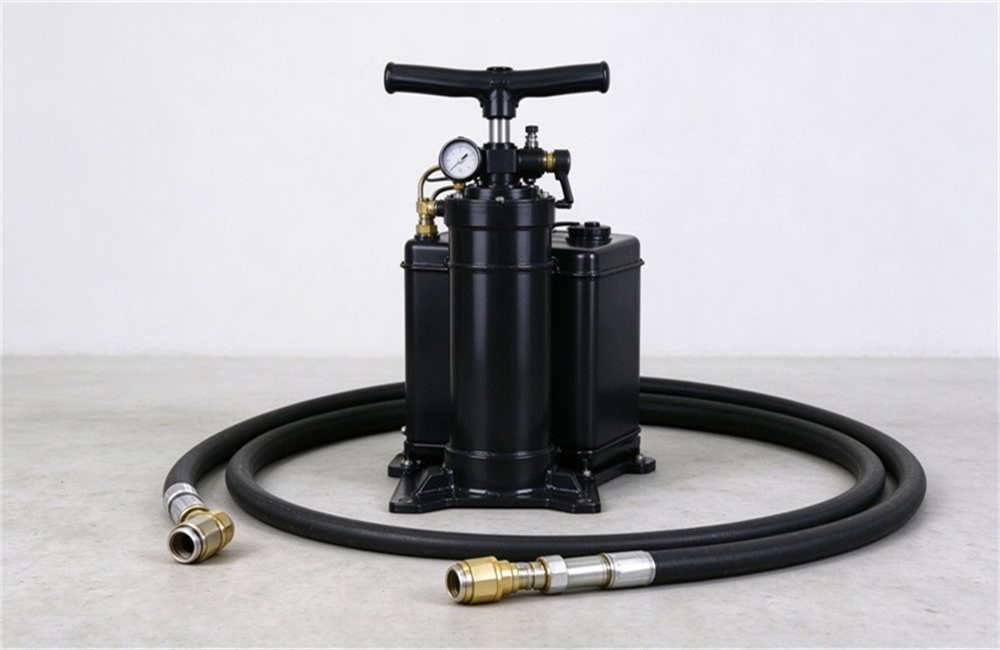
Construction teams cut, break and lift all day near power outlets. Electric hydraulic power units with mains power give unlimited runtime at low noise. Crews avoid fuel storage on site and meet stricter emission rules.
Utility crews use engine driven hydraulic pumps for remote pipeline work and battery driven hydraulic pumps for indoor plant rooms. The same tools run on either pump, so one tool fleet serves both power sources.
Europe and the Gulf tighten noise and emission rules for urban work. Tenders now mention sound level and indoor exhaust. Battery and electric units win these clauses.
North America keeps engine driven hydraulic pumps strong for heavy extrication. NFPA 1936 sets tool performance, not the power source, so both families stay compliant.
Buying on pressure alone ignores runtime. A high-pressure battery driven hydraulic pump still stops when the pack empties. Match pressure to the tool and runtime to the mission.
Buying one family because the neighbour bought it ignores your own site. Hospital work and highway work need different pumps. Re-run the decision tree with your own numbers.
Forgetting spares is the most expensive mistake. A unit without a spare pack or filter kit is a liability from day one. Add spares to the first order, not the second.
Engine operation is a learned skill set. Choke, warm-up, fuel mix and exhaust placement need supervised practice. New members shadow an experienced operator before solo duty.
Battery driven hydraulic pump operation follows a simple loop. Fit the pack, check the charge, run the tool, dock the pack. Most crews are self-sufficient after one session.
Recertification cycles differ. Engine operators re-test yearly in many agencies. Battery operators refresh on tool technique, not power management. Time saved on training returns to the team.
Tender documents should specify flow, pressure, weight, noise and runtime. A battery driven hydraulic pump and an engine driven hydraulic pump both pass a simple pressure test, so buyers must add the mission profile to the spec.
Ask suppliers for a five-year cost line, not just a quote. The answer separates vendors who know fleet economics from vendors who only move boxes.
Spare packs and fuel kits belong in the same tender. A pump without spares is a liability. Specify pack count, charger rack and fuel storage with the main unit.
Life-critical teams carry a second power path. One engine driven hydraulic pump plus one battery driven hydraulic pump, or two battery driven hydraulic pumps with spare packs. A single pump type is a single point of failure.
Manual pumps earn their place as a third layer. A hand pump weighs about 10 kg and works with no power at all. It is slow, but it never runs out of energy.
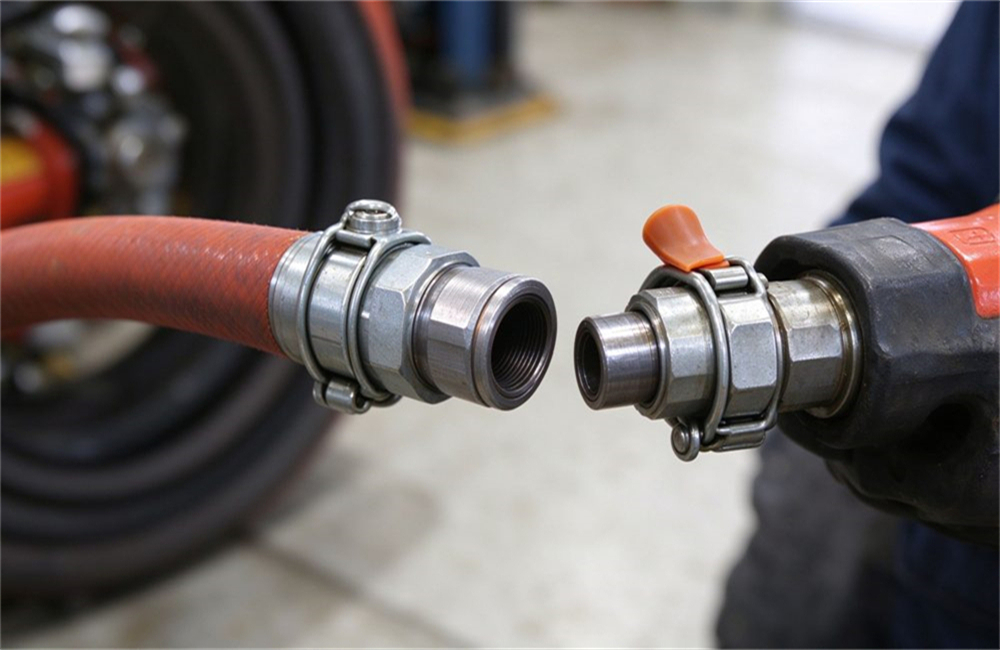
Purchase price is only the first line. Total cost of ownership adds fuel, electricity, maintenance, parts, downtime and replacement over five years. This is the number procurement teams should compare.
Engine driven hydraulic pumps win on purchase price. A petrol hydraulic pump costs less than a battery driven hydraulic pump of similar power. But fuel, oil, filters and engine service add steadily through the service life.
Battery driven hydraulic pumps win on running cost. Electricity is cheap, service is minimal and the pack is the only planned replacement. Teams that run daily often cross over in year two or three.
List purchase price, energy per year, service per year, spare parts and predicted replacement. Apply the team's real usage hours, not a manufacturer test cycle. Sum the lines for year five.
Include downtime in the model. A failed engine waits for a mechanic. A failed battery swaps in seconds if a spare pack is carried. For life-critical teams, reliability directly prices into the total.
Take 400 working hours per year. Engine driven hydraulic pump energy and service add up fast: fuel at two to four litres per hour, oil and filters every 200 hours, one major service per year.
Battery driven hydraulic pump energy stays near zero. One spare pack and a charger cover the shift. The only large line is pack replacement in year three or four.
At year five, the battery vs engine driven hydraulic pump cost gap closes: the daily-use battery fleet usually ends below the engine fleet on total cost, before counting downtime and emissions compliance.
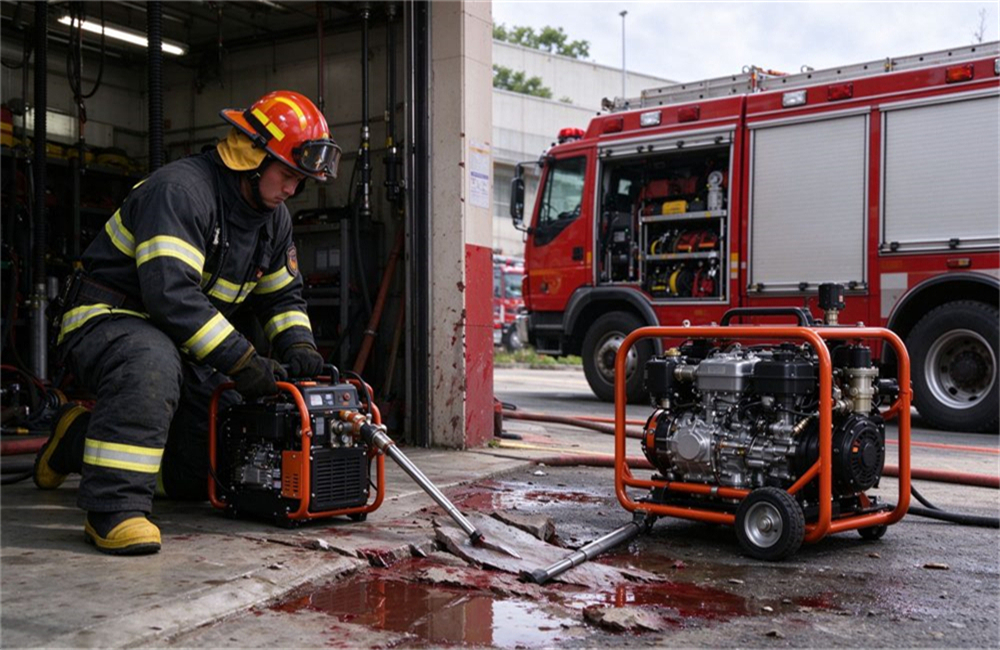
Many grants now favour low-emission equipment. A battery or electric unit strengthens a funding application. Quote the noise and emission line alongside the price.
Maintenance budgets respond differently. Engine fleets carry a constant service line. Battery fleets move the cost to purchase and replacement, which suits budget years with capital funding.
Write the five-year model into the application. Funders read total cost and reliability. A clear comparison page makes the case stronger than a single quote.
Quote on the same mission, not the same model. Ask each supplier for a matched pump, spares, training and a five-year cost line. Compare like with like.
Watch for excluded lines. Fuel, storage, charging racks and training often sit outside the sticker price. Add them before comparing the two families.
Reference checks carry weight. Ask for two teams that run the proposed model for a full season. Performance under real shifts beats any brochure claim.
Storage, insurance and compliance sit outside the quote. Fuel storage adds cabinets, signage and inspection. Battery storage adds charging racks and pack tracking. Both are real budget lines.
Warranty terms differ. Engine warranties hinge on service records. Battery warranties hinge on charge cycles. Read both clauses before tender, because enforcement costs money either way.
Many tender documents now ask for a five-year cost model. Agencies that compare only purchase price often pay more in year three. Procurement teams should write TCO clauses into the specification.
Battery driven hydraulic pumps hold resale value in a growing electric tool market. Engine driven hydraulic pumps face tightening emission rules in some cities, which shortens their useful service life.
Use the five-year TCO table below to compare both options on one page before writing a tender.
|
Comparison Point |
Battery Powered Hydraulic Pump |
Engine Driven Hydraulic Pump |
|
Runtime per shift |
45-90 min per pack; mains option unlimited |
6-10 hours per fuel tank |
|
Working pressure |
63 MPa / 630 bar tool system |
155-195 bar power unit system |
|
Flow rate |
1.5-3.5 L/min at tool |
20-80 L/min system flow |
|
Weight |
12-25 kg complete |
70-245 kg on wheels |
|
Noise level |
55-62 dB |
85-95 dB |
|
Emissions |
Zero exhaust, indoor safe |
CO and fumes, outdoor only |
|
Maintenance cost |
Minimal; battery replacement planned |
Oil, filters, plugs, engine service |
|
Energy cost |
Electricity: very low per job |
Petrol/diesel: high per hour |
|
Cold weather |
Capacity drops below -10°C |
Starts with care; reliable once warm |
|
Charging / refuel |
40-60 min charge; pack swap |
5 min refuel anywhere fuel is sold |
|
Remote long jobs |
Pack rotation needed |
Best choice for long field shifts |
Which pump fits a fire department rescue truck best?
Most brigades pick an engine driven hydraulic pump for the rescue truck and a battery unit for indoor first response. The battery vs engine driven hydraulic pump choice rarely eliminates either family. That is how which pump suits which team gets answered. This covers long extrication jobs and quiet building rescues.
Can battery driven hydraulic pumps be charged while working?
Yes, with a spare pack rotation. Charge one pack while the other runs, then swap in seconds. A charger on the truck keeps the team working through the whole shift.
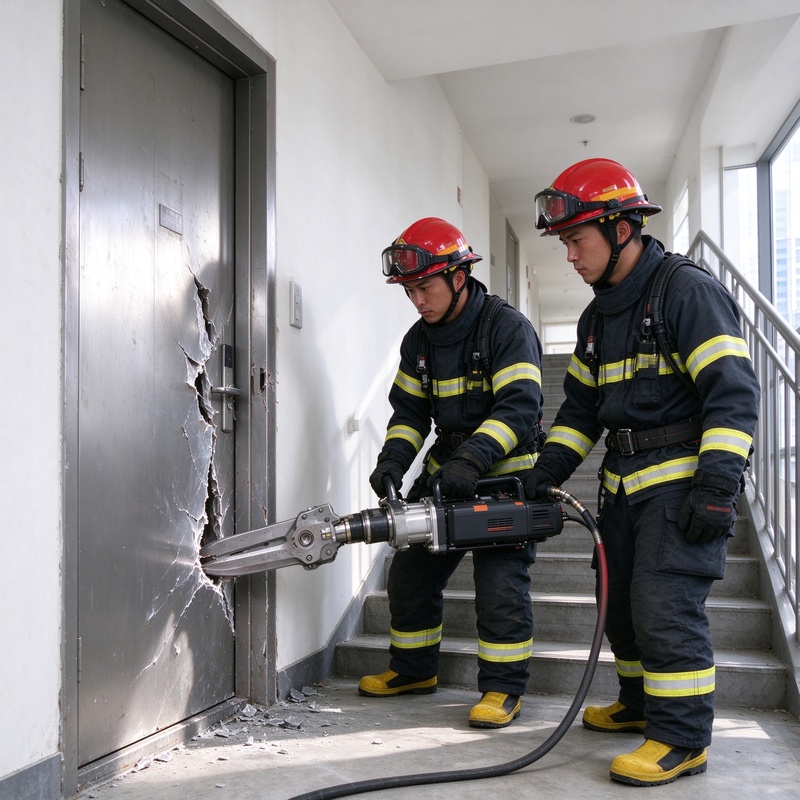
Both pump families are available in OEM and private-label configuration. Teams specify colour, voltage, pack capacity, hose length and tool set. Bulk orders ship with training manuals and spare parts kits.
A rescue pump is a life-safety purchase. Choose the battery vs engine driven hydraulic pump mix by mission, not by price tag. The comparison above gives every team the numbers, the cost model and the decision tree to choose once and choose well.
For project pricing, send the mission profile, crew size and expected shift length. A supplier should reply with a matched pump, spare packs or fuel kit and a five-year cost line. This guide gives every team the language to ask the right questions.
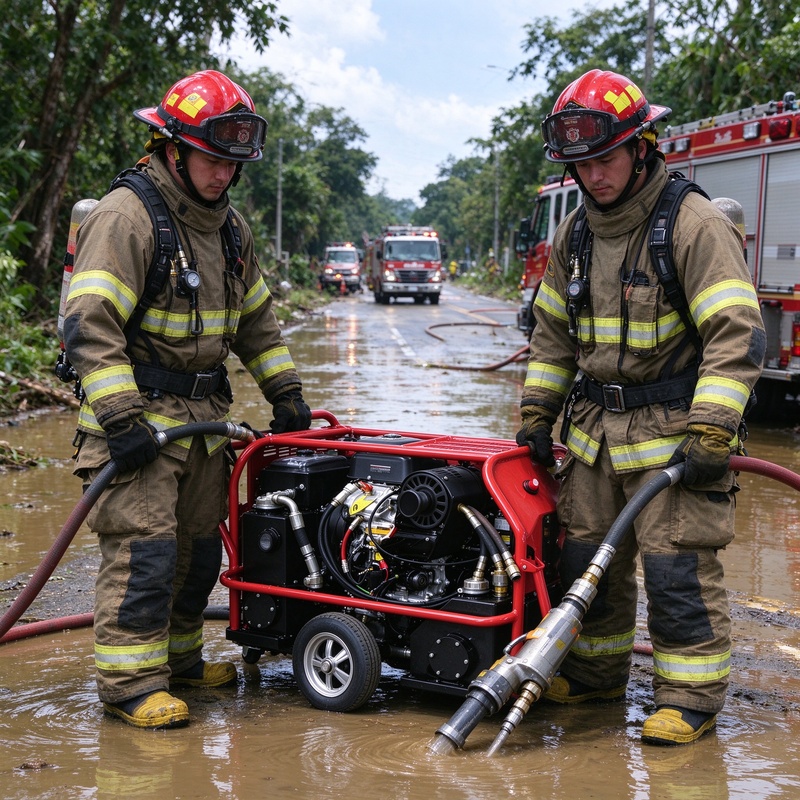
Hydraulic rescue pump comparison guide for fire, rescue and construction teams. This battery vs engine driven hydraulic pump comparison supports fire teams, construction crews and flood response. Contact info@yrftextile.com for project pricing, OEM configuration and spare parts kits.
Przyjazne linki :
prawa autorskie © Custom Disaster - Relief Bedding: Tents, Sleeping Bags, Blankets Wszelkie prawa zastrzeżone
profesjonalny zespół do obsługi !