Hospital and institutional blanket purchasing becomes shallow when it starts with a product name. The difficult decision is operational: who receives the blanket, how it is issued, what happens after use, who approves care compatibility, how stock is identified and what must remain repeatable at replenishment. Product fields only become meaningful after that flow is mapped.

Institutional blanket selection fails when procurement, laundry or care operations, ward users, and receiving teams approve different assumptions without one shared operating brief. Select an institutional blanket by converting the facility's actual issue, care, receiving, and replenishment workflow into measurable purchase fields. A hospital-use label alone does not prove suitability, wash performance, or any medical outcome.
Ask each supplier to quote the same institutional fields: product specification, care requirements, packing, documents, MOQ, and delivery conditions. This makes the offers easier to compare.
Procurement usually asks for comparable price, specification and documents. Operations asks for easy counting, clear identification, workable care and low disruption. Write both briefs separately, then resolve conflicts. For example, bulk packing may lower handling material but create ward-level repacking. Unit packing may simplify issue but increase opening and waste work. The final requirement should state which consequence the facility accepts.
A wool-and-synthetic blend direction and a hospital polar-fleece direction can enter development comparison. Compare surface, construction, care route, identification and packing through an identified sample. Do not import a military blend ratio or claim institutional wash performance. Composition, dimensions, GSM or unit weight and care evidence remain fields to close for the selected specification option.
If one central warehouse receives the whole order, carton-level counting and destination marks may be enough. If cartons move directly to several wards, each pack may need clearer identity and allocation. Map handling steps, people and error points for both routes. Select packing and labels from the lower-risk workflow rather than from a generic idea of hospital packaging.

Use the table as a responsibility map. Separate who defines use and care, who approves the product and packing, who receives it, and who owns replenishment changes.
| Decision field | What closes the decision |
|---|---|
| Central receiving | Carton count, warehouse split, later internal issue |
| Direct-to-department | Pack identity, destination allocation, local counting |
| Care route | On-site/outsourced process and compatibility review |
| Replenishment | Retained specification, labels, packing and differences |
Hospitals, elderly-care facilities, and general duty facilities should not share one 'hospital grade' label. Record users, issue point, collection, actual care route, replenishment, and packing hygiene before selecting a specification. An institutional option should be defined by its confirmed composition, finished dimensions, piece weight or GSM, construction, and care instructions, then evaluated through project sampling and care-process review.
The same institutional blanket can create different operating results. A central hospital store may prioritize carton identity and controlled issue. A ward may need fast visual separation. An elderly-care facility may place more weight on handling, comfort, collection, and replenishment. A general duty institution may favor durable identification and simple stock control. These are not four marketing names for one specification. They are four operating briefs that should determine sample review, label, packing, care information, receiving responsibility, and reorder records.

Define the facility workflow before the product. Record the user group, issue location, expected replacement cycle, collection method, laundry route, storage conditions, and quantity by building or ward. These operating facts determine which specification and packing fields belong in the RFQ.
Convert use needs into comparable fields. Compare suppliers on the same field set: fibre composition, finished dimensions, construction and edge treatment, approved colour, label position, care information, unit or bulk packing, carton quantity, carton marks, and required evidence. Do not compare one offer by a marketing name and another by measurable specifications.
Build the specification from evidence, not the use label. Hospital blanket, healthcare blanket, and institutional blanket describe a procurement context. They do not establish fibre composition, dimensions, GSM, unit weight, hygiene performance, wash durability, packing, or certification. Put every required field in the RFQ and classify the supplier response as documented, sample-checkable, quotation-specific, or still open. This prevents a use label from becoming an unsupported product specification.
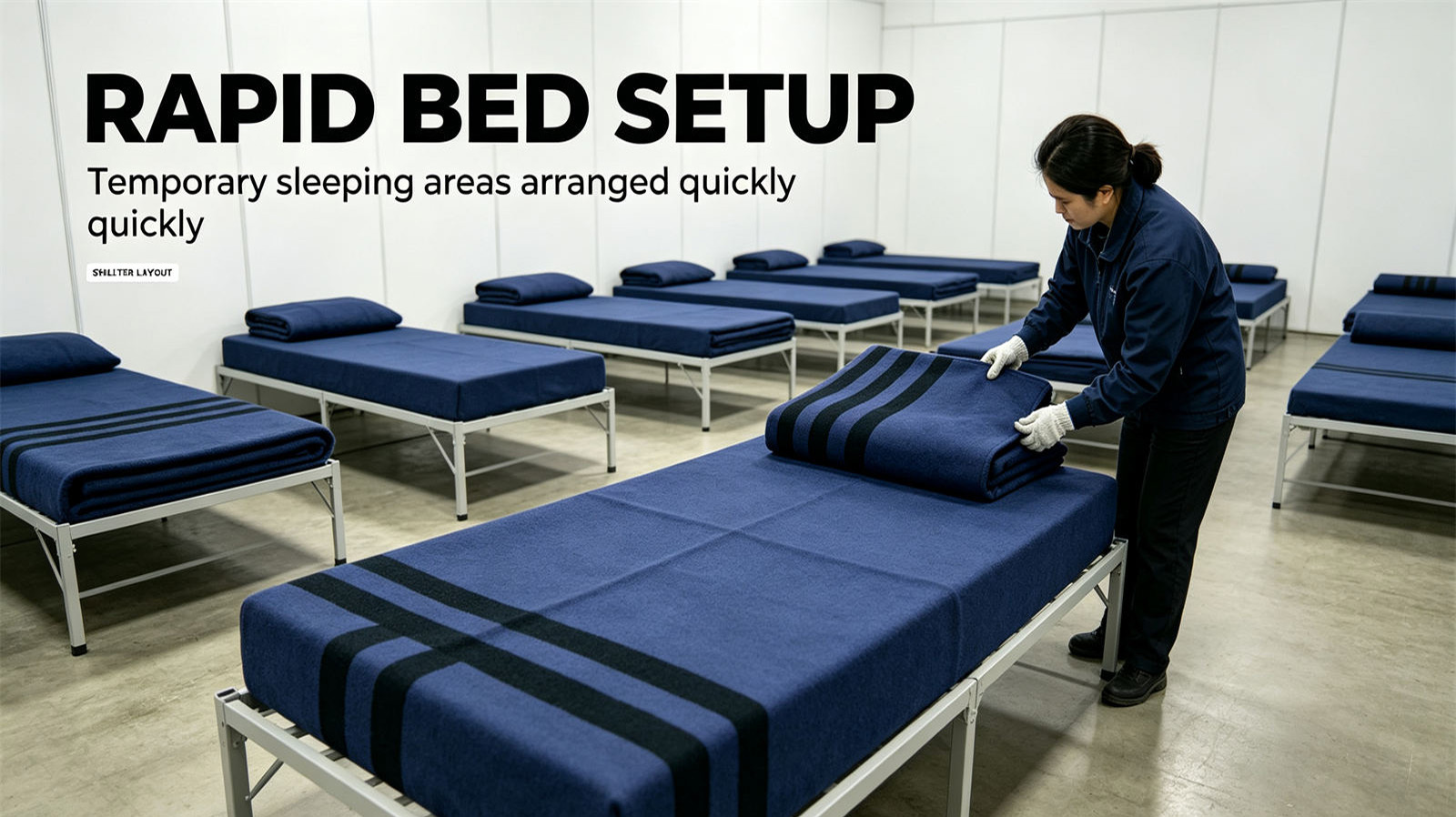
We can coordinate samples, color coding, label position, unit or bulk packing, and destination splits in one approval record, with project-appropriate production, packing, and loading images. Medical-textile, antibacterial, disinfection, or infection-control claims require a matching product, method, report holder, and scope. No current blanket certification should be claimed without that match.
Approve a sample with both procurement and operations. Measure the sample, inspect shade and surface, review edge finishing and labels, and test it only under a documented facility process. Record the method, result, reviewer, and acceptance decision. A visual sample cannot prove composition, repeated-wash durability, or batch consistency by itself.
Design packing for receiving and internal issue. Define pieces per pack and carton, carton identification, destination allocation, batch reference, counting method, and treatment of damaged or mismatched units. Packing should support fast receiving and internal distribution, not only reduce shipping volume.
Mirror the purchase order in the acceptance checklist. Receiving staff should check product identity, approved specification, quantity, dimensions, shade range, labels, packing, and the agreed document list. Vague terms such as hospital grade should be replaced with fields the receiving team can actually verify.
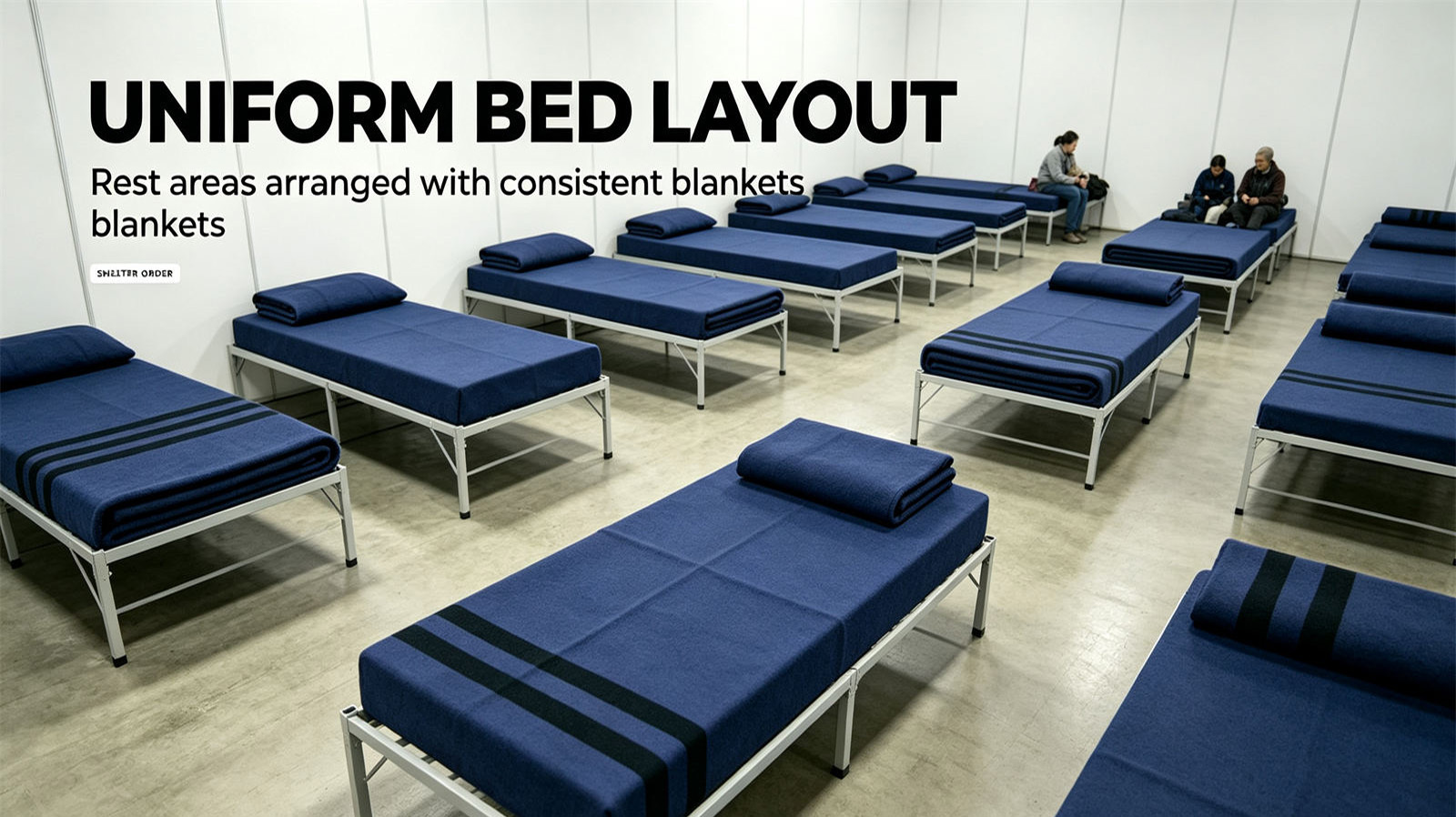
Procurement, operations, and receiving should share approval responsibility. One sample observation cannot prove a fixed wash life. Cycle count and allowed change must come from the project method or a valid applicable report.
Protect replenishment consistency. For repeat orders, compare the new quotation and approval sample with the retained reference. Reconfirm material wording, dimensions, colour, labels, packing, and any changed process. Record approved differences before production.
Compare quotations without losing the operating requirement. Create a difference column beside every required field. Mark each supplier response as confirmed, alternative, pending evidence, or not offered. Review total receiving and operating impact as well as unit price: an undefined label, carton quantity, or care condition can create work after arrival even when the product price appears lower.
Define what should stop approval to start the order. Do not release an order while the product identity, composition wording, dimensions, sample status, packing method, label artwork, or acceptance responsibility is contradictory. Certification and test requirements should also remain open until the exact document scope is agreed. A clear pending field is safer than an unsupported promise.

Translate hygiene objectives into controllable operations. A request for better hygiene should be converted into actions the buyer can control: issue status, clean-versus-used separation, collection containers, laundry handover, storage protection, label readability, and replacement decisions. Do not ask a blanket supplier to promise a hygiene outcome that depends on the facility's full operating system. Ask instead which product, label, and packing fields can support that system and how they will be checked at receiving.
Decide between unit packing and bulk packing by workflow. Unit packing can simplify identification or controlled issue, while bulk packing may reduce handling material and support high-volume internal movement. Neither format is universally better. Compare opening labour, counting accuracy, storage space, repacking needs, destination allocation, waste handling, and protection during transport. The chosen pack should be documented with fold method, pieces per inner or carton, label position, and carton identification after those details are confirmed.
Use a four-layer sample approval record. Layer 1 identifies the exact quoted product. Layer 2 records measurable and visible fields such as dimensions, shade, surface, edge, and labels. Layer 3 records operational checks agreed with the facility, without turning an informal trial into a performance claim. Layer 4 records packing and receiving fields. Sign-off should state what was checked, what remains quotation-specific, and what evidence is still required before production.

Create a quotation difference schedule. Do not accept a quotation that merely repeats the RFQ. Add columns for requested value, offered value, evidence reference, permitted tolerance, alternative, and open point. This makes differences visible before price comparison. A lower unit price may not be comparable when dimensions, packing, labels, inspection scope, or document responsibilities differ. Close commercial and technical differences together before approval to start the order.
Plan replenishment before the first order. Institutional blanket replenishment becomes difficult when the first order leaves no retained reference. Keep the approved specification, sample photographs and measurements, label artwork, packing record, carton marks, inspection result, and authorized differences. For the next order, compare each field instead of asking for the same blanket. The phrase same as before is not a measurable repeat-order instruction.
Build a receiving decision tree. Receiving staff need clear actions for correct goods, minor documented differences, missing documents, damaged cartons, quantity differences, and product mismatches. Define who may accept a difference, what evidence must be photographed or measured, which units are isolated, and when the supplier is notified. This turns acceptance from an opinion into a repeatable process and reduces disputes between procurement, operations, and the supplier.

YRF can coordinate product sampling, color coding, labels, unit or bulk packing, inspection material, certification support, and multi-destination allocation for institutional projects. Its certification and project-supply capabilities can support the procurement file, while any medical, antibacterial, disinfection, or fixed wash-performance statement must still match the applicable product and method. This balance gives the buyer useful supplier support without turning a hospital or facility setting into an unsupported medical claim. It also keeps operations, receiving, and replenishment connected after the first delivery.
Send the facility type, user groups, issue and collection route, actual care process, receiving method, packing choice, and replenishment pattern.
Include quantity by destination, composition, dimensions, construction, colour, labels, packing, care process, acceptance fields, evidence requirements, and delivery window.
Not necessarily. Segment needs by user, distribution point, collection and care route, and storage, while controlling the inventory burden created by too many variants.
The buyer should provide the actual equipment, program, or outsourced-care requirements. The supplier can then state care conditions or arrange sample evaluation without assuming the facility process.
No. Choose unit or bulk packing according to hygiene controls, counting, storage, and internal distribution requirements.
Without a defined applicable standard and evidence, do not state a vague grade as product fact. Use composition, dimensions, construction, care, packing, and acceptance fields.
Retain the approved specification, sample record, label artwork, packing record, and documented differences for comparison.
A blanket should not be described as a medical device or as producing a medical outcome unless valid evidence and the applicable regulatory scope support that claim.
No. Composition is one field. Performance claims require their own defined method and supporting evidence.
Provide the actual process or required method, including equipment and conditions where verified, then request compatibility evidence or a controlled sample evaluation.
Create a physical or approved-sample reference for each color and use consistent codes in the purchase order, labels, packing, and destination allocation.
Continue with the overview, product option, application plan, and closely related procurement guide for this decision.
Prepare the Institutional Blanket Operations Brief
For an institutional project review, provide quantities by facility, user group, care process, packing and label needs, receiving checks, and the required delivery window.
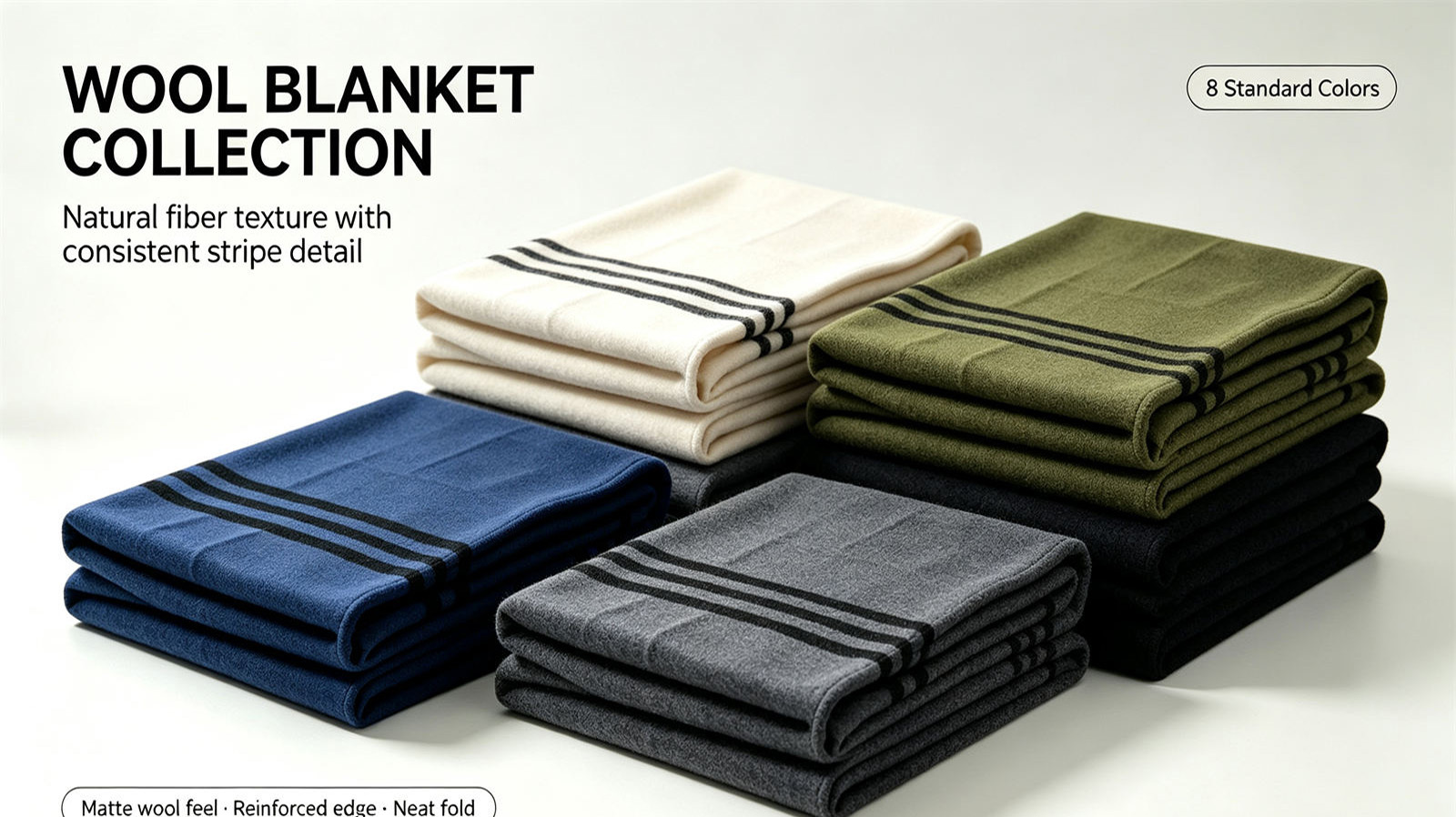
Compare blanket product lines, application routes and related procurement resources.
 |
 |
Institutional Wool Blend Blankets for Hospital, Care and Accommodation ProjectsReview product specifications, configuration options and order confirmation points. |
Hospital Blanket Procurement for Facility OperationsReview selection, packing and supply planning for this procurement scenario. |
✅ Official website: https://x.c1ns.cn/F9rNV
✅ Catalog download link: https://x.c1ns.cn/aVHtI
✅ Factory video link (YouTube): https://x.c1ns.cn/zVNIU
✅ Facebook homepage: https://a.c1ns.cn/SjJla
✅ Email: info@33ljy.com
✅ WhatsApp: +8613702995607
prawa autorskie © Custom Disaster - Relief Bedding: Tents, Sleeping Bags, Blankets Wszelkie prawa zastrzeżone
profesjonalny zespół do obsługi !