Kategorie
Last updated: September 10, 2026 | By Emergency Shelter Team This makes our tent wholesale ideal for international procurement. Our tent export services cover global shipping and custom orders.

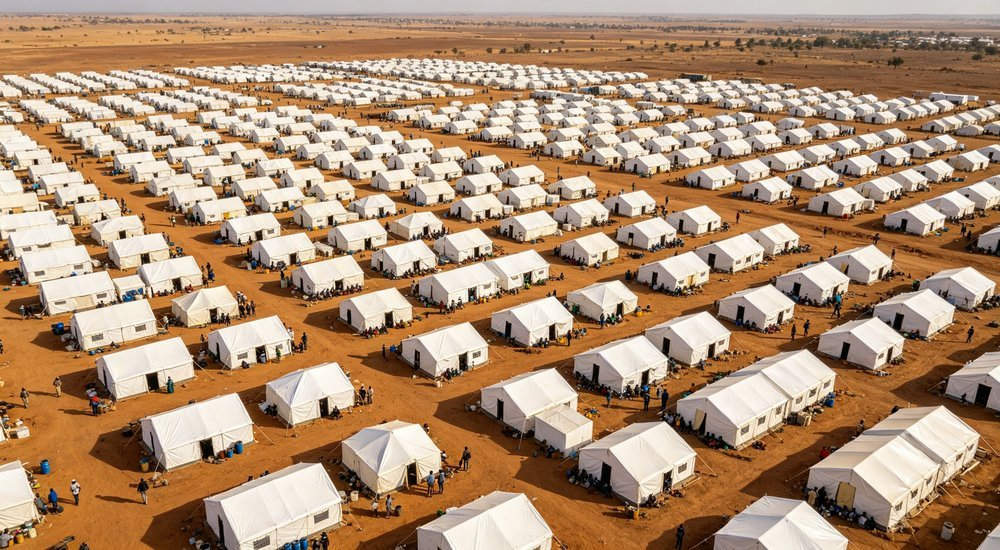
Procuring humanitarian relief tents for NGOs, disaster response agencies, and government emergency stockpiles requires a different approach than commercial camping gear. This guide covers UNHCR/IOM standards, certification requirements, RFQ processes, and logistics planning for large-scale shelter procurement. As a leading emergency shelter supplier and relief tent manufacturer in China, we support NGO tent supplier evaluations with UNHCR tent standard compliance and bulk relief tents capacity.
This comparison table outlines key specifications for humanitarian relief tent. Procurement teams use this data to evaluate disaster relief procurement options, compare pricing structures, and verify compliance with international standards. As an experienced refugee shelter supply, we ensure every parameter meets field deployment requirements for emergency response operations worldwide. This information is particularly valuable for government procurement teams, NGO aid organizations, and international relief agencies evaluating bulk supply contracts.
This comparison table provides essential specifications for procurement evaluation. Buyers use this data to compare configurations, assess material quality, and calculate total project costs. As a professional tent manufacturer with extensive export experience, we ensure all parameters meet international standards and field deployment requirements. This information is particularly valuable for government procurement teams, NGO aid organizations, and international relief agencies evaluating bulk supply contracts.
| 1. Why humanitarian procurement is different | 9. Emergency and scheduled logistics |
| 2. UNHCR/IOM tent standards decoded | 10. Long-term framework cooperation |
| 3. Core technical specifications | 11. Cost structure and budget |
| 4. Certification and compliance | 12. Spare parts and after-sales |
| 5. End-to-end procurement process | 13. Common procurement risks |
| 6. Supplier audit points | 14. Tent needs by disaster type |
| 7. Sample approval and pilot | 15. Procurement checklist template |
| 8. Bulk production and QC | |
|
16. Frequently Asked Questions |
Humanitarian tent procurement operates on three pressures simultaneously: scale (hundreds to thousands of units), auditability (every material and certificate traceable), and urgency (delivery measured in days). Understanding these constraints helps buyers structure RFQs that actually produce field-ready shelters.
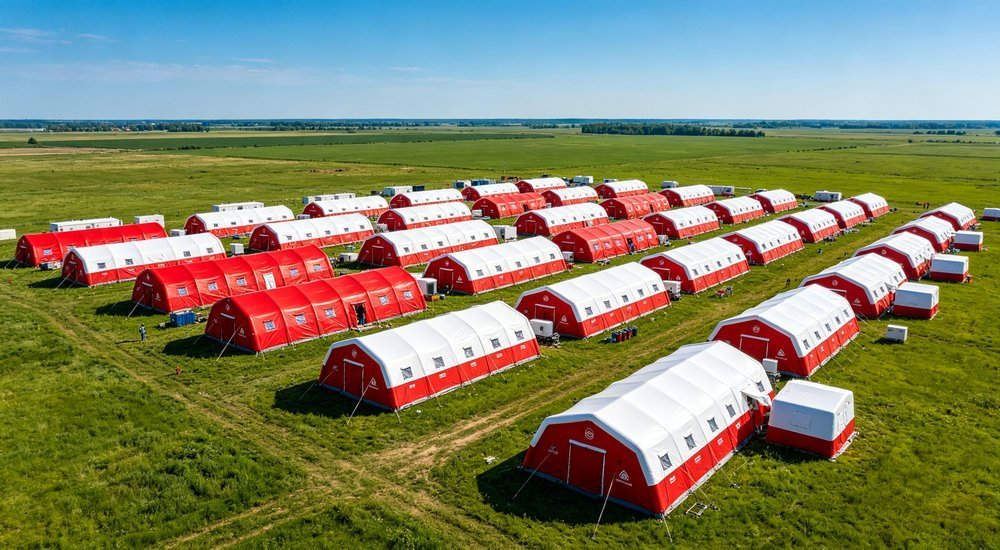
UNHCR family shelter guidance and IOM emergency shelter practice provide the technical framework most NGOs use. These public standards define floor area, waterproofing, wind load, fire retardancy, and service life expectations that responsible manufacturers can engineer against.
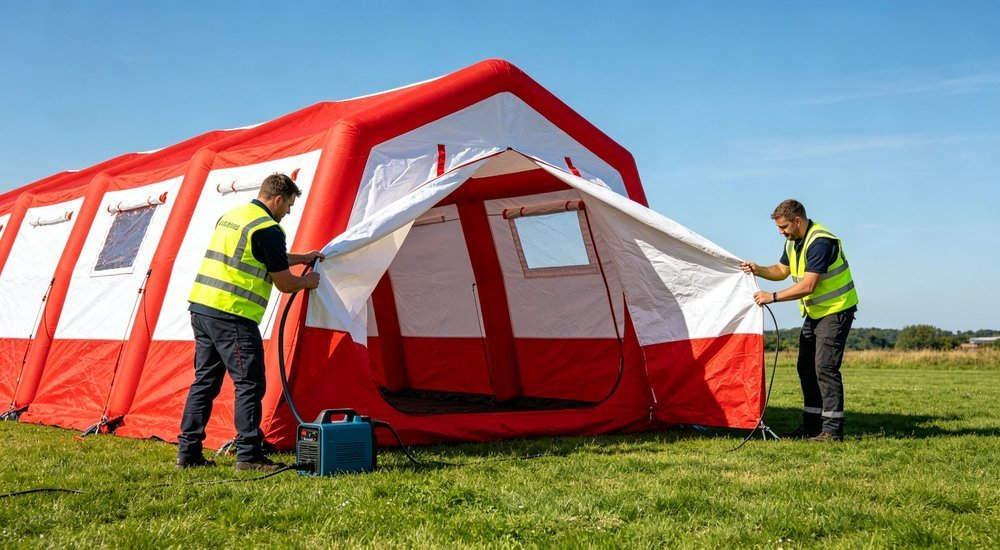
The most common failures in first-time humanitarian orders are price-only selection, under-specified technical briefs, and forgotten freight and duty budgets. The result is containers that look good in photos but cannot clear customs or be assembled in the field.
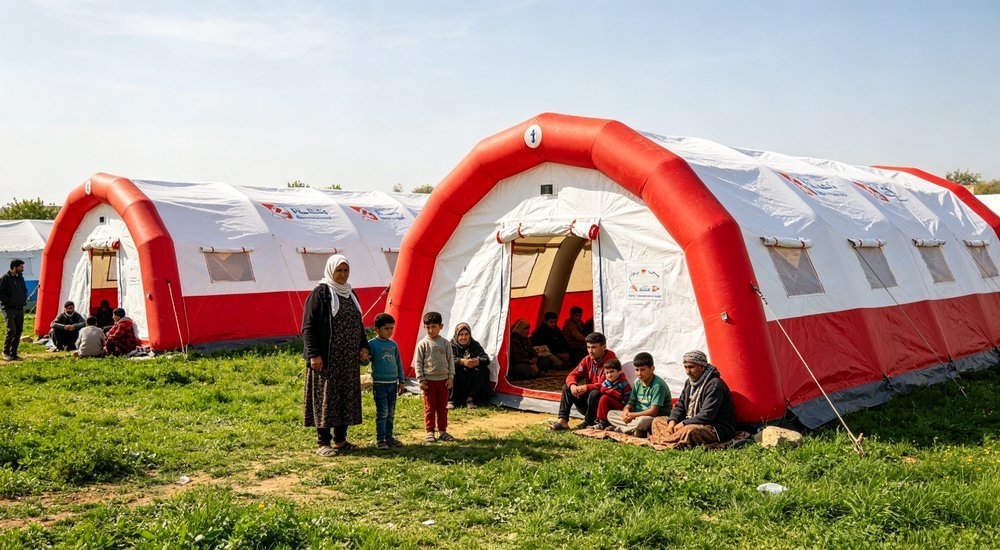
This guide walks through standards, certifications, the end-to-end RFQ process, supplier audit points, sample approval, bulk production QC, logistics, framework agreements, cost structure, spare parts, common risks, disaster-specific needs, and a procurement checklist template. This makes our custom tent ideal for international procurement.
Humanitarian relief tent procurement requires understanding emergency shelter standards, NGO tent supplier capabilities, and disaster response tent logistics. As a relief tent manufacturer, we support family tent procurement for UNHCR tent standard compliance. A consumer tent order ends when the parcel arrives.
A humanitarian order starts when the parcel arrives. Between contract and first night of shelter, the product has to clear customs, pass a field inspection, be erected by untrained staff, and survive weather it may not have been designed for. The procurement process has to anticipate all of this. This makes our bulk tent ideal for international procurement.
Learn more about inflatable vs frame tent differences for humanitarian use.
This humanitarian tent procurement process guide covers emergency shelter purchasing guide essentials for NGO and government buyers. Understanding how to buy relief tents in bulk requires evaluating supplier capacity, quality systems, and delivery reliability across the entire humanitarian tent procurement process. This makes our tent export ideal for international procurement.
This humanitarian tent procurement guide explains how to choose humanitarian tent suppliers for NGO emergency shelter procurement. Understanding how to choose humanitarian tent options helps buyers avoid common mistakes in emergency shelter for refugees and disaster response operations.
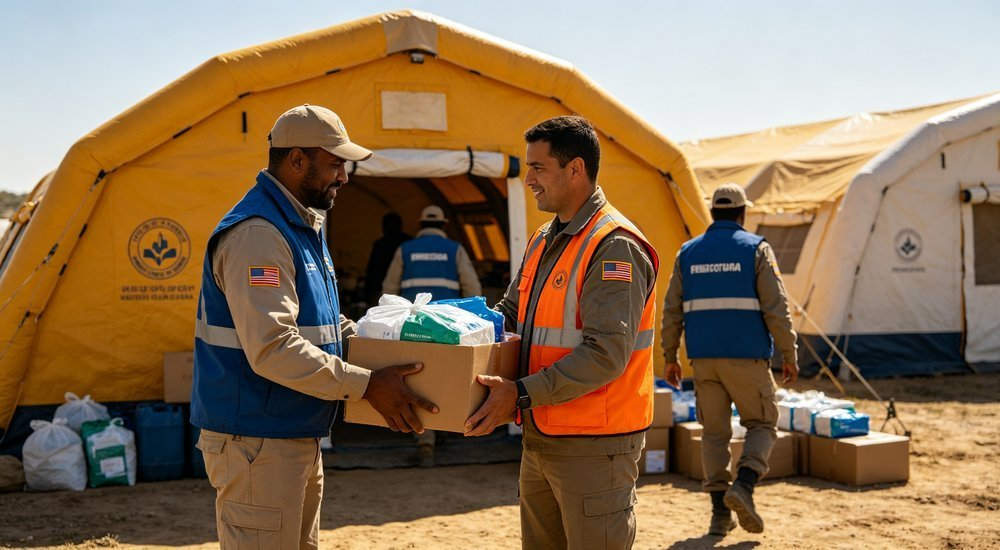
Three pressures define humanitarian relief tent procurement. First, scale: a single emergency may need 500 to 5,000 units, which strains any factory's fabric supply and sewing line. Second, auditability: every material, every certificate and every carton must be traceable to a lot number. Third, urgency: the window between disaster and arrival is measured in days, not weeks. A supplier that treats these orders like retail will miss on at least one.
We see the same three failure modes in first-time humanitarian buyers: they select on price alone, they under-specify the technical brief, and they forget to budget freight and duties. The result is a container that looks good in photos but cannot clear customs or cannot be assembled in the field. This guide is built to prevent those three mistakes. This makes our China tent ideal for international procurement.
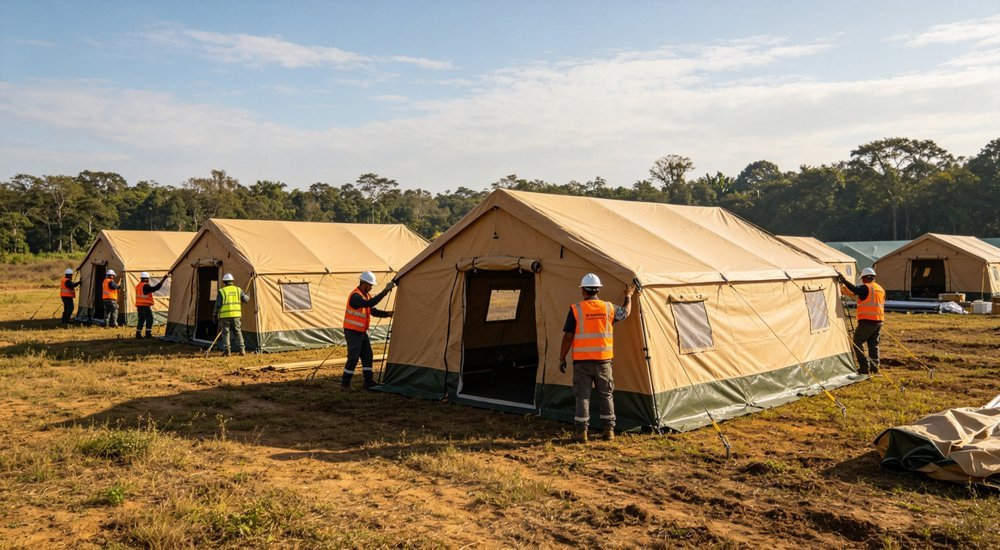
UNHCR tent standard specifications define emergency shelter performance criteria. NGO tent supplier evaluations should verify disaster relief shelter construction, refugee camp tent durability, and emergency tent factory quality systems against these public benchmarks. Public guidance from UNHCR family shelter programs and IOM emergency shelter practice sets the frame most humanitarian buyers use. You do not need to be a UN agency to apply them; any NGO can write the same clauses into its own tender. The table below summarizes what a family tent at the heart of these guidelines usually targets.
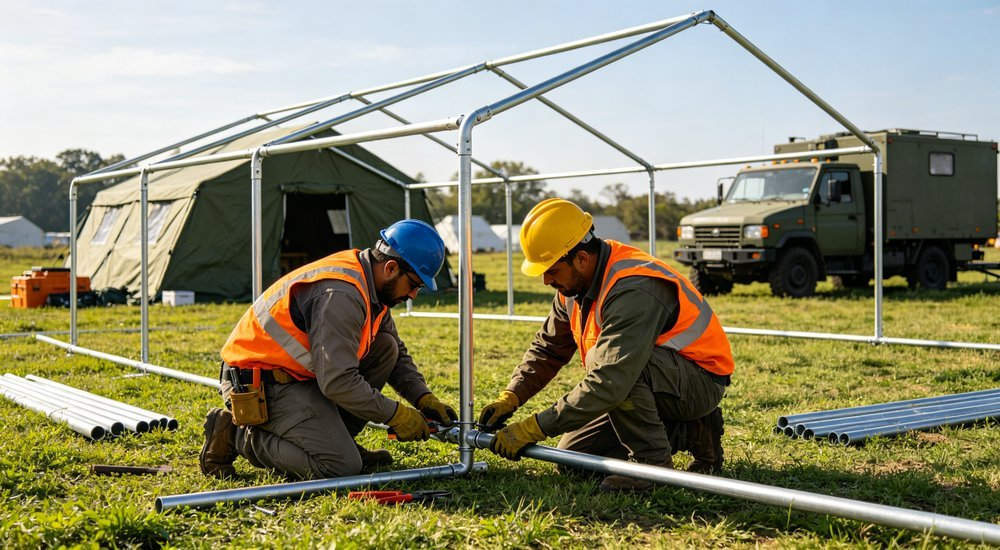
See our tent fabric waterproof guide for material selection details.
Humanitarian tent dimensions and emergency shelter material requirements are defined in UNHCR standard tent specifications. These standards include refugee tent waterproof rating requirements, disaster relief tent wind resistance testing, and humanitarian shelter fire safety standard compliance for all field-deployed units.
UNHCR standard tent specifications define minimum performance criteria for refugee camp tent manufacturer compliance. These UNHCR standard tent specifications cover fabric strength, waterproofing, flame resistance, and structural stability for long-term displaced-person camp use.

The following technical specification table outlines core humanitarian relief tent parameters fully aligned with UNHCR tent standard requirements for field deployment. Understanding these emergency shelter specifications helps NGO tent supplier evaluations ensure reliable field-ready performance, including 600D Oxford fabric durability, tent fabric waterproof ratings, and structural wind resistance for long-term refugee camp tent operations across diverse climate conditions.
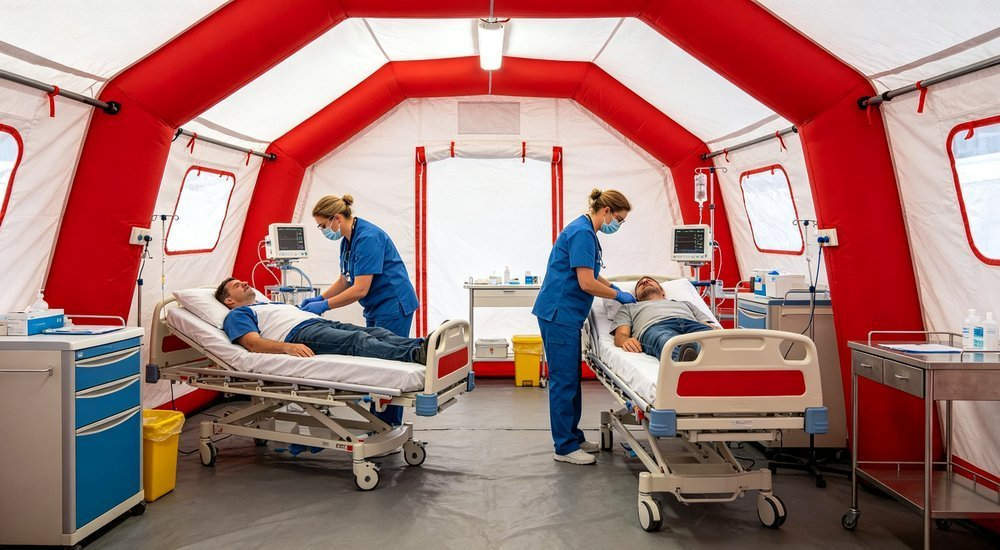
This comparison table provides essential specifications for procurement evaluation. Buyers use this data to compare configurations, assess material quality, and calculate total project costs. As a professional tent manufacturer with extensive export experience, we ensure all parameters meet international standards and field deployment requirements. This information is particularly valuable for government procurement teams, NGO aid organizations, and international relief agencies evaluating bulk supply contracts.
Parameter
Typical family shelter target
What the buyer specifies
Usable floor area
16 m² (around 4×4 m)
Internal dimensions, not external footprint
Occupancy
5-7 people per unit
Assumed bed or cot layout
Outer fabric
Polyester canvas or Oxford, treated
g/m², coating, hydrostatic head
Waterproofing
≥3000 mm hydrostatic head, taped seams
Lab test report
Frame
Steel or aluminum poles, corrosion-resistant
Tube diameter, wall, finish
Wind load
Beaufort 6-7 with stakes and guylines
Anchor configuration
Fire retardancy
CPAI-84 or equivalent
Third-party report
Expected service life
3-5 years in outdoor field use
Replacement fabric policy
Setup
4-6 people, under 60 minutes
Pictorial instructions included
Markings
Agency logo as approved
Vector artwork and PMS color
Always cite the current public edition of the standard you rely on. A printed claim that the tent "meets UNHCR standards" without a referenced clause is not a procurement answer. Frame, fabric and fire treatment should each be mapped to a specific paragraph. For fabric details, read tent fabric waterproof guide; for frame construction, see civil affairs relief frame tent.
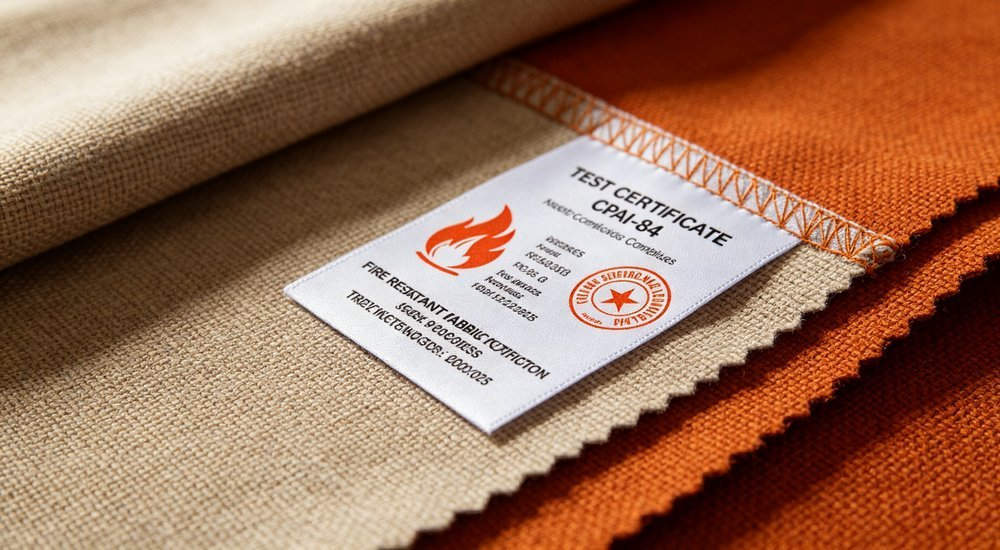
Do not confuse "meets the standard" with "approved by the agency." Meeting a published specification is an engineering statement that any supplier in the business can make. Being listed on a specific agency's vendor roster is a separate contractual process run by that agency, and no supplier should imply the second without showing the listing. Buyers who hear the stronger claim should ask to see the current vendor registration document, not the brochure.
Core technical specifications for humanitarian relief tent procurement include 600D Oxford outer fabric with PU coating, PVC coated polyester for heavy duty applications, flame retardant fabric treatment meeting CPAI-84, and tent seam sealing for waterproof performance. Family tent procurement should verify these specifications against UNHCR tent standard requirements. A usable technical
Compare with medical emergency tent specifications for specialized use cases.
Core humanitarian tent dimensions typically range from 12m² to 30m² usable floor area, with emergency shelter material requirements specifying 600D Oxford outer fabric, PVC coated polyester reinforcement, and flame retardant treatment. Refugee tent waterproof rating should meet minimum 3000mm hydrostatic head for long-term camp use.
Relief tent fabric specifications should be clearly defined in the RFQ, including 600D Oxford fabric weight, PVC coated polyester coating thickness, flame retardant fabric standard, and tent seam sealing method. These relief tent fabric specifications directly impact product lifespan and field performance.

brief separates what the tent must do from what it may look like. Write the brief in measurable numbers: floor area, fabric weight, hydrostatic head, tube diameter and wall thickness, wind rating, temperature range, setup crew and time, packing volume per unit. Avoid adjectives like "strong", "waterproof" or "durable" on their own.
Include environmental conditions: expected rainfall, wind speed, snow load if any, temperature range, UV exposure, and ground type. Without these, every supplier will quote the product they happen to make, not the product you need. A tent specified for a tropical monsoon camp is not the right product for a Central Asian winter camp.
Also specify what is excluded. Does the bid include cots, lighting, heating, floor mats, repair kits, packaging, and markings? A quote that excludes stakes and guylines is not a complete relief tent. The cleanest way to avoid this is to attach a bill of materials to the tender and require suppliers to confirm or propose against every line.
government shelter supplier certifications include ISO 9001 quality management, CPAI-84 flame retardant fabric testing, and CE marking where required. wholesale emergency tents buyers should request current certificates matching the legal entity. Institutional buyers need documents, not slogans. The table below lists the certificates most frequently requested in humanitarian tenders and what each one actually proves.
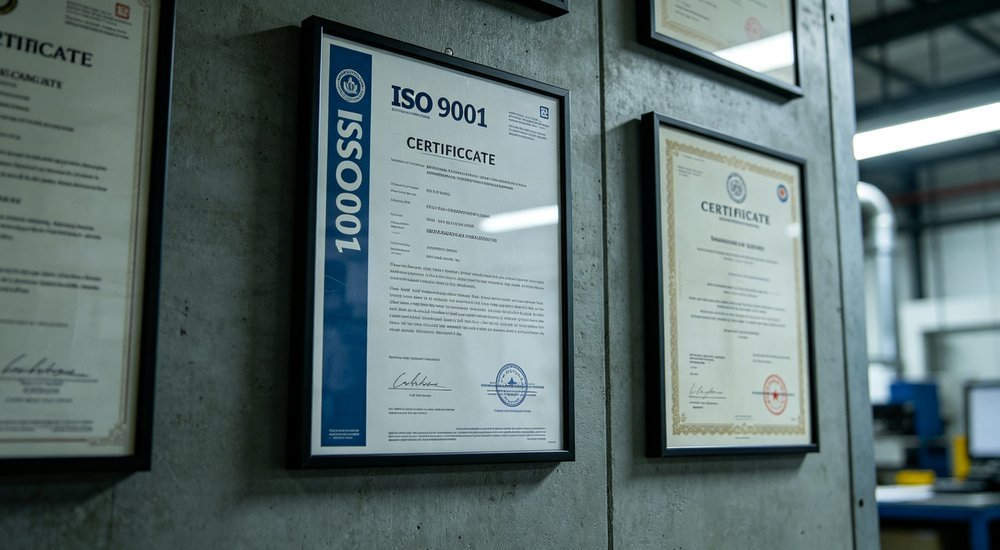
Humanitarian shelter certification requires ISO 9001 quality management, CPAI-84 flame retardant fabric testing, and CE marking where applicable. The relief tent certification process includes third-party laboratory testing and factory audit verification. ISO certified relief tent factory operations maintain documented quality records for every production batch.
Humanitarian shelter certification requirements vary by destination country and funding agency. Common certifications include ISO 9001 quality management, CPAI-84 flame retardant fabric compliance, CE marking for EU markets, and fabric test reports for tent fabric waterproof performance. Buyers should verify that all humanitarian shelter certification documents are current and issued by accredited third-party laboratories.
This certification table summarizes key humanitarian shelter compliance documents required for emergency shelter procurement by international funding agencies. Each certification demonstrates relief tent manufacturer quality systems accountability, from ISO 9001 process control to flame retardant fabric testing standards, ensuring government shelter supplier transparency and auditability for NGO emergency shelter logistics procurement teams.
This comparison table provides essential specifications for procurement evaluation. Buyers use this data to compare configurations, assess material quality, and calculate total project costs. As a professional tent manufacturer with extensive export experience, we ensure all parameters meet international standards and field deployment requirements. This information is particularly valuable for government procurement teams, NGO aid organizations, and international relief agencies evaluating bulk supply contracts.
Understanding refugee shelter supply requires careful analysis of the parameters below. This table helps procurement officers compare tent manufacturer solutions, identify cost-saving opportunities, and select configurations that match their operational needs. We manufacture OEM relief tent with strict quality control at every production stage. This information is particularly valuable for government procurement teams, NGO aid organizations, and international relief agencies evaluating bulk supply contracts.
|
Document |
What it proves |
Watch-out |
|
ISO 9001 |
Factory has a controlled quality system |
Check certificate scope covers tent manufacturing |
|
CE marking |
Product meets EU health/safety requirements where applicable |
Not every tent type requires CE; check destination |
|
CPAI-84 / NFPA 701 |
Fabric flame retardancy |
Must match the actual fabric lot, not generic |
|
Hydrostatic head report |
Waterproof performance of fabric and seams |
Ask for seams, not just panel, test |
|
FSC certificate |
Timber components from certified forests |
Only relevant if poles or crates contain wood |
|
Social audit (SMETA / equivalent) |
Labor and workplace conditions |
Large NGOs often require this before award |
|
Certificate of origin |
Country of manufacture |
Required for customs and duty calculation |
A supplier that cannot produce current, scanned certificates in the legal entity name you contracted with is a procurement risk, regardless of price. For military or camouflage variants, additional paint and UV specifications may apply; see military camouflage relief tent.

The end-to-end bulk relief tents procurement process covers RFQ issuance, technical evaluation, sample approval, production monitoring, and emergency shelter logistics coordination. OEM humanitarian tent customization allows agency-specific markings and colors. A standard humanitarian bulk order runs through eight stages. Skipping a stage saves a week now and costs a month later. The table below maps each stage to a typical duration and the decision that happens inside it.
The end-to-end humanitarian tent procurement process covers needs assessment, RFQ issuance, supplier evaluation, sample approval, production monitoring, pre-shipment inspection, and logistics coordination. NGO tent procurement checklist should include technical specifications, certification requirements, MOQ terms, delivery timeline, and after-sales support commitments.
MOQ requirements for humanitarian relief tent orders typically start at 100 units for standard models, with OEM customization available from 500 units. Lead time for sample approval is 7-10 days, bulk production 25-35 days, and sea freight 25-40 days depending on destination port.
The procurement process table maps each structured stage of humanitarian relief tent acquisition from initial needs assessment through final delivery and acceptance. Following this emergency shelter procurement workflow helps bulk relief tents buyers manage production timelines, OEM humanitarian tent customization milestones, and quality control checkpoints across the entire supply chain for disaster response tent deployments.
This comparison table provides essential specifications for procurement evaluation. Buyers use this data to compare configurations, assess material quality, and calculate total project costs. As a professional tent manufacturer with extensive export experience, we ensure all parameters meet international standards and field deployment requirements. This information is particularly valuable for government procurement teams, NGO aid organizations, and international relief agencies evaluating bulk supply contracts.
This specification table provides a comprehensive overview of tent manufacturer. Organizations use this data to benchmark OEM relief tent suppliers, evaluate material quality, and plan logistics for large-scale deployments. As a direct bulk humanitarian tent, we offer transparent pricing and flexible customization for every order size. This information is particularly valuable for government procurement teams, NGO aid organizations, and international relief agencies evaluating bulk supply contracts.
|
Stage |
Typical duration |
Decision / deliverable |
|
1. Needs assessment |
1-2 weeks |
Headcount, climate, duration, budget envelope |
|
2. Tender / RFQ release |
1 week |
Technical brief and BOM attached |
|
3. Shortlist and sample order |
2-3 weeks |
Three suppliers; each sends a sample |
|
4. Sample approval |
1-2 weeks |
Golden sample signed off |
|
5. Factory audit |
1-2 weeks (parallel) |
On-site or remote audit report |
|
6. Bulk production |
20-45 days |
Production starts after deposit |
|
7. Pre-shipment inspection |
3-5 days |
Third-party inspection passes |
|
8. Delivery and customs |
Air 3-7 days / sea 20-35 days |
Document pack for broker |
For urgent response, stages 3-5 can be compressed: pre-approved framework suppliers skip re-audit, and a standing sample removes the sample lead time. This is the practical reason framework agreements matter, covered in stage 9. For medical or clinical deployments, the process also adds infection-control requirements; see medical emergency tent.
An audit does not have to be a long visit. It has to answer five questions. First, is the company you are contracting the same company that actually sews the tents? Trading companies that subcontract on the spot are a common surprise. Second, can they show the fabric rolls, the sewing floor and the packing line in one continuous walk-through?
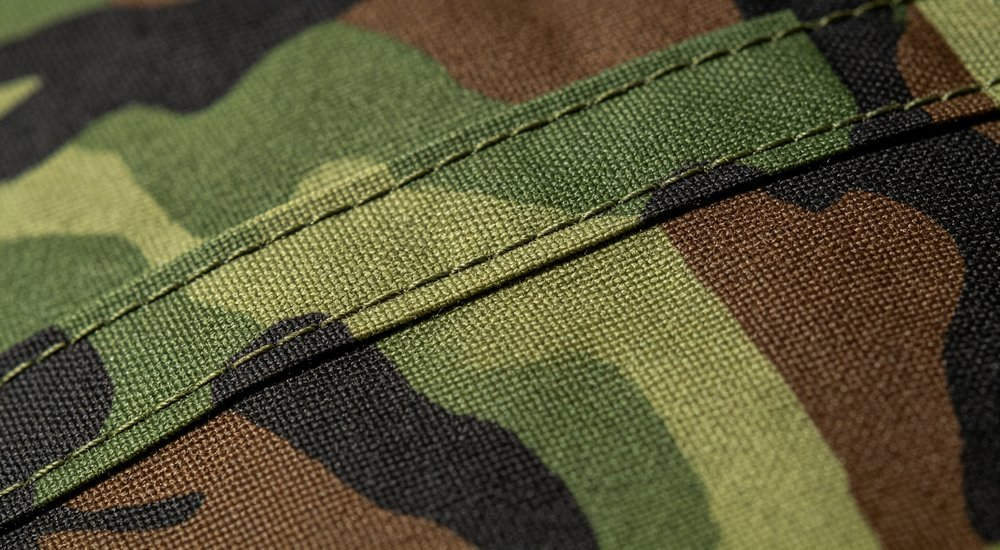
Case Study: A European NGO procured 2,000 units of humanitarian relief tents for refugee camp operations. Our factory completed production in 28 days with 100% UNHCR standard compliance, delivered via sea freight with zero quality issues. The client has since placed three repeat orders totaling 8,500 units.
Supplier audit for China humanitarian tent manufacturer evaluation should verify production capacity, fabric testing equipment, sewing line quality, and final inspection protocols. A reliable emergency shelter supplier maintains transparent quality records and allows buyer or third-party inspections at any production stage. UNHCR tent quality inspection procedures are available upon request.
When evaluating a relief tent manufacturer for humanitarian orders, the supplier audit should verify emergency tent quality control procedures, fabric testing equipment, sewing line capacity, and final inspection protocols. A credible disaster relief tent supplier China operation maintains documented quality records for every production batch, including 600D Oxford fabric test results, PVC coated polyester thickness measurements, flame retardant fabric compliance certificates, and tent seam sealing pull tests.

Quality assurance at every production stage ensures consistent humanitarian relief tent performance, with documented inspection records available for buyer review.
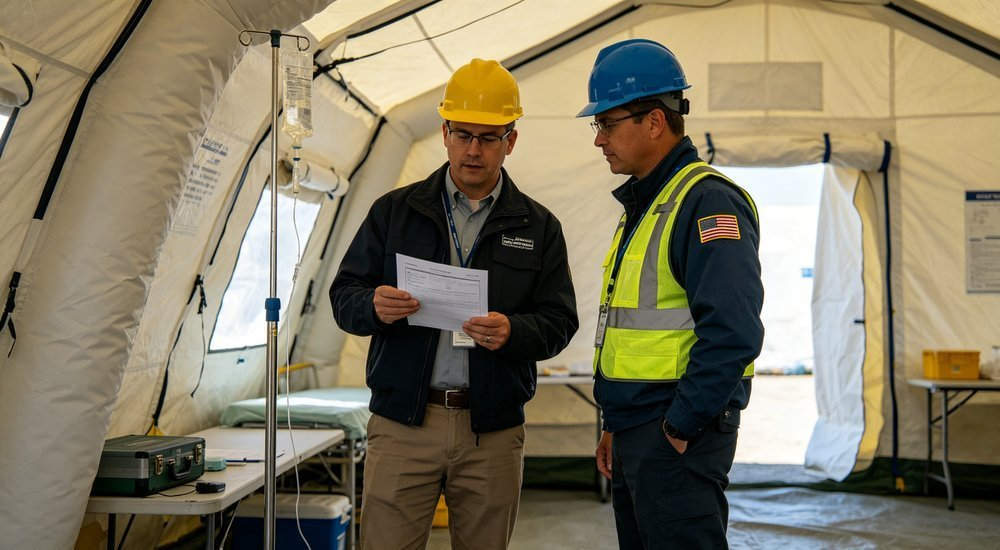
Supplier audit points for humanitarian aid tent factory evaluation include production capacity verification, fabric incoming inspection, sewing quality sampling, and final random assembly testing. A thorough humanitarian shelter certification review confirms ISO 9001, CPAI-84, and CE compliance before bulk production begins.
Third, what is their quality record: rejection rate, customer complaints, repeat-order history? Fourth, what is their spare-parts policy over the contract life? Fifth, can they scale to your volume within 45 days? A factory that makes 5,000 tents a year is not ready for a 3,000-unit emergency order without warning.
Remote audits work for first screening: video walk-through, certificate scan, reference check, and a sample order. Physical audits are worth booking once a supplier reaches shortlist for a multi-year framework. For fabric and material traceability specifically, the fabric guide lists what to check on incoming rolls.
Audit notes should be written, not oral. A one-page memo that records what was seen, what was missing, and what was promised in writing prevents the situation where two people leave the same factory visit with two different conclusions. For framework suppliers, repeat the audit every 18-24 months; factories change lines, subcontractors and raw-material sources faster than buyers assume.
Sample approval for OEM humanitarian tent orders requires a fully erected golden sample with exact fabric, frame, color, door, window, and agency markings. The signed sample becomes the quality benchmark for bulk production comparison. NGO tent supplier evaluations should include sample testing of 600D Oxford fabric waterproofing and tent seam sealing integrity. Never approve a supplier from a photo or a catalog. Order one fully built sample in the exact configuration you intend to buy: same fabric, same frame, same color, same door, same window, same markings. Assemble it with your own team. Time the setup. Check that the instructions make sense to someone who has never seen the tent before.
Photograph the sample from every side, inside and out. Sign the corner. This signed sample becomes the golden sample. Mass production is compared against it, not against a memory. Color drift, fabric weight drift, and missing details are the three things a golden sample stops silently.
For 500 units or more, we recommend a pilot run of 10-20 units before full bulk production. The pilot catches sewing pattern errors, carton labeling mistakes, and assembly instructions that looked fine on paper. The cost of a pilot is small compared with the cost of 1,000 identical wrong tents.
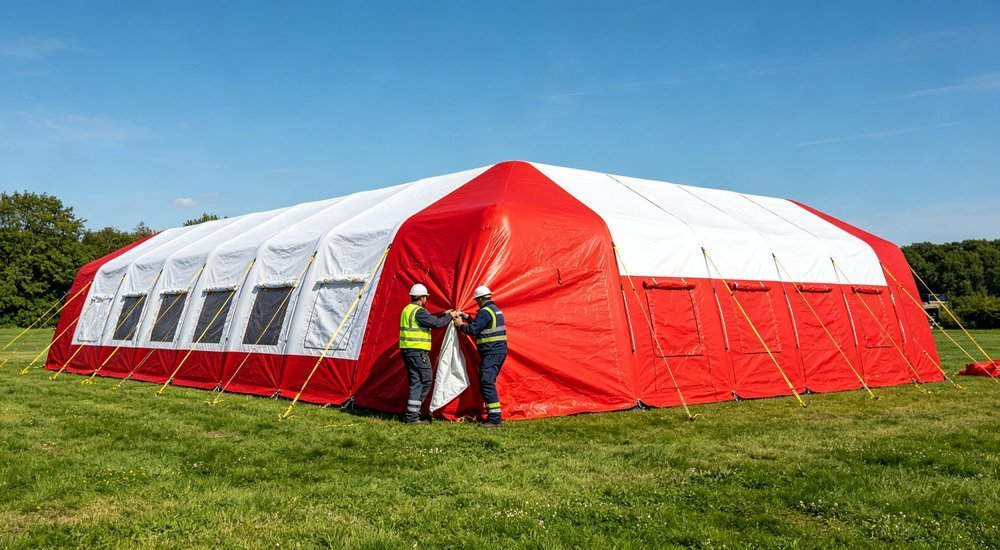
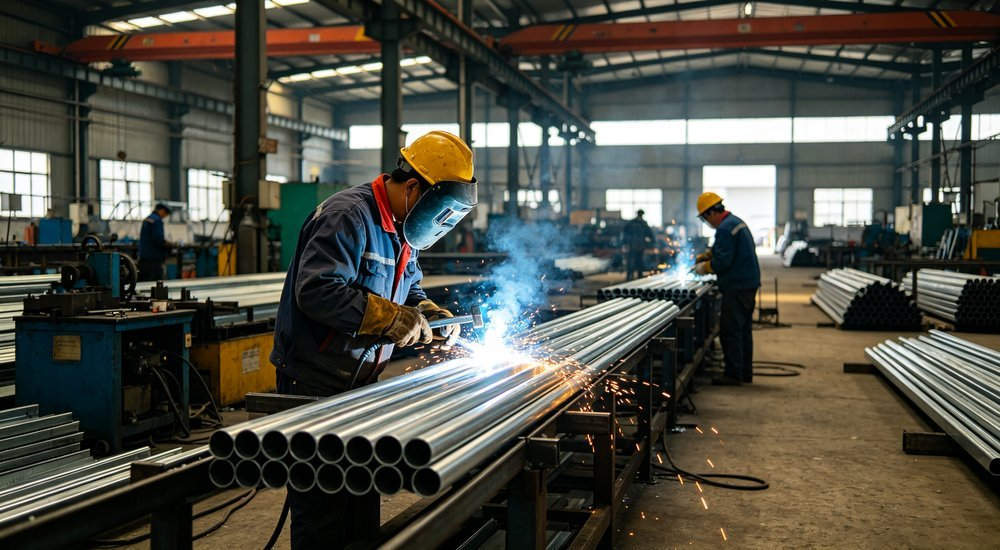
Bulk production QC for wholesale emergency tents should include incoming fabric inspection, cutting verification, sewing quality checks, tent seam sealing verification, flame retardant fabric testing, and final random assembly tests. Relief tent manufacturer quality systems should document every inspection stage with lot traceability. Once production starts, the buyer should not disappear. A pre-shipment inspection (PSI) by an independent third party is standard for orders above 100 units. The inspector counts cartons, opens random units, checks fabric weight and color, verifies seam taping, and photographs packing.

Inside the factory, our own QC sequence mirrors what an external inspector expects: incoming fabric roll check (weight, coating, color), frame weld and pull test, random full-size erection per batch, and final carton-by-carton count. We share the inspection photos with the buyer before container loading. This is not a courtesy; it is how disputes about substitution are prevented.
For repeat framework orders, the QC list can be trimmed after the first three successful deliveries, but the random erection and carton count should never be dropped. The most common production failure is not a sewing error but a substitution: a 420D roll sent in place of a 600D order. Weight check catches it on day one.
Emergency shelter logistics requires balancing air freight urgency with sea freight cost efficiency. Disaster response tent shipments need proper packing lists, certificates of origin, and customs documentation for humanitarian import clearance. Logistics decides whether the tents arrive in time. The table below compares the realistic options for a relief consignment.
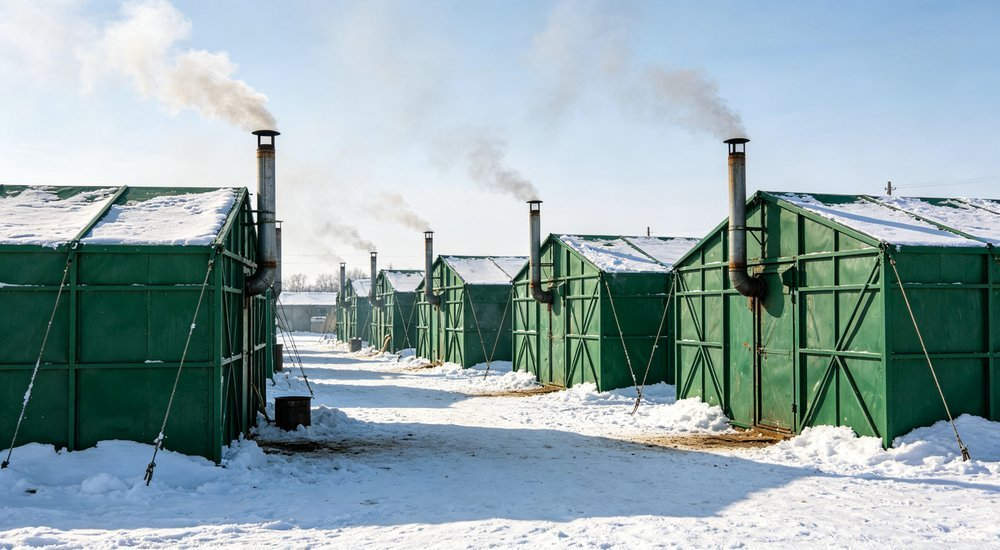
Read our What Is a Medical Emergency Inflatable Tent? Specs, Price & Selection Guide for shipping optimization.
Emergency shelter delivery time depends on order quantity, customization level, and destination port. Standard humanitarian tent shipping options include express air freight for urgent small orders, sea freight LCL for medium volumes, and FCL container shipping for bulk procurement. Relief tent logistics management requires proper packing, documentation, and customs clearance coordination.
This logistics comparison table analyzes multiple emergency shelter delivery options for humanitarian relief tent shipments to global disaster zones. Selecting the appropriate freight mode balances cost efficiency, delivery speed, and cargo reliability for disaster response tent deployments, with emergency shelter logistics planning critical for meeting NGO and government shelter supplier delivery commitments under urgent field conditions.
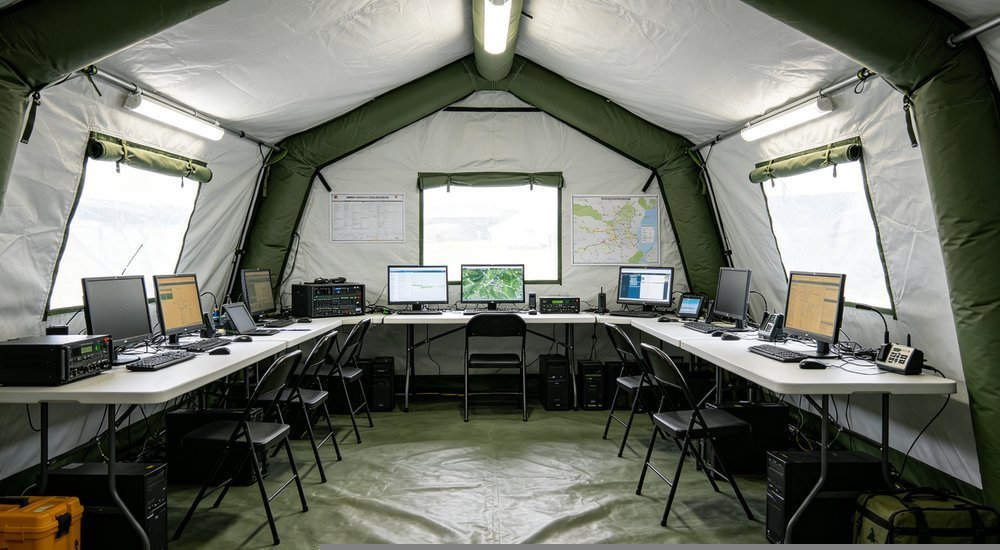
This comparison table provides essential specifications for procurement evaluation. Buyers use this data to compare configurations, assess material quality, and calculate total project costs. As a professional tent manufacturer with extensive export experience, we ensure all parameters meet international standards and field deployment requirements. This information is particularly valuable for government procurement teams, NGO aid organizations, and international relief agencies evaluating bulk supply contracts.
The data below summarizes essential metrics for OEM relief tent. Procurement teams rely on this information to compare bulk humanitarian tent performance, assess durability ratings, and calculate total project budgets. Our factory produces China tent factory with consistent quality and reliable delivery timelines for international clients. This information is particularly valuable for government procurement teams, NGO aid organizations, and international relief agencies evaluating bulk supply contracts.
|
Mode |
Door-to-door time |
Cost per unit (indicative) |
Best for |
|
Express air freight |
3-7 days |
Highest (4-8x sea) |
Urgent first batch, under 200 units |
|
Commercial air freight |
5-10 days |
High |
200-1,000 unit urgent consignments |
|
Sea LCL (less than container) |
25-40 days |
Medium |
Small replenishment orders |
|
Sea FCL (full container) |
20-35 days |
Lowest per unit |
1,000+ unit planned orders |
|
Road / rail (regional) |
7-20 days |
Medium |
Cross-border within region |
A common pattern is split shipment: 100 units by air to start the response, the balance by sea. We can split cartons and labels accordingly. Always confirm whether destination requires fumigation, phytosanitary certificates, or consignee tax ID. Missing one paper delays a container as much as a missing carton. For frame tents, packed tube bundles also affect container loading density; see frame tent packing and shipping.
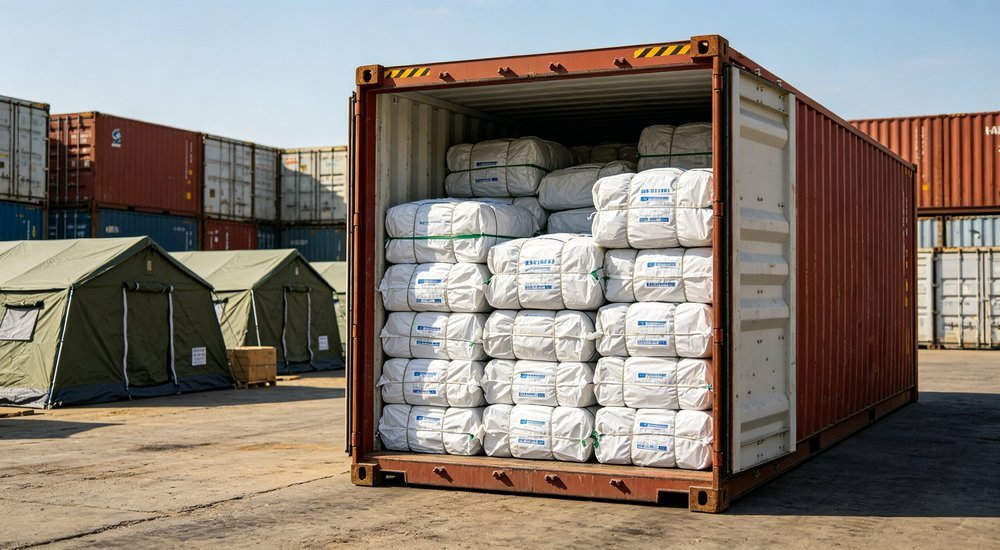
Long-term framework agreements with government shelter supplier partners should include fixed pricing tiers, guaranteed spare parts availability, annual quality audits, and capacity reservations for surge demand. Emergency tent factory partnerships reduce procurement lead times for repeated disaster response tent orders. Buyers that respond to emergencies every year save the most time by signing a framework agreement rather than a one-off PO. A framework locks prices, specifications and lead times for 12-24 months. It also reserves production capacity so a disaster response does not have to queue behind a commercial order.
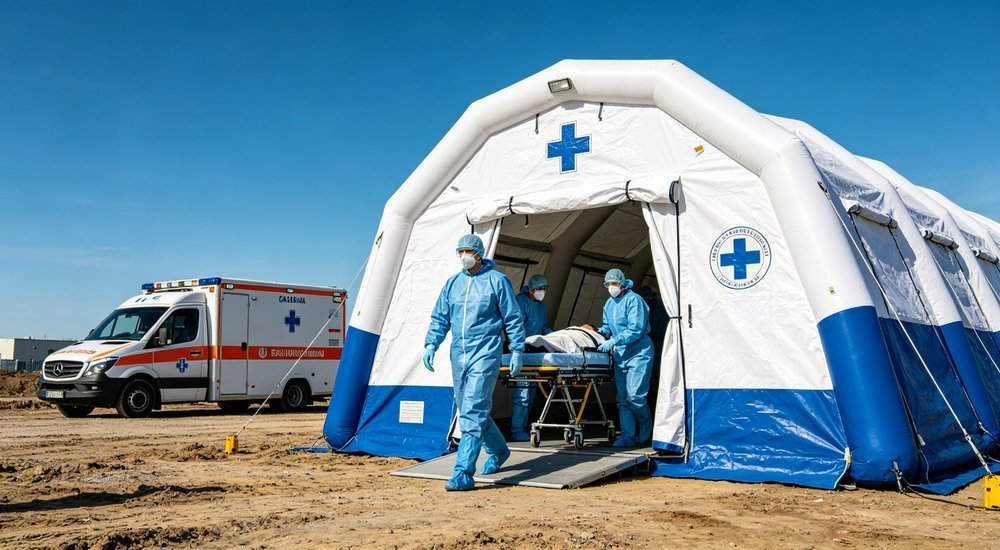
Three elements make a framework useful. First, a standing golden sample so re-orders do not re-approve product. Second, a spare-parts price list locked for the contract period. Third, a small pre-positioned emergency stock held either by the supplier or by the buyer's regional warehouse, so the first 100-300 units ship in 48 hours after a disaster. The third element is what converts a good supplier relationship into a fast response: the product already exists, is already approved, and is already packed to the carton list your team recognizes.
Frameworks are not a price trap. Re-confirm pricing annually against raw-material (steel, fabric) movements. A fixed price that is below market for two years will quietly drive substitution on the third year. Build an escalation clause tied to published indices, not to silence.
Government shelter supplier pricing should include tent ex-work, packaging, marking, inland transport, international freight, insurance, customs duties, on-site distribution, spare parts, and contingency. Budget for landed cost, not just factory price. The ex-works price is the starting line, not the finish line. The landed cost of a relief tent typically includes the components below. Budgeting on ex-works alone is the single most common budget failure in small NGO programs.
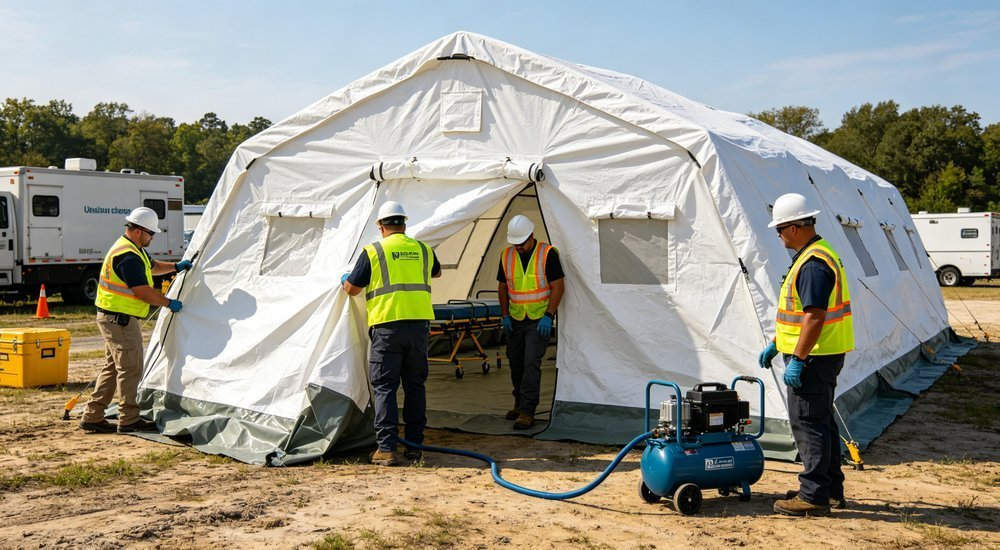
Humanitarian tent price per unit varies by size, fabric specification, frame type, and order quantity. Emergency shelter cost comparison should include factory price, packaging, marking, inland transport, international freight, insurance, customs duties, and on-site distribution. Relief tent bulk pricing offers volume discounts for orders exceeding 500 units, with humanitarian shelter budget planning recommending 10-15% contingency reserve.
An emergency shelter cost breakdown helps buyers budget beyond factory price. The emergency shelter cost breakdown includes tent ex-work, packaging, marking, inland transport, international freight, insurance, customs duties, on-site distribution, spare parts, and contingency reserves for humanitarian operations.
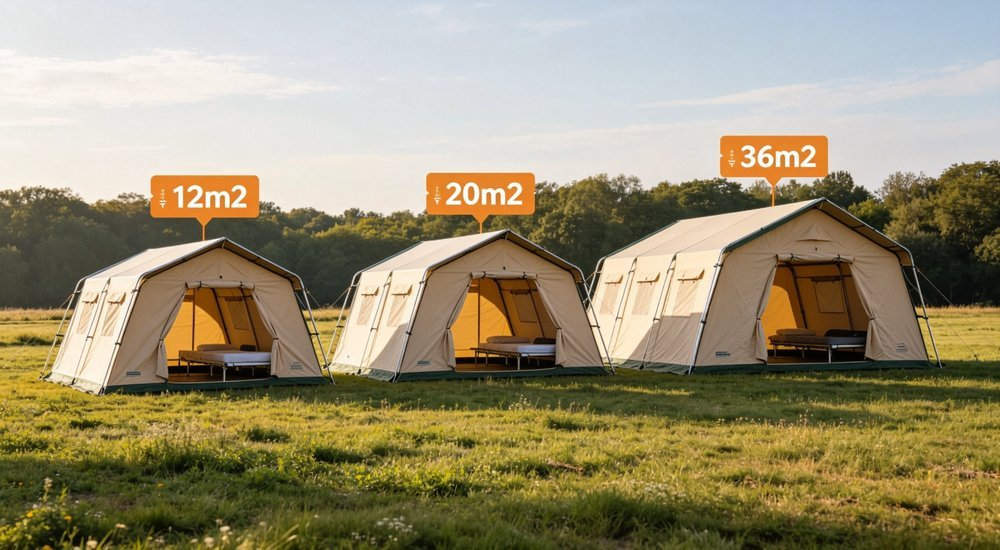
The cost breakdown table details all components of humanitarian relief tent landed pricing for accurate emergency shelter budgeting. Understanding wholesale emergency tents cost structures helps government shelter supplier negotiations, including OEM humanitarian tent customization, freight, insurance, and contingency reserves for disaster relief shelter operations.
The comprehensive cost breakdown table details all components of humanitarian relief tent landed pricing for accurate emergency shelter budget planning. Understanding wholesale emergency tents cost structures helps government shelter supplier negotiations, including OEM humanitarian tent customization charges, international freight, insurance premiums, and contingency reserves for disaster relief shelter operations across different procurement scenarios.
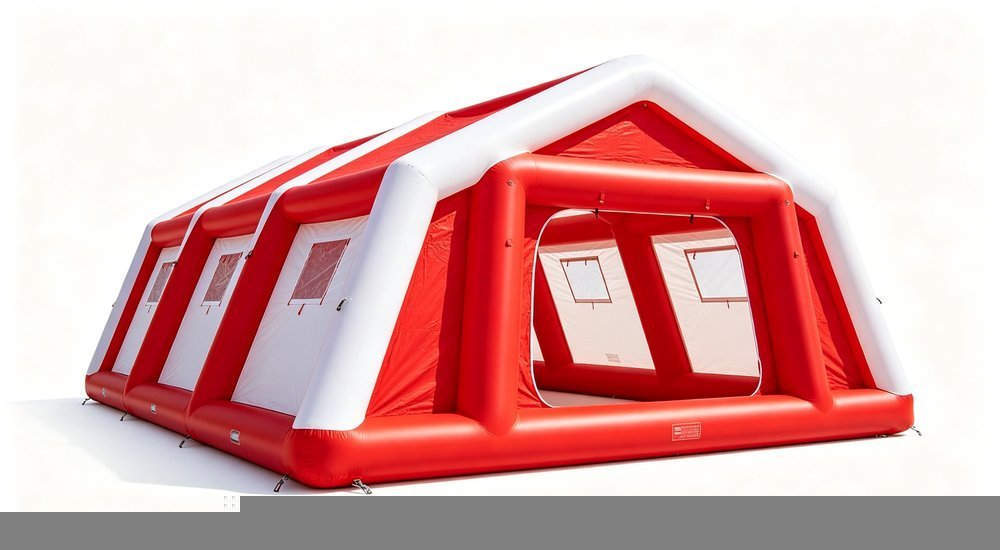
This comparison table provides essential specifications for procurement evaluation. Buyers use this data to compare configurations, assess material quality, and calculate total project costs. As a professional tent manufacturer with extensive export experience, we ensure all parameters meet international standards and field deployment requirements. This information is particularly valuable for government procurement teams, NGO aid organizations, and international relief agencies evaluating bulk supply contracts.
This comparison helps buyers understand the differences between bulk humanitarian tent configurations. The table covers key specifications that determine China tent factory suitability for different emergency scenarios. As a professional aid organization supplier, we provide detailed documentation and sample validation for every product line we manufacture. This information is particularly valuable for government procurement teams, NGO aid organizations, and international relief agencies evaluating bulk supply contracts.
Cost component
Share of landed cost (typical)
Notes
Tent ex-work (fabric + frame)
50-65%
Depends on size and fabric grade
Packaging, markings, packing list
2-5%
Custom logo adds to this line
Inland China transport to port
2-5%
Depends on factory location
International freight
10-25% (sea), 30-50% (air)
Air dramatically raises unit cost
Insurance
0.5-1%
Usually on CIF terms
Destination duties and clearance
5-20%
Check humanitarian-duty exemption if applicable
On-site distribution and setup labor
5-15%
Often overlooked in head office budgets
Spare parts and contingency (10%)
10%
Reserve for loss, damage, replacement
Some humanitarian consignments qualify for duty relief under international agreements or donor-funded procurement rules. Your broker should confirm this before shipment; it is not something we can guarantee from the factory side. For medical or decontamination variants, additional certification cost applies; see decontamination wash tent.
Spare parts planning for refugee camp tent operations includes replacement poles, connectors, seam tape, repair patches, and guy lines. Negotiate spare parts pricing for the full contract life and maintain 5-10% consumables on site. Confirm parts interchangeability across production batches of disaster relief shelter units.
A tent in the field is not a finished product; it is a 5-7 year maintenance program. Spares decide whether a damaged tent becomes a repair or a write-off. Plan for poles that bend in wind, stakes that bend in rock, seam tape that peels in sun, and door zippers that jam in dust.
Spare parts planning for refugee camp tent manufacturer orders includes replacement poles, connectors, seam tape, repair patches, and guy lines. Negotiate spare parts pricing for the full contract life and maintain 5-10% consumables on site for ongoing camp maintenance.
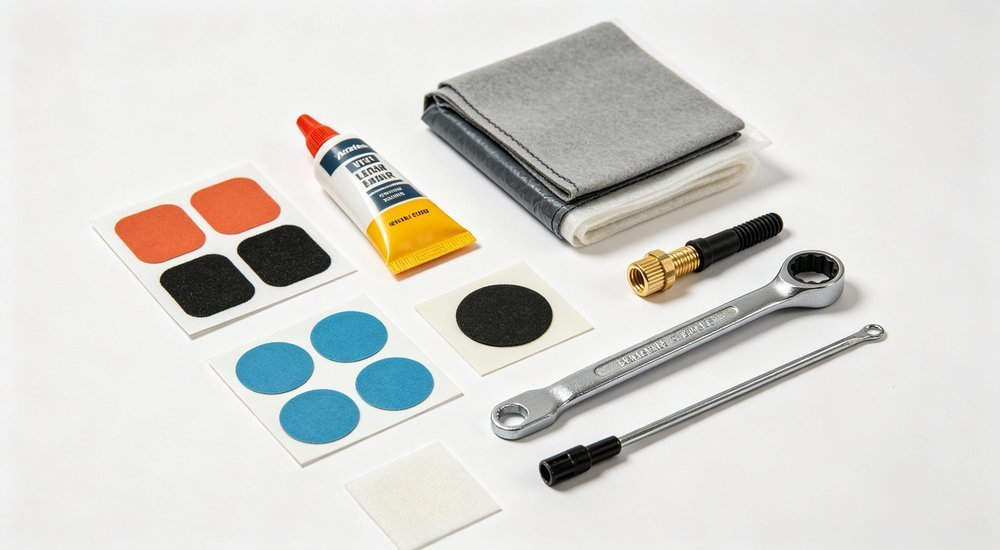
Recommended spares to include in the first shipment: 5-10% spare frame poles by diameter, 10% extra stakes and guylines, a repair kit per 50 tents (fabric patches, seam tape, thread, needle), and a small number of door/zipper replacements. Over a three-year framework, also ask the supplier to hold a spare-parts price list so emergency replacements do not become ad-hoc negotiations.
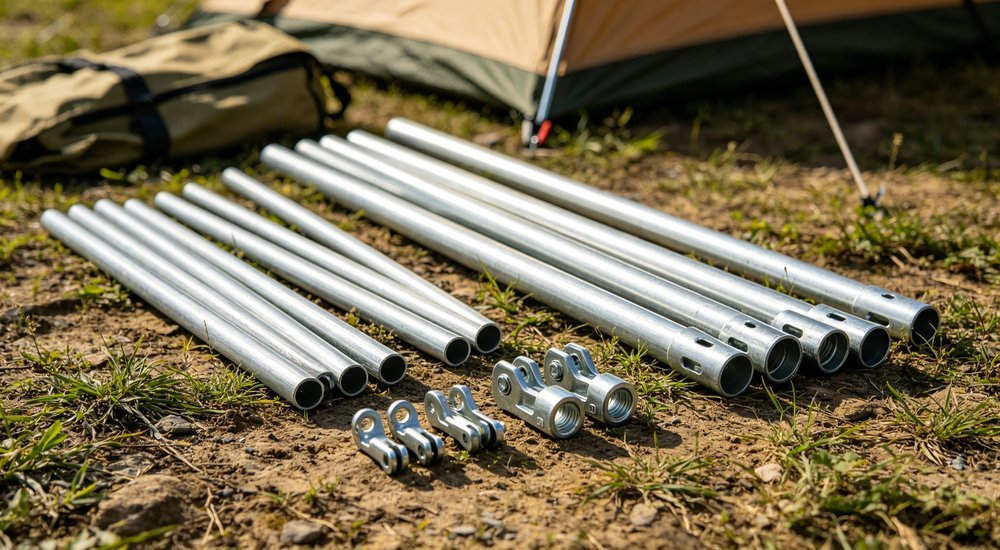
After-sales in this industry is mostly documentation: clear part numbers, repeatable drawings, and a fast quote on one-off replacements. We answer field questions by photo: send a photo of the damaged part, we send a part number and a lead time. This is slower than a consumer return but works reliably across borders.
For camps that stay for multiple seasons, also ask the supplier to hold a rolling stock of slow-moving parts: special connector castings, custom webbing buckles, and sized stakes that are not available locally. The holding cost is small compared with the cost of a tent sitting unusable for six weeks while a part is air-freighted in. Write this into the framework, not into a side email.
Common bulk relief tents risks include silent fabric substitution, untaped seams, wet packing causing mold, color drift between batches, and missing documentation. All are preventable with proper incoming inspection and pre-shipment audits. Most risks in humanitarian tent procurement are not exotic. They are familiar mistakes repeated on bigger budgets. The reject list below names the patterns that should trigger a second look at a supplier.
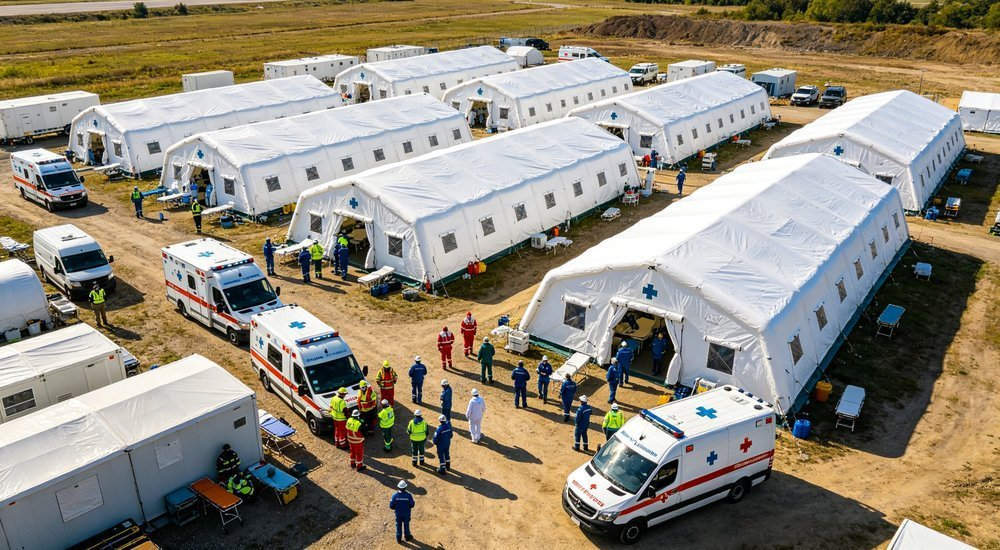
Quality risks in humanitarian relief tent procurement include fabric substitution, inadequate tent seam sealing, weak flame retardant fabric treatment, and structural failures under wind load. Emergency tent quality control should catch these issues before shipment through incoming fabric inspection, in-process sewing audits, and final random assembly testing. Buyers should require test reports for tent fabric waterproof performance, 600D Oxford tensile strength, and PVC coated polyester durability.
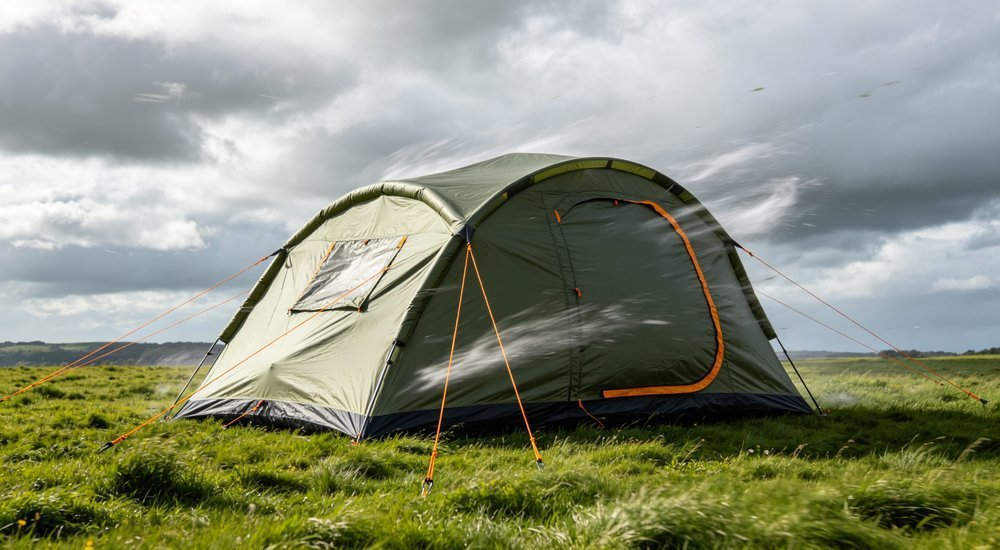
Common bulk emergency tents wholesale risks include silent fabric substitution, untaped seams, wet packing causing mold, color drift between batches, and missing documentation. These risks are preventable with proper incoming inspection and pre-shipment audits from a qualified disaster relief tent supplier China partner.
None of these are fatal on their own. They are fatal when stacked: a cheap price, a missing sample, and no inspection is the recipe for a container of tents that cannot be used in the field. Ask for the documents; walk if they are not produced.
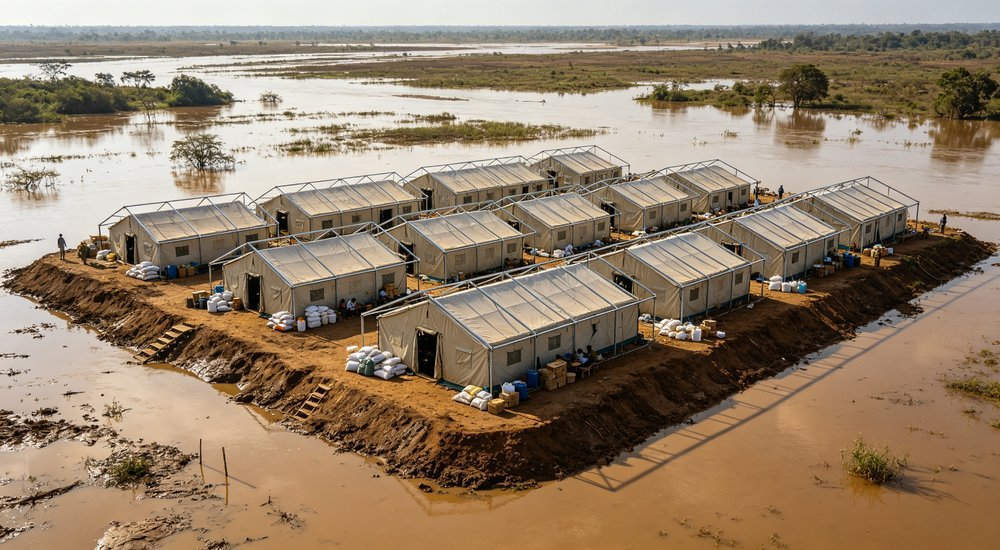
Different disaster types require different emergency shelter configurations. Earthquake response needs rapid deployment inflatable tents, flood response needs elevated steel frame tents, and winter operations require insulated refugee camp tent solutions. Not every disaster needs the same tent. The table below maps common response scenarios to the shelter type that fits. This is a planning reference, not a case study.
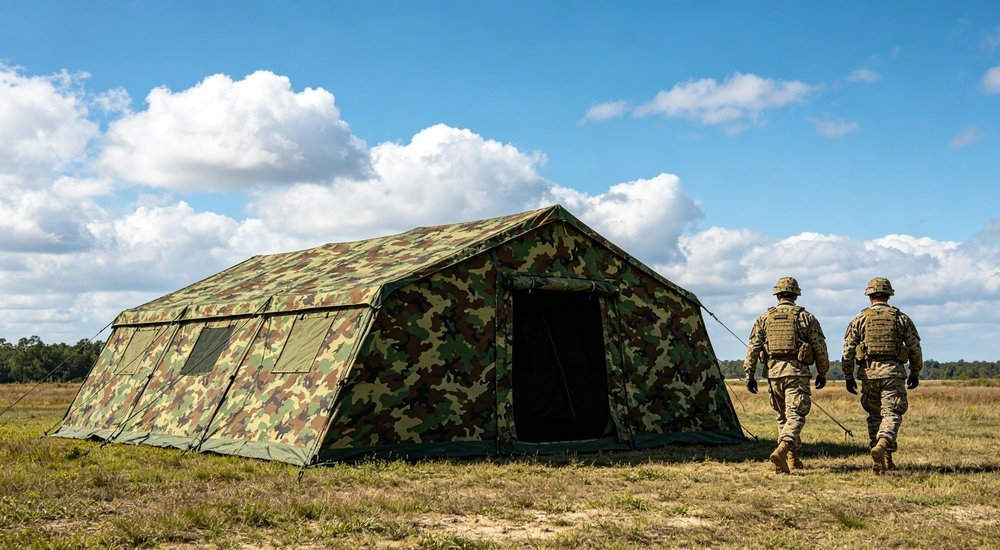
Different disaster scenarios require specific shelter configurations. Emergency shelter for earthquake response needs rapid deployment inflatable tents with quick setup capability. Humanitarian tent for flood response requires elevated steel frame designs with waterproof flooring. Disaster relief tent winter use demands insulated liners, stove vents, and reinforced wind resistance for cold climate operations.
Different disaster scenarios require different emergency shelter configurations. Earthquake response needs rapid deployment inflatable tents, flood response needs elevated steel frame tents, and winter operations require insulated refugee camp tent solutions with stove vents and sealed door flaps.
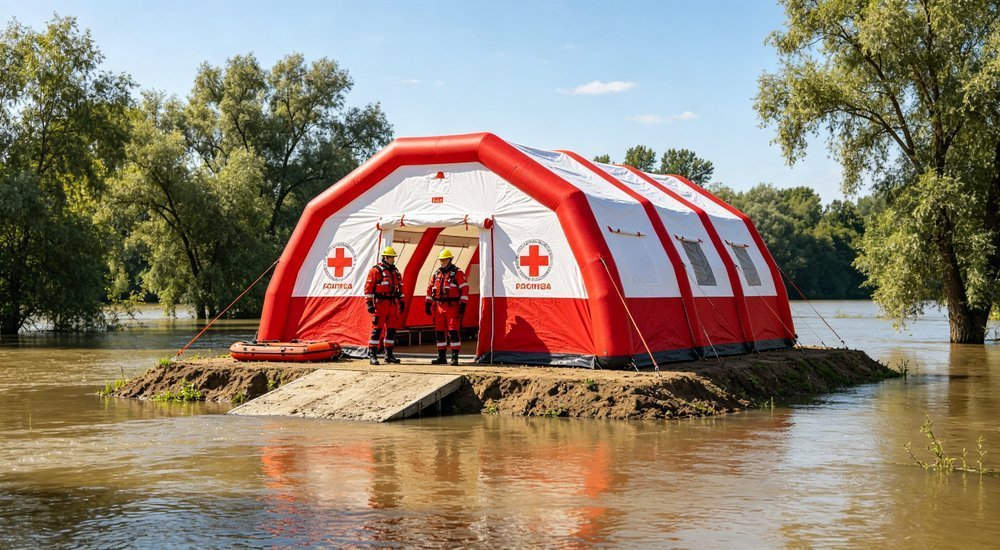
This disaster scenario table matches different emergency types with appropriate humanitarian relief tent configurations and field deployment strategies. Earthquake response requires rapid deployment inflatable designs, flood situations need elevated steel frame structures, and winter operations demand insulated refugee camp tent solutions, ensuring disaster response tent selection aligns with field conditions and emergency shelter requirements.
This comparison table provides essential specifications for procurement evaluation. Buyers use this data to compare configurations, assess material quality, and calculate total project costs. As a professional tent manufacturer with extensive export experience, we ensure all parameters meet international standards and field deployment requirements. This information is particularly valuable for government procurement teams, NGO aid organizations, and international relief agencies evaluating bulk supply contracts.
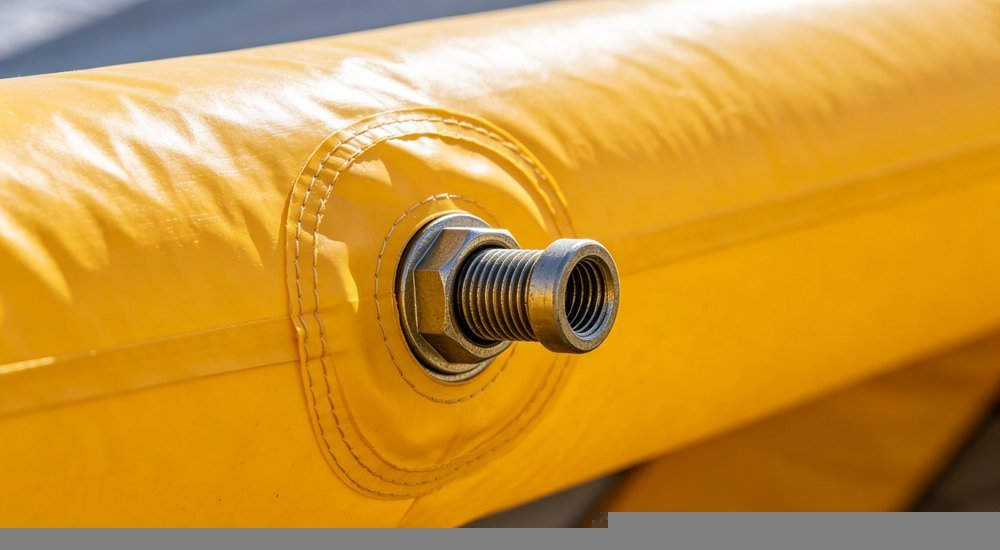
This comparison table outlines key specifications for China tent factory. Procurement teams use this data to evaluate aid organization supplier options, compare pricing structures, and verify compliance with international standards. As an experienced humanitarian relief tent, we ensure every parameter meets field deployment requirements for emergency response operations worldwide. This information is particularly valuable for government procurement teams, NGO aid organizations, and international relief agencies evaluating bulk supply contracts.
Disaster scenario
Shelter need
Recommended tent type
Key selection point
Earthquake response (urban)
Rapid family shelter for months
16 m2 frame family tent
Fast setup, durable frame
Flood response (wet season)
Raised distribution and shelter
PU5000 Oxford frame tent
Mildew-resistant, elevated floor
Displaced-person camp (years)
Settled family housing
Canvas family tent + liner
Breathable, repairable
Cold-weather emergency
Heatable winter shelter
Frame tent with cotton liner
Stove vent, sealed door flaps
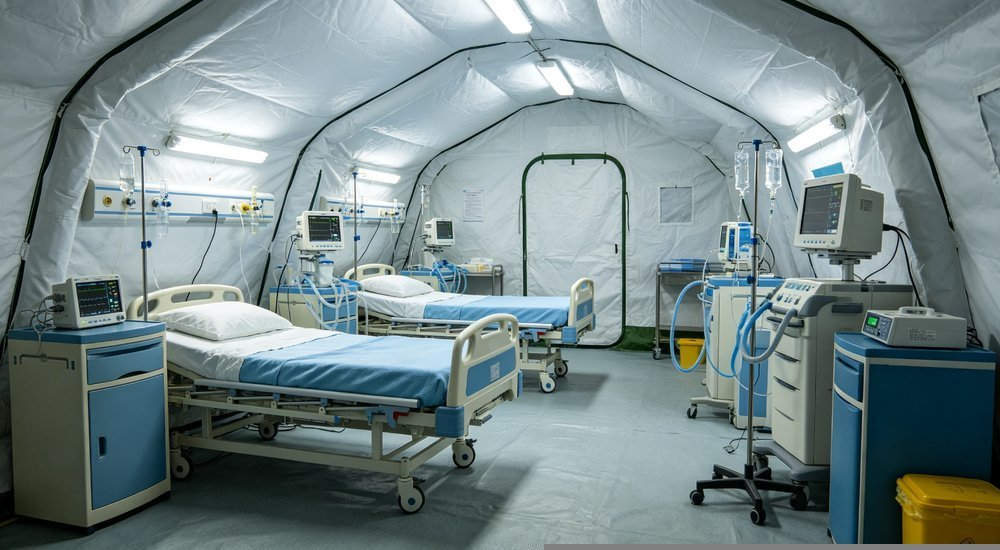
Epidemic / field clinic
Controlled clinical space
Medical inflatable or frame tent
Clean zoning, easy disinfection
Chemical / decontamination
Wet-zone wash enclosure
PVC decon tent
Heat-welded, chemical-proof
Security / military support
Camouflaged field post
Camouflage frame tent
Local-pattern color, durable fabric
For a multi-room camp solution, interlinked structures change the calculation; see inflatable emergency tents for rapid deployment, fire rescue inflatable tents for incident command, and decontamination tents for CBRN.
The procurement checklist template for emergency shelter logistics covers technical brief completeness, supplier qualification documents, golden sample approval, production milestone inspections, pre-shipment audit, packing list verification, certificate collection, freight booking, customs documentation, and on-site delivery coordination. Use the checklist below to close out a procurement file before contract signing. It is written for the buyer, not the supplier.
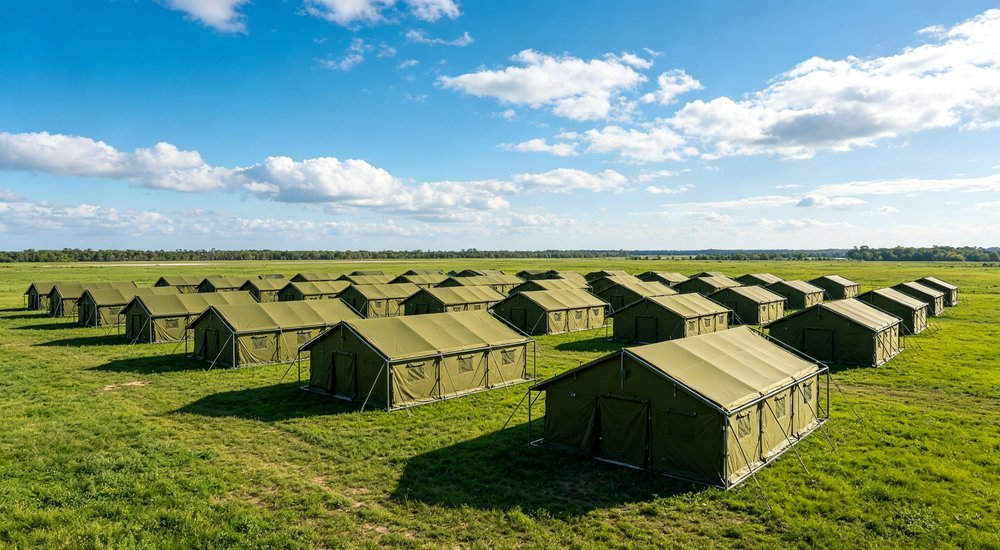
The procurement checklist template for NGO emergency shelter procurement covers technical brief completeness, supplier qualification documents, golden sample approval, production milestone inspections, pre-shipment audit, packing list verification, certificate collection, freight booking, customs documentation, and on-site delivery coordination.

Inside any humanitarian tender, the fabric decision drives cost, weight and service life more than the frame does. A 600D PU3000 Oxford family tent costs less and packs lighter than a 400 g/m² canvas family tent of the same size, but it lasts 2-4 years outdoors instead of 5-10. The right choice depends on whether the camp is designed as a short response or a multi-year settlement. Buyers writing tenders should state the fabric in g/m², coating and hydrostatic head, not by product name. "Relief-grade Oxford" means nothing; "600D polyester Oxford, PU3000mm, CPAI-84, mildew-resistant finish" means something a supplier can build and an inspector can verify.
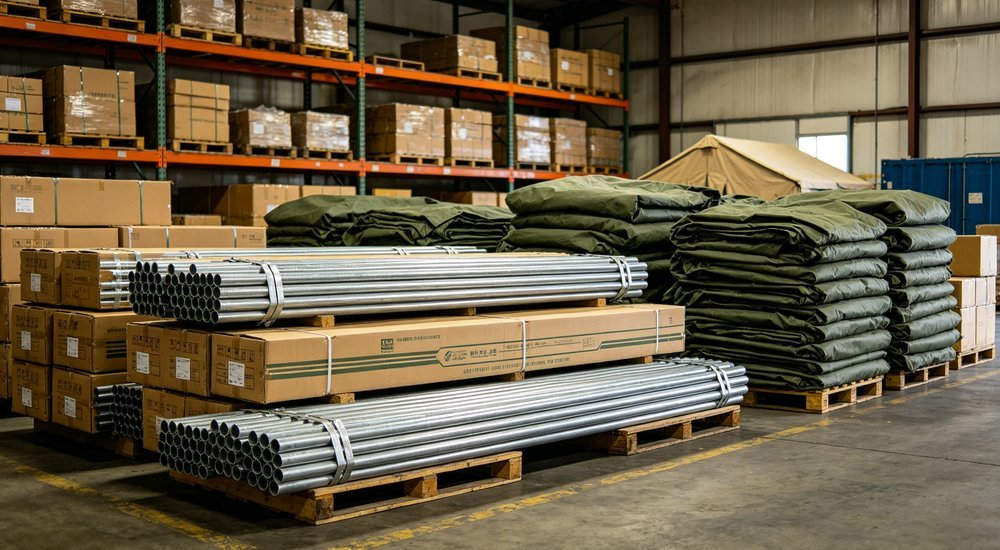
For custom markings, sizes or colors, see custom emergency tent OEM. For the fabric-level decision behind any of these, read the full terminology and comparison in the Tent Fabric Waterproof Guide: Oxford vs PVC vs Canvas, Decoded.
As a China-based emergency tent factory with 18 years of humanitarian shelter manufacturing experience, we offer OEM and ODM customization for relief organizations worldwide. Our bulk production capacity supports large-scale disaster response tent orders with consistent quality. We export to over 70 countries and provide competitive wholesale pricing for volume purchases, with dedicated quality inspection at every production stage.
Frequently asked questions about bulk relief tents cover UNHCR tent standard compliance, OEM humanitarian tent customization options, NGO tent supplier audit procedures, emergency tent factory capacity, and wholesale emergency tents pricing structures. Buyers should always request current test reports for 600D Oxford fabric, PVC coated polyester, flame retardant fabric treatment, and tent seam sealing quality. Suppliers can tender and be listed once their products meet the relevant family tent or emergency shelter specifications. Do not claim an existing partnership without a contract. The right statement is: fabrics and construction meet the cited standard; we can supply against your RFQ.
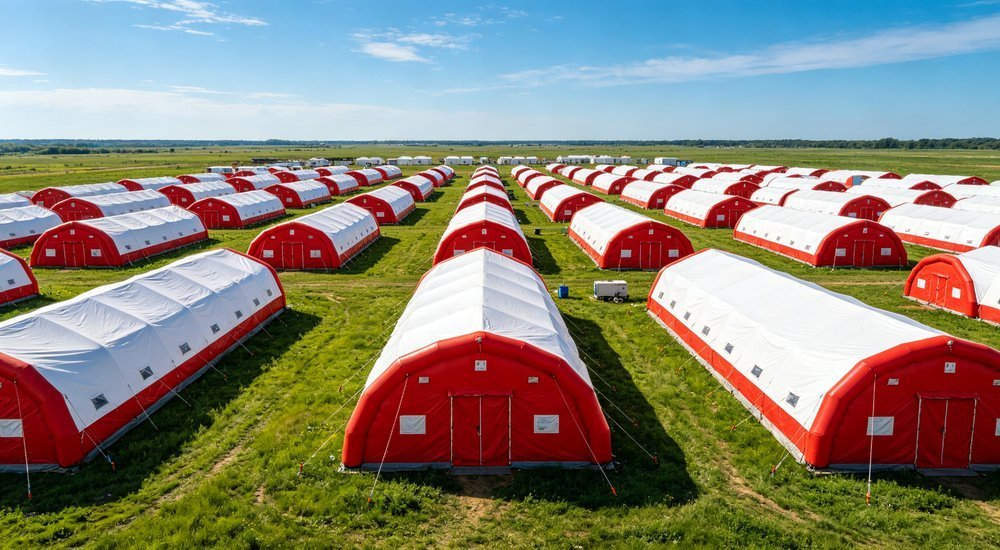
Frequently asked questions cover humanitarian tent quality standards, emergency shelter testing methods, OEM humanitarian shelter manufacturer capabilities, wholesale disaster relief tents pricing, and refugee camp shelter solutions for long-term operations. Buyers should request current test reports, certification documents, and production capacity verification before finalizing any procurement agreement.
Frequently asked questions about bulk emergency tents wholesale cover UNHCR standard tent specifications, OEM humanitarian tent customization options, NGO tent supplier audit procedures, emergency tent factory capacity, and MOQ requirements for first-time orders. Buyers should always request current test reports and humanitarian shelter certification before finalizing any government emergency shelter supplier agreement.
Break the budget into: tent ex-work, packaging and marking, inland and international freight, insurance, customs duties, on-site distribution, spare parts, and a 10% contingency. Shipping and duties often double the landed cost, so do not budget on ex-work price alone.
UNHCR public guidance defines a family shelter by floor area (around 16 m2 for a typical family), waterproofing, wind load, fire retardancy, door and window design, and service life. Always reference the current public edition of the standard, not a second-hand summary.
Standard in-stock colors and sizes usually ship in 20-30 days. Custom colors, logos and new sizes add 15-30 days. Emergency air freight adds 48-72 hours production priority but does not waive quality inspection. Confirm the critical path in writing.
Air freight reaches most capital cities in 3-7 days but costs 4-8x more per unit and is limited by packed volume. Sea freight takes 20-35 days but is 1/5 to 1/10 the cost. Split the order: urgent batch by air, balance by sea.
Expect ISO 9001 for the factory, CE marking where required, CPAI-84 or NFPA 701 for fabric flame retardancy, FSC for any timber components, and a social compliance audit (SMETA or equivalent). Ask for scanned copies that match the current legal entity.
Require video factory walk-through, written quality manual, batch test reports, references from comparable buyers, and a third-party inspection on final production. Physical audits are best for framework partners; remote audit works for first-time screening.
Approve one fully erected sample with the exact fabric, frame, color, door, window and markings of production. Photograph it from all sides. The signed sample becomes the golden sample against which mass production is compared.
Negotiate spare pole, connector, seam-tape and repair-kit pricing for the full contract life. Keep 5-10% consumables on site. Confirm that parts remain interchangeable year over year, even after minor design changes.
Common failures: wrong fabric weight substituted silently, seams untaped, packed wet leading to mold, color drift between batches, and missing packing lists. All of these are caught by incoming inspection and pre-shipment audit if you require them.
Yes. Screen printing or heat transfer of relief agency markings is standard above 50-100 units. Below that, iron-on transfers are possible. Send vector artwork and confirm PMS colors before production.
We provide commercial invoices, packing lists, certificates of origin and any required inspection certificates. Destination customs clearance is usually handled by your broker or local partner; we coordinate documents but do not clear import on your behalf.
Contact our OEM/ODM team for bulk pricing, sample requests, and customized emergency shelter solutions.
 |

|
Przyjazne linki :
prawa autorskie © Custom Disaster - Relief Bedding: Tents, Sleeping Bags, Blankets Wszelkie prawa zastrzeżone
profesjonalny zespół do obsługi !