Kategorie
Last updated: November 19, 2026 · Landslide emergency kit
Landslide emergency kit planning decides whether a rescue team reaches trapped people in hours or loses the first night to missing gear.
This guide lists what search teams, schools and relief groups stock before landslide season - helmets rescue tools and search gear, headlamps, first aid and shelter supplies.
Every item is checked for real field use, so the kit works in mud, rain and collapsed ground.
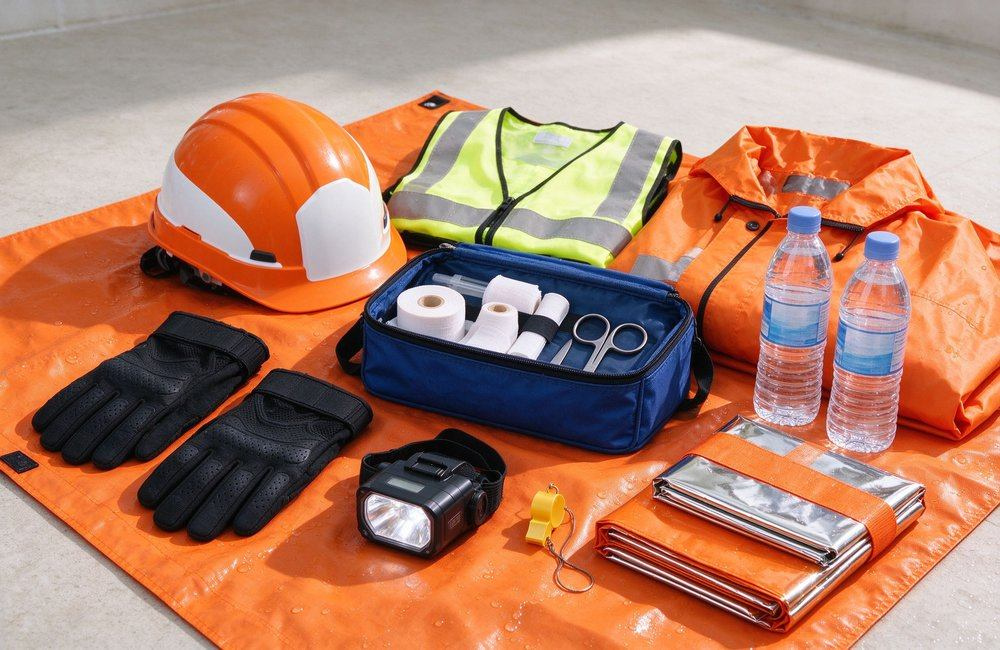
Complete landslide emergency kit family setup with rescue helmets, debris clearing gloves, headlamp, first aid kit, blankets and water on a bright surface for search team bulk planning
Every hour counts when a slope fails. Landslide rescue teams need helmets against falling rock, cutting tools for debris, headlamps for night work and first aid for trapped people.
A solid slope failure preparedness supplies checklist covers all three, so the page explains which items to order in bulk, how many to stock per team, and how to resupply after the rainy season.
Procurement officers, school safety staff and relief coordinators will find the same checklist used by field units, whether they are ordering a single school pack or bulk search and rescue gear for a regional convoy.
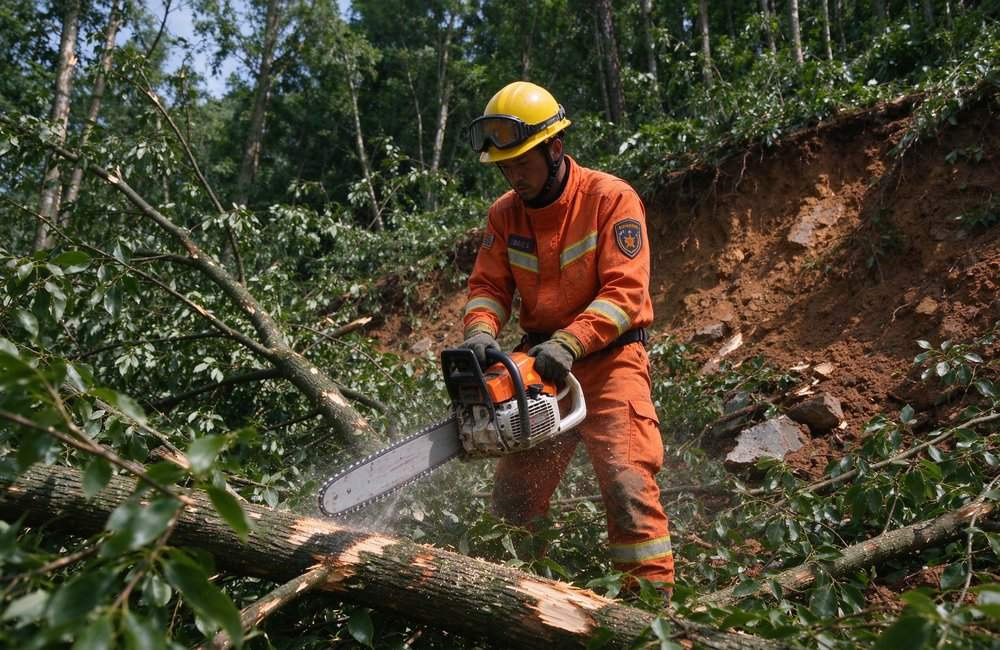
Rescue worker in helmet and reflective vest clearing fallen trees after a landslide, chainsaw and debris beside a blocked mountain road
Landslides rarely announce themselves with enough time. Rain-saturated slopes fail without warning, roads close, and rescue work starts in darkness and mud. A landslide emergency kit removes the guesswork: each team member picks up one sealed kit and moves to the site.
The sections below cover head protection, debris tools, visibility, first aid, lighting, power and the procurement questions buyers ask before the wet season.
Open pit mine landslide risk area with cracked slope and loose rock, geologist marker cones and warning tape at the edge
This guide is written for organizations, not single households. You will see bulk quantities, per-team ratios and restock cycles, because a unit deploying 50 rescuers faces different decisions than one family.
Where numbers appear, they match standard field planning guidance and can be adjusted to your team size and budget.
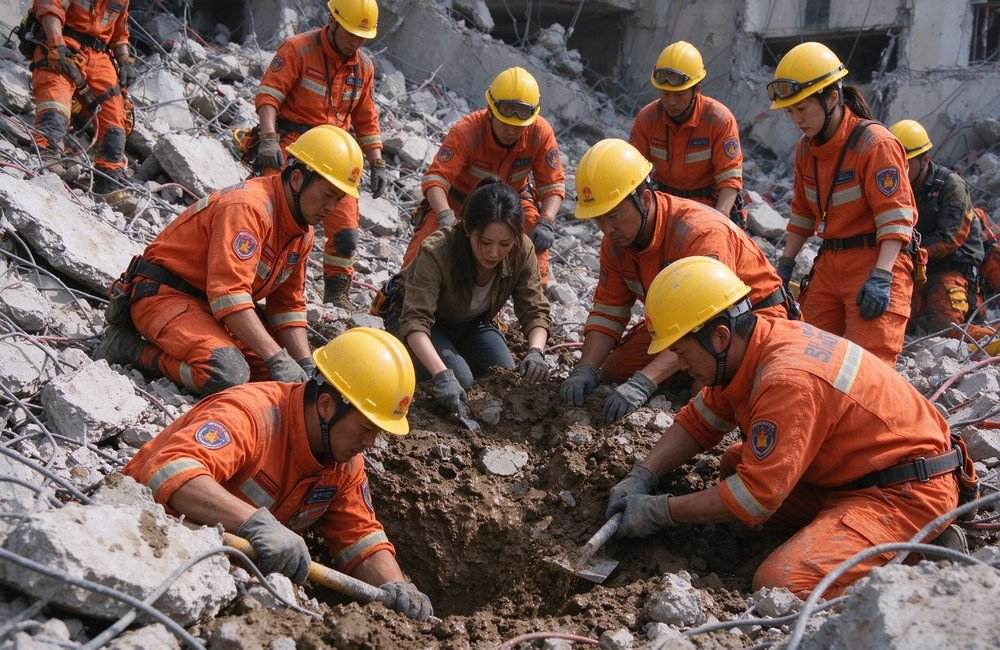
Search and rescue team in helmets searching collapsed ruins after a landslide, lifting debris in coordinated formation with headlamps on
By the end, you will know which items matter most, how many to order per rescuer, how to store kits so they stay ready in the wet season, and which official sources to check during an active landslide.
The final sections give a quick-reference list and a procurement checklist you can hand to your supplier.
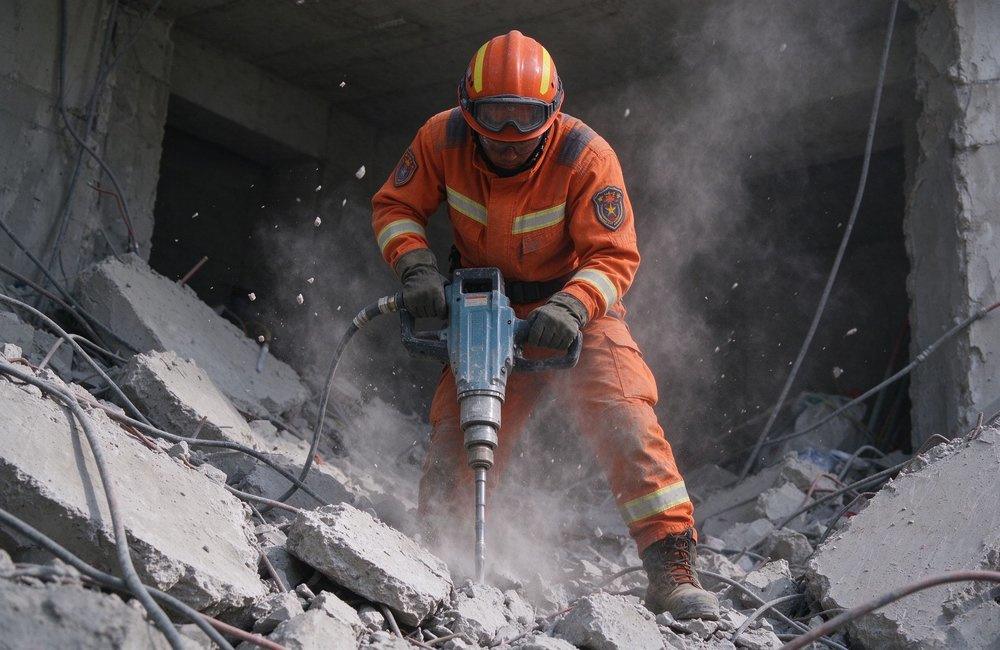
Rescue worker in helmet and gloves breaking concrete rubble with a jackhammer on a landslide site, debris dust rising, heavy safety gear and cutting tool in full action
Preparedness is measured in response hours. A team that can mobilize within the first hour reaches people still alive under light debris; a team that waits for equipment lists does not.
For organizations, the same rule applies at larger scale: a landslide emergency kit per rescuer turns chaos into a routine.
Heavy rain now triggers more slope failures each year, so stocking is no longer optional for schools, relief groups and municipal response teams near hilly terrain.
When a slope fails, the first hours decide survival rates. Mud and debris trap air pockets that last only a few hours, and every minute of coordinated digging matters.
A kit that is packed, labeled and stored at the vehicle bay shortens mobilization from minutes of decision-making to seconds of loading.
Rainy seasons now bring more intense downpours, which means kits must be restocked and rotated before and after every wet period.
Response data makes the point concrete: teams that pre-pack one kit per rescuer and one tool set per vehicle deploy twice as fast on the first night.
Municipal crews that inventory kits quarterly find missing straps and dead batteries before the crisis, not during it.
Budget for one field drill per season and treat it as part of the kit itself.
Drill data makes the point concrete: teams that practice their mobilization routine once a season cut their first-night deployment time by more than half.
Units that run a ten-minute inventory drill find missing straps and dead batteries before the crisis, not during it.
Budget for one field drill per year and treat it as part of the kit itself, because a packed box that nobody can find is no better than no box at all.
Slope failure does not wait for daylight or good weather. The teams that perform best are the ones that treat preparation as an annual cycle: order in spring, inspect before summer rain, drill in early fall and restock after the wet season.
That rhythm keeps kits fresh without special effort, and it gives the whole unit one clear moment each year to review what changed in their area.
Unprepared rescue units face three failures at once: rescuers arrive without helmets or gloves, teams run out of headlamps and cutting tools within hours, and coordinators spend the first night improvising. Each failure adds hours of work.
A pre-built landslide emergency kit with sealed components, printed checklists and assigned storage avoids all three, and it is cheaper to buy in bulk before the rainy season than during an emergency, when suppliers are sold out and freight is delayed.
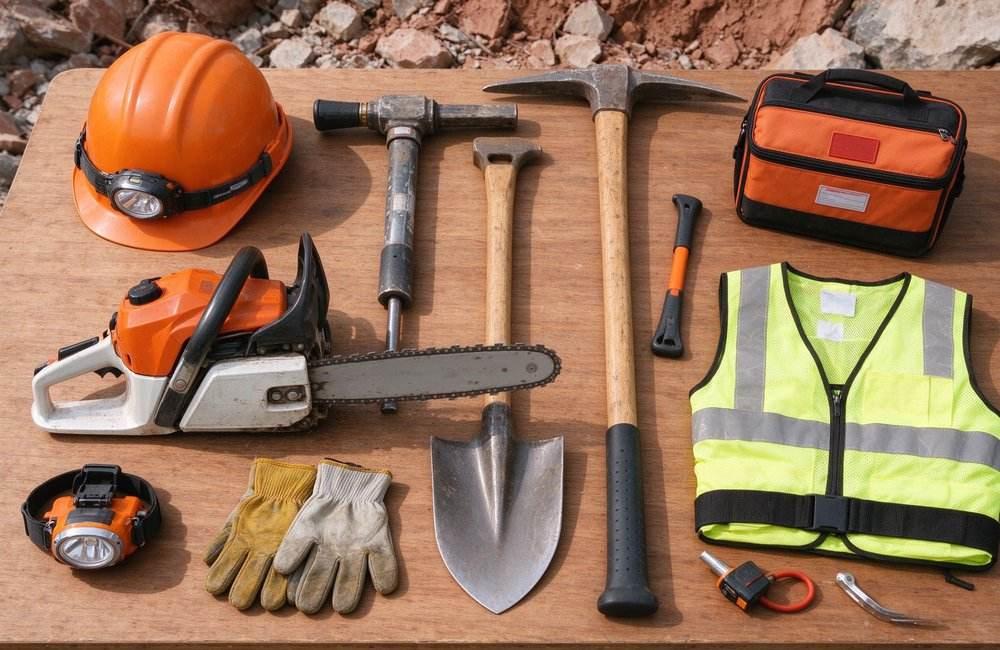
Landslide rescue tools flat lay with pry bars, shovels, cutting tools, ropes, carabiners and headlamps arranged in neat rows for fast field deployment by rescue teams
Landslide risk is not uniform, and neither is a landslide emergency kit. A school in a mountain valley faces a different threat than a road crew near a cut slope, but both need the same core layers: head protection, debris tools, visibility, first aid, lighting and shelter supplies.
Understanding the local risk profile tells you which layers to weight when ordering.
Historical records help too: slopes that failed before usually fail again under similar rain, and old scars are visible in aerial maps and local memory.
Build your hazard list from past events in your own district, not just from national maps, and weight the kit budget toward the triggers that actually occur where you work.
Rain, rapid snowmelt and earthquake shaking all soften a slope. Teams that map trigger zones before the wet season stock slope failure preparedness supplies at the depots closest to those zones.
Landslides follow predictable triggers: heavy rain, rapid snowmelt, earthquakes, and human excavation that undercuts slopes. Most failures happen during or just after intense downpours, when water pressure builds inside the slope.
Track local rainfall forecasts and slope monitoring reports, and treat a warning as a trigger to pre-position kits rather than wait for a confirmed slide.
Each warning level should trigger a named action: yellow means check helmet stocks and tool batteries, orange means pre-position kits at the vehicle bay, red means activate the team roster and confirm equipment.
Written triggers remove guesswork for new members and keep the response consistent even when the same people are not on site.
Post the trigger table in the bay next to the kit shelves.
Debris determines tools. Mud flows need shovels and rain gear; rock slides need pry bars and cutting tools; mixed rubble from buildings needs jackhammers and concrete breakers.
A bulk rescue equipment order should cover the debris types in your service area, and each tool set should be assigned to a vehicle so nothing is shared across sites at the wrong moment.
Slope monitoring is a shared job: residents, road crews and geologists all report cracks, bulging soil or new springs, and those reports trigger early warnings.
Post a simple observation card at schools and community centers so anyone can describe what they saw, and route reports to the same team that activates the kits.
Early reports buy the hours that kits are built to use.
Rescue sites are hazardous: unstable slopes, sharp debris, power lines, contaminated water and fatigue in long shifts. Personal protection is the first line: a certified rescue helmet for falling rock, gloves for sharp edges, boots for mud, a reflective vest for visibility, and goggles or a dust mask for airborne dust.
Kit planning must include these items per rescuer, not per team.
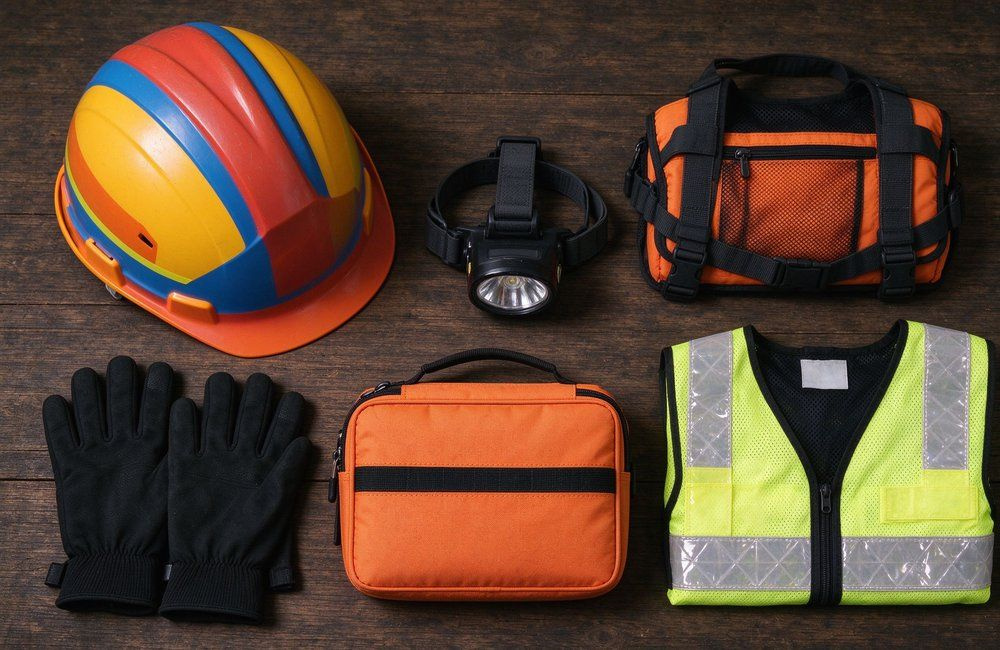
Emergency PPE kit flat lay with safety helmet, gloves, goggles, reflective vest and dust mask for landslide rescue workers preparing for wet-season field operations
The landslide emergency kit has six working parts: head protection, hand and foot protection, debris tools, visibility and communication, first aid, and shelter and power.
Ordering each part in bulk keeps per-unit cost low and ensures every kit is identical, which makes training and inspection simpler.
A useful reference is the Red Cross survival kit supplies checklist, which lists the core items most household and team kits should cover. Each mudslide response kit is built around the same four pillars: head protection, hand and foot protection, visibility and first aid, and shelter power.
Helmet stocks should cover visitors too: inspectors, media and newly arrived volunteers all enter the site and all need head protection. Keep a visitor bin at the entry point with ten spare helmets, and log their return at the end of each shift.
This small stock prevents the most common field accident, the struck visitor.
A core part of any helmets rescue tools and search gear loadout, the rescue helmet takes the first impact when rock falls from a slope. Look for chin straps, side-impact coverage and a washable sweat band.
A rescue helmet is the non-negotiable item on a landslide site. It absorbs impact from falling rock, protects against debris strikes and carries a chin strap that stays on during work.
Wholesale safety helmets with ABS shells and adjustable suspension cover most field needs; teams working under buildings add a full-brim style for rain deflection.
Stock one per rescuer plus 10 percent spares.
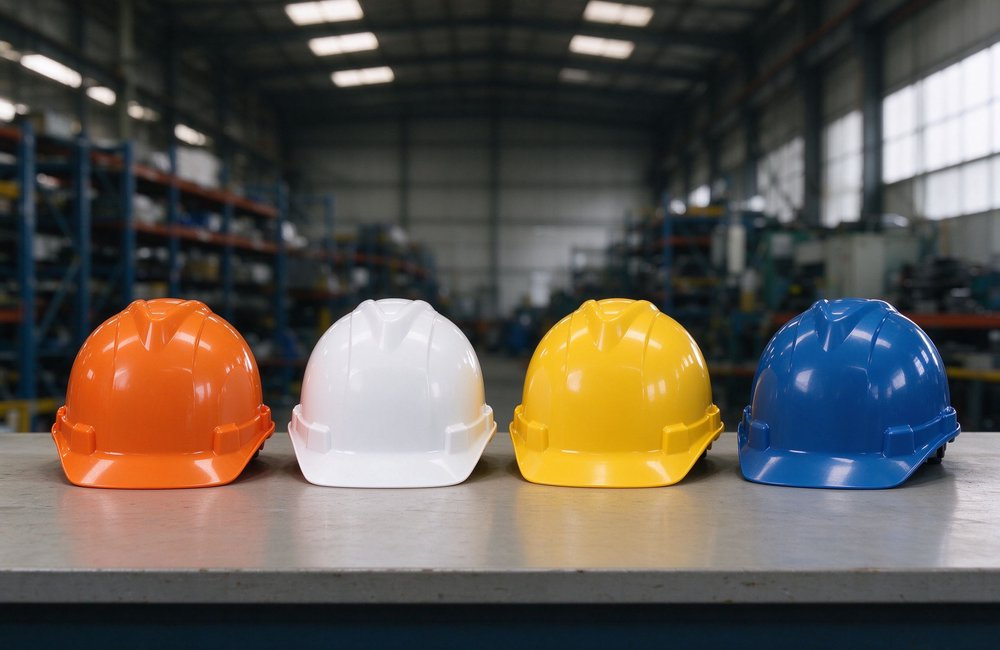
Four colors of safety helmets lined on a white surface, ABS shells with chin straps, bulk wholesale helmet set for rescue teams
Before deployment, every helmet gets a two-minute check: shell cracks, strap condition, suspension fit and certification label. A damaged helmet fails exactly when it is needed, so the inspection is part of the kit routine, not an optional step.
Assign the check to a named team member on each shift.
Helmet fit is the detail that saves lives: an adjustable suspension spreads impact across the head, and a chin strap that is always fastened keeps the helmet in place during falls.
Train every team member to size their own helmet once and mark it, so swapped helmets never go out with the wrong fit.
The two-minute inspection at shift start covers the same checks every time.
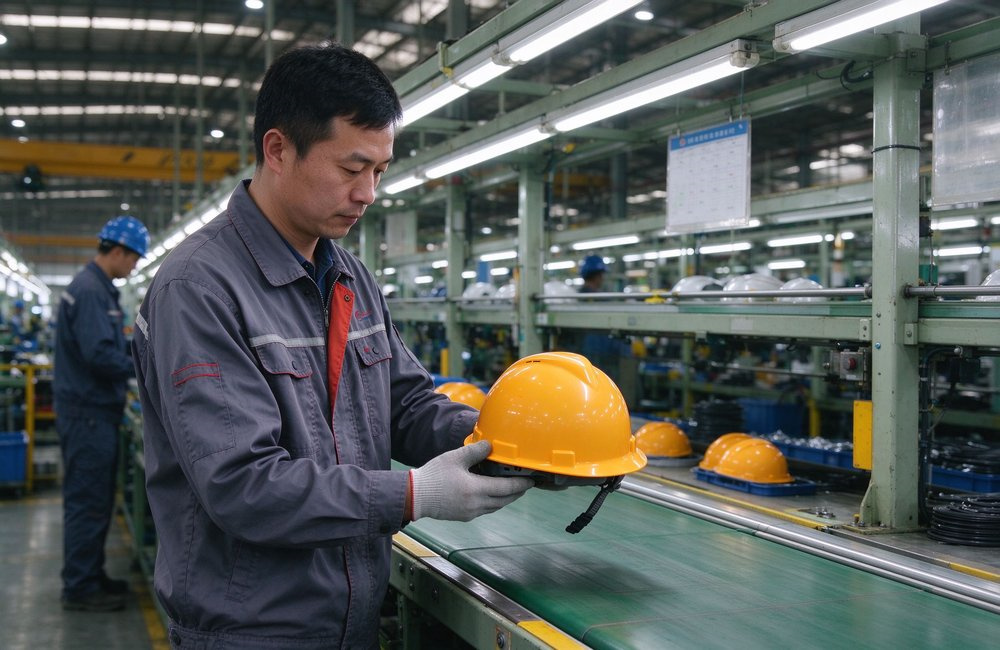
Safety helmet displayed for a landslide emergency kit, shell, strap and suspension system arranged for field deployment inspection by the buyer
Rescue gloves protect hands from sharp debris, rebar and glass, while boots with steel toes and ankle support protect feet in mud and rubble.
Cutting protection completes the set: pry bars, bolt cutters, shovels and reciprocating saws for wood, with concrete breakers added where buildings are at risk.
Match glove material to the debris type and rotate gloves that become soaked.
Radio discipline is trained, not automatic: one channel for command, one for search teams, and a clear rule that only the team leader transmits on the command channel.
Rehearse the call signs in the field drill so a real site does not become twenty people talking at once. A simple two-channel habit makes the whole kit coordinate properly.
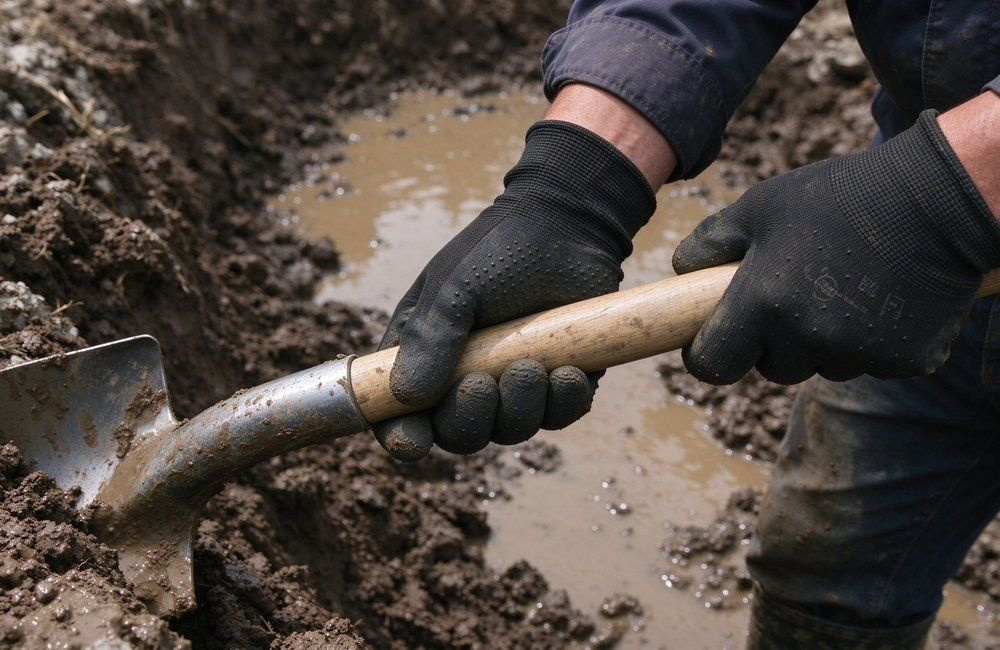
Rescue worker in boots and helmet digging through wet mud and debris with a shovel, rain and landslide aftermath around
Landslide sites are loud, dark and crowded. Reflective vests make rescuers visible to heavy equipment and traffic, first aid kits treat crush injuries and lacerations on site, and radios keep teams coordinated across a scattered site.
First aid planning should include splints, trauma dressings, burn care and eye rinse, because field injuries differ from household injuries.
Headlamp choice matters at a landslide site: a beam of at least 300 lumens lights a ten-meter debris field, and a red mode preserves night vision during radio checks.
Battery life is the hidden specification, so stock spare cells per rescuer and verify the charging system before each shift.
Reflective vests are the communication layer of a night site: they make hand signals readable to equipment operators and keep rescuers visible in rain and dust.
Choose vests with 360-degree reflective tape and a whistle pocket, and issue one per shift because vests get soaked and dirty fast.
The first aid kit on a landslide site is trauma-focused, not household-focused: tourniquets, pressure dressings, splints, burn gel and eye rinse. One kit per vehicle and one per rescue station keeps treatment within minutes of the injury, and the inventory is checked at every shift change.
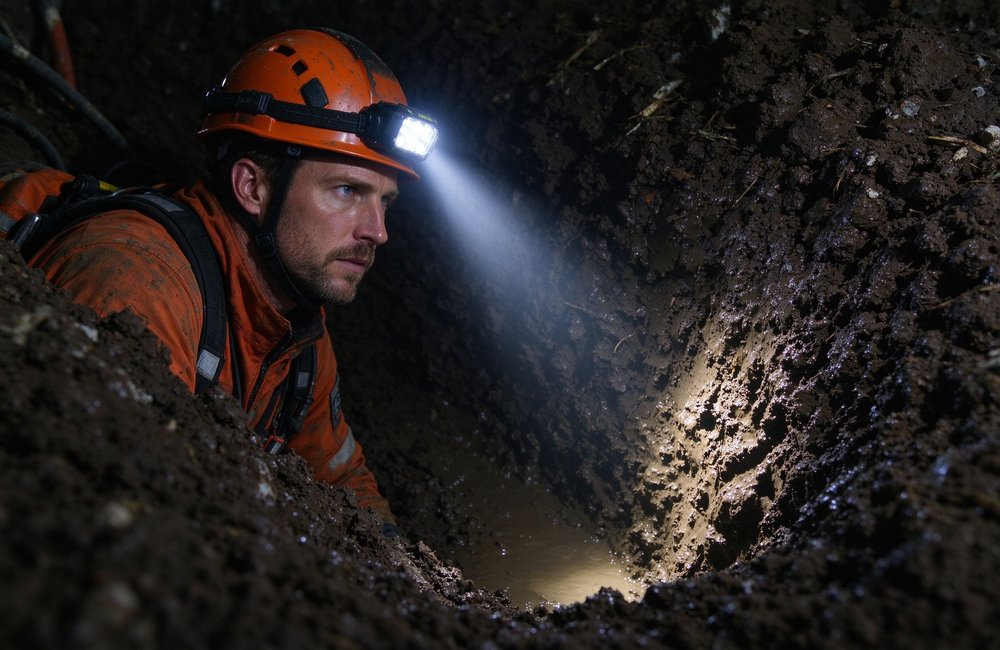
Rescue worker checking a headlamp beam in low light at night camp, hands adjusting the strap, verifying backup batteries for the night search shift
Landslide response often runs for days. Sleeping bags and water bottles keep rotating crews rested, portable generators power tools and lights, and temporary lighting towers turn a night site into a workable one.
Shelters and relief stations distribute blankets, water and emergency supplies to evacuated families while teams work the slope.
Sleeping rotations keep rescuers effective: one team works while one rests, and a dry sleeping bag plus clean water makes the rest productive.
Stock one set per rescuer and store them in the vehicle bay so tired crews do not search for gear at 2 a.m.
Generators power the whole night system: tools, scene lighting, phone charging and medical equipment. Run them outside and away from tents, keep fuel in marked cans, and pair every generator with a CO alarm because rescue tents have little ventilation.
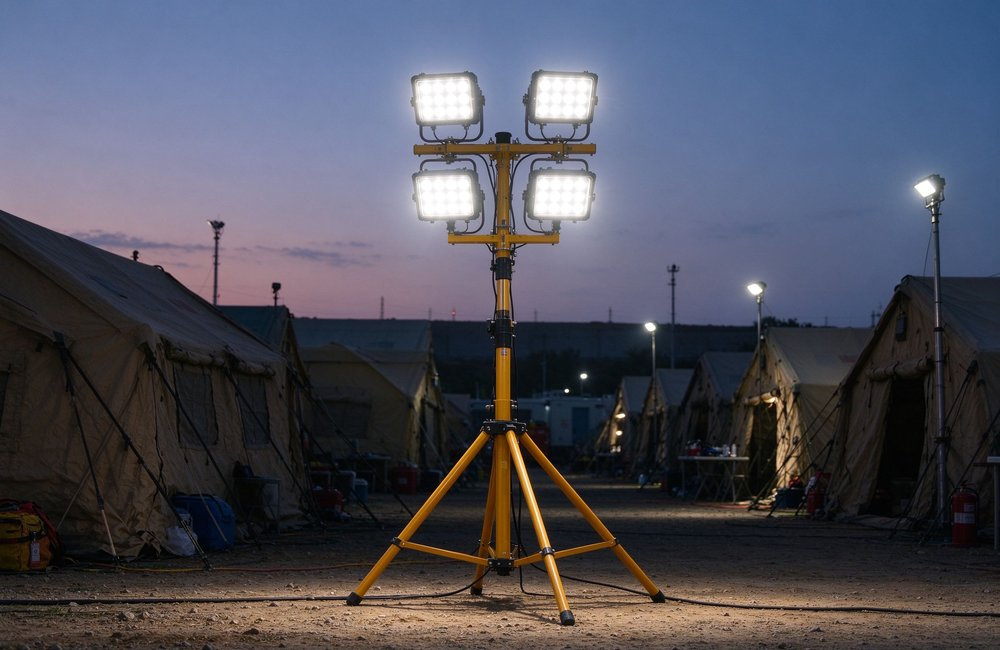
Lighting towers change the search: one tower covers the equivalent of dozens of headlamps and gives coordinators a stable light grid. Position towers at the site edge so crews work with light behind them, and plan fuel for a full night before darkness falls.
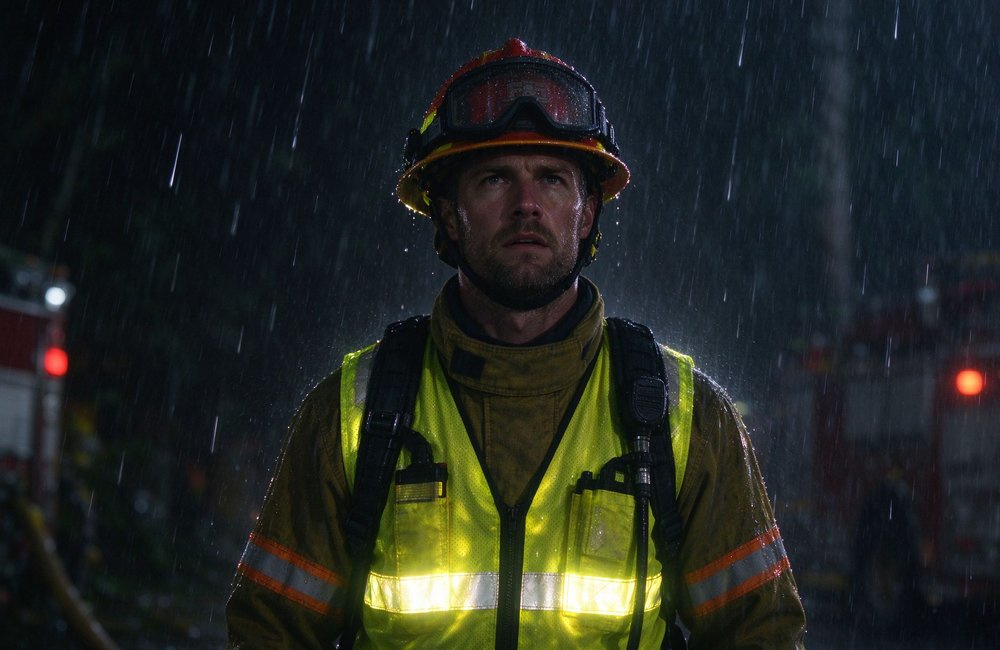
Rescue worker in a reflective vest directing traffic at night with a flashlight on a blocked road, high visibility gear keeping crews safe near heavy equipment
Access is the first battle. Clearing the road to the site lets heavy equipment and ambulances reach the rescue point, and clearing blocked drains prevents a second flood from washing the site away.
Work in sequence: road access first, then drains and culverts, then the debris pile where people are most likely trapped.
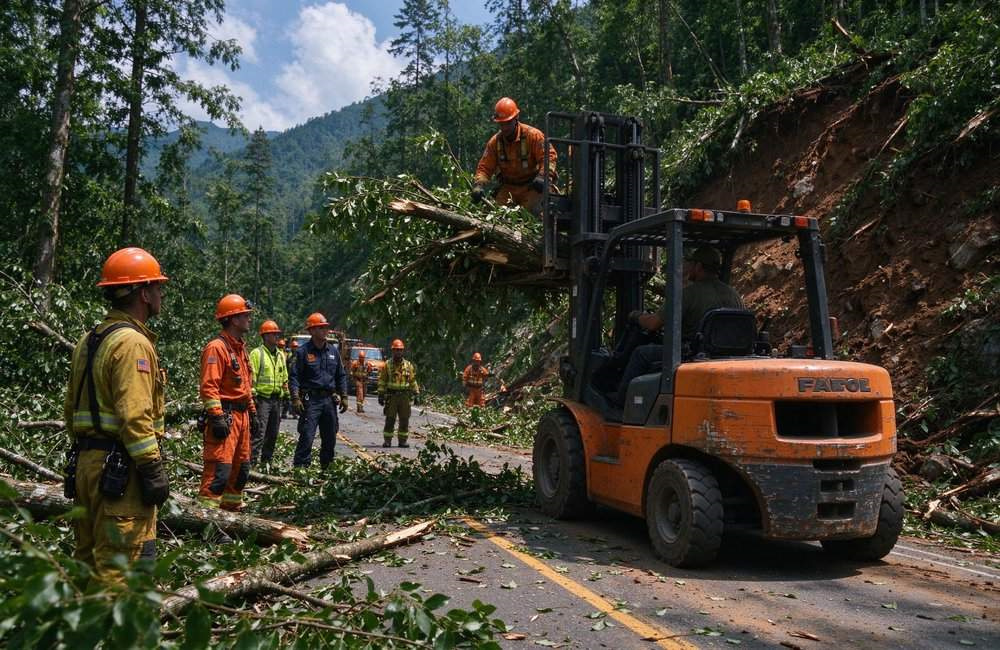
Heavy equipment speeds the work: forklifts and loaders move large debris that crews cannot lift, and excavators cut through deep mud. Coordinate equipment with hand teams so nobody works under an active bucket.
A signal plan - whistle, radio channel or hand signal - keeps everyone aware of equipment movement.
Debris clearing follows a safe sequence: stabilize the pile, mark access lanes, then work the highest-probability voids. Crews rotate between digging and listening every twenty minutes, because sound detection is the fastest way to find a survivor and the easiest to miss when tools are running.
Silence the equipment for one listening minute each cycle.
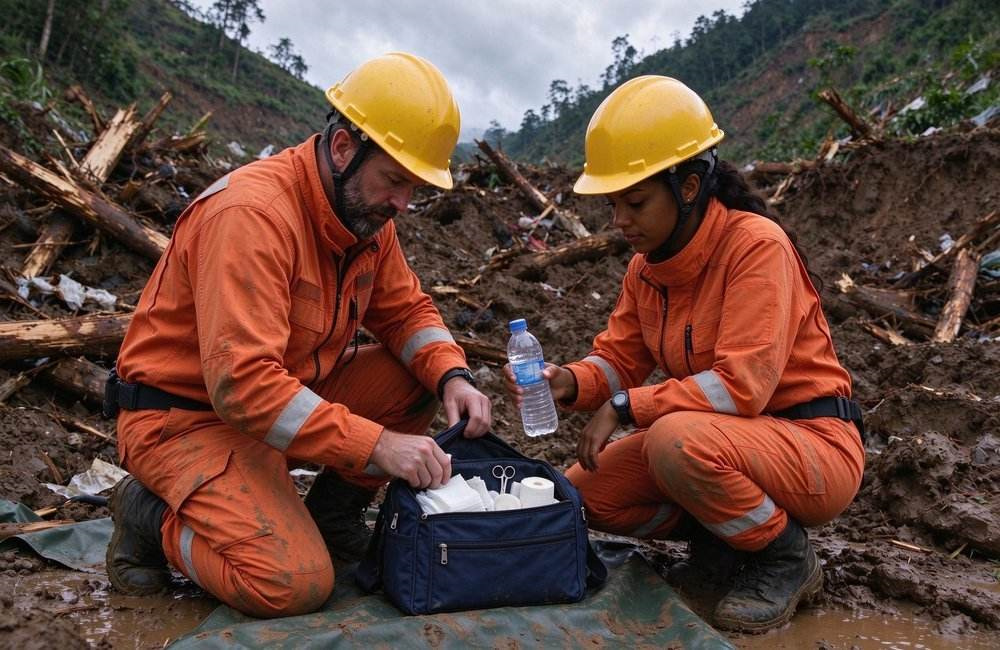
Rescue team checking a bulk first aid kit at a relief station, inventorying bandages, splints and trauma supplies before deploying to the debris site
Search starts with the highest-probability points: voids under structural elements, sheltered corners and the last known positions reported by neighbors. Teams work in coordinated grids with one listener at a time, because sound travels through debris in unpredictable ways.
Mark searched zones with flags or chalk so effort is not repeated.
Shift handover is when errors happen: tired crews pass tools, notes and radio channels verbally, and details are lost. Use a written handover sheet for each vehicle: tools used, batteries changed, sections searched, hazards found.
Fifteen minutes of paperwork at each shift change saves hours of rework and keeps the search grid accurate.
Night falls fast at a landslide site, and work continues. Headlamps keep hands free, scene lighting towers illuminate the search grid, and backup batteries keep both running through the shift.
Plan for 12-hour rotations so lighting and people are always fresh, and confirm fuel for generators before darkness.
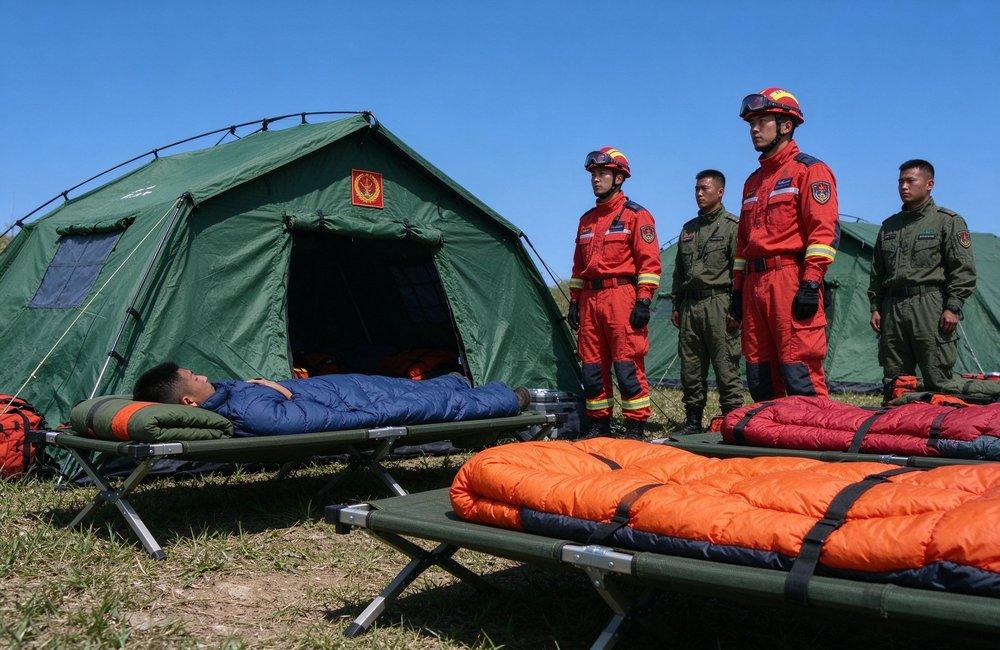
Sleeping bag and water bottle kit on a shelter cot at a relief center, emergency overnight supplies ready for displaced families during multi-day response
After the debris settles, hazards remain: contaminated water, spoiled food, dust and damaged structures. Treat all water as unsafe until confirmed, discard food exposed to flood or mud, and use masks where dust is thick.
Relief stations should distribute safe water and re-check evacuee medical needs, because crush injuries and hypothermia appear after the first hours.
Post-response care is part of the kit cycle: wash mud from gloves and boots, dry helmets away from heat, sharpen cutting tools, and log what was consumed.
A debrief sheet listing used items becomes the exact resupply list, and it prevents the next unit from discovering missing gear at the site.
Resupply before the next rainy season, not after. Replace damaged helmets, rotate batteries, sharpen cutting tools, restock first aid and update contact sheets if routes changed. A post-response inventory list makes this a one-day job, and quarterly inspection keeps every kit field-ready.
Budgets scale with the number of rescuers protected. A small community team of up to 20 members starts with helmets, gloves, headlamps, first aid and hand tools. A school protecting students and staff adds evacuation kits and shelter supplies.
A municipal or regional response unit covering hundreds of rescuers plans tool sets per vehicle, lighting towers and generator fuel with quarterly rotation.
The table below shows how planning scales by team size:
| Team Size | Rescuers Covered | Core Investment | Restock Cycle |
|---|---|---|---|
| Small community team | Up to 20 members | Helmets, gloves, headlamps, hand tools | Twice a year |
| School or facility unit | 50-200 people | Kits per classroom, shelter supplies | Before rainy season |
| Municipal / regional unit | 200-1,000 rescuers | Tool sets per vehicle, lighting, generators | Quarterly rotation |
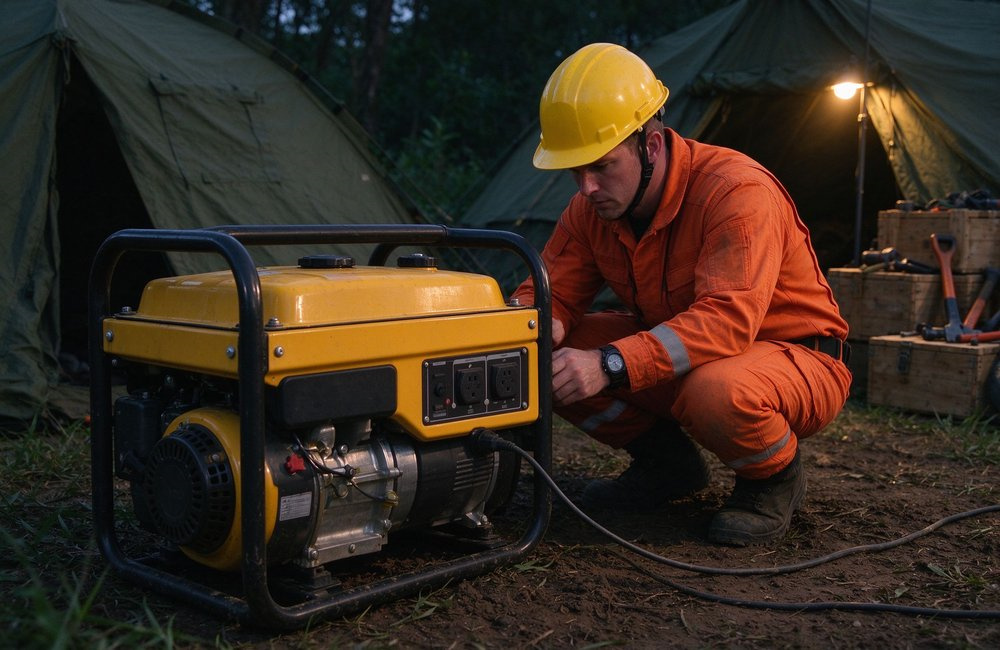
Most procurement issues trace back to buying on price alone. Ask for the specification sheet before quoting: helmet shell material and certification, glove cut-resistance rating, tool steel grade and test reports on request.
A cheap look-alike helmet that fails under a rock strike costs more than any saving, and it adds liability to the organization that issued it.
When ordering helmets and gloves in the same lot, request one combined test report per carton and one sample per production batch.
Keep the samples with the bulk kits as field references, so a team leader can compare a replacement shipment against the approved quality before distribution.
Confirm packaging is sealed, labeled and deployable in seconds, and that production and shipping finish before the rainy season - 8 to 12 weeks is a safe ordering window.
Collect documentation at order time: test reports, certificates and a packing list per carton. Request samples before the bulk order and keep documentation for your compliance files.
Rain is the storage enemy for landslide gear: mud dries into tools, straps weaken in humidity and textiles mildew in closed bins.
Store kits with vents open, keep tools oiled and dry after each response, and inspect textiles twice a year. A dry bay is the cheapest insurance for wet-season readiness.
Store kits where teams can grab them: labeled bins at the vehicle bay, one shelf per vehicle, and sealed cartons on pallets for bulk.
Avoid damp basements, which rust tools and damage textiles. Check storage quarterly and log the inspection date on each bin.
Label every bin with three lines: contents, quantity and the next inspection date. A bin that says helmets, 50, check January makes the quarterly inventory a five-minute walk instead of a search.
Use the same label format on pallets and go-bags so any volunteer can find and verify stock without asking.
Quarterly checks catch the quiet failures: batteries that self-discharge, dressings that expire, straps that crack in storage. Put one person in charge of the calendar and make the check part of the standing meeting, so the kit inventory is reviewed at the same time as staff schedules and vehicle maintenance.
Restock before the wet season, not after. Twice-a-year rotation works for most organizations: once before the high-risk months and once after. Regional response units rotate quarterly to keep hundreds of kits fresh.
Tie restocking to the same calendar as field drills so it never gets skipped.
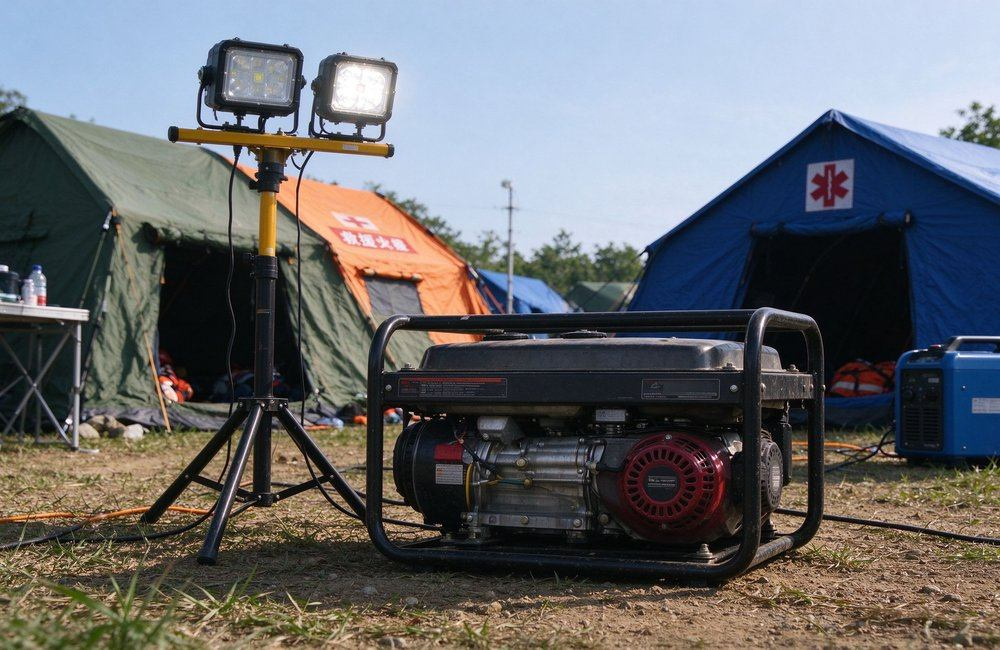
Temporary lighting tower illuminating a landslide rescue site at night, bright floodlights spreading over the search grid for coordinated night operations
The 72-hour baseline per rescuer: one certified rescue helmet, one pair of rescue gloves, one headlamp with spare batteries, one reflective vest, one whistle, three days of food and three liters of water, and a personal first aid pouch.
Add goggles or a dust mask for debris sites and rain gear for wet-season work.
Documents travel with the kit: a printed team roster, medical notes for known conditions, site maps and a contact sheet for local authorities.
Photocopy them into each go-bag and keep originals in a waterproof pouch at the bay, because phones die and networks fail on the first night.
|
Category |
Per-Rescuer Item |
Notes |
|
Head Protection |
Certified rescue helmet with chin strap |
Replace after any real impact |
|
Hands and Eyes |
Cut-resistant gloves, dust mask, goggles |
Wash gloves after each mud operation |
|
Visibility |
Reflective vest, headlamp, whistle |
Spare alkaline batteries per kit |
|
Survival |
3L water, 72h food, personal first aid pouch |
Rotate food each quarter |
|
Documents |
Roster, medical notes, site maps, contacts |
Seal in waterproof pouch |
This per-rescuer table is the minimum 72-hour loadout for one search team member; add rain shells, cold-weather layers and a waterproof document pouch for extended wet-season deployments. and extra gloves for wet-season cleanup.
Team-level bulk: shovels, pry bars, bolt cutters, reciprocating saws with spare blades, one trauma first aid kit per vehicle, one stretcher, lighting towers, one generator with fuel and a CO alarm where structures are involved.
Keep this list on the vehicle bay door so volunteers can inventory in ten minutes.
|
Category |
Per-Team Item |
Notes |
|
Clearing Tools |
Shovels, pry bars, bolt cutters, reciprocating saws |
Spare blades per vehicle |
|
Medical |
Trauma first aid kit per vehicle, stretcher |
Refresh after each drill |
|
Lighting and Power |
Lighting towers, generator, fuel, CO alarm |
Required where structures are involved |
|
Communications |
Two-way radios, battery chargers |
Channel plan posted in each vehicle |
Inventory this team list at the start of every wet season and after any real deployment; restock within ten working days and log the check on the bin card so gaps are caught before the next storm.
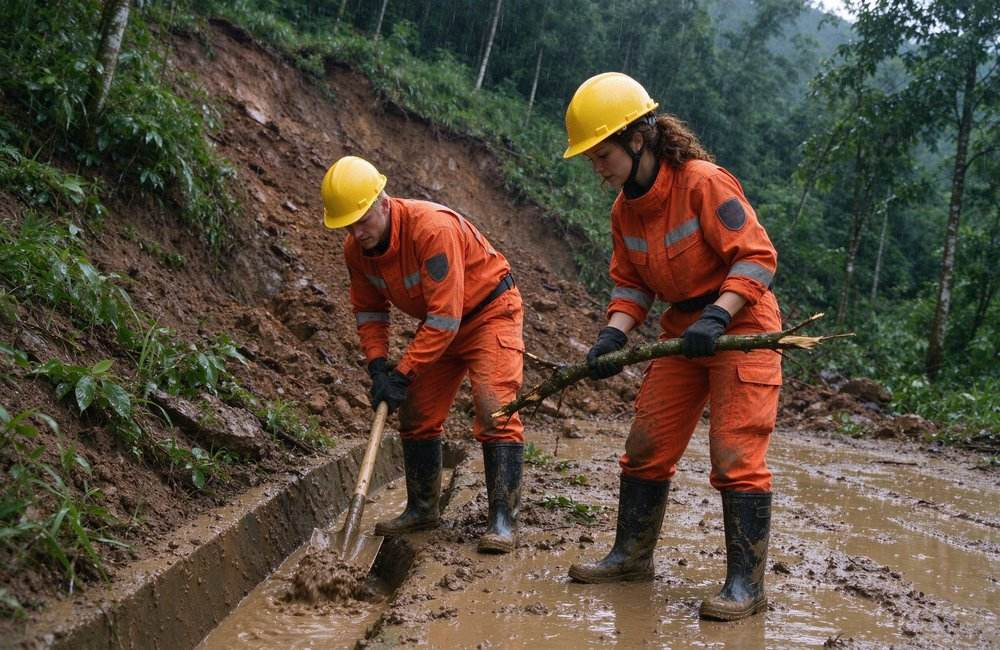
Rescue worker clearing a blocked drain in rain boots and helmet after a mudslide, restoring the water channel to prevent a second flood on the site
Check these trusted pages before the rainy season and again during an active event. NWS general emergency preparedness guidance covers warning signs, evacuation routes and family communication plans for slope-failure events.
The American Red Cross landslide preparedness page lists household steps, kit basics and recovery priorities used by relief organizations worldwide.
For slope failures triggered by ground shaking, our earthquake emergency kit guide explains the parallel checklist for earthquake response, and the same field gear principles apply to both.
Landslides, mudslides and debris flows strike steep terrain on nearly every continent. They follow heavy rain, rapid snowmelt, earthquakes and wildfire burn scars, and they block roads, sever utilities and trap residents in hours rather than days.
Crews that clear mountain highways and rural roads after rain are first on scene. They need certified rescue helmets, pry bars, shovels and reflective vests staged in every depot before the wet season, with bulk spares for multi-week recovery.
These landslide rescue supplies live in locked, weatherproof bins at each depot door.
Schools on hillsides or above drainage channels must shelter or evacuate students on short notice. A school-grade landslide emergency kit includes student-sized hard hats, dust masks, whistles, first aid pouches and two-way radios for staff. These landslide rescue supplies are staged in the school safety office and inventoried each term.
Relief groups deploy within hours of a debris flow event. They order bulk landslide relief equipment in sealed, numbered kits so that each responder picks up one pack and moves to the field without inventory delays.
Field logistics officers audit the landslide rescue supplies on every pallet before convoy departure.
Open-pit mines and quarry benches face slope-failure hazards year round. Compliance requires hard hats, fall protection, headlamps and rescue kits at every bench, with restock cycles tied to the rainy season.
Audits verify the landslide rescue supplies at each bench match the posted team roster, and the same landslide rescue supplies are cross-checked against the relief-convoy packing list.
By the time a landslide warning is issued, retail shelves are empty and freight is delayed. Procure helmets, tools and shelter supplies in bulk weeks ahead of the wet season and stage them in waterproof go-bags.
Site hard hats are built for falling bolts, not for rockfall and debris impact. Choose rescue-rated helmets with chin straps, impact-absorbing suspension and side impact coverage for search and mudslide response work.
Most mudslides close roads overnight. Teams that arrive with only vehicle lights work blind in the first hour. Stock a headlamp per rescuer plus alkaline spares, and test batteries every quarter.
A drill that opens every kit reveals expired food, dead batteries and torn webbing. Build a restock cycle that replaces used items within ten days of any exercise or real deployment.
Forklift clearing fallen trees and debris from a landslide-damaged road, heavy equipment restoring vehicle access for rescue crews and ambulances
Buying bulk search and rescue gear means matching the kit tier to the team size and deployment length, not over-ordering one-size-fits-all packs that waste budget and shelf space.
Teams vary in size, terrain and deployment length. The comparison table below matches three kit tiers to typical buyers, so procurement officers can quote one consistent configuration per depot, school or relief convoy.
|
Kit Level |
Best For |
Core Contents |
Sourcing Note |
|
Basic Response Pack |
Single crew, school, or small public works depot |
Rescue helmet, gloves, headlamp, whistle, first aid pouch, 3L water, 72h food, rain shell |
Sealed go-bag, one pack per person |
|
Team Field Kit |
10 to 30 member response team, multi-day operation |
Basic pack plus pry bars, shovels, bolt cutters, trauma first aid, stretcher, radios, lighting |
Numbered bins per vehicle, restock after each drill |
|
Bulk Relief Deployment |
Relief NGO, convoy, regional warehouse |
Team field kit plus shelter tarps, water bladders, generator, CO alarm, spare helmets at 10% |
Bulk landslide relief equipment on pallets, OEM labeling available |
Most buyers start with the Team Field Kit for one pilot depot, then scale to the Bulk Relief Deployment level once the rainy-season drill proves the configuration works for their terrain and crew size.
Ordering bulk search and rescue gear this way avoids over-buying the top tier for a single crew and keeps per-kit cost predictable. Volume pricing on bulk search and rescue gear is quoted once your team count and deployment length are on file.
Rescue gear lives in mud, rain and dust. A short care routine keeps every landslide emergency kit ready for the first call, and it extends the working life of helmets, headlamps and webbing across multiple wet seasons. Treat all landslide rescue supplies as perishable field gear, not warehouse inventory.
For orders above 200 kits, we provide OEM private-label packaging, custom color tags and team-numbered bins. Minimum order quantities and lead times are quoted per contract once your component list and deployment schedule are confirmed.
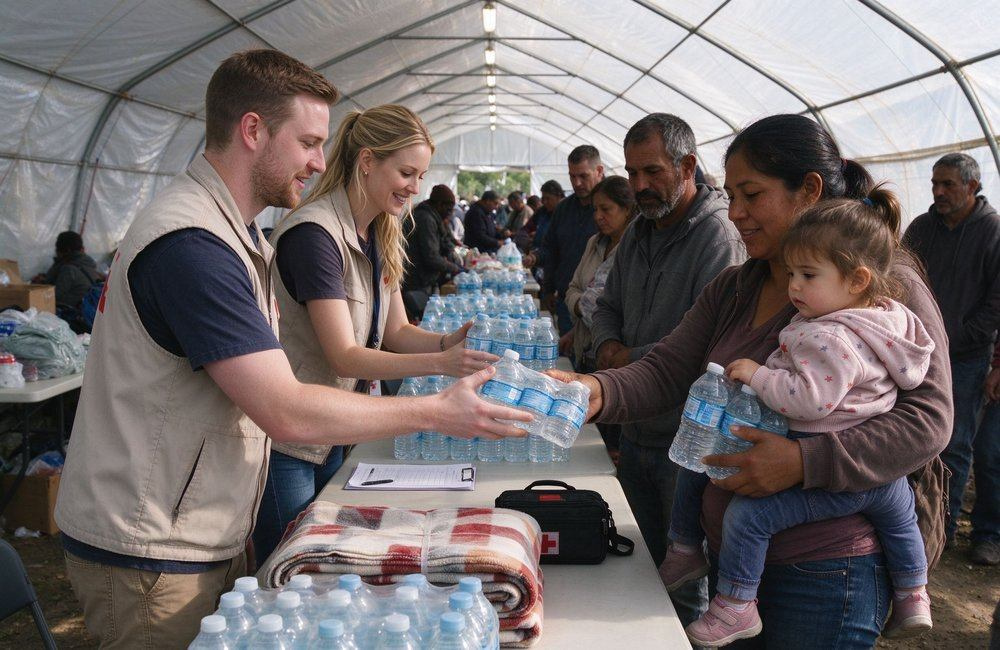
Relief station distributing blankets, water and emergency supplies to landslide evacuees at a community shelter table, volunteers handing out kits to families
Stock one certified rescue helmet per rescuer plus 10 percent spares. A 50-member team therefore starts with 55 helmets, and spares cover strap failures and new arrivals during a long response.
Minimum quantities depend on the components and supplier. Bulk kits are usually quoted by kit configuration and team size; send your component list and expected headcount to get a volume price, with custom packaging available for larger orders.
Yes. Bulk orders ship by sea or air depending on volume and destination. Confirm delivery lead time before the rainy season so kits arrive with weeks to spare for inspection and storage.
Quality ABS helmets last years within their rated life. Inspect for cracks, strap wear and suspension damage each season, and replace any helmet that has taken a real impact.
Start with shovels, pry bars, bolt cutters and a reciprocating saw. Add a jackhammer and concrete breaker where building rubble is likely, and coordinate power tools with generators and lighting.
A complete mudslide response kit pairs those hand tools with hearing protection, shatter-resistant goggles and a pry bar rated for embedded rock.
Yes, within their rated cycles. Clean, dry and inspect tools, gloves and helmets after each response, retire items with visible damage, and restock consumables like batteries and dressings.
Yes. Stock trauma-level first aid supplies and pair them with training: splinting, hemorrhage control and crush-injury care. A kit without trained users loses most of its value in the field.
Ask for specification sheets, test reports and certification for helmets and gloves. Request samples before the bulk order and keep documentation for your own compliance files.
Most canned and dried food lasts 12 to 24 months when stored cool and dry. Label every kit with an expiry date and rotate food twice a year before the rainy season.
Yes. Bulk orders can be customized with printed packaging, label placement and kit configuration. Share your artwork early so production and printing finish before the season.
Order at least 8 to 12 weeks before the high-risk months. This covers production, shipping, inspection and storage, and leaves time to fix any specification issues.
Yes. Suppliers can provide checklists, usage guides and drill scripts that teach teams how to deploy each component in under a minute.
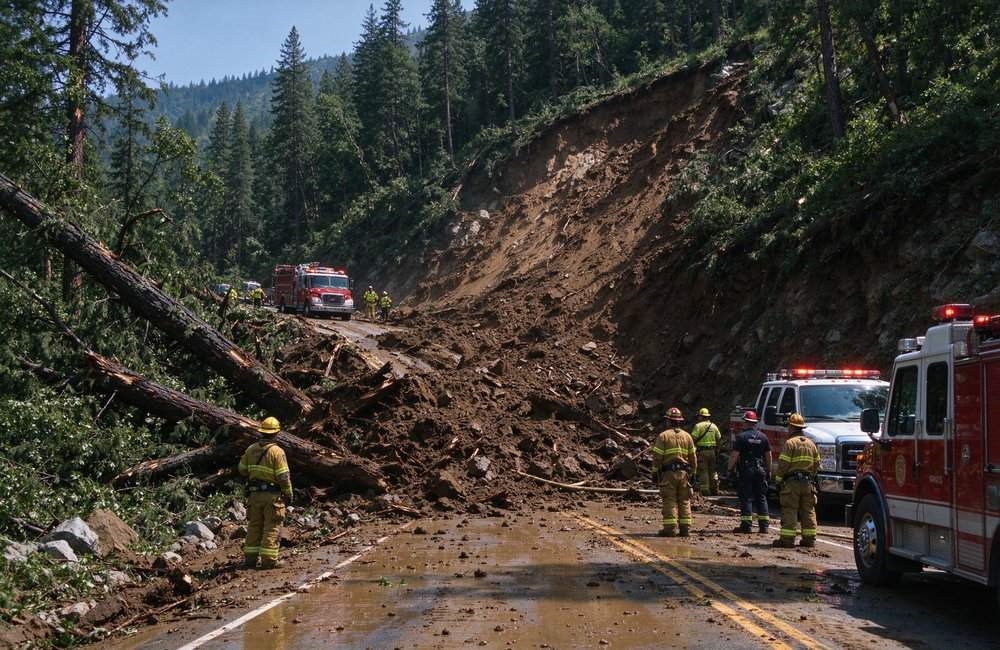
Landslide debris covering a mountain road with rocks and mud after heavy rain, warning cones and tape marking the blocked section for traffic safety
A kit that has never been practiced fails in the moment. Run one mobilization drill before the rainy season: time the load, check the route, and note which items ran out.
Fix those gaps in the order, then repeat after the season ends.
An annual review takes one morning: walk the bay with the inventory sheet, test one helmet and one radio from each bin, check the contact sheet against current numbers, and confirm the monitoring subscription is active.
Write the date on the bay wall so everyone knows the system was verified this year.
Update slope hazard maps when monitoring reports change, keep a printed contact sheet in every kit, and subscribe to local rainfall and landslide alerts so teams know when to pre-position. Small annual updates keep the whole system usable for years.
A landslide emergency kit is not a product list; it is a decision made in advance. Order the components, store them at the vehicle bay, train the team, and review the plan once a year.
When the slope gives way, the kit does the thinking.
Contact: info@yrftextile.com · YRF Textile, China
 |

|
Przyjazne linki :
prawa autorskie © Custom Disaster - Relief Bedding: Tents, Sleeping Bags, Blankets Wszelkie prawa zastrzeżone
profesjonalny zespół do obsługi !