Kategorie
Published: October 11, 2026 | Last Updated: October 11, 2026
Uncontrolled bleeding kills in 3–5 minutes. Cardiac arrest kills in 8–10 minutes. When a mass casualty incident happens at your event, you do not have time to read a manual — your team has to act in the first 60 seconds, before professional EMS arrives. The WHO estimates that bystander hemorrhage control saves 30–40% of trauma deaths that would otherwise be preventable.
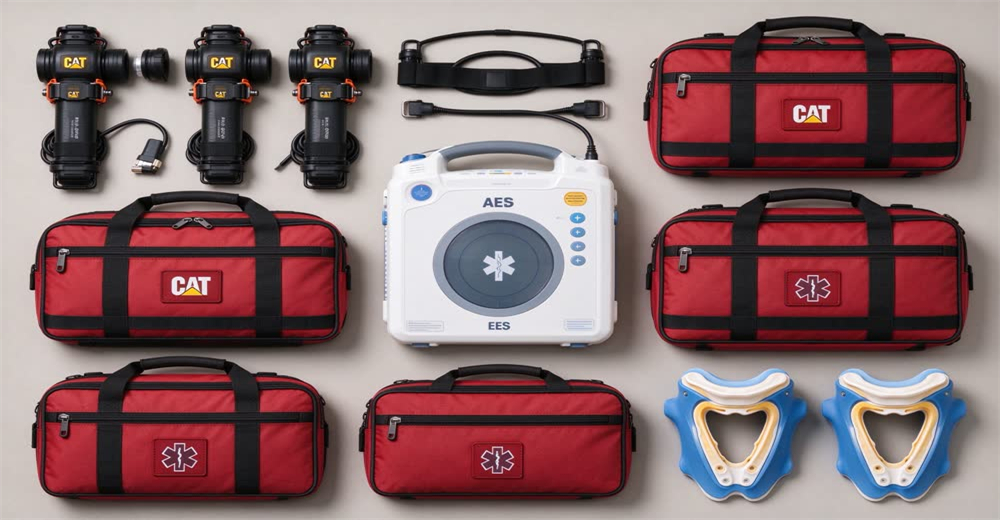
Event medical supervisors, security commanders, and workplace safety officers need more than a first aid kit. They need a triage system that works when 12 people are injured at once, tourniquets that actually stop arterial bleeding, AEDs reachable in under 60 seconds, and trauma kits stocked with the right gear. This guide covers START triage, hemorrhage control, AED deployment, and mass casualty equipment setup, referencing the Red Cross Stop the Bleed program.
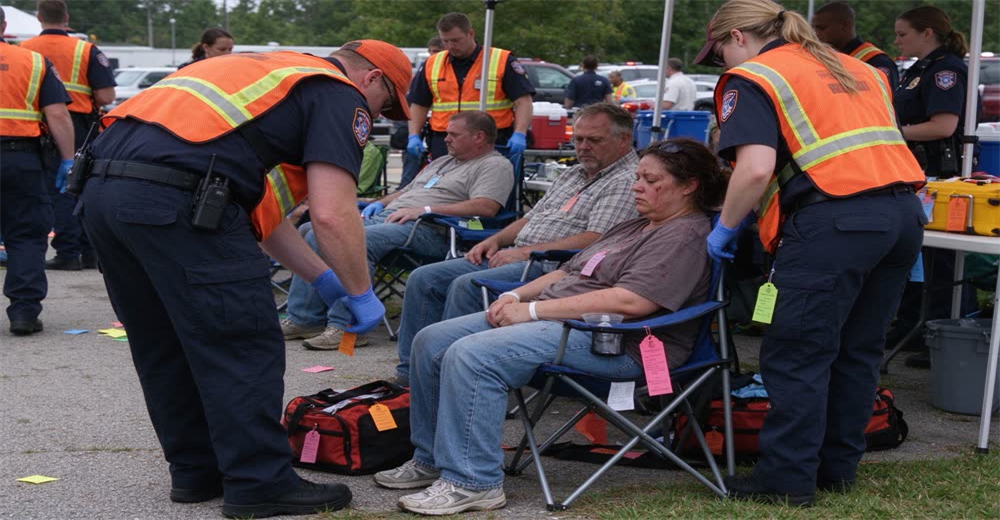
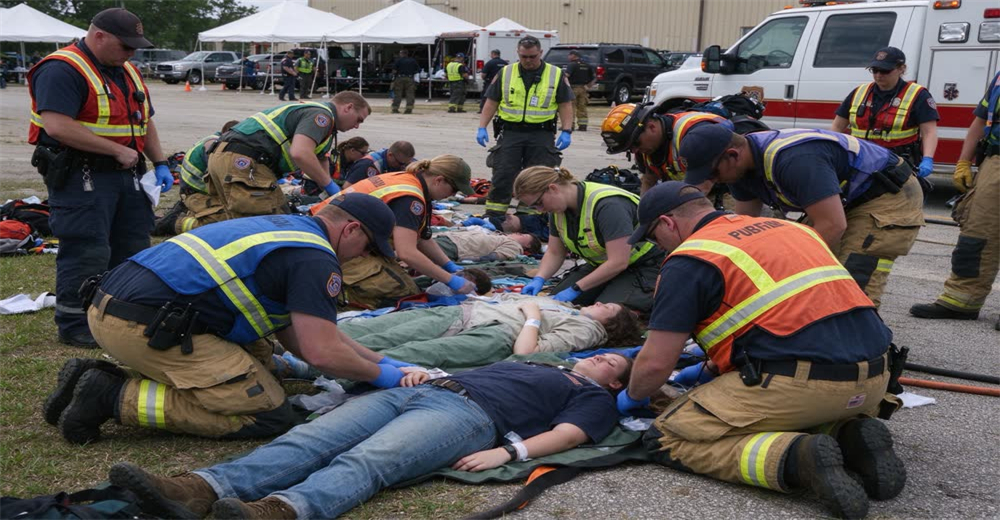
A mass casualty incident is any event that produces more patients than the local emergency system can handle with normal resources. This can include natural disasters (earthquakes, floods, tornadoes), transportation accidents (multi-vehicle crashes, train derailments), industrial explosions, or acts of violence. In an MCI, the number of injured people may exceed the available ambulances, trauma surgeons, and hospital beds. The fundamental shift is from treating everyone to treating the greatest number of patients possible — which means deliberately delaying care for some patients to save more lives overall.
Without triage, responders naturally gravitate to the loudest or most visible victims — which may not be the ones who need immediate care. Triage imposes a systematic approach: each patient is assessed in about 60 seconds and assigned a color-coded priority. The Ready.gov emergency framework emphasizes that pre-incident triage planning is essential; you cannot figure out the system during the chaos itself. Organizations that have practiced triage protocols respond in minutes; those who have not waste precious time.
Trauma care has a concept called the golden hour — the first 60 minutes after injury, during which definitive treatment offers the best chance of survival. In a mass casualty event, the golden hour may be the only window. Every minute of delay reduces survival rates for treatable injuries. This is why hemorrhage control by bystanders and early responders is so critical: stopping bleeding in the field buys the time needed to get patients to surgery.
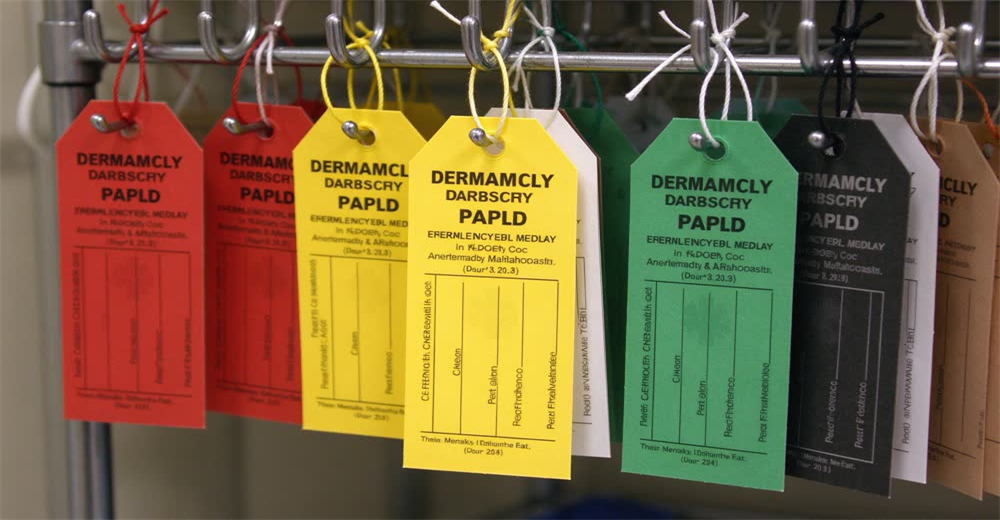
START (Simple Triage and Rapid Treatment) uses three quick assessments: can the patient walk? Are they breathing? Is there a pulse? Based on the answers, patients are assigned to one of four color-coded Categories. Red (Immediate): life-threatening injuries that are treatable — severe bleeding, airway compromise, chest injury. Yellow (Delayed): serious but not immediately life-threatening — fractures, abdominal Injuries without shock. Green (Minor): walking wounded — cuts, sprains, minor burns. Black (Expectant/Deceased): injuries incompatible with survival given available resources.
Triage fact: START triage takes 30 seconds per patient. In a 50-casualty incident, the first 5 minutes determine who lives and who dies.
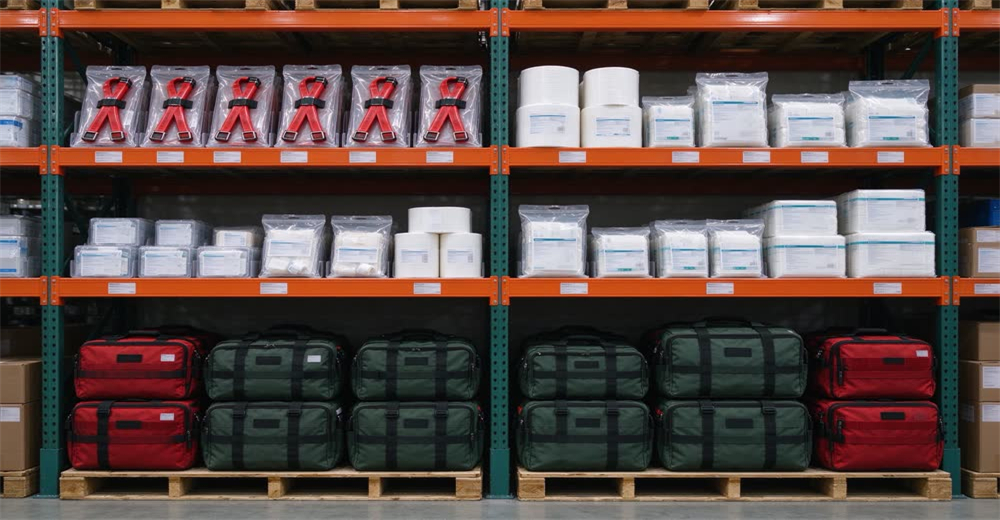
Triage tags are paper or plastic labels that record the patient's priority level, assessment notes, and treatment given. They are worn prominently so incoming medical personnel can see the priority at a glance. Bulk orders of triage tags are an essential but often overlooked supply. For a planned event, estimate one tag per expected attendee — it is always better to have too many than to run out. The tags should be waterproof and tear-resistant, with space for vital signs and treatment records.
Triage is dynamic. A patient initially tagged Yellow can deteriorate to Red if their bleeding is not controlled. Conversely, a Red patient whose bleeding is controlled and who stabilizes may be downgraded to Yellow. Responders must reassess patients as resources become available. This is why clear documentation on triage tags matters — it creates a running record of each patient's condition over time.
Tag Color
Priority
Examples
Action
Red
Immediate
Severe bleeding, airway blockage, chest injury
Treat first, transport within minutes
Yellow
Delayed
Fractures, abdominal injury, moderate burns
Treat within 30-60 min
Green
Minor
Cuts, sprains, walking wounded
Self-care area, queue for later
Black
Expectant
Catastrophic injuries, no pulse/apnea
Provide comfort, no resources spent
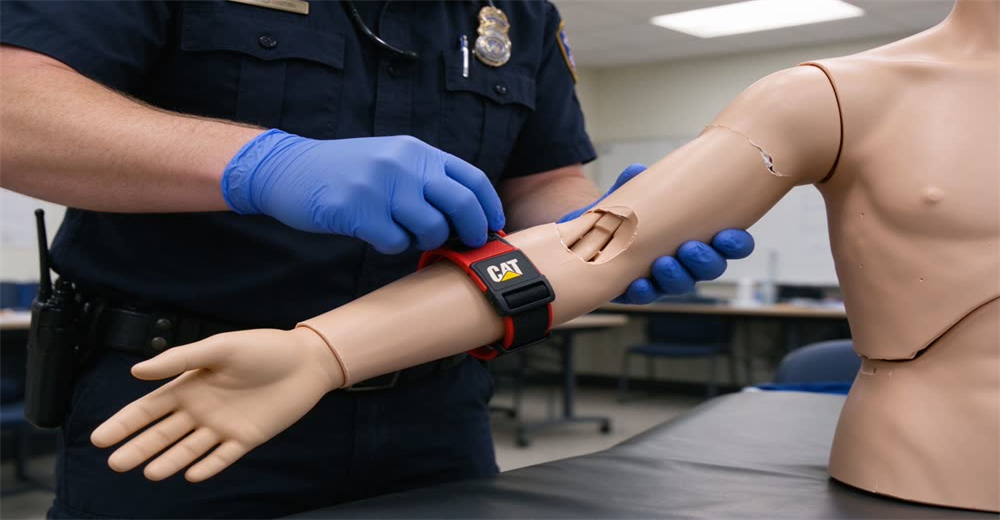
Uncontrolled extremity bleeding is the leading preventable cause of death on the battlefield and in civilian mass casualty events. A properly applied tourniquet stops arterial bleeding within seconds. Modern combat application tourniquets (CAT) are lightweight, one-handed, and designed for self-application. Every responder and every trauma kit should carry at least two tourniquets — one may fail or be applied to the wrong limb. The American Red Cross Stop the Bleed initiative trains bystanders in tourniquet application because early control saves lives.
Common mistake: Putting a tourniquet on too loosely or over clothing. A tourniquet must be applied directly against skin, 5–7 cm above the wound, and tightened until bright red bleeding stops. If you can slide a finger under the strap, it is too loose.
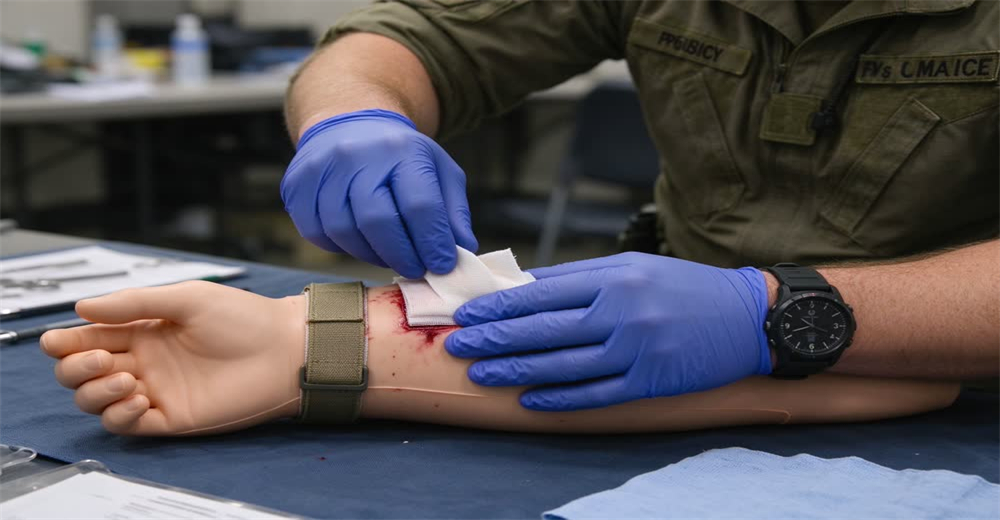
For junctional bleeding — wounds in the groin, armpit, or neck where a tourniquet cannot be applied — wound packing with hemostatic gauze is essential. The gauze is packed deep into the wound and held with direct pressure for three minutes. This is a higher-level skill that should be taught in training, but having the right gauze available is the first step. We supply compressed hemostatic gauze packs in individual vacuum-sealed pouches, ready for trauma kit insertion.
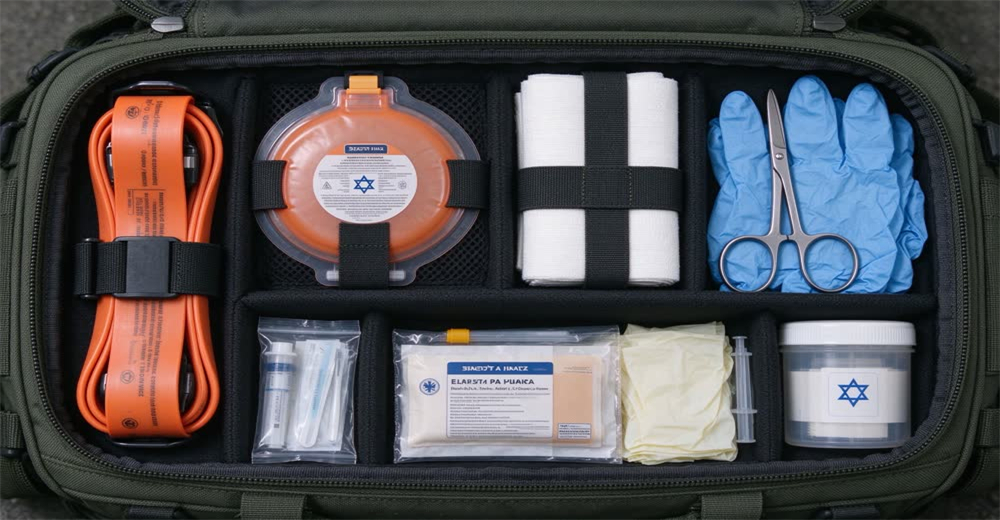
Standard pressure dressings are for moderate bleeding that does not require a tourniquet. Trauma shears — the orange-handled scissors that cut through clothing and seatbelts — are in every trauma bag.
They seem simple but are essential: you cannot treat a wound you cannot see through clothing. Also included in every trauma kit: nitrile gloves, a CPR face shield, and a marker for writing time applied on a tourniquet.
Critical insight: Tourniquets save lives. Every responder should carry two. Every trauma bag should contain enough hemorrhage control supplies for 5-10 patients. This is the single highest-yield category in mass casualty first aid.
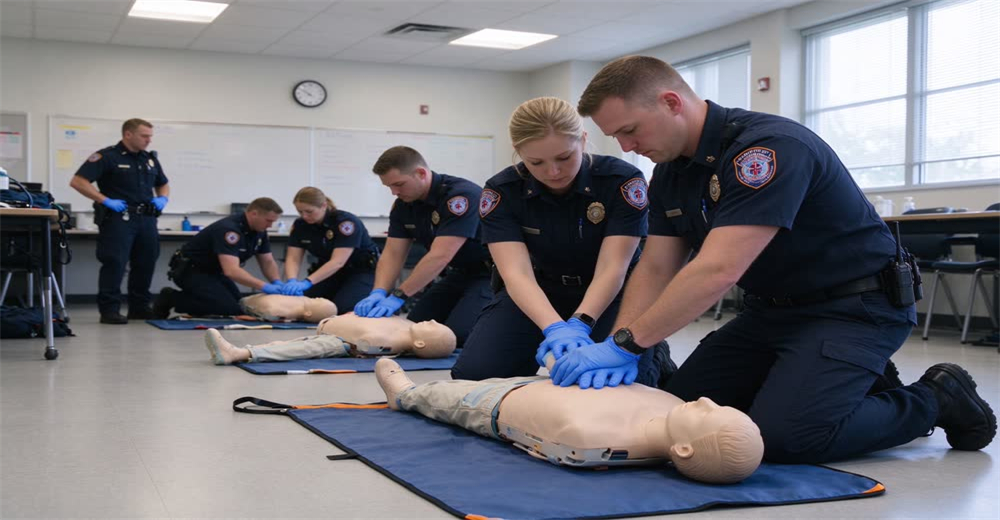
Sudden cardiac arrest can occur alongside traumatic injury, or independently among bystanders in the chaos. An AED (Automated External Defibrillator) analyzes the patient's heart rhythm and delivers a shock if needed. In a mass casualty event, having multiple AEDs staged at different points lets responders treat cardiac arrest victims simultaneously. AEDs are also high-value equipment that your organization should invest in — they are not cheap, but they are the only way to treat sudden cardiac arrest outside a hospital.
AEDs come in fully automatic and semi-automatic versions. Fully automatic units analyze the rhythm and deliver a shock without requiring the responder to press a button — ideal for untrained bystanders. Semi-automatic units require a button press after the device advises a shock. Look for clear voice prompts, long battery life, and pad expiration dates. Pediatric pads are available for children under 8. We supply AED units at wholesale pricing with multi-language voice prompts and CE/FDA certification.
An AED in a locked cabinet is useless. Mount units in clearly marked, unlocked cabinets in high-traffic areas: building entrances, gyms, stadiums, factories, and event venues. Pair each AED with a wall sign and an alarm. For outdoor events, AED backpacks carried by medics are more practical than wall-mounted units. Plan one AED per 500 expected attendees at large events.
An open chest wound — called a sucking chest wound — lets air enter the chest cavity and collapse the lung. A chest seal is a transparent adhesive dressing that covers the wound and has a one-way valve, letting air escape but not enter. Every trauma kit should include at least two chest seals (one for the front entry wound and one for the back exit wound). Modern chest seals are transparent, allowing wound monitoring without removing the dressing.
An unconscious patient who is breathing but has a blocked airway can be helped with a nasopharyngeal airway (NPA). This soft rubber tube is inserted through the nose into the throat, keeping the airway open. NPA kits come in multiple sizes to match different patient ages. This is a skill that requires training, but having the equipment available is essential for professional responders.
Every responder should carry a pocket CPR mask with a one-way valve. This protects the rescuer from bodily fluids while providing rescue breaths. The mask should fit both adults and children, with an oxygen inlet for supplemental oxygen. These are low-cost but essential items that should be in every trauma bag and first aid kit.
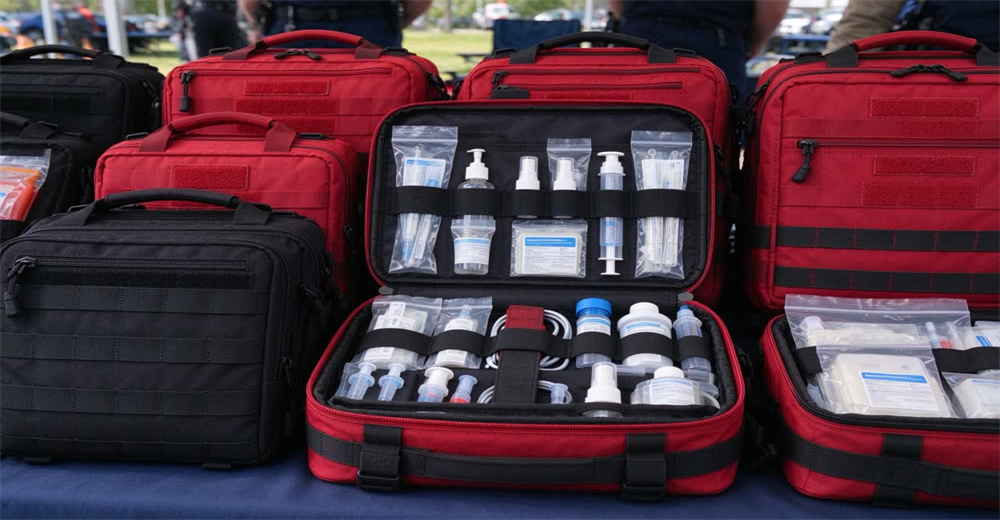
Each responder on your team should carry an individual first aid kit on their belt or vest. The IFAK contains the basics: two tourniquets, a pair of gloves, a chest seal, trauma shears, pressure dressing, and a marking pen. The IFAK is what a responder uses in the first 60 seconds before bigger equipment arrives. We supply IFAK pouches in red, black, or tan MOLLE-compatible nylon, pre-loaded with the essentials.
Beyond individual kits, your team needs larger trauma bags carried by designated medics. These bags contain enough supplies to treat 5-10 patients: multiple tourniquets, hemostatic gauze, chest seals, pressure dressings, airways, a portable suction unit, and an AED. The bag should be brightly colored (red or orange), water-resistant, and easily identifiable in low light. Backpack-style trauma bags distribute weight well for mobile response.
For very large events (stadiums, festivals, industrial sites), dedicated mass casualty bags contain 20-50 patient equivalents: bulk tourniquets, gauze rolls, trauma dressings, triangular bandages, c-spine immobilizers, and patient stretchers. These are deployed from a central medical point. The WHO emergency trauma kit guidelines recommend one mass casualty bag per 100 expected casualties.
Table: Three levels of trauma kits. IFAKs are on every responder; MCI bags come out only in large incidents.
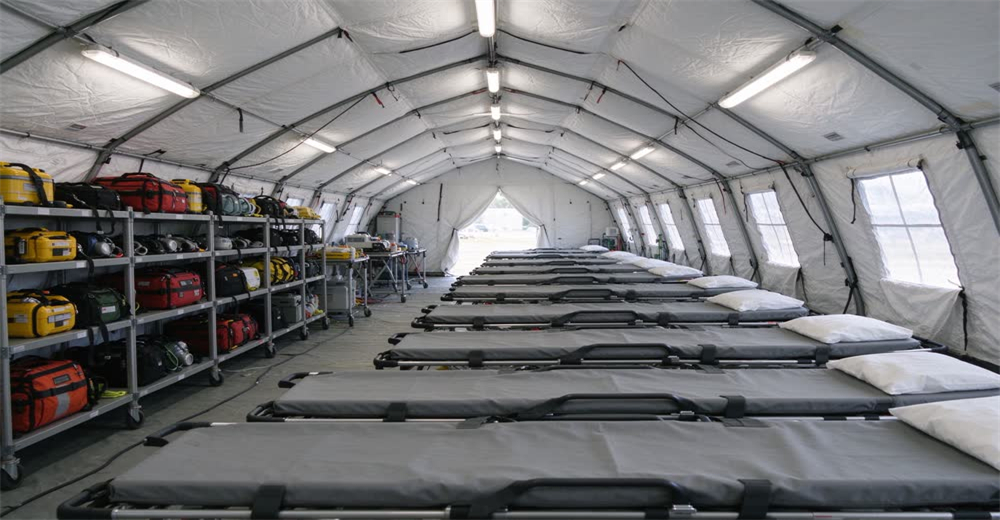
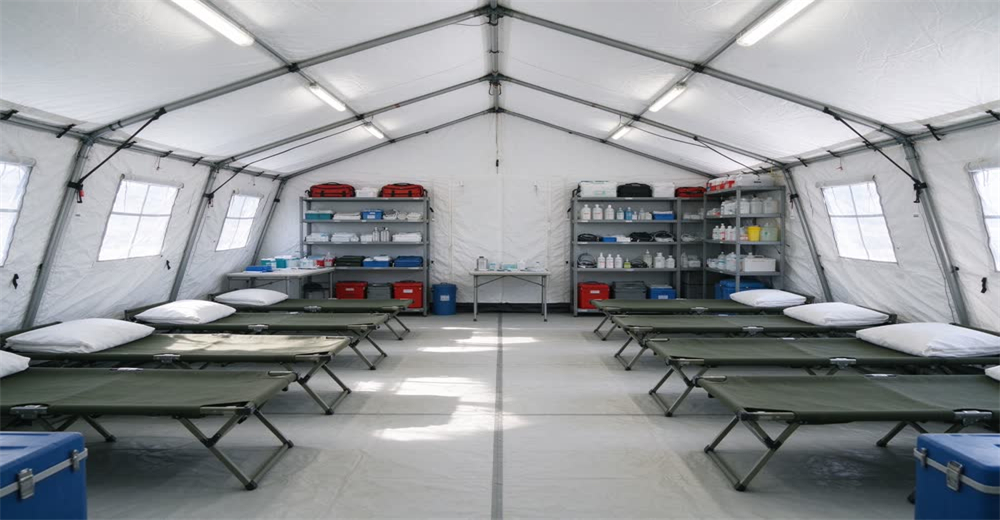
After triage, patients need organized treatment areas. A large medical tent with clear signage (RED, YELLOW, GREEN zones) keeps care organized. Folding cots become treatment beds. Portable lighting allows treatment after dark. We supply medical tents, folding cots, and mobile lighting towers as a complete field medical package. The tent should be large enough to zone by triage category — mixing Red and Green patients creates dangerous confusion.
Even in chaos, patients need some privacy. Simple privacy screens or curtained cubicles create dignity while allowing medical staff to move freely. For pediatric patients or female patients, a dedicated screened area is important. These small considerations improve both care quality and family trust during a chaotic event.
If the incident involves chemical, biological, or radiological materials, a decontamination zone must be set up before treatment. Decontamination tents, eye wash stations, and PPE are essential. Our emergency eyewash stations provide 15 minutes of flushing water for chemical exposure. For industrial sites, pre-planned decontamination equipment is a regulatory requirement, not just a best practice.
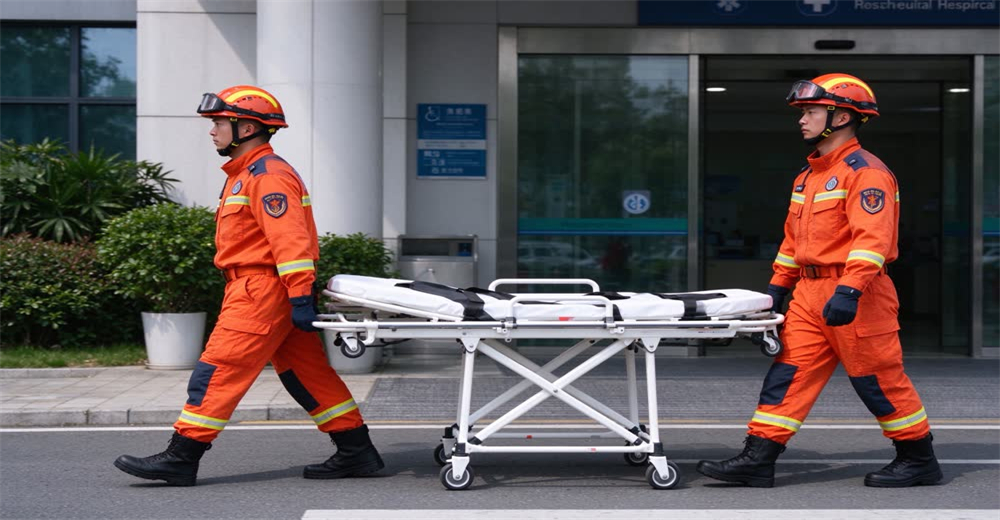
Getting patients from the scene to the ambulance requires stretchers. Collapsible aluminum stretchers fold in half and weigh only 4-5 kg, but support up to 159 kg. Every trauma bag and medical tent should have at least one stretcher. For large events, plan one stretcher per 50 casualties. We supply both standard collapsible stretchers and flexible wheeled stretcher chairs for narrow corridors.
Walking wounded (Green tag) still need somewhere to sit or lie down while waiting. Folding cots and camp beds provide a waiting area that is more dignified than sitting on the ground. Cots also serve as treatment surfaces for Yellow-tag patients. Our steel-frame folding cots support 120 kg and fold flat for storage. For a 100-patient waiting area, plan 20-30 cots.
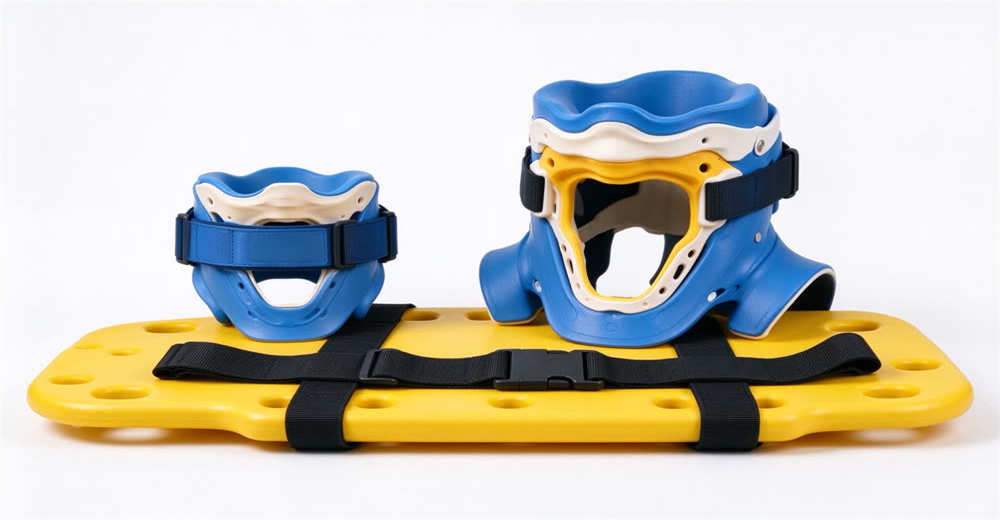
Suspected spinal injuries require cervical collars and spinal boards. Adjustable cervical collars fit both adults and children. Short spinal boards are used for extracting patients from vehicles or confined spaces. These are specialized items that every professional MCI kit should include, but they are rarely used in smaller emergencies. Stock them centrally and deploy them only when needed.
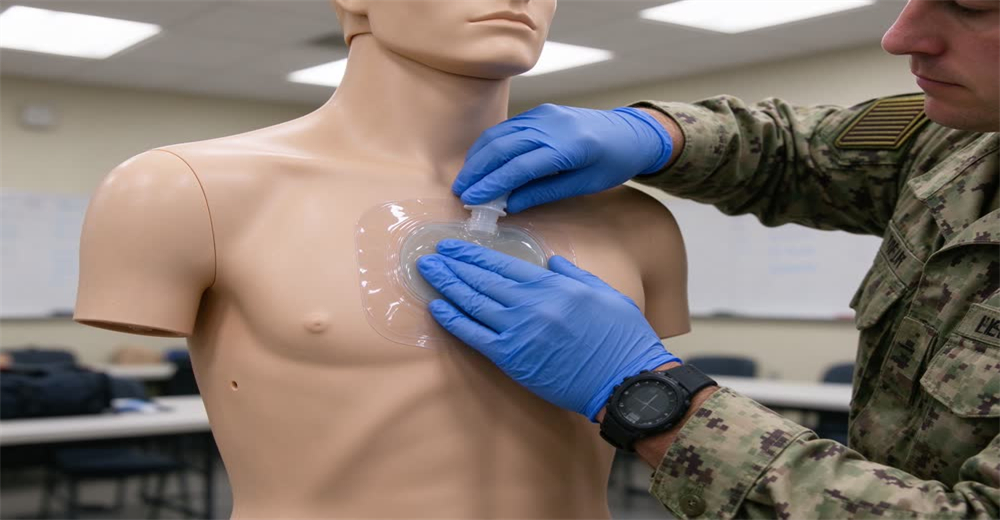
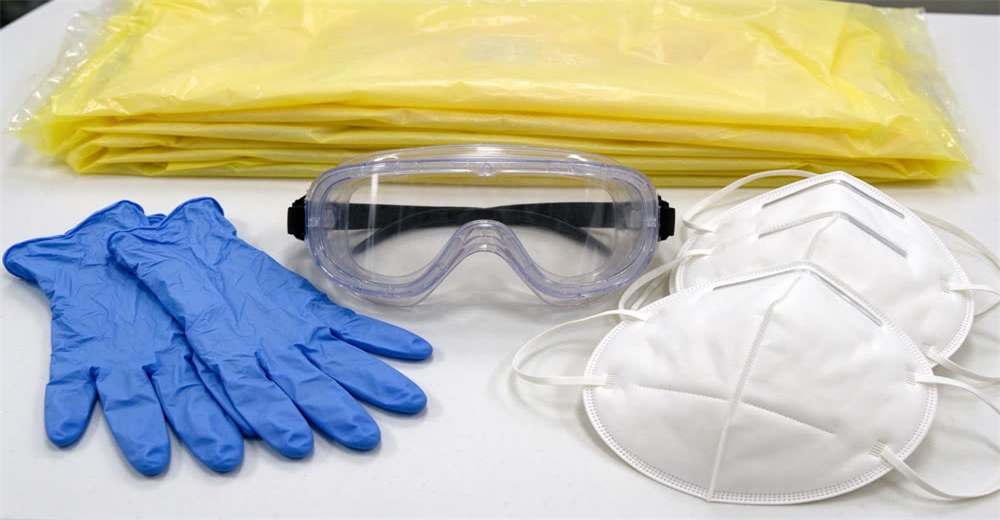
Responders must protect themselves first. Nitrile examination gloves (not latex, due to allergies), safety goggles, and surgical masks are minimum PPE. For scenes with blood or bodily fluids, face shields and gowns are needed. Bulk nitrile gloves should be in every trauma bag and treatment area. The CDC bloodborne pathogen guidelines require PPE whenever contact with blood is possible.
Responder safety on the incident scene is paramount. Hard hats protect against falling debris in structural collapse. High-visibility vests make responders visible at night or on roadways. Steel-toe boots protect feet. A responder who becomes a patient themselves adds to the casualty count — PPE is not optional.
For scenes involving smoke, dust, or airborne contaminants, N95 respirators or P100 masks are needed. We supply NIOSH-approved N95 masks in bulk. For chemical exposure, full-face respirators with organic vapor cartridges are required — these should be pre-positioned at industrial sites where chemical incidents are possible.
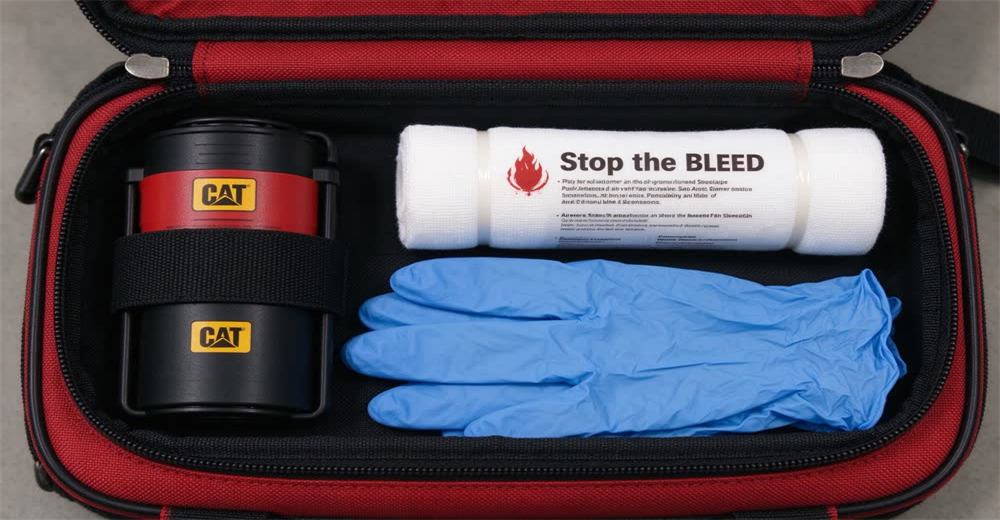
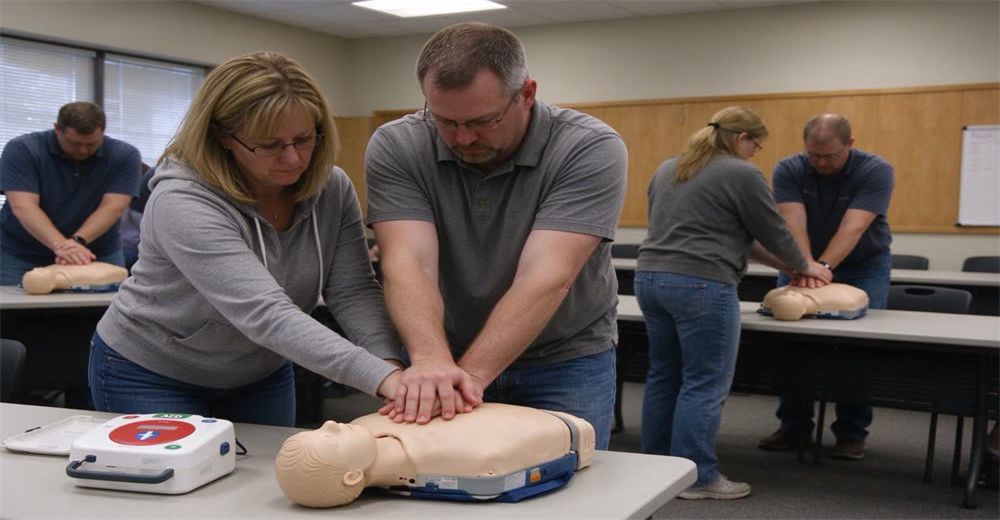
Having equipment without training is useless. The Stop the Bleed campaign trains bystanders in three core skills: applying direct pressure, packing a wound, and applying a tourniquet. A 90-minute course can save a life. Every organization that stocks trauma kits should schedule annual Stop the Bleed refreshers. Equipment only works if someone knows how to use it under pressure.
Triage is a skill that degrades without practice. Annual MCI drills — using volunteer "patients" with makeup injuries — test your team's triage speed, communication, and equipment access. Drills reveal gaps you would never find on paper: where is the nearest AED? Who has the key to the trauma cabinet? How long to get stretchers out? The Ready.gov recommends full-scale drills at least biennially for organizations with mass gathering responsibilities.
Expired tourniquets, dead AED batteries, and out-of-date gauze are silent failures. Set up a maintenance calendar: check AED battery status monthly, inspect trauma kits quarterly, rotate expired items before their use-by date. A kit that has not been checked in two years may be full of unusable supplies. Assign one person to own this maintenance — it is too important to be shared.
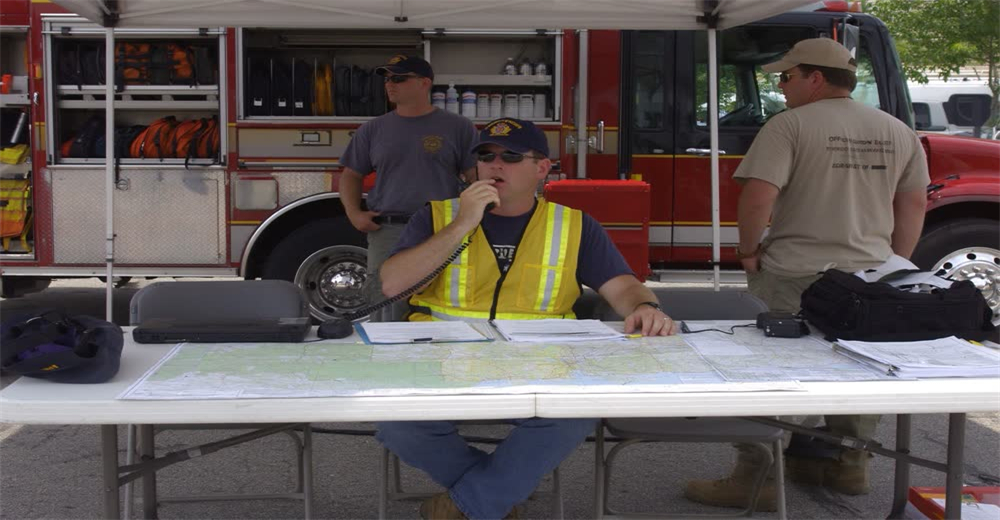
Table: Mass casualty equipment by event size. Scale up AEDs and tourniquets first — these are the highest-impact items.
|
Category |
20-Person Event |
100-Person Event |
1000-Person Event |
|
AED units |
1 |
2 |
5 |
|
Tourniquets |
4 |
20 |
100 |
|
Trauma bags |
1 |
3 |
10 |
|
Triage tags |
50 |
200 |
1000 |
|
Chest seals |
4 |
20 |
100 |
|
Gauze rolls |
10 |
50 |
300 |
|
Stretchers |
0 |
2 |
10 |
|
Folding cots |
2 |
10 |
50 |
|
Nitrile gloves (pairs) |
20 |
100 |
500 |
|
Medical tent |
0 |
1 |
3 |
A: Triage is the rapid sorting of patients by injury severity when emergency resources are overwhelmed. Color-coded tags (red, yellow, green, black) identify who gets treated first. It ensures the greatest number of patients survive, not just the loudest voices.
A: Bleeding control. Uncontrolled hemorrhage is the leading preventable trauma death. Tourniquets and wound packing in the first minutes save more lives than any other intervention.
A: Plan one trauma kit per 50 expected casualties, plus one IFAK on every responder. For very large events, add dedicated MCI response bags at central medical points.
A: Yes. Sudden cardiac arrest can happen alongside trauma. Multiple AEDs should be staged so responders can treat victims simultaneously. AEDs are simple to use — voice prompts guide even untrained bystanders.
A: Red = immediate (life-threatening but treatable). Yellow = delayed (serious but stable). Green = minor (walking wounded). Black = expectant (survival unlikely with available resources).
A: Yes. Call emergency services first, then control obvious bleeding with direct pressure or a tourniquet. By time professional help arrives, early bystander action can mean the difference between life and death.
A: Tourniquets and chest seals are the most commonly under-stocked items. Standard office first aid kits have band-aids but lack hemorrhage control equipment — which is exactly what MCIs require.
A: Pre-position trauma kits and AEDs, train your team in Stop the Bleed and triage protocols, conduct annual drills, and maintain equipment on a scheduled calendar.
A: Simple Triage and Rapid Treatment. In about 60 seconds per patient, the responder checks walking ability, breathing, and pulse/mental status to assign a triage category.
A: Plan on at least one tourniquet per 500 attendees for mass-gathering events, but stage them where they are accessible — not locked in a cabinet. For a 5,000-person festival, that means 10–15 tourniquets distributed across medical tents and staff belts. The Stop the Bleed campaign (run by the American College of Surgeons) recommends one rapid tourniquet kit per 200–300 people at high-density events.
A: Minimum requirement: everyone on your medical team should know START triage and tourniquet application. Run a 30-minute tabletop drill 48 hours before the event — assign roles, confirm radio channels, and check that every trauma bag has working items. Practice matters more than equipment count: a team that has drilled together reacts in seconds, not minutes.
Start by
(1) estimating the worst-case casualty count for your venue or region,
(2) identifying who on your team has Stop the Bleed or CPR training, and
(3) staging trauma kits at known risk points. We are a China-based supplier of mass casualty response equipment — AED units, trauma kits, tourniquets and hemorrhage control supplies. Contact us for wholesale pricing.
Przyjazne linki :
prawa autorskie © Custom Disaster - Relief Bedding: Tents, Sleeping Bags, Blankets Wszelkie prawa zastrzeżone
profesjonalny zespół do obsługi !