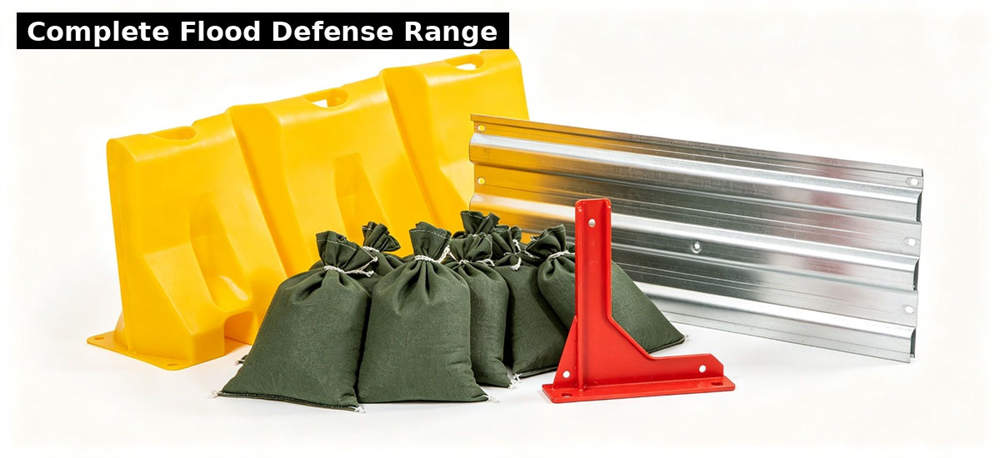
Flood defense is not one product — it is a system. Sandbags work for corners and irregular shapes. Water barriers cover long straight lines fast. ABS plastic boards seal doorways without drilling. Aluminum barriers protect garage and metro entrances for years. Most projects use two or more types together. This guide covers all four — how to choose, deploy, inspect and maintain each one. For personal protective equipment, see our flood disaster relief products page.
Before you start: These four types are not interchangeable. Sandbags need fill material and labour on site. Water barriers need a trained deployment team. ABS boards need flat, smooth ground. Aluminum barriers need flat vertical sides for post mounting. Match the product to your site first, then calculate quantities.
Flood defense works as a system. Barriers keep water out, but your team also needs protective clothing, footwear and rescue equipment.
Flood Disaster Relief Products
Four product categories cover most flood defense needs. Match the product to your site conditions first, then handle quantities and inspection.
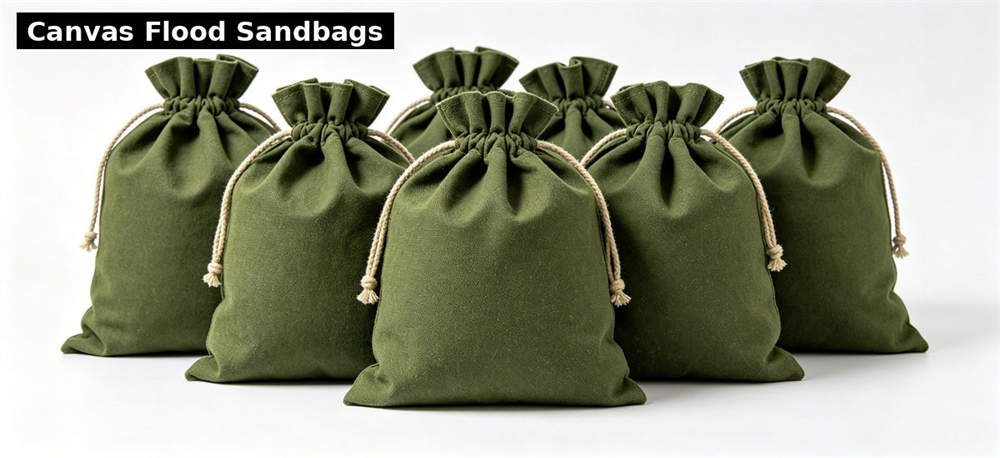
Use when suitable fill material (clean sand or gravel) is available at the destination and the project can organise filling, closing, carrying and placement. Five material types are commonly available:
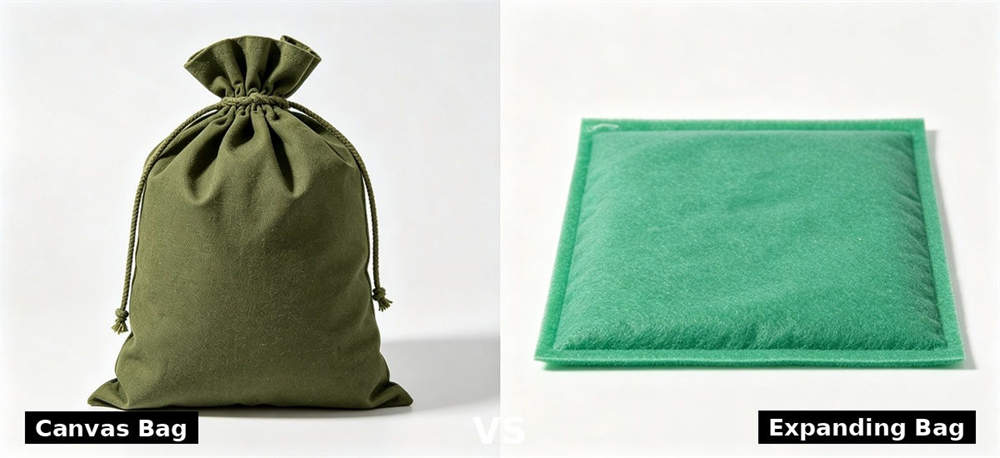
(1) Thick canvas — the most common reusable type, army green or olive, durable and abrasion-resistant;
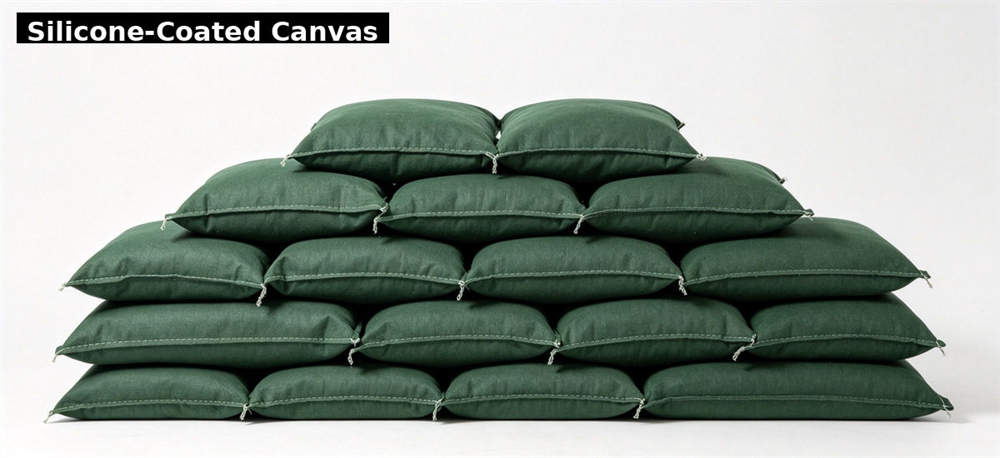
(2) Silicone-coated canvas — waterproof and colour-fast, for long-term outdoor exposure;
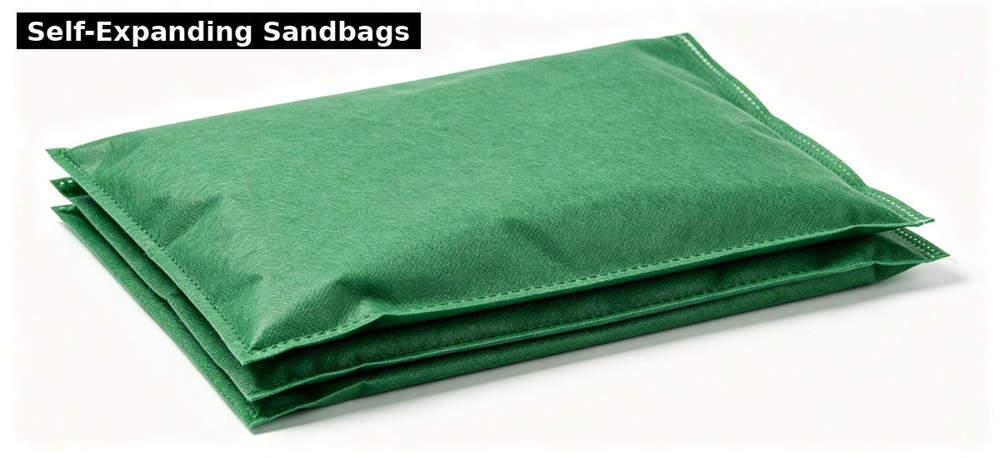
(3) Hydrophilic self-expanding bags — contain super-absorbent polymer, swell 3–20× on contact with water in 30 seconds to 3 minutes, no sand needed, green non-woven or canvas outer;
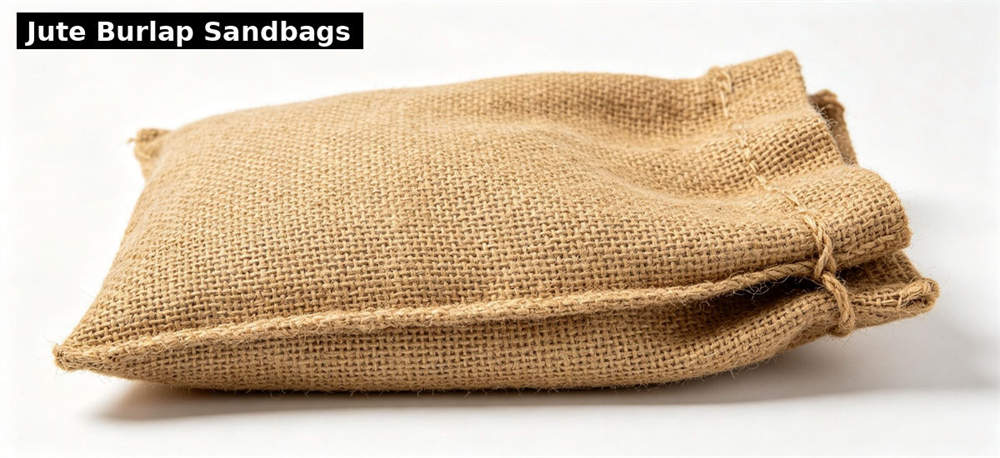
(4) Jute/burlap — natural biodegradable fibre, preferred for eco-sensitive and overseas environmental projects;
(5) PP woven — lowest-cost single-use option, 50–100gsm (60–80gsm typical), optional PE coating.
Standard size: 30×60cm (12×24 inch); also 25×50cm, 25×70cm, 40×60cm, 40×80cm, 50×80cm. Colours: army green (most common), olive, yellow, white, orange, natural jute tan.
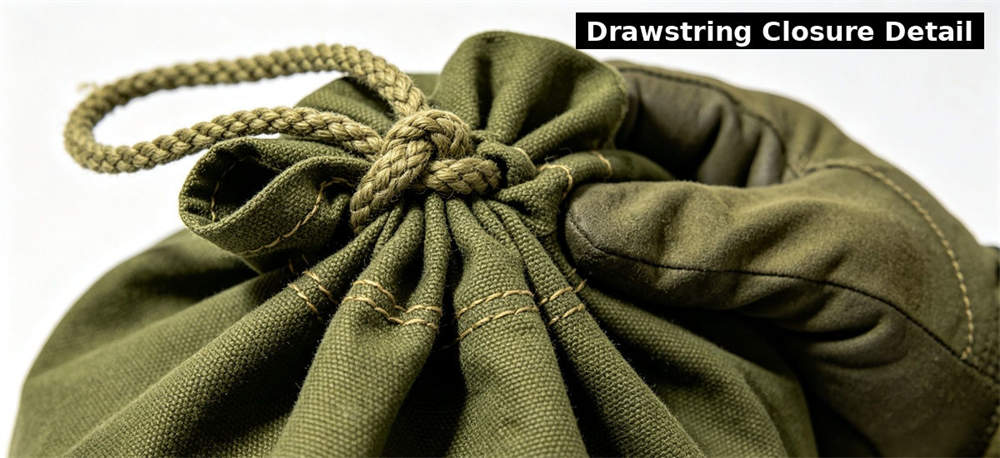
Closure: drawstring, zipper or tie string. Fill to one-half to two-thirds only — a fully filled bag cannot stack and will split.
Filled weight: 15–25kg per standard bag depending on size. Stack in staggered (brick) pattern, pyramid shape, maximum 4–5 courses high. Empty canvas bags store 3–5 years; PP bags with UV stabiliser store 2–3 years. Do not use when the site lacks fill, labour or access, or when an immediately deployable continuous barrier is needed.
View heavy-duty flood sandbags with drawstring closure
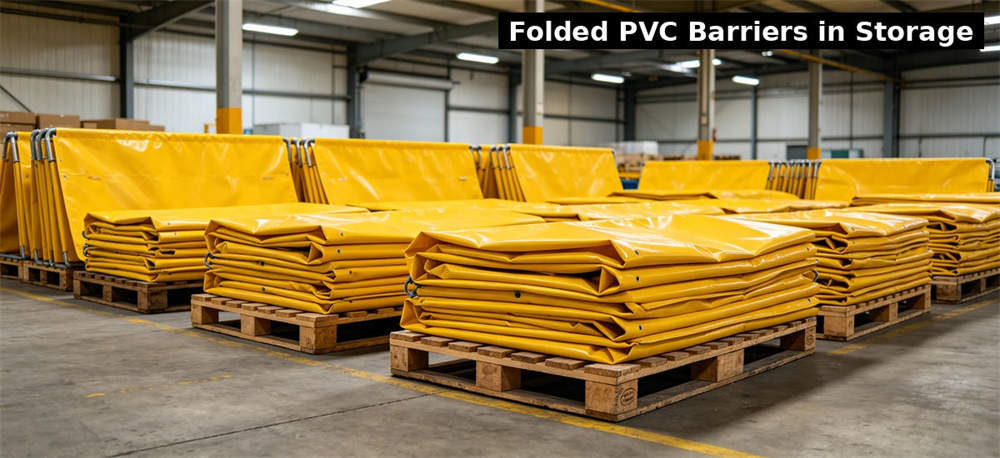
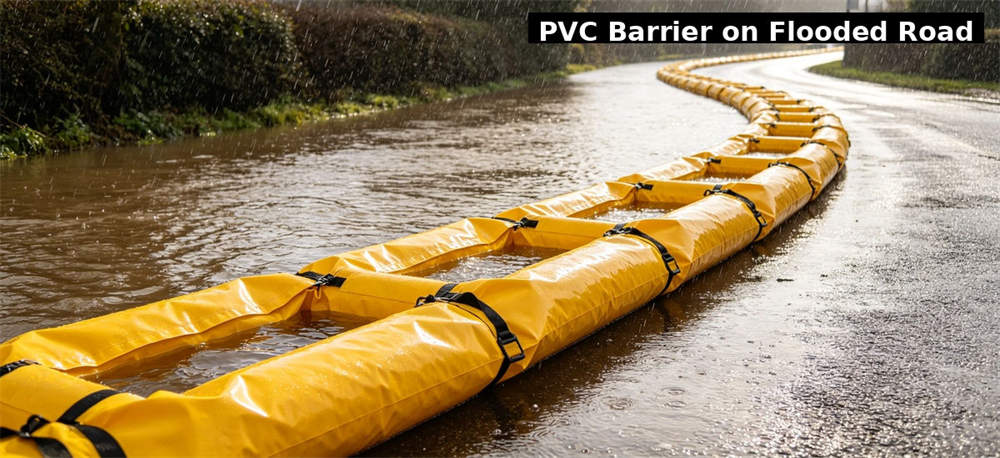
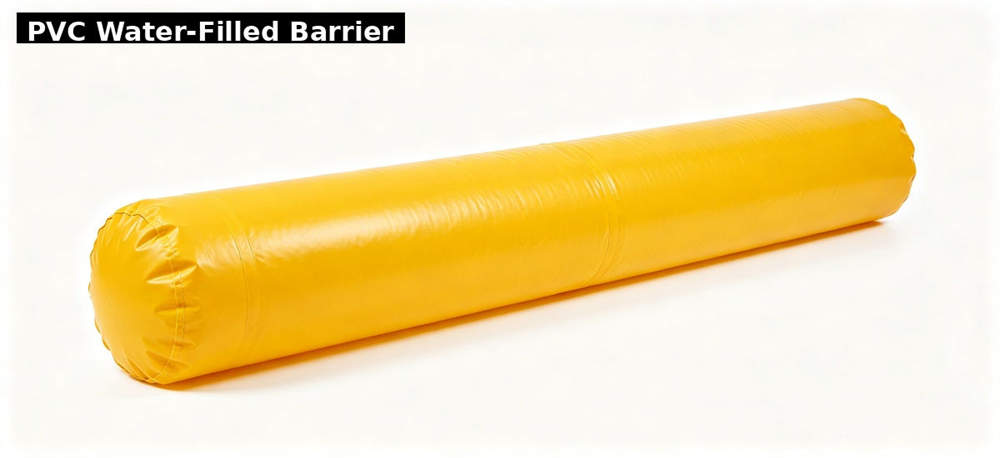
Use when the route can be measured and a trained team can deploy, connect, secure, inspect, remove and recover a complete system.
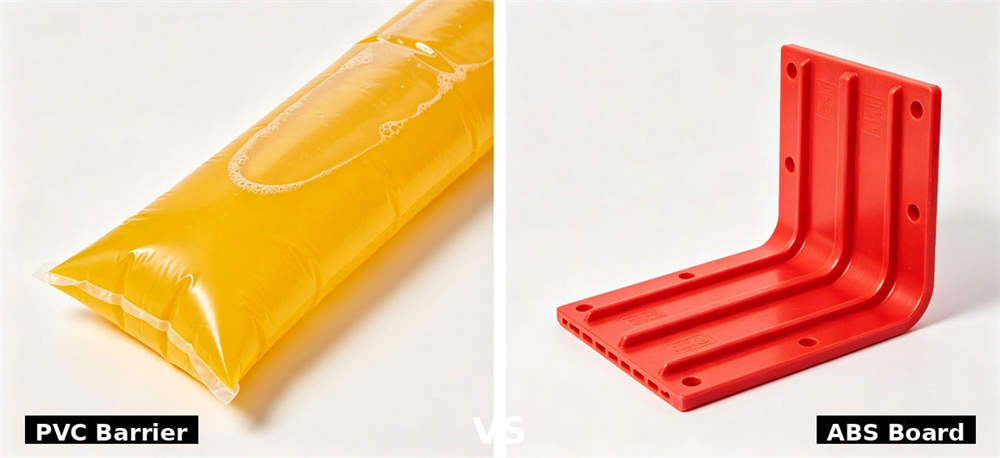
Material: PVC-coated polyester or TPU.
Section lengths: 1m, 2m or 5m. Heights: 30cm, 50cm, 70cm or 100cm. Base width is typically 1.5–2× the height for stability. Weight: 3–8kg per metre depending on size.
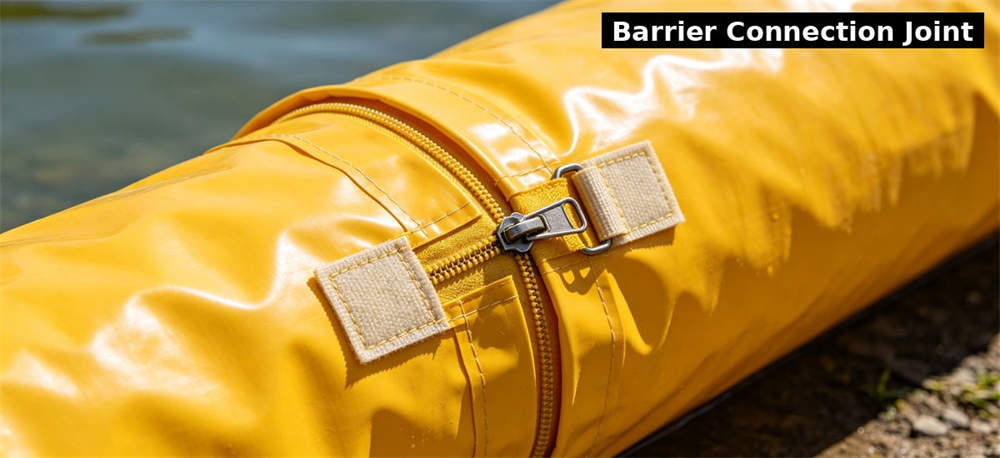
Connection: zipper, velcro or clip system.
Filling: water-fill or sand-fill depending on model. Reusable for approximately 5–10 deployments depending on wear. Each unit ships with a repair kit (PVC patches + adhesive) and deployment instructions. Do not use when ground conditions, corners, ends or flow conditions are unknown, or when no team is responsible for deployment and recovery.
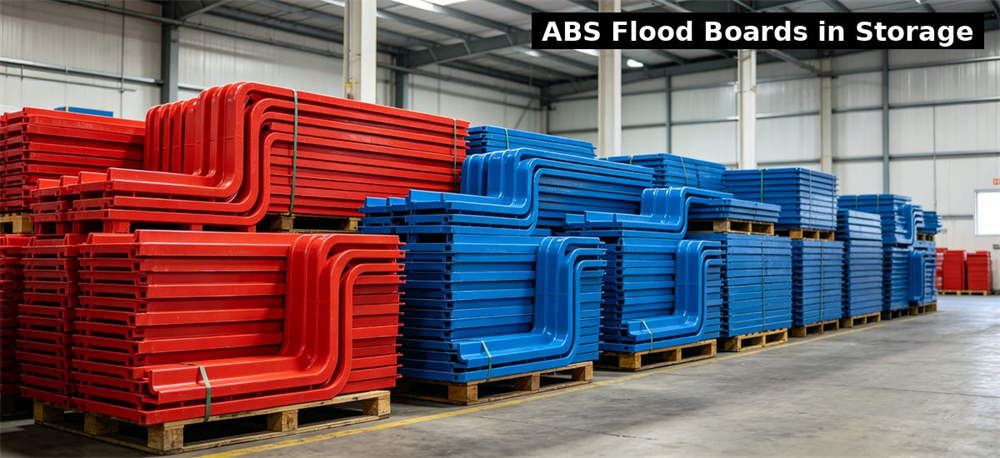
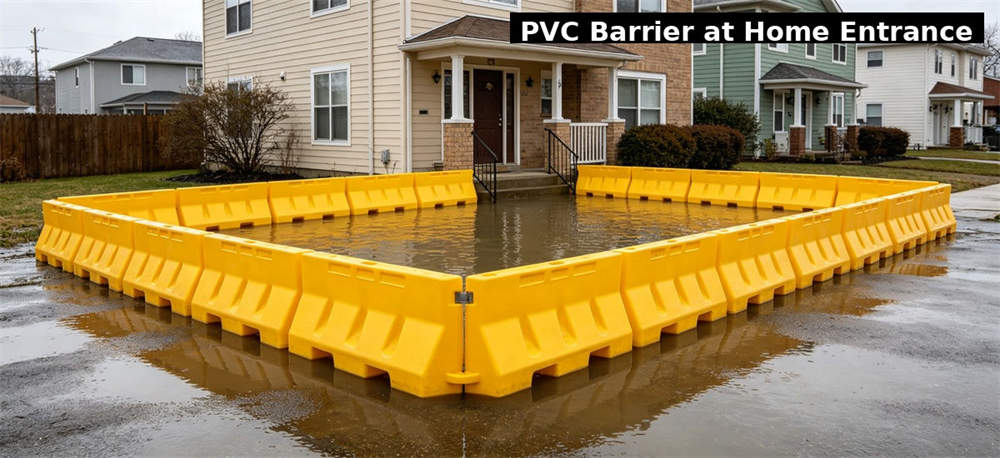
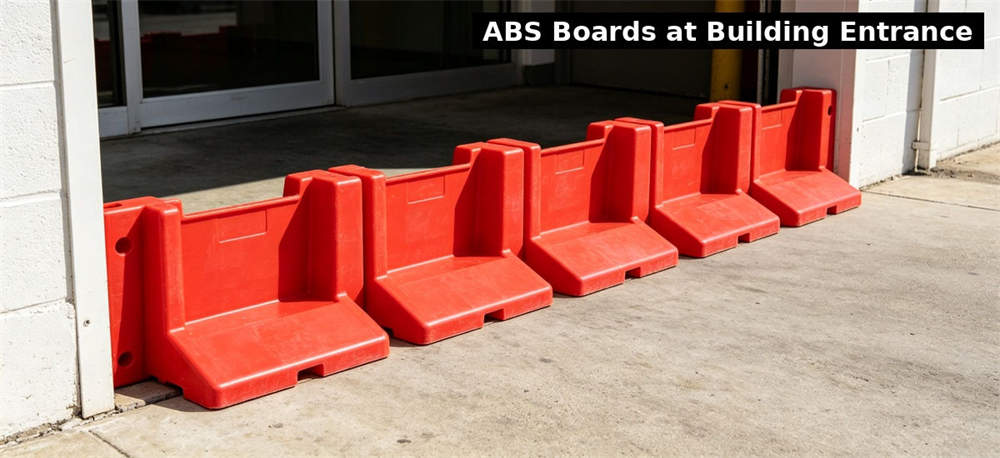
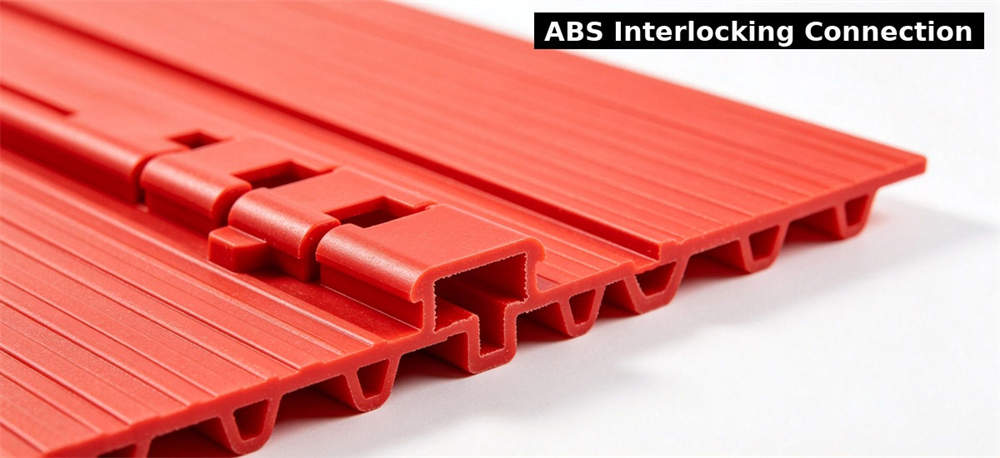
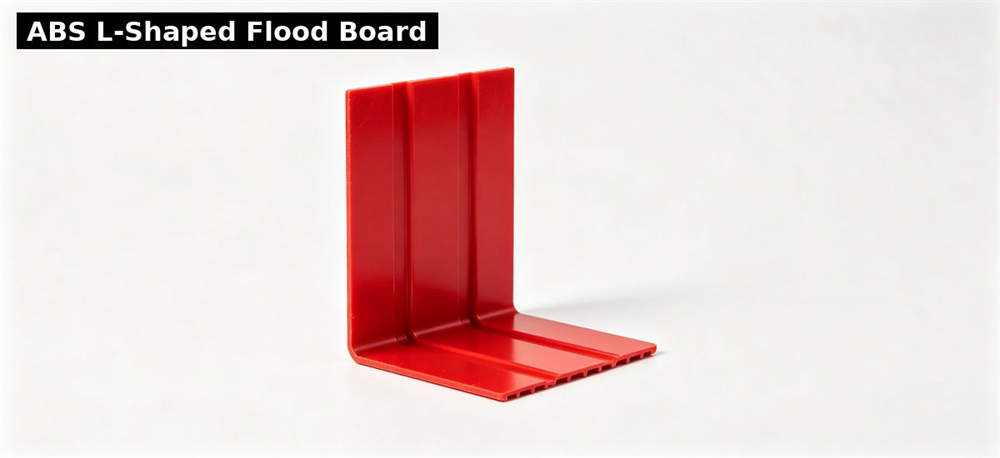
Use when you need a quick, self-standing barrier at doorways, garages, warehouse entrances or low walls without drilling or installing tracks. Material: ABS engineering plastic, L-shaped profile (vertical panel + horizontal base). The horizontal base sits on the ground and water pressure pushes it down for a tighter seal — the deeper the water, the more stable it becomes. Heights: 52.8cm, 66cm, 75cm, 80cm, 100cm, 110cm, 120cm. Width per unit: 70cm, 80cm, 100cm. Weight: 3–6kg per unit depending on size. Connection: interlocking design, straight units + inner corner + outer corner for turns. Colours: red (most common), blue, yellow. No tools needed for installation — place on flat ground, interlock units, ready in minutes. Reusable for many seasons. Do not use on uneven ground, gravel or surfaces larger than 5mm gap — the base needs flat contact to seal.
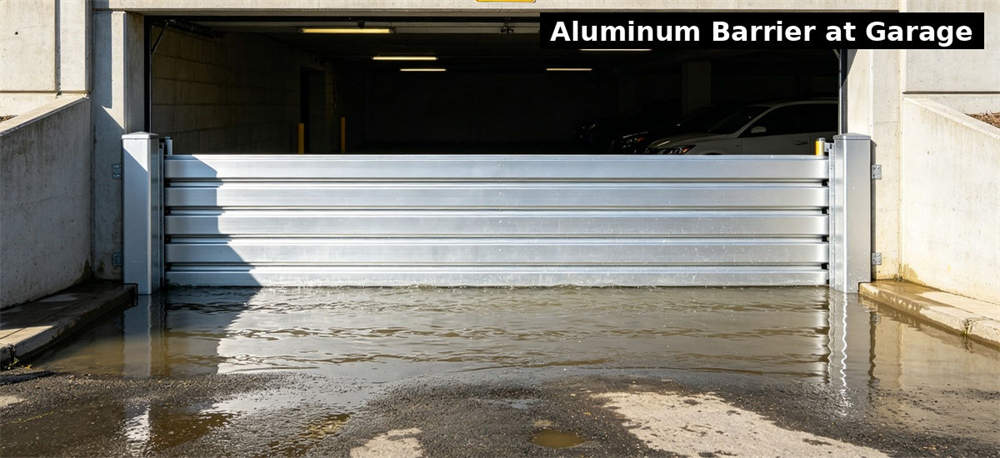
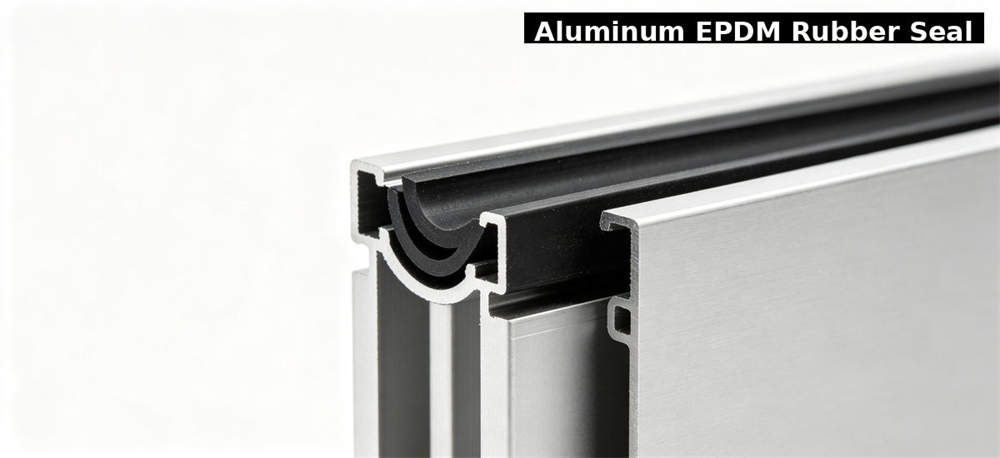
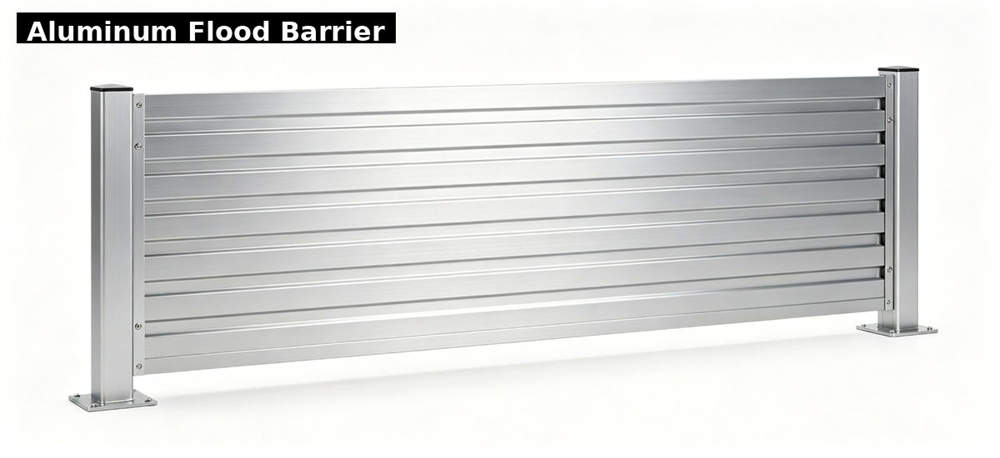
Use for permanent or semi-permanent installation at underground garage entrances, metro stations, commercial building entrances, warehouses and municipal facilities where a high-quality, long-lasting barrier is required. Material: 6063-T5 aluminum alloy, anodized surface for corrosion resistance. Structure: side posts (installed on both sides of the entrance) + horizontal aluminum panels stacked to required height + EPDM rubber sealing strips. Panel heights: 20cm, 40cm, 60cm per panel (stackable to 1m+). Panel thickness: 4–5mm with internal reinforcement ribs. Features: removable panels (store when not in use), watertight seal via compression rubber, anti-corrosion, lightweight (2–5kg per panel). Custom lengths available. Installation: one-time drilling for side posts, then panels slide in/out in minutes. Do not use when the entrance has no flat vertical sides for post mounting, or when the opening width exceeds custom fabrication capacity.
|
Feature |
Sandbags |
Water Barrier |
ABS L-Shaped Board |
Aluminum Barrier |
|
Arrival state |
Empty bags, fill on site |
Complete units + connectors |
Ready-to-use boards |
Posts + panels, install once |
|
Installation |
Fill + stack, labour intensive |
Unfold, connect, fill water |
Place on ground, interlock |
Drill posts, slide panels in |
|
Deploy speed |
Slow (hours) |
Fast (minutes) |
Very fast (minutes) |
First install hours, then minutes |
|
Max height |
0.5–0.8m (4–5 courses) |
0.3–1.0m |
0.5–1.2m |
0.6–1.0m+ (stackable) |
|
Best for |
Corners, doorways, irregular |
Long straight lines, roads |
Doorways, garages, temporary |
Garage, metro, commercial |
|
Reusable |
Generally single-use |
5–10 deployments |
Many seasons |
5–8 years+ |
|
Ground requirement |
Any surface |
Fairly level, clear debris |
Flat, smooth, ≤5mm gap |
Flat floor + vertical sides |
|
Site resources |
Sand, shovels, labour |
Water source, team, tools |
None (place and go) |
Drill, tools, installer |

|
Feature |
Flood Sandbags |
Deployable Water Barrier |
|
Arrival state |
Empty bags, fill on site |
Complete units + connectors + repair kit |
|
Material |
Canvas, silicone canvas, hydrophilic expanding, jute, PP woven 50–100gsm |
PVC-coated polyester or TPU |
|
Standard size |
30×60cm (also 40×60, 50×80cm) |
1m/2m/5m sections, 30–100cm high |
|
Fill required |
Sand/gravel on site, 15–20kg per bag |
Water or sand (model-dependent) |
|
Deployment speed |
Slow — requires filling labour |
Fast — unfold, connect, fill |
|
Best for |
Corners, doorways, irregular shapes |
Long straight lines, roads, riverbanks |
|
Reusable |
Generally single-use (contamination) |
Yes, approx 5–10 deployments |
|
Site resources needed |
Fill, shovels, filling/carrying labour |
Assembly team, water source, tools |
|
Storage footprint |
Small (empty bags compact) |
Larger (folded units + components) |
|
Post-use handling |
Dispose of contaminated fill + bags |
Clean, dry, inspect, repack, store |
|
Feature |
ABS Plastic L-Shaped Board |
Aluminum Flood Barrier |
|
Material |
ABS engineering plastic |
6063-T5 aluminum alloy, anodized |
|
Installation |
No drilling, place on flat ground |
One-time drill for side posts, panels slide in |
|
Heights available |
52.8cm, 66cm, 75cm, 80cm, 100–120cm |
20/40/60cm panels, stackable to 1m+ |
|
Weight per unit |
3–6kg |
2–5kg per panel |
|
Sealing method |
Water pressure pushes base down |
EPDM rubber compression seal |
|
Corners/turns |
Inner/outer corner units available |
Custom post configuration |
|
Best for |
Doorways, garages, temporary use |
Garage entrances, metro, commercial buildings |
|
Ground requirement |
Flat, smooth surface only |
Flat floor with vertical sides for posts |
|
Reusable |
Yes, many seasons |
Yes, 10+ years with maintenance |
A single total length hides transitions and can leave an unprotected gap at the highest-risk opening. Survey the site before requesting a quotation.
✅ For water-rescue projects requiring long-range line deployment, explore bulk rescue line throwers | Rescue Line Launchers and Line Throwers for Project Procurement to compare line launchers, rescue lines, and project-supply options.
Sandbag quantity formula (reference): For a 0.5m high wall, approximately 3 bags per metre per course × 4 courses × 1.2 redundancy = about 15 bags per metre. Adjust for height, bag size and wall shape. Always confirm with your site engineer.
Calculate barrier sections from usable deployed length, not nominal product length. Add connectors, end sections, turns, anchoring or ballast, repair parts and reserve sections. Keep all assumptions with the quantity sheet so the next procurement team can verify.
Empty-bag quantity is only the first step. The way bags are filled and stacked determines whether the wall holds.
5. Do not drag filled bags. Carry them — dragging abrades the fabric and causes splits.
6. Standard filled weight: 15–20kg. One person can carry this safely. Over 25kg needs two people.
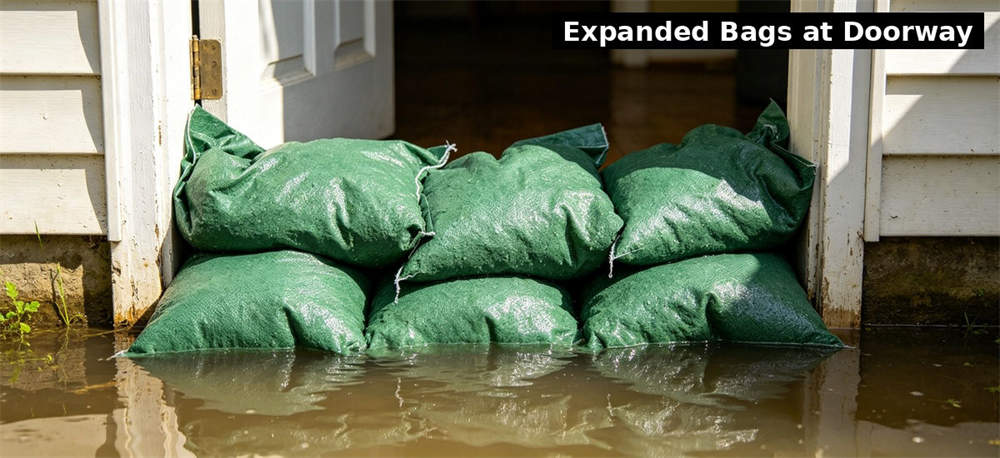
Safety: Bend at the knees when lifting, not the waist. Two people for bags over 25kg. Do not stand on top of a sandbag wall — it may collapse. Wear gloves and waterproof boots during filling and deployment.
Assign: fill material source, screening (remove rocks/debris), one person holding the bag open, one person shovelling, one person closing, one person carrying. A well-organised station can fill 200–400 bags per hour with 4–5 people. Record responsibility for unused bags, contaminated fill and post-event removal.
Do not order a deployable barrier only by "number of panels." The system includes straight units, connectors, corners, ends, anchoring, tools, spares and storage. A correct count of main units is still unusable when one critical connector is missing.
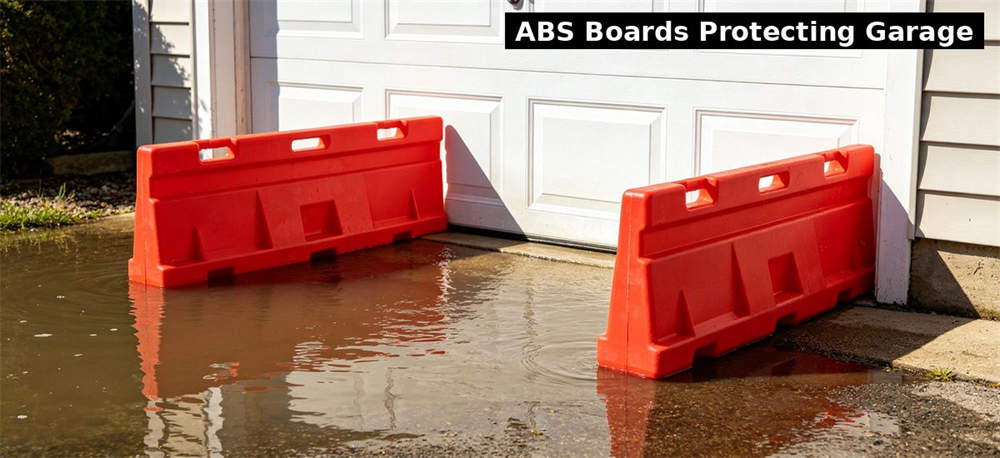
Important: A sample or short trial section should reproduce unfolding, connection, corners, ends, fixing, removal and repacking on representative ground. A demonstration confirms handling of that configuration — it does not prove unlimited flood height or every site condition.
ABS boards are the fastest to deploy — no tools, no drilling. But they only work on flat, smooth ground. Follow these steps for a reliable seal.
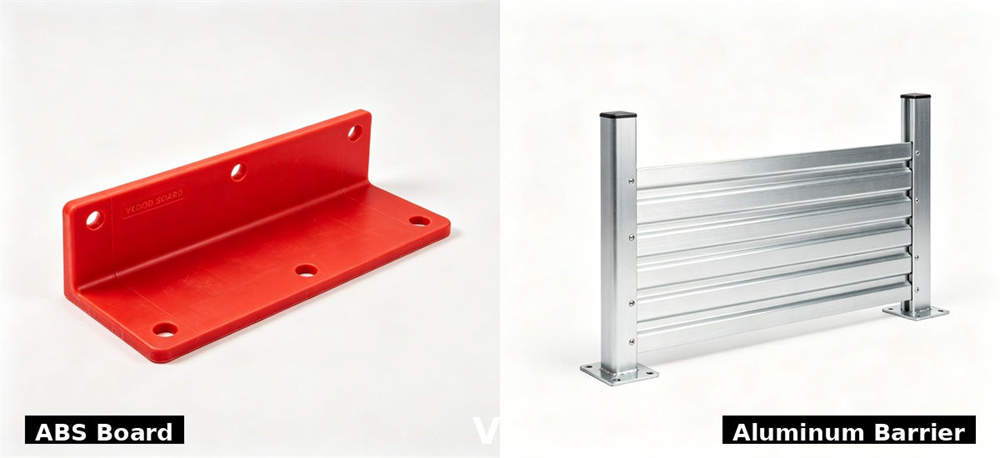
ABS board limits: Do not use on gravel, grass, cracked concrete or slopes over 2 degrees. Do not stack boards vertically — they are designed for single-layer use. Maximum water depth is approximately 80% of the board height.
Aluminum barriers require one-time installation of side posts, then panels slide in and out in minutes. This is a permanent or semi-permanent solution for garage, metro and commercial entrances.
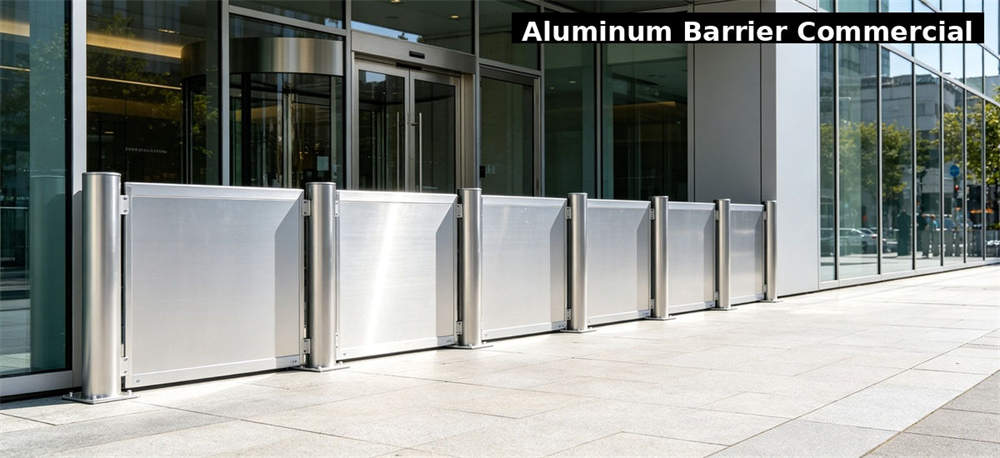
Aluminum barrier maintenance: Inspect EPDM seals annually — replace if cracked or hardened. Clean post channels of debris before inserting panels. Lubricate channels with silicone spray once per year for smooth panel insertion.
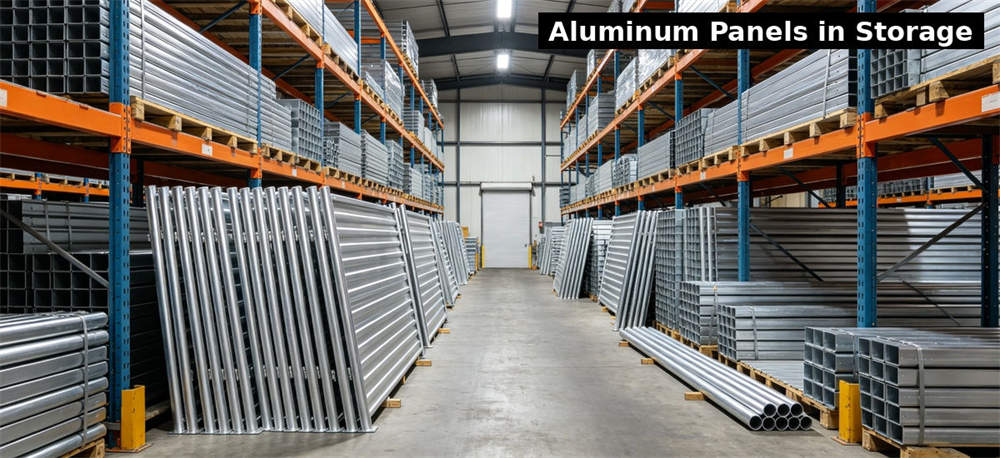
Never approve flood control products from photos alone. Approve a physical sample, then seal it. Bulk production must match the sealed sample.
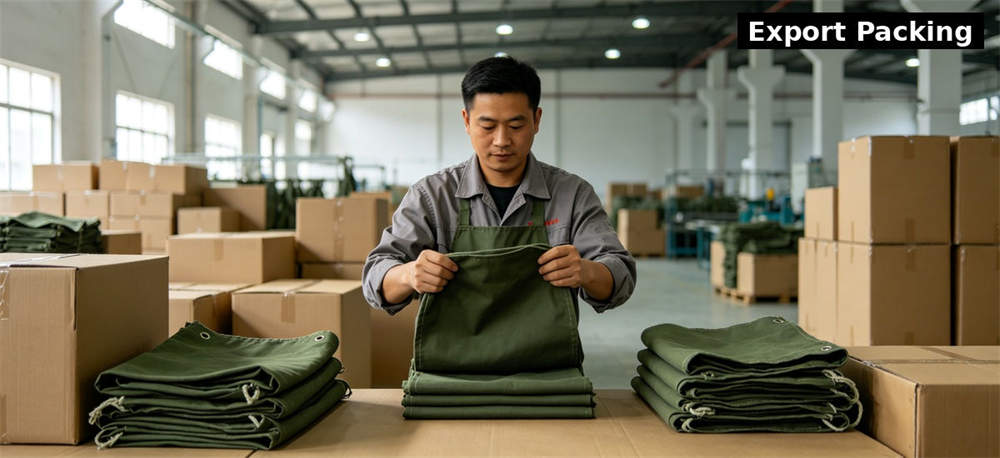
Do not accept a shipment by counting cartons only. Open cartons from different positions and inspect actual products. For government tender or large projects, request an AQL 2.5 inspection report from the factory before shipment.
|
Step |
Action |
Notes |
|
Drain |
Open drain valve, fully empty water/sand |
Do not fold while full — strains seams |
|
Rinse |
Hose off mud, silt and debris |
Use mild soap if needed; avoid solvents |
|
Inspect |
Check for punctures, abrasions, broken zippers |
Mark damaged areas for repair |
|
Repair |
Use PVC patch kit for punctures |
Clean area, apply adhesive, press, hold 30s |
|
Dry |
Air dry completely before folding |
Mildew grows if stored damp |
|
Repack |
Fold according to instructions, return to storage bag |
Count all components against the list |
|
Store |
Cool, dry, away from sunlight and heat sources |
PVC becomes brittle below -10°C; avoid freezing |
How do I choose between sandbags and a water barrier?
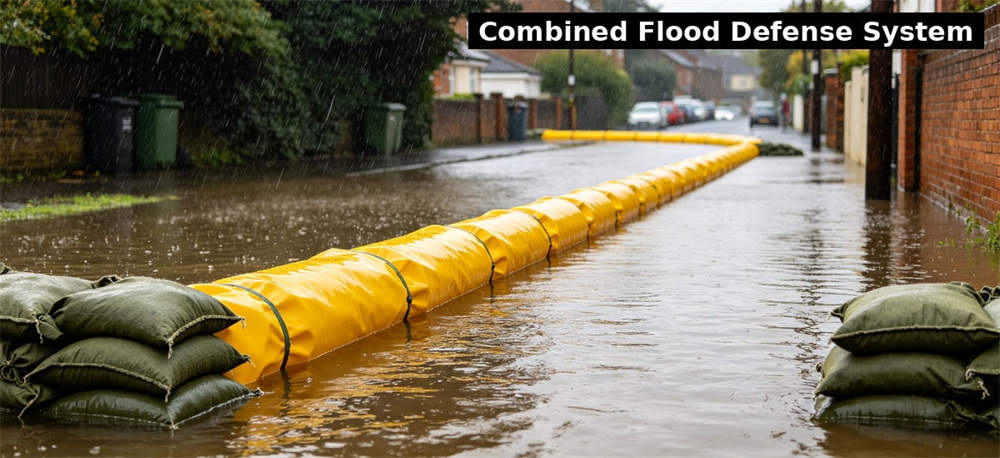
Choose sandbags when clean fill material and labour are available on site, and for irregular shapes like corners and doorways. Choose water barriers for long straight lines (roads, riverbanks) when you need fast deployment and reusability. Many projects use both: water barriers for the main line and sandbags for corners, ends and doorways. Sandbags have lower unit cost but are generally single-use; water barriers cost more upfront but can be reused 5–10 times.
The most common international size is 30×60cm (12×24 inches). Other available sizes are 40×60cm and 50×80cm for larger barrier applications. Fabric weight is typically 60–80gsm PP woven, with optional PE coating for water resistance. Always confirm the exact size and gsm with your supplier, as these vary by manufacturer.
Fill only one-half to two-thirds full. For a standard 30×60cm bag, this is approximately 15–20kg of sand. A fully filled bag is too round to stack properly and will split under the weight of bags above it. The empty top portion is folded under the bag to create a flat, stable base for stacking.
How many sandbags do I need per metre?
As a rough reference, a 0.5m high wall needs about 3 bags per metre per course × 4 courses × 1.2 redundancy = approximately 15 bags per metre. This varies with bag size, desired wall height and cross-section shape. Always confirm quantities with your site engineer, and add 10–20% reserve for damage, settlement and corner overlap.
A free-standing sandbag wall should not exceed 4–5 courses (layers). Higher walls become unstable under water pressure and may collapse. If you need more height, widen the base (pyramid shape) or use water barriers designed for greater heights. Never stand on top of a sandbag wall — it may collapse.
The effective water height is approximately 80–90% of the barrier's stated height, accounting for wave splash, settlement and slight deflection. A 50cm barrier effectively holds about 40–45cm of water. Add 20–30% to your required height when ordering. Barriers are available in 30cm, 50cm, 70cm and 100cm heights. Never exceed the manufacturer's rated water height.
Can water barriers be reused? How many times?
Yes, water barriers are designed for repeated use. A typical PVC or TPU barrier can be deployed 5–10 times, depending on conditions. Sharp ground, heavy abrasion and UV exposure reduce lifespan. After each use, drain, rinse, inspect, repair, dry completely and repack. Store in a cool, dry place away from sunlight. Replace units that show cracking, brittleness or multiple punctures.
For a small puncture, use the provided PVC repair kit: clean the area, apply adhesive, press the patch firmly and hold for 30 seconds. For a connection leak, drain that section, disconnect, clean the seal, reconnect and refill. For a major tear, replace the damaged section with a spare and repair it later. Always keep spare sections and repair kits on site during deployment. Test-fill 2–3 units before the flood event to catch issues early.
How should used sandbags be disposed of?
If the sand is clean and uncontaminated, empty the bags and the sand may be reused or disposed of as ordinary waste. If the bags were deployed in flood water, the sand may be contaminated with chemicals, sewage or biological hazards. Wear gloves and a mask when handling. Dispose of contaminated sand and bags according to local waste regulations — do not dump in rivers, lakes or open ground. The PP bags themselves can be recycled if clean, but contaminated bags must go to appropriate waste facilities.
Yes. Sandbags are available in yellow, white, orange, olive green or custom Pantone colour (MOQ 1,000 units). Logo printing is by silk-screen or heat transfer on the front or side. Water barriers can be custom-coloured and logo-printed (MOQ 50 sections). Custom sizes, gsm and connection types are also available. Always approve a pre-production sample with the actual logo and colour before bulk production.
What is the typical MOQ and lead time?
Standard sandbags: MOQ 500 units, 7–15 working days. Custom sandbags: MOQ 1,000, 15–25 days. Standard water barriers: MOQ 10 sections, 15–25 days. Custom water barriers: MOQ 50 sections, 25–40 days. Standard models can sometimes start production within 72 hours for emergency orders — confirm stock and capacity first. These are reference ranges; exact timing is confirmed after configuration is finalised.
We can help arrange third-party test reports based on your project requirements — material strength testing, seam strength, water barrier leakage tests, or relevant standards such as ASTM F1899 (sandbag guidance) or ASTM F2477 (flood barrier testing). The buyer selects the standard and testing laboratory based on the destination market. We recommend completing testing as part of sample approval, before bulk production. Each report covers the exact model tested.
How should I store flood control products between seasons?
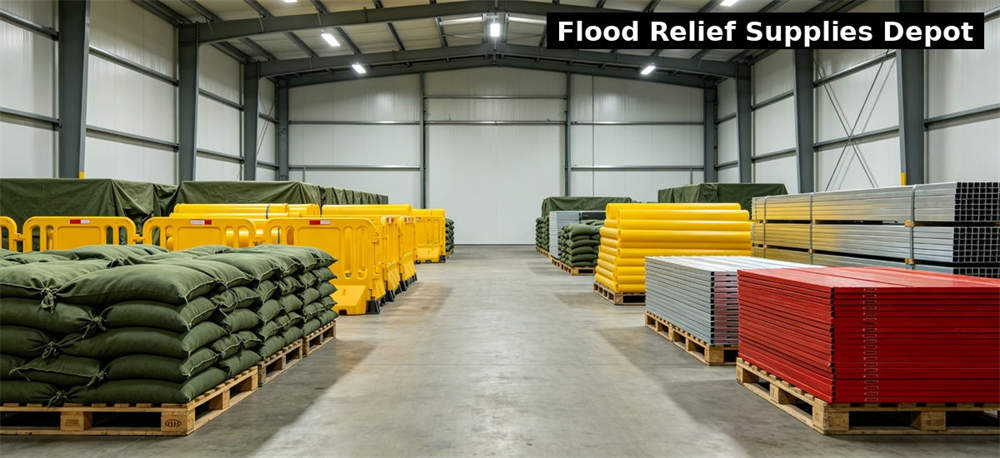
Store in a cool, dry, well-ventilated area away from direct sunlight and heat sources. Sandbags: keep in original packaging, off the ground, away from moisture. UV stabiliser extends storage life to 3–5 years. Water barriers: ensure completely dry before repacking, fold according to instructions, store in original bags, avoid freezing temperatures (PVC becomes brittle below -10°C). Before each flood season, inspect all units — do not just count cartons.
Yes. Connectors, valves, caps, repair patches and complete repair kits are available for all barrier models we supply. Always order spares by the exact model number to ensure compatibility — visually similar parts from different models may not connect properly. We recommend stocking 1 repair kit and 1 spare connector set per 10 barrier sections. Spare parts are covered under the same manufacturing defect warranty.
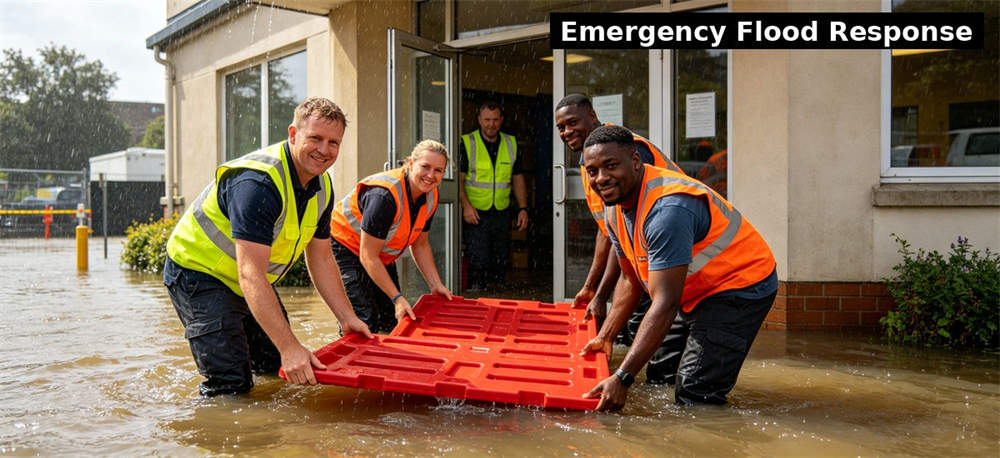
ABS boards use an L-shaped profile — a vertical panel plus a horizontal base that sits flat on the ground. When water rises, its weight pushes the horizontal base down, creating a tighter seal against the floor. The deeper the water, the more stable the board becomes. Boards interlock side-by-side to form a continuous line. No drilling, no tools, no permanent installation — just place and connect.
What ground surface do ABS boards need?
ABS boards require a flat, smooth surface with gaps no larger than 5mm. Suitable surfaces include smooth concrete, asphalt, tile and sealed wood. Do not use on gravel, grass, cracked concrete, dirt or slopes over 2 degrees — the base cannot make full contact and water will leak underneath. If your ground is uneven, use sandbags or a water barrier instead.
First-time installation (drilling and fixing side posts) takes 1–2 hours for a standard garage entrance, depending on floor material. After posts are installed, inserting or removing panels takes 2–5 minutes — just slide panels in or out of the post channels. This makes aluminum barriers ideal for locations that need protection only during flood season, with normal access the rest of the year.
Will aluminum barrier posts damage my floor?
Posts are fixed with chemical anchors or expansion bolts drilled into the concrete floor. This creates small holes that can be filled with epoxy if the posts are ever removed. Posts are typically installed at the edges of the entrance where they do not interfere with vehicle or pedestrian traffic. When panels are removed, posts sit flush against the side walls and are barely noticeable.
Sandbags have the lowest unit cost but require fill material and labour, and are generally single-use. ABS boards have a moderate upfront cost and are reusable for many seasons. Water barriers cost more but cover long distances fast. Aluminum barriers have the highest upfront cost but last 5–8 years+ and are the most professional solution for permanent entrances. The right choice depends on your site, frequency of flooding and available labour.
Can I mix different barrier types at one site?
Yes — most projects use a combination. A common setup is: aluminum barriers at the main garage entrance, ABS boards at side doorways, water barriers along the property boundary, and sandbags at corners, ends and irregular shapes. Each type has strengths, and combining them gives better coverage than any single type alone.
INTERNAL LINK CARD AREA - target page and URL pending
Przyjazne linki :
prawa autorskie © Custom Disaster - Relief Bedding: Tents, Sleeping Bags, Blankets Wszelkie prawa zastrzeżone
profesjonalny zespół do obsługi !