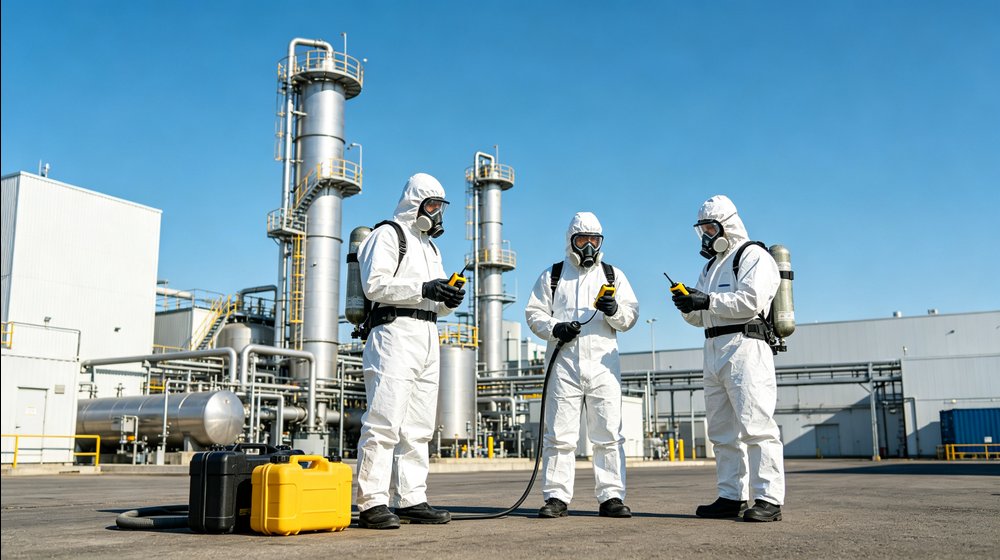
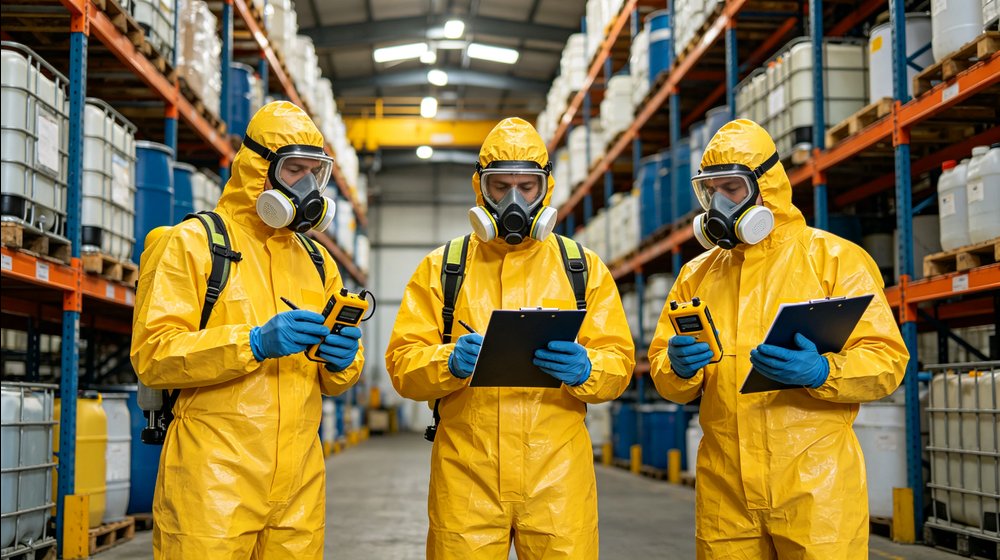
Selecting hazmat protection starts with the hazard: unknown or high-concentration vapors require gas-tight Level A suits with self-contained breathing apparatus; known liquid splash hazards use liquid-tight Level B suits; low-concentration particulate and splash environments use Level C coveralls with filtering respirators. Our product range covers all three protection levels, plus the gas detection and decontamination equipment needed for a complete hazardous material response.
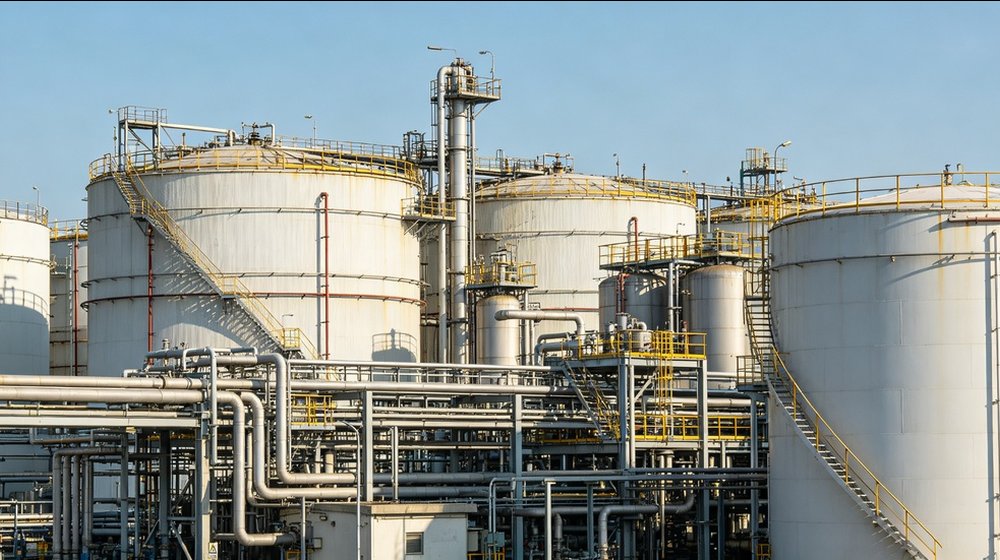
Our industrial park protection equipment covers five core product groups. Each group includes multiple models and configurations, selected by hazard type, exposure risk and task duration. Wholesale and bulk pricing available for factory direct orders. As a leading OEM supplier, we provide custom branding and private label options for bulk orders. Our hazmat suit for chemical plant applications meets EN 943 standards for full body protection.
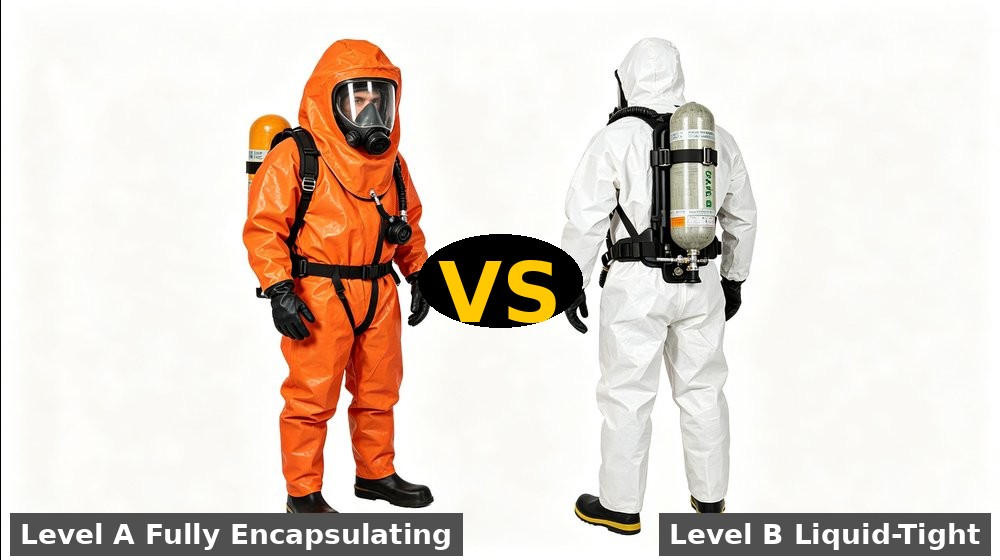
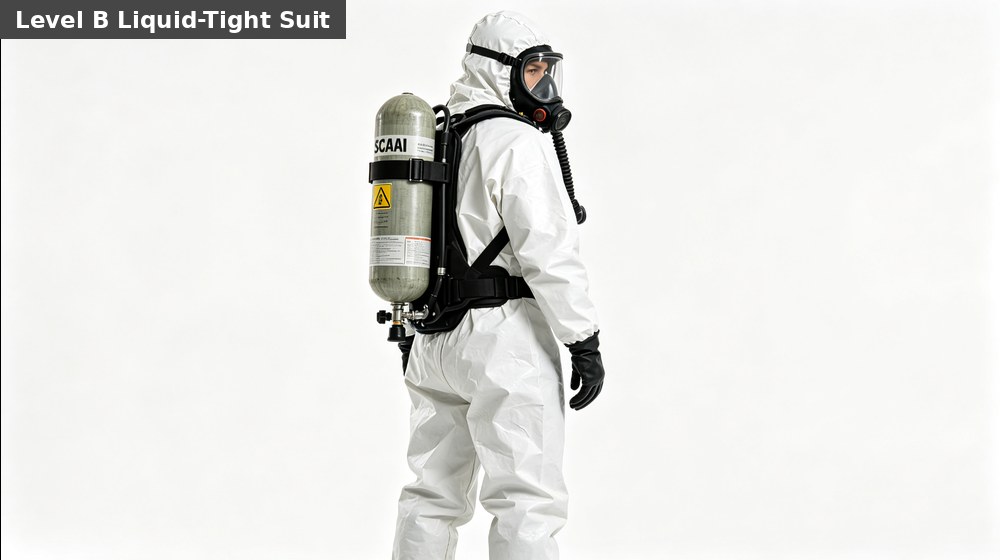
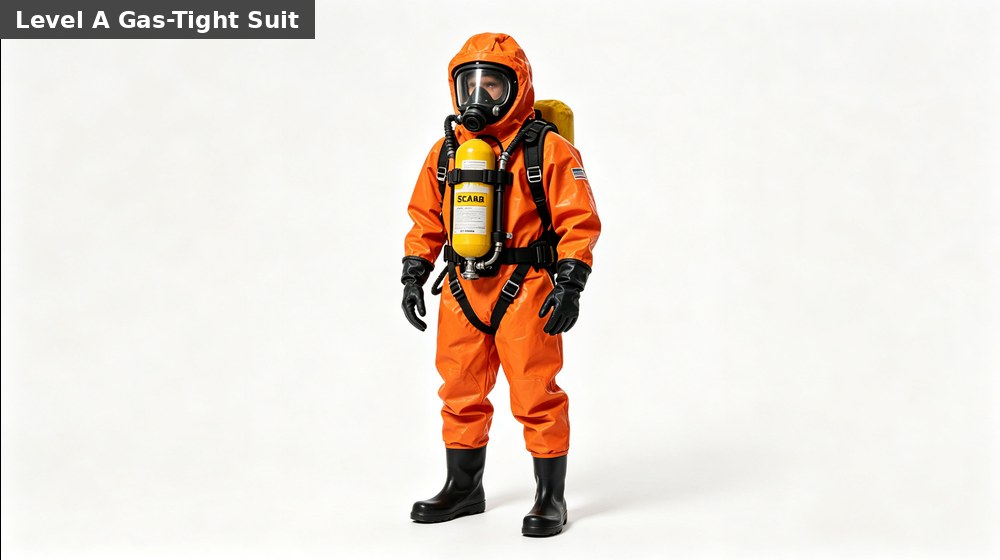
Gas-tight and liquid-tight chemical protective suits for high-hazard environments. Level A suits are fully encapsulating with built-in SCBA, designed for unknown or high-concentration vapors and gases. Level B suits are liquid-tight with external breathing apparatus, for known liquid chemical splash and spray. Both use chemically resistant fabrics with heat-sealed and tape-sealed seams, wide visors and integrated glove connections.
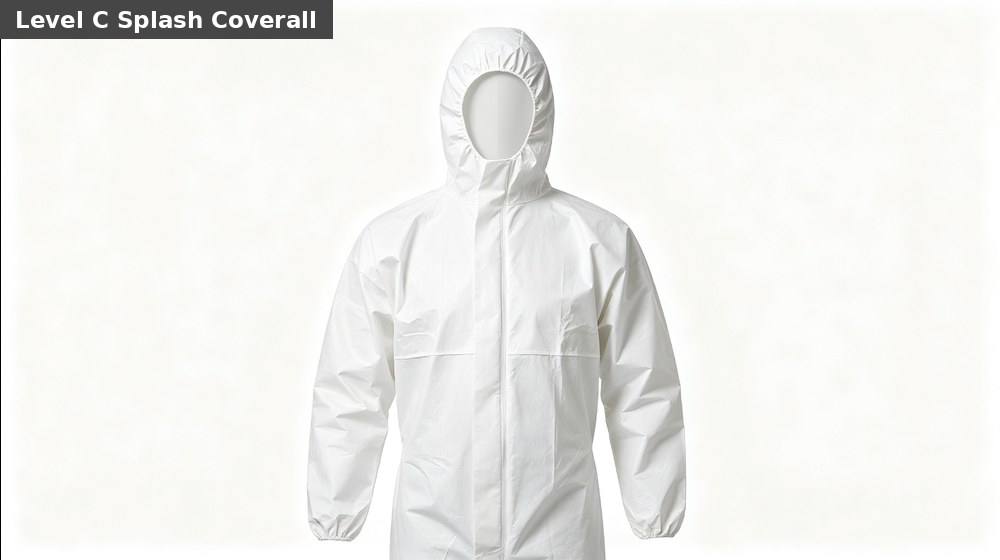
Lightweight chemical splash coveralls for lower-hazard environments. Level C suits protect against liquid splashes and particulates when used with filtering respirators. Made from SMS non-woven or microporous film laminate fabrics, with taped seams and elastic cuffs and ankles. Disposable or limited-use, ideal for routine chemical handling, decontamination support and industrial maintenance.
Self-contained breathing apparatus (SCBA) for oxygen-deficient or high-toxicity atmospheres, and filtering respirators for known lower-concentration gases and particulates. SCBA units use carbon fiber composite cylinders with 30MPa working pressure and 30 to 60 minute duration. Filtering respirators use interchangeable filter cartridges for organic, inorganic, acidic and ammonia gases, with P2/P3 particle filters.
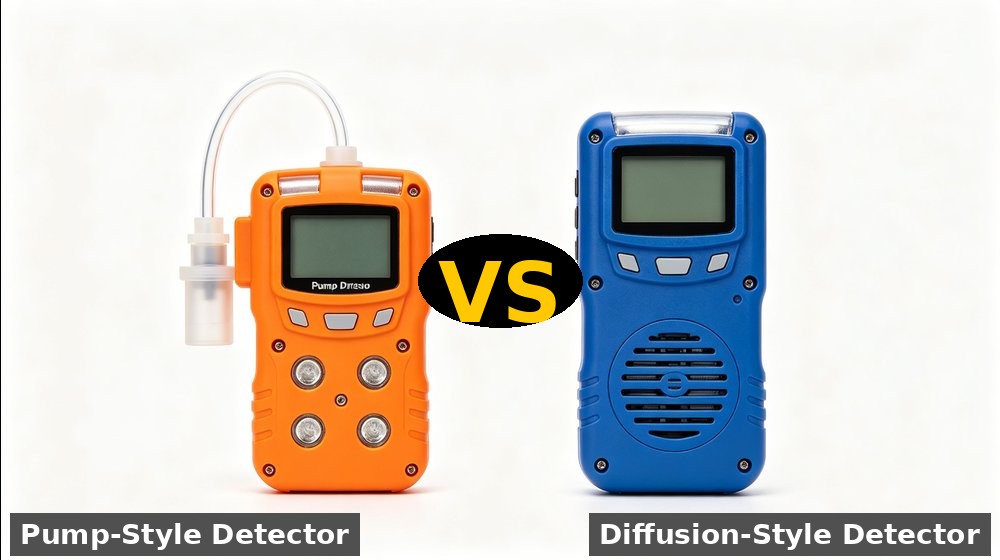
Portable gas detectors for pre-entry testing and continuous monitoring in hazardous areas. Four-in-one detectors measure oxygen, carbon monoxide, hydrogen sulfide and combustible gases simultaneously. Single-gas and VOC detectors available for specific hazards. Pump-suction or diffusion models, with ATEX/IECEx explosion-proof certification, audible and visual alarms, and data logging.
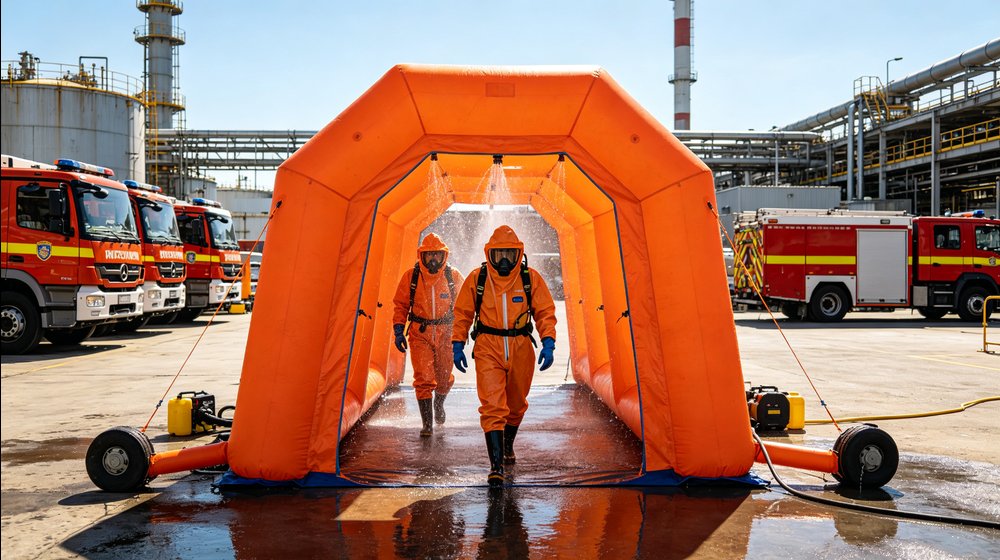
decontamination tents, portable shower systems, personal decontamination kits and emergency response kits for hazmat incidents. Decontamination systems provide a three-zone workflow: contaminated zone, decontamination zone, clean zone. Personal kits include disinfectant wipes, decontamination solution, gloves and waste bags. All kits are packed for rapid deployment and easy field use.
|
Category |
Typical Models |
Key Parameters |
Use Case |
|
Level A Suit |
Gas-tight encapsulating suit, built-in SCBA |
Butyl rubber or multi-layer film, heat-sealed seams, EN 943-1 Type 1a |
Unknown high-concentration vapors, IDLH atmospheres |
|
Level B Suit |
Liquid-tight suit, external SCBA |
PVC/butyl composite, taped seams, EN 14605 Type 3/4 |
Known liquid chemical splash and spray |
|
Level C Coverall |
Splash protection coverall, filtering respirator |
SMS/microporous 50-80g/m², taped seams, EN 13034 Type 6 |
Low-concentration particulates and splash, routine handling |
|
Respiratory Protection |
SCBA, half/full mask respirator, filter cartridges |
3-9L cylinder 30MPa, 30-60min, EN 137; A/B/E/K filters EN 14387 |
Oxygen deficiency, toxic gases, particulates |
|
Gas Detection |
4-in-1 detector, single gas, VOC monitor |
O2/CO/H2S/LEL, ATEX/IECEx, IP65/67, 12-18h battery |
Pre-entry testing, continuous monitoring |
|
Decontamination |
Decon tent, portable shower, personal decon kit |
3x3m or 4x4m tent, spray system, 3-zone workflow |
Personnel and equipment decontamination |
Answer these four questions before requesting a quotation: Our hazmat suit for chemical plant applications meets EN 943 standards for full body protection.
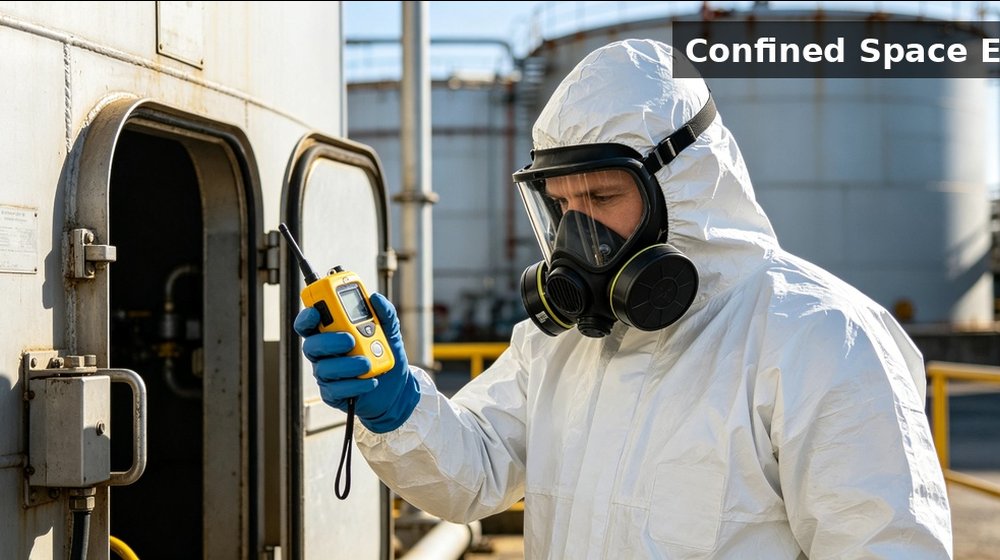
|
Protection Level |
Hazard Condition |
Suit Type |
Respiratory Protection |
|
Level A |
Unknown or high-concentration vapors, gases, IDLH atmosphere |
Gas-tight encapsulating suit (EN 943-1 Type 1a) |
Built-in SCBA (positive pressure) |
|
Level B |
Known liquid splash, spray, lower vapor concentration |
Liquid-tight suit (EN 14605 Type 3/4) |
External SCBA or long-line air |
|
Level C |
Low-concentration particulates, liquid splash, normal oxygen |
Splash coverall (EN 13034 Type 6) |
Filtering half/full mask respirator |
|
Level D |
No respiratory hazard, minimal skin contact |
Standard work coverall |
None required |
When the hazard is unknown or cannot be confirmed, always start at Level A and downgrade only after gas detection confirms the atmosphere is safe. Gas detection should be performed before entry and continuously monitored during work. Wholesale and bulk pricing available for factory direct orders. As a leading OEM supplier, we provide custom branding and private label options for bulk orders. Our hazmat suit for chemical plant applications meets EN 943 standards for full body protection.
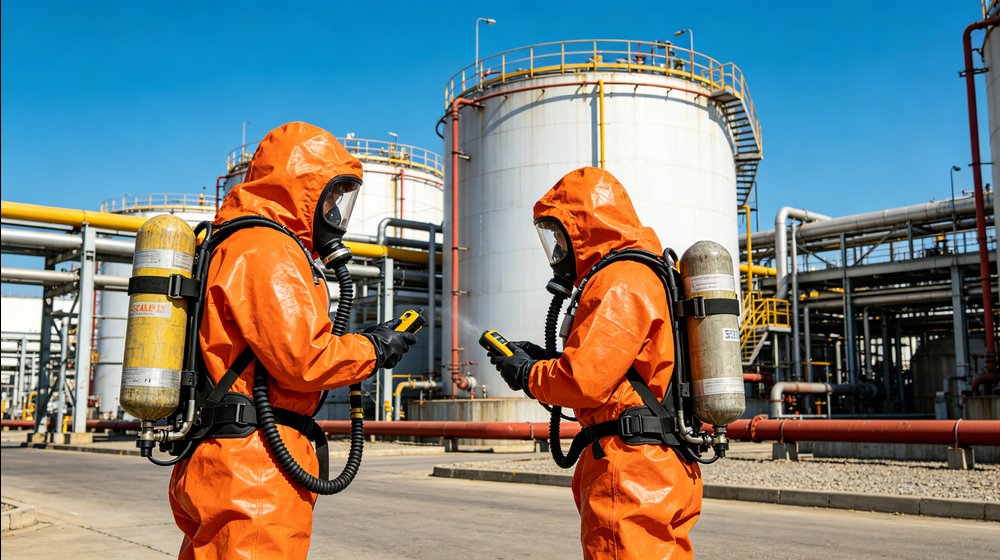
Chemical plants and industrial parks require a full range of hazmat protection for storage, handling and emergency response. Recommended configuration: Level A suits for the emergency response team, Level B suits for spill response, Level C coveralls for routine maintenance, SCBA for confined space and high-hazard entry, 4-in-1 gas detectors for each entry team, and a permanent decontamination station with personal decon kits. Chemical plants should maintain a minimum response team of 4-6 fully equipped personnel, with reserve suits and SCBA cylinders for extended operations. Our hazmat suit for chemical plant applications meets EN 943 standards for full body protection.
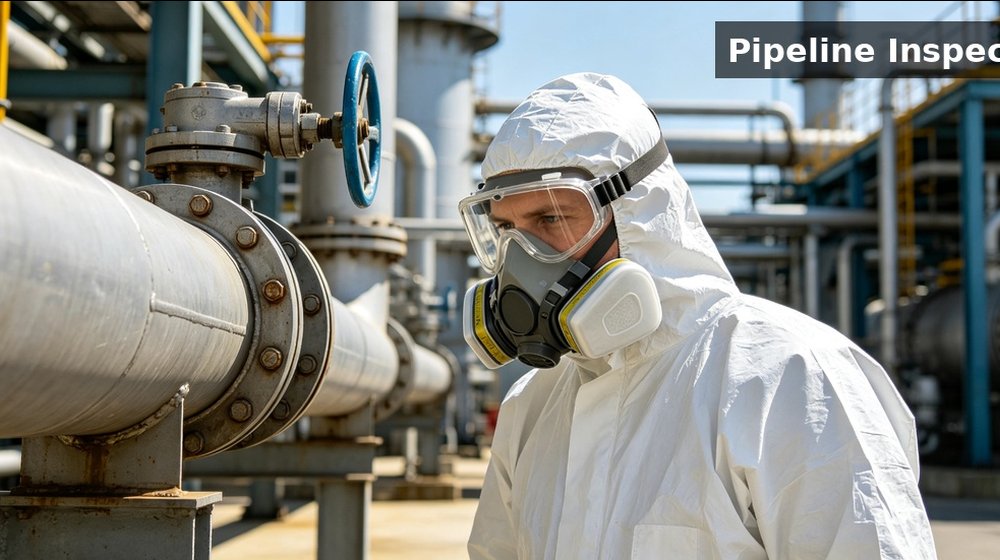
Petroleum facilities face flammable gas, hydrocarbon vapor and H2S risks. Recommended configuration: Level B suits for spill and fire response, Level C coveralls for tank cleaning and maintenance, SCBA for confined space entry (storage tanks, separators), 4-in-1 gas detectors with LEL and H2S focus, and explosion-proof lighting. All electrical equipment in Zone 1/2 areas must be ATEX certified. Petroleum sites should plan for both routine maintenance and major spill scenarios. Our hazmat suit for chemical plant applications meets EN 943 standards for full body protection.
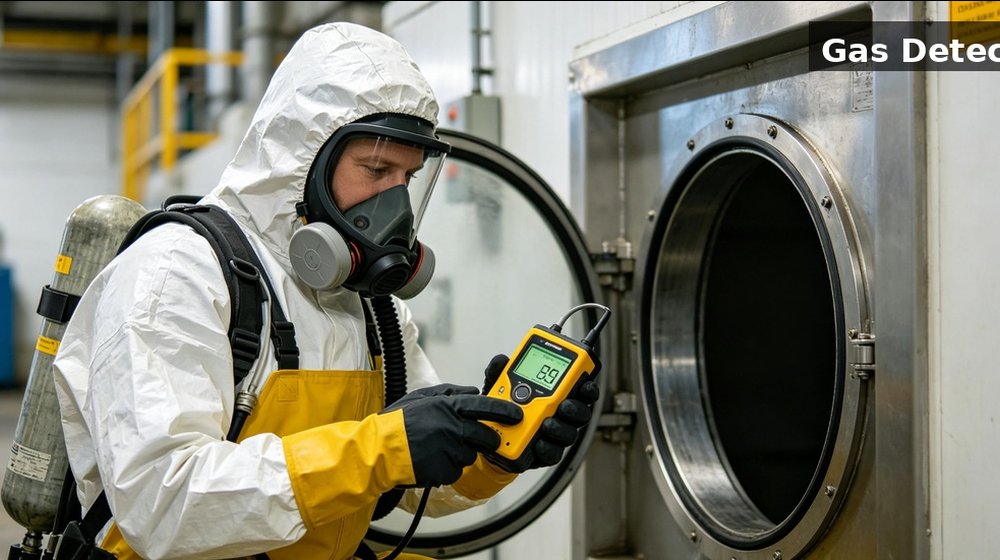
Pharmaceutical plants handle potent compounds, solvents and reactive chemicals. Recommended configuration: Level B suits for high-potency API handling, Level C coveralls for production and cleaning, filtering respirators with appropriate cartridges for solvent vapors, single-gas detectors for specific process gases, and local decontamination stations near production areas. Pharmaceutical facilities often require documented cleaning validation and change control, so product specifications and certificates should be retained for quality records.
Fire departments and municipal hazmat teams need rapid-deployment equipment for unknown incidents. Recommended configuration: Level A suits as the primary response option (since hazard is often unknown), Level B suits for confirmed liquid incidents, multiple SCBA units with spare cylinders, 4-in-1 and VOC gas detectors for scene assessment, and mobile decontamination systems. Response teams should train with all equipment and conduct regular fit testing and seal checks on respirators.
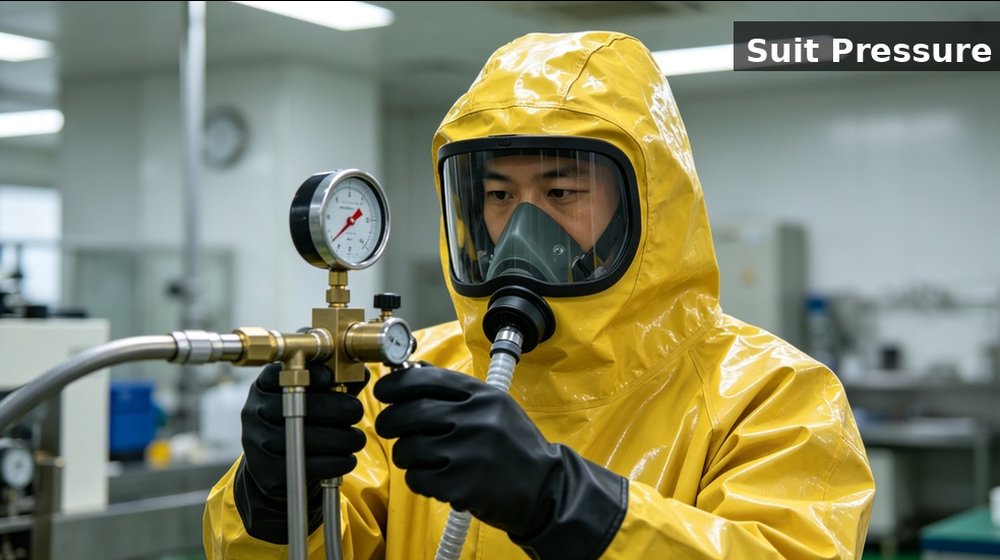
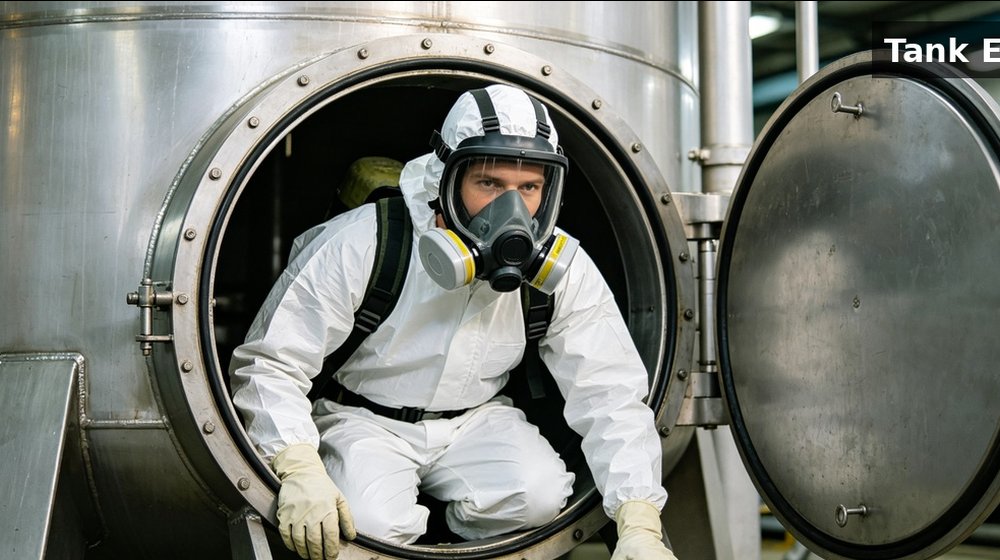
Level A suits provide the highest level of respiratory, skin and eye protection. Fully encapsulating design with built-in SCBA compartment. Fabric options include butyl rubber (excellent resistance to acids, bases and many organic chemicals) and multi-layer composite film (such as Saranex or equivalent barrier film) for broad-spectrum chemical resistance. Seams are heat-welded and tape-sealed for gas-tight integrity. Wide PVC or polycarbonate visor with anti-fog treatment. Butyl rubber gloves with triple-ring sealed wrist connections. Integrated booties or boot connections. Rear or front entry with gas-tight zipper and cover flap. Certified to EN 943-1 Type 1a. Weight 5-8kg depending on size and fabric. Available in sizes S-XXL. Each suit should be pressure-tested before each use and after any decontamination. Wholesale and bulk pricing available for factory direct orders. As a leading OEM supplier, we provide custom branding and private label options for bulk orders. Our hazmat suit for chemical plant applications meets EN 943 standards for full body protection.
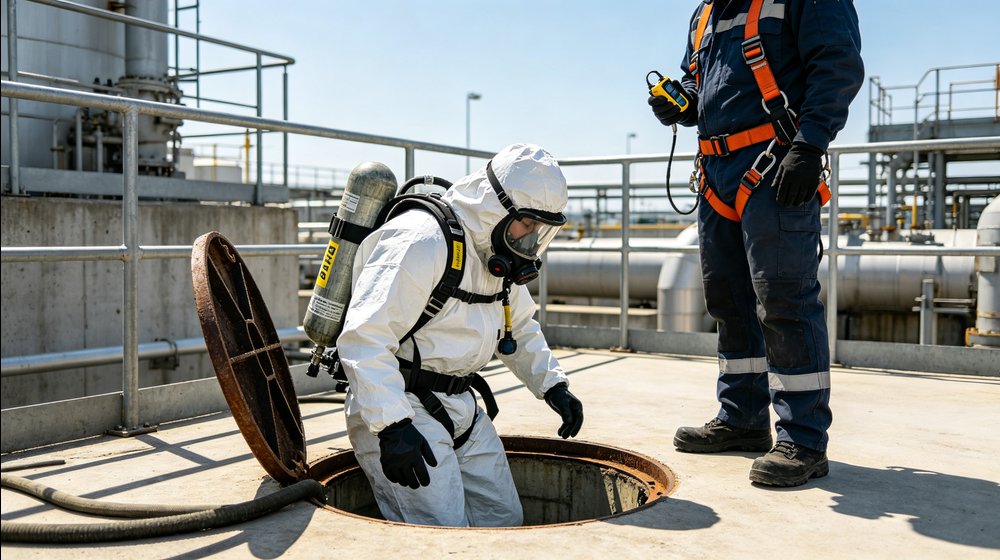
Level B suits provide liquid-tight skin protection with external respiratory protection. Fabric options include PVC-coated polyester, butyl rubber composite and multi-layer chemical barrier fabrics. Seams are heat-sealed and tape-sealed for liquid integrity. Elastic or sealed cuffs and ankles. Full-length front zipper with storm flap. Available in one-piece coverall or two-piece jacket and pants. Certified to EN 14605 Type 3 (jet-tight) and Type 4 (spray-tight). Weight 3-5kg. Sizes S-XXL. Level B suits are used when the hazard is confirmed as liquid splash or spray and respiratory protection is handled separately by SCBA or long-line air supply.
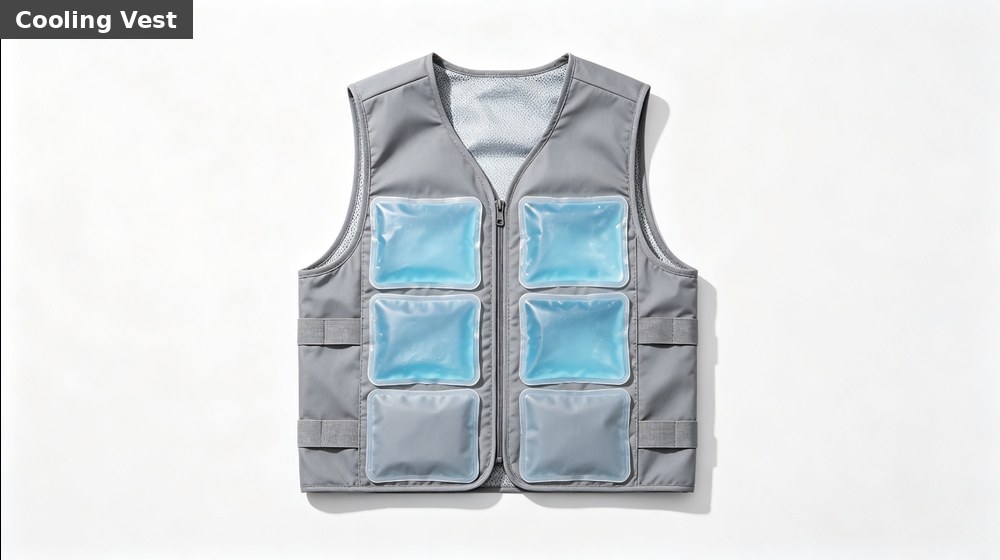
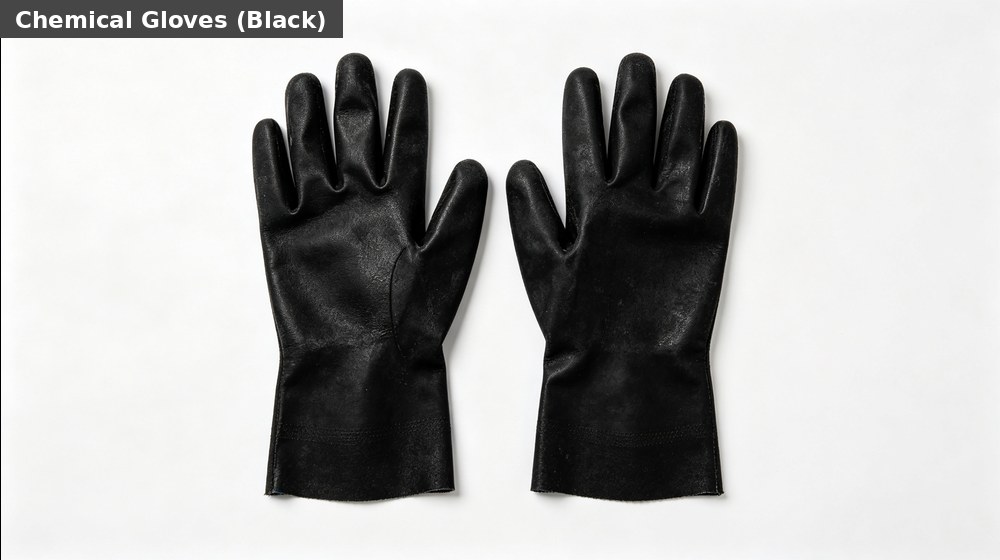
Available accessories for Level A and B suits include: replacement visors, spare glove sets, inner cooling vests (for high-temperature environments), communication systems (voice amplifiers or radio integration), carrying bags, and decontamination brushes. Cooling vests are strongly recommended for operations above 25°C, as encapsulating suits cause rapid heat stress. All accessories should be compatible with the suit model and certified for use in hazardous environments.
 |
 |
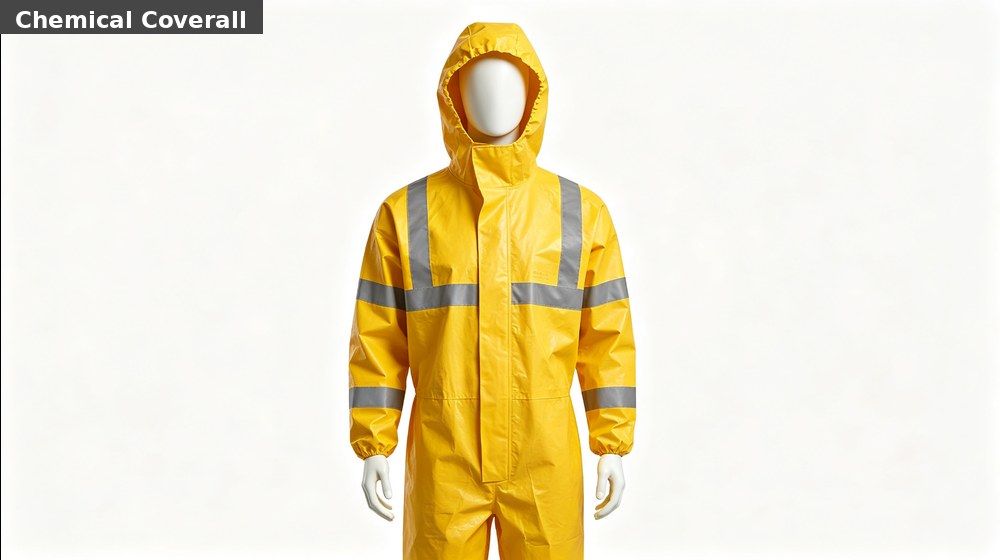
Level C coveralls are lightweight, disposable or limited-use garments for lower-hazard environments. Fabric options include SMS non-woven (50-65g/m², good particulate and light splash protection) and microporous film laminate (60-80g/m², better liquid barrier and breathability). Taped seams for enhanced splash protection. Elastic cuffs, ankles and hood opening. Full-length zipper with storm flap. Available in white, blue or yellow. Certified to EN 13034 Type 6 (reduced spray protection). Weight 0.3-0.5kg. Sizes S-5XL. Level C coveralls are ideal for routine chemical handling, asbestos removal, decontamination support, industrial cleaning and pharmaceutical production. They should be used with appropriate filtering respirators when airborne contaminants are present. Our hazmat suit for chemical plant applications meets EN 943 standards for full body protection.
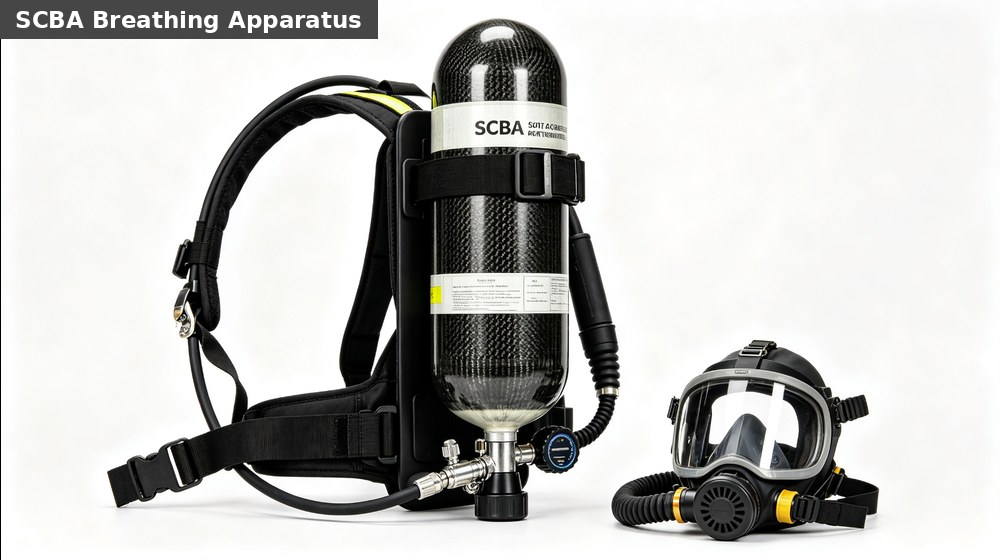
Positive-pressure SCBA provides respiratory protection in oxygen-deficient, toxic or unknown atmospheres. Carbon fiber composite cylinder in 3L, 6L or 9L capacity, 30MPa working pressure. Duration: 30 minutes (3L), 45 minutes (6L) or 60 minutes (9L) under moderate work rate. Low-pressure alarm activates at 5.5±0.5MPa, providing audible and visual warning. Silicone full-face mask with polycarbonate anti-fog visor. Positive-pressure demand valve ensures continuous positive pressure inside the mask, preventing inward leakage. Padded backframe and shoulder straps. Certified to EN 137. Weight 6-10kg including cylinder. Cylinders require hydrostatic testing every 5 years (or per local regulation). Annual inspection and flow testing recommended. Spare cylinders should be available for extended operations.
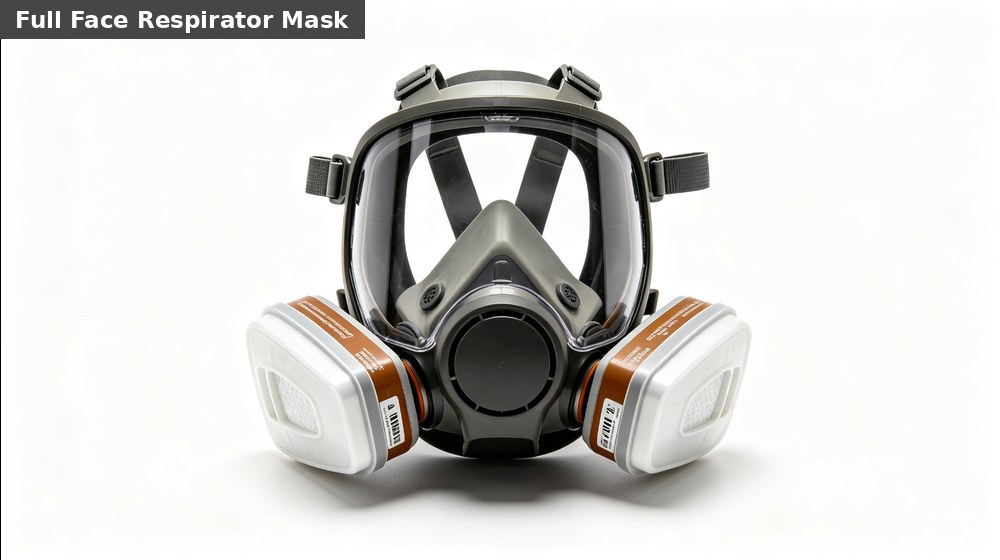
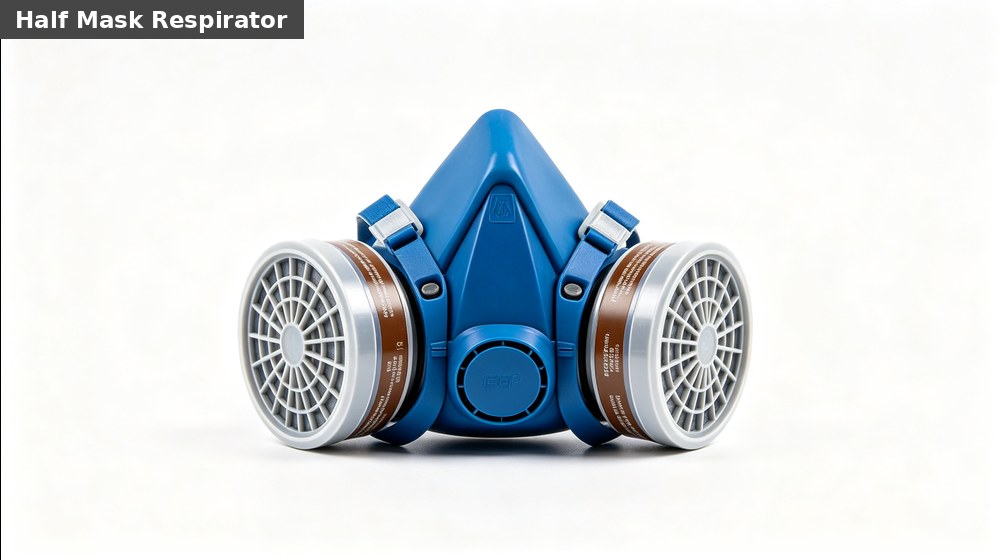
Filtering respirators are used when oxygen level is above 19.5% and the contaminant is known and below IDLH concentration. Half-mask (covers nose and mouth) or full-face mask (covers eyes, nose and mouth). Silicone or TPR facepiece for comfort and seal. Interchangeable filter cartridges: Type A (organic gases and vapors), Type B (inorganic gases), Type E (acid gases), Type K (ammonia and derivatives). Protection levels P1, P2, P3 for particulates. Combination filters available for mixed hazards. Certified to EN 14387 (filters) and EN 136/140 (masks). Filter service life depends on contaminant concentration, breathing rate and humidity; change schedules should be based on manufacturer data and workplace assessment. Fit testing is required before initial use and annually thereafter.
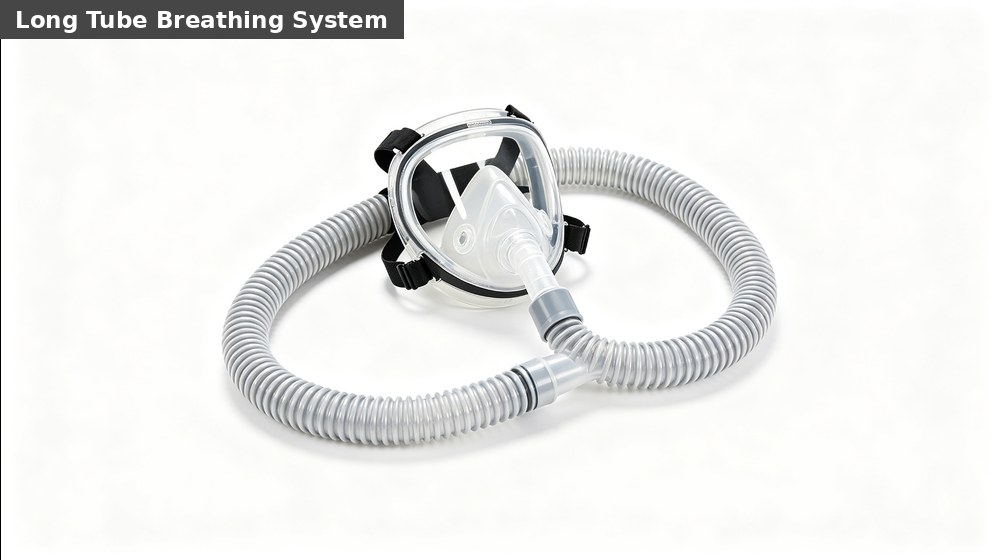
For extended-duration operations in fixed locations, supplied-air systems provide continuous air from a stationary source or compressor. 10m, 20m or 30m air hoses with quick-connect couplings. Escape cylinder (5-10 minutes) for emergency egress if the air supply fails. Used in tank cleaning, confined space maintenance and industrial painting. Certified to EN 139. Supplied-air systems should always include an escape SCBA or emergency escape cylinder as backup.
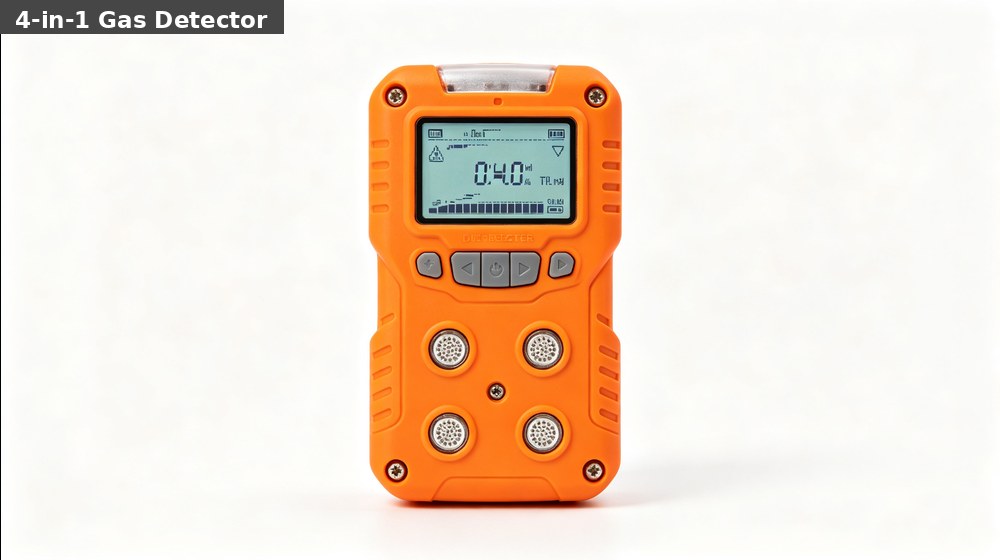
The standard confined space and hazmat entry detector measures four gases simultaneously: oxygen (O2, 0-25% VOL), carbon monoxide (CO, 0-1000ppm), hydrogen sulfide (H2S, 0-100ppm) and lower explosive limit (LEL, 0-100% LEL). Accuracy ±5% full scale. Response time T90 under 30 seconds. Pump-suction model for pre-entry testing from outside the space, or diffusion model for personal monitoring. Audible (90dB), visual (LED) and vibrating alarms. ATEX/IECEx Ex ia IIC T4 explosion-proof certification. IP65 or IP67 ingress protection. Lithium-ion battery with 12-18 hour runtime. Data logging for up to 6 months. Daily bump test recommended; full calibration every 6 months or after any exposure to high gas concentrations. Size approximately 120x60x35mm, weight 150-250g.
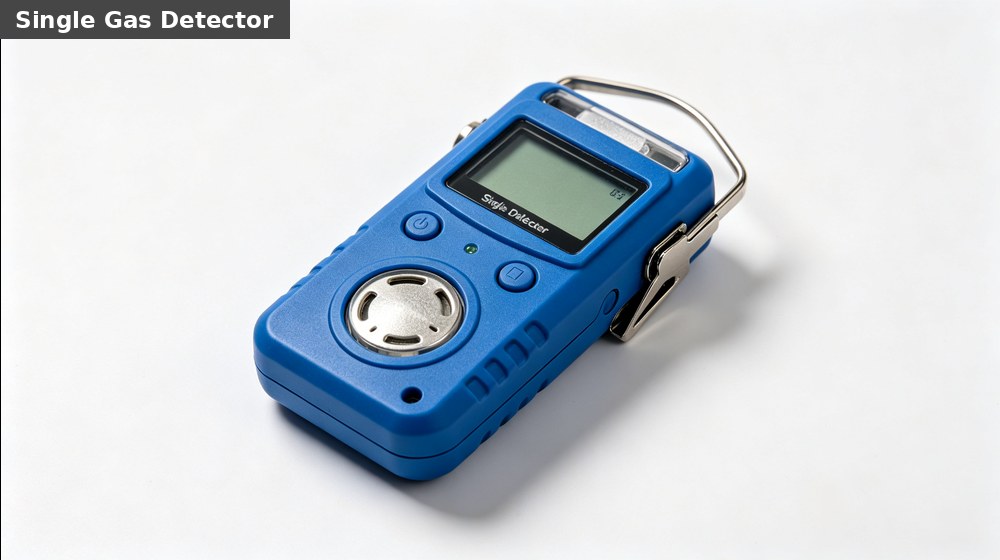
For specific chemical hazards, single-gas detectors are available for: ammonia (NH3), chlorine (Cl2), sulfur dioxide (SO2), nitrogen dioxide (NO2), hydrogen chloride (HCl), phosphine (PH3) and others. PID (photoionization detector) for VOC (volatile organic compound) measurement, range 0-1000ppm or 0-10000ppm. IR (infrared) detectors for CO2 and hydrocarbons. All specialty detectors maintain the same ATEX certification, alarm system and calibration schedule as the 4-in-1 model.
For perimeter monitoring and area protection, multi-gas area monitors provide simultaneous detection with wireless or wired data transmission. 4-8 gas channels, 360-degree alarm lights, and external alarm options. Used to establish hot zone perimeters and monitor decontamination areas. Area monitors can be networked for facility-wide gas detection systems in chemical plants and industrial parks.
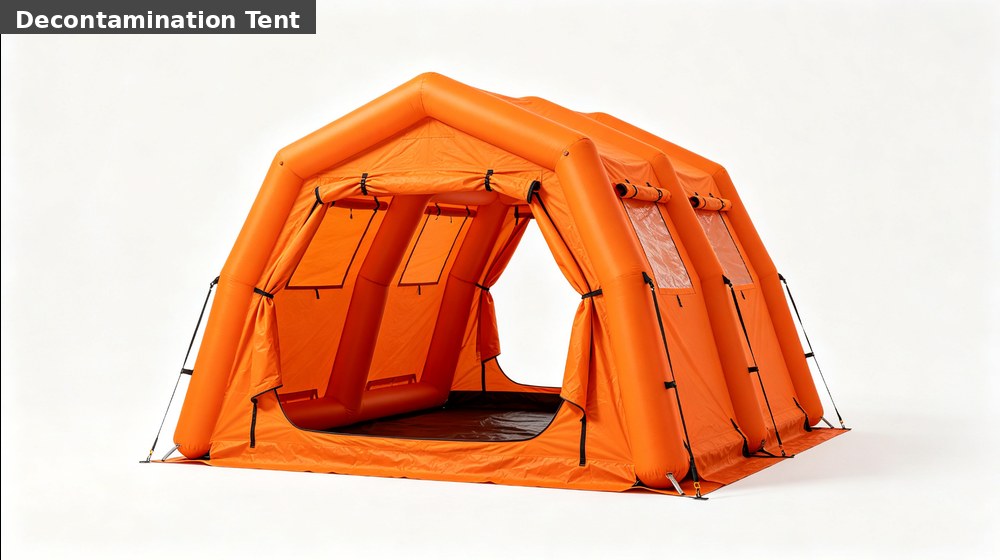
Portable decontamination tent for personnel and equipment decontamination. Standard sizes 3x3m (single lane) or 4x4m (dual lane). Frame or inflatable structure for rapid setup (5-15 minutes). Internal shower system with multiple spray nozzles, connected to water supply or portable water tank. Integrated floor with drainage and waste collection bag. Three-zone layout: contaminated zone (undressing), decontamination zone (showering), clean zone (dressing and medical). Opaque or transparent walls. Certified to EN standards for emergency decontamination. Weight 25-50kg depending on size and type.
Compact personal decontamination kit for immediate field use after chemical exposure. Contents include: decontamination solution (neutralizing or surfactant-based), disinfectant wipes, disposable gloves, waste bags, scissors (for cutting clothing), and instruction card. Packed in waterproof pouch or hard case, 0.5-1.5kg. One kit per person recommended for hazmat response teams. Personal kits provide immediate gross decontamination before reaching the formal decon line.
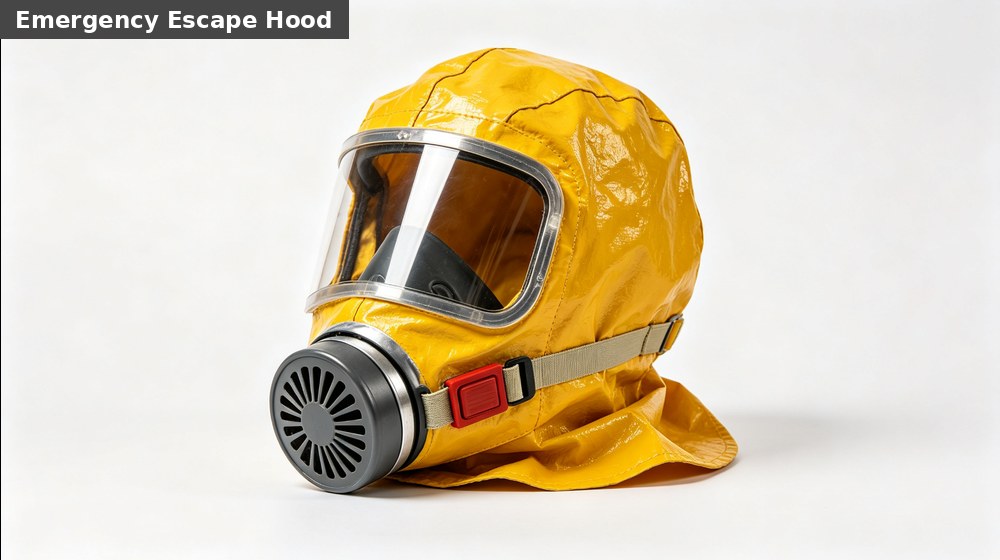
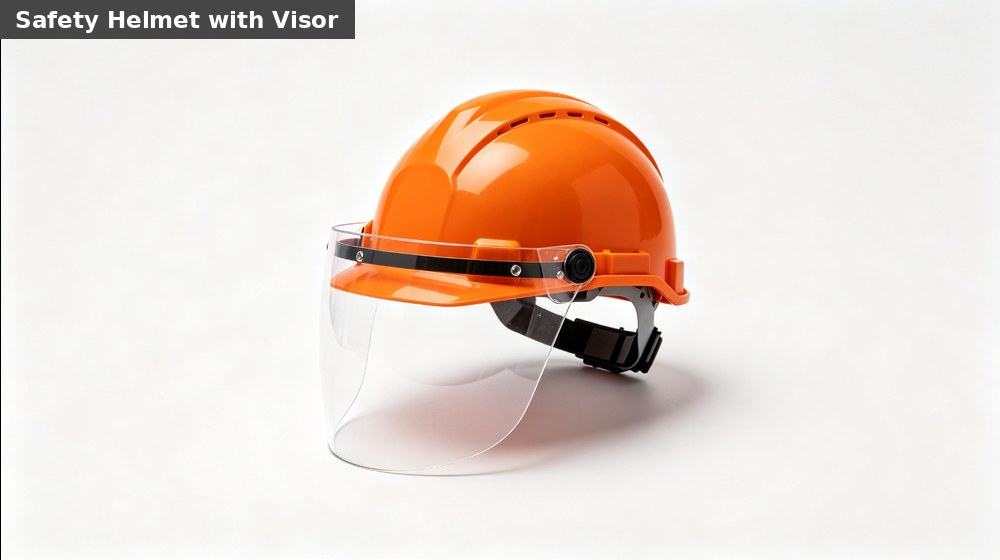
Comprehensive emergency response kit for first responders and industrial fire teams. Includes: Level C coveralls, gloves, face shield, filtering respirator, 4-in-1 gas detector, emergency escape hood, first aid supplies, flashlight, caution tape and multi-tool. Packed in wheeled hard case or backpack for rapid transport. Customizable based on facility hazard assessment. Response kits are designed for the first 15-30 minutes of an incident, before full hazmat team mobilization.
The following is a sample configuration for a 10-person industrial hazmat response team. Actual quantities should be adjusted based on facility hazard assessment, team size and regulatory requirements.
Category
Item
Quantity
Notes
Level A Suit
Gas-tight encapsulating suit with built-in SCBA
4 sets
2 entry teams of 2, plus reserve
Level B Suit
Liquid-tight suit, external SCBA
6 sets
Spill response and decon support
Level C Coverall
SMS/microporous coverall, taped seams
50 pieces
Routine use and training
SCBA
6L carbon fiber cylinder, 45min
8 units
4 entry + 4 reserve/spare
SCBA Spare Cylinders
6L, 30MPa, full charged
8 units
Extended operations
Filtering Respirator
Full-face mask with A2P3 filters
10 units
Level C operations
Gas Detector
4-in-1 pump-suction, ATEX
4 units
2 entry + 2 backup
Decon Tent
3x3m inflatable with shower
1 unit
Personnel decontamination
Personal Decon Kit
Individual decon pouch
20 kits
2 per person + reserve
Emergency Escape Hood
15-minute CO/particulate escape
10 units
One per team member
Cooling Vest
Phase-change or evaporative
10 units
Heat stress prevention
Estimated total volume: approximately 8-12 cubic meters. Estimated total weight: approximately 400-600kg. Exact weight and volume confirmed after final product selection and packing configuration. Standard items ship in 7-15 working days; custom items (printed logos, specific colors, non-standard configurations) require 15-25 working days. All timelines subject to final confirmation.
Proper maintenance ensures hazmat equipment functions when needed. Follow these guidelines for each product category:
Our hazmat and industrial protection products meet relevant international standards. We can help arrange third-party test reports based on your project requirements. Common standards include: As a China factory with over 20 years of export experience, we supply wholesale chemical protective clothing, self contained breathing apparatus (SCBA), four in one gas detector units, respirator mask options, and chemical boots in bulk. OEM custom orders are welcome with flexible MOQ terms. FOB China pricing available on request. Our four gas detector for industrial safety applications provides simultaneous monitoring of LEL, O2, CO and H2S. Chemical protective clothing wholesale programs are available with custom labeling and bulk packaging options.
When procuring hazmat protection equipment, confirm these eight points to ensure safety and regulatory compliance: As a China factory with over 20 years of export experience, we supply wholesale chemical protective clothing, self contained breathing apparatus (SCBA), four in one gas detector units, respirator mask options, and chemical boots in bulk. OEM custom orders are welcome with flexible MOQ terms. FOB China pricing available on request. The decontamination tent for emergency response features rapid inflation and complete shower line systems. Level A hazmat suit bulk order pricing starts at 50 units with progressive volume discounts available.

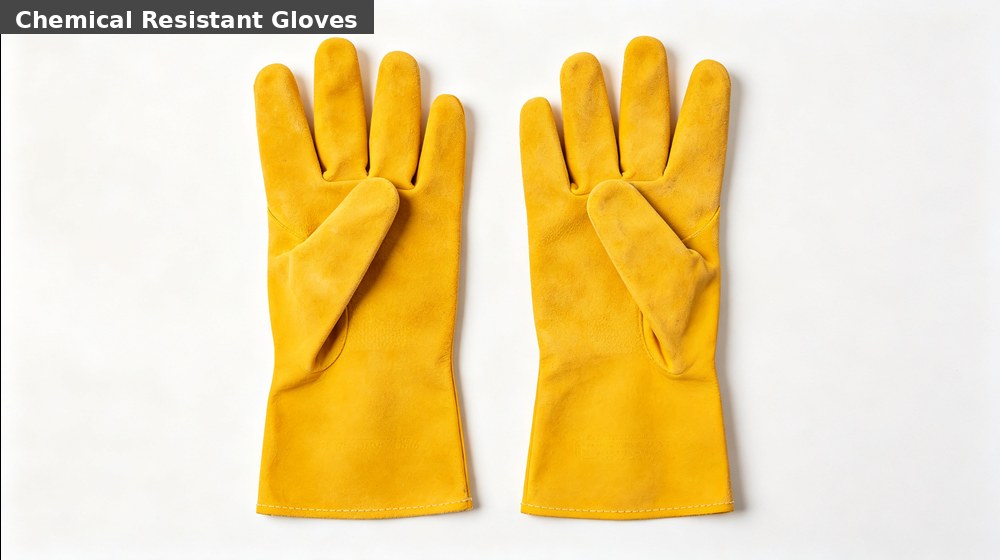
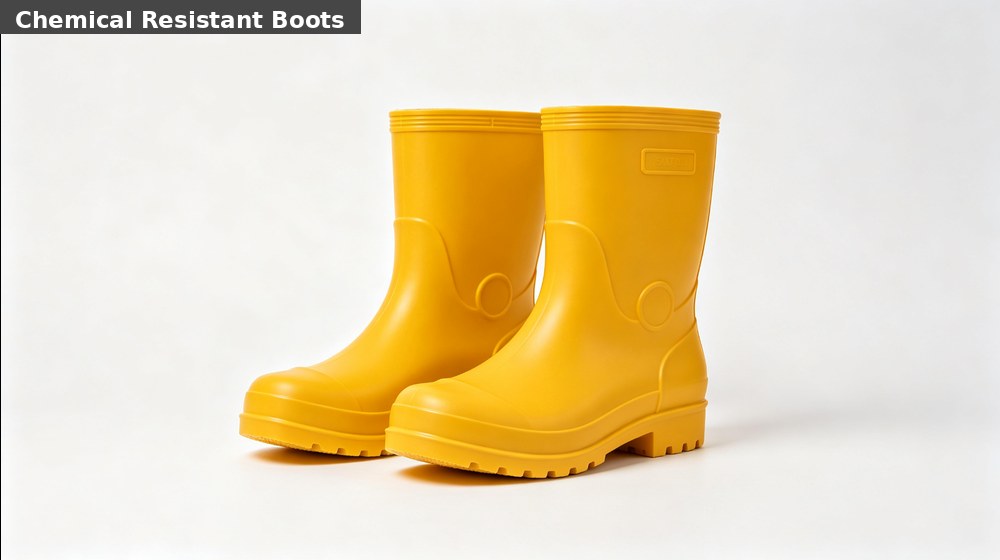
Level A is gas-tight encapsulating protection with built-in SCBA, for unknown or high-concentration vapors. Level B is liquid-tight protection with external respiratory protection, for known liquid splash. Level C is splash protection with filtering respirator, for low-concentration particulates. The selection depends on hazard type, concentration and oxygen level. When in doubt, start at Level A and downgrade only after gas detection confirms safety. Professional gas detector calibration service includes NIST-traceable certificates and 24-hour turnaround. Complete your PPE ensemble with chemical resistant gloves and boots fully compatible with all our hazmat suit systems.
Duration depends on cylinder size and user work rate. A 3L cylinder provides approximately 30 minutes, 6L provides 45 minutes, and 9L provides 60 minutes under moderate work. Heavy work, stress and high breathing rate reduce actual duration. The low-pressure alarm activates at 5.5MPa, giving approximately 5-10 minutes to exit. Always plan entry around the alarm time, not the full duration.
Level A and B suits can be limited-reuse if properly decontaminated and pressure-tested after each use. However, after exposure to high-concentration or unknown chemicals, disposal is recommended. Level C coveralls are typically disposable single-use. Always follow manufacturer guidelines and your site's health and safety procedures for reuse decisions.
A standard 4-in-1 detector measures oxygen (O2, 0-25% VOL), carbon monoxide (CO, 0-1000ppm), hydrogen sulfide (H2S, 0-100ppm) and combustible gases (LEL, 0-100% LEL). This covers most confined space and general industrial hazards. For site-specific chemicals such as ammonia, chlorine, VOCs or others, add single-gas or PID detectors to your configuration.
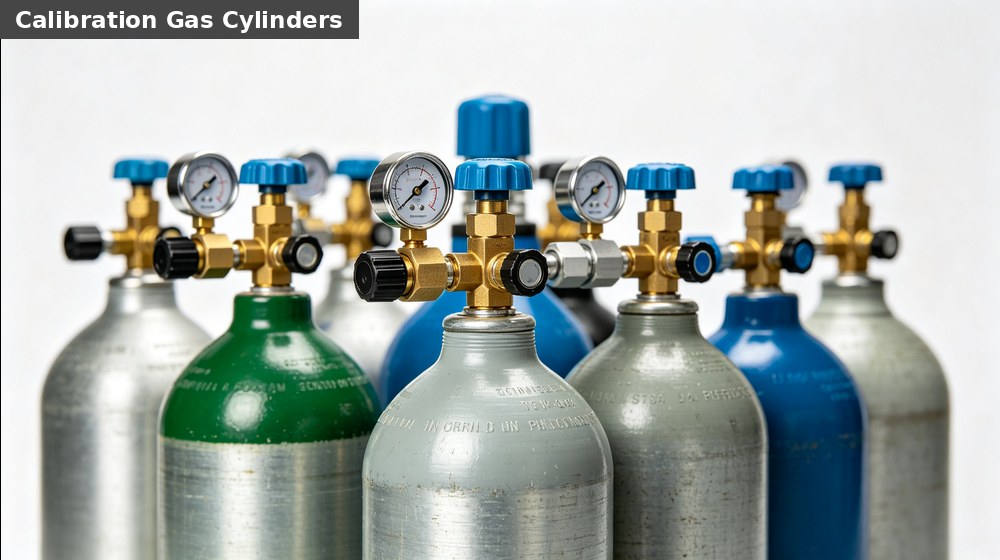
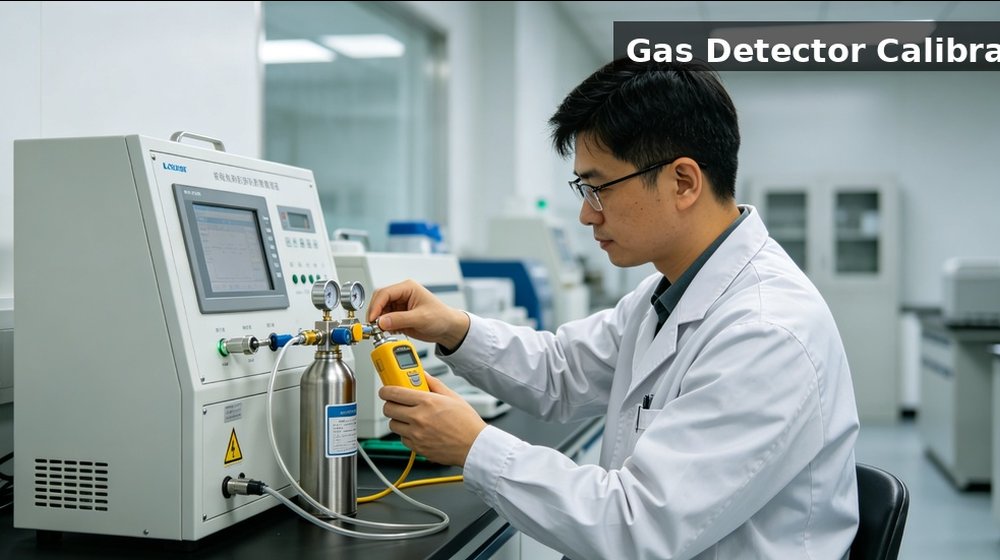
Bump test (functional test) should be performed daily before use, exposing the sensor to known gas to verify alarms activate. Full calibration (adjusting sensor reading to known gas concentration) should be performed every 6 months, after any exposure to high gas concentrations, or when the bump test fails. Sensors have a service life of 2-3 years (electrochemical) or longer (catalytic/infrared), and should be replaced when calibration fails.
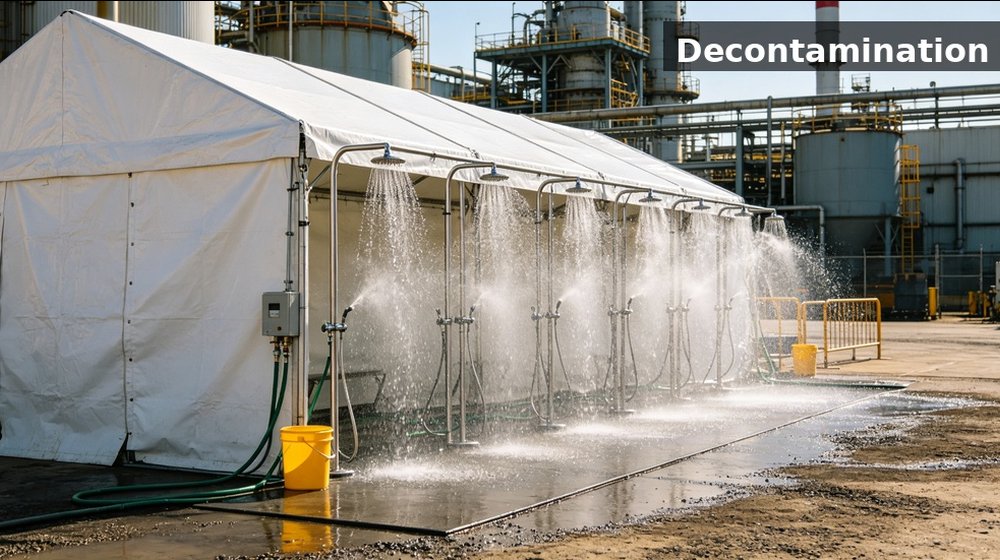
Standard decontamination follows a three-zone process:
(1) Contaminated zone - remove outer gloves and gross contamination;
(2) Decontamination zone - full shower with water or decontamination solution. scrub suit exterior, remove suit;
(3) Clean zone - remove inner gloves, respirator, wash hands and face, medical evaluation. The specific decontaminant depends on the chemical involved. Always have a decontamination plan before entry, not after.
ATEX or IECEx certification is required for any electrical equipment used in potentially explosive atmospheres (Zone 0, 1, 2 for gas; Zone 20, 21, 22 for dust). This includes gas detectors, communication devices, lighting and power tools. Chemical plants, petroleum facilities and many industrial parks have classified zones. Always confirm the zone classification before selecting equipment.
Filter selection is based on the specific gas or vapor present. Type A for organic solvents (benzene, xylene, alcohols), Type B for inorganic gases (chlorine, hydrogen cyanide), Type E for acid gases (sulfur dioxide, hydrogen chloride), Type K for ammonia. Particle filters P2/P3 are added for dusts and aerosols. Combination filters handle mixed hazards. Always verify the filter is rated for your specific chemical and concentration, and that oxygen level is above 19.5%.
Unused Level A/B suits in original packaging typically have a 5-10 year shelf life when stored in cool, dry conditions away from UV and chemicals. Filter cartridges have a 3-5 year shelf life unopened, and must be replaced after opening per manufacturer schedule (typically 6 months to 1 year, or sooner if breakthrough occurs). SCBA cylinders do not expire but require hydrostatic testing every 5 years. Always check manufacture dates before deployment.
Yes. Level C coveralls can be printed with company logos, identification numbers or color-coded team markings. SCBA masks and hard hats can be labeled. Level A/B suits typically cannot be printed due to the chemical barrier fabric, but identification tags and labels can be attached. Production lead time for custom printing is 15-25 working days. Provide artwork in vector format for best results.
Personnel using Level A/B suits and SCBA require formal training to recognized standards such as NFPA 472/473 (Hazmat Awareness/Operations/Technician) or equivalent national standards. Training includes: donning and doffing procedures, seal checks, emergency procedures, decontamination, equipment maintenance and emergency escape. Refresher training should be conducted annually. We can provide operation manuals and training videos with equipment orders.
Calculate based on your largest expected response team, working in pairs (entry team of 2 minimum, plus backup team of 2). For each entry person, plan one suit in use plus one reserve. SCBA: one unit per entry person plus 50% spare cylinders for extended operations. Level C coveralls: plan for daily use plus training and reserve. A 10-person team typically needs 4 Level A, 6 Level B, 50+ Level C, 8 SCBA with 8 spare cylinders, and 4 gas detectors.
Each shipment includes: commercial invoice, detailed packing list (with model numbers, sizes, lot numbers and expiration dates), product specification sheets, CE/ATEX certificates where applicable, user manuals, and maintenance log templates. For tender projects, we can provide test reports, conformity declarations and technical data sheets on request. All documents are matched to the specific product configuration and lot numbers in your shipment.
Yes. We can assemble a complete turnkey hazmat response package including suits, SCBA, gas detectors, decontamination systems, tools and accessories, configured to your team size and hazard profile. Packages are available for 4-person, 6-person, 10-person and 20-person teams. All items are packed in labeled cases with a master inventory list and setup guide. We can also include training materials and maintenance schedules.
For complete industrial emergency preparedness, you may also need these related product categories. Each has a dedicated page with detailed specifications and selection guidance: Wholesale pricing available for all related industrial safety equipment. Related products include SCBA breathing apparatus, gas detectors, and decontamination tents for complete industrial safety solutions.
Send your project details for a customized hazmat protection quotation. Include facility type, hazard assessment, team size, required protection levels and destination. We will respond with product recommendations, specifications, packing plan and estimated timeline.
Email: info@yrftextile.com
WhatsApp: +86 13702995607
Website: www.yrftextile.com
Location: China
Retain the protection level selection, SCBA duration planning and gas detection requirements from this page in your final RFQ. We can combine multiple product categories into one shipment with unified packing and documentation.
Przyjazne linki :
prawa autorskie © Custom Disaster - Relief Bedding: Tents, Sleeping Bags, Blankets Wszelkie prawa zastrzeżone
profesjonalny zespół do obsługi !