Our comprehensive range includes PPE gloves, PPE boots, proximity gloves, wildland gloves, technical rescue hand protection and emergency response footwear for fire departments, industrial teams and government procurement.

hand protection and boots are not safer because they are thicker. The right material, reinforcement, toe cap and tread must match the heat, cut, chemical, ground and handling task, including safety shoes, including protective footwear, including nitrile examination gloves, including chemical resistant boots, including waterproof safety boots, including steel toe safety shoes, including steel toe boots, including medical exam gloves, including industrial safety footwear, including industrial industrial industrial work gloves, including leather work gloves, including wholesale hand protection. This wholesale page compares 9 product lines — each with real materials, applicable standards, sizes and bulk packing — so fire departments, disaster relief agencies, government buyers and industrial safety programs can build a complete, compatible hand and foot protection PPE system with fire gloves and safety boots.
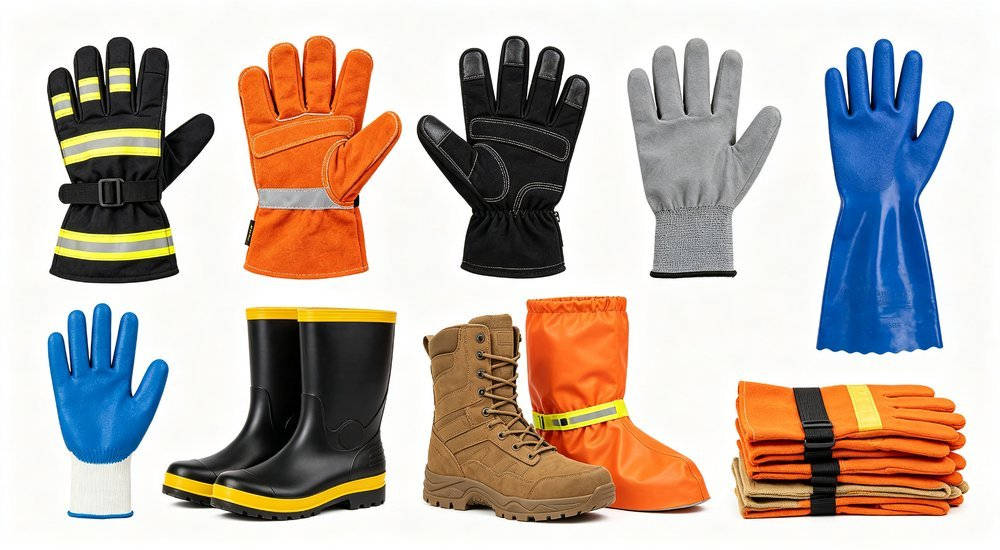
YRF Textile is a China-based wholesale supplier of hand and foot protection PPE — your trusted PPE supplier China for fire departments, rescue teams, hazmat units, disaster relief agencies, government emergency programs, industrial safety programs and hospitals. We produce in China with volume pricing and priority production for large wholesale orders, including safety shoes, including protective footwear, including nitrile examination gloves, including chemical resistant boots, including waterproof safety boots, including steel toe safety shoes, including steel toe boots, including medical exam gloves, including industrial safety footwear, including industrial industrial industrial work gloves, including leather work gloves, including wholesale hand protection. Every shipment passes four-stage quality inspection: incoming material check, assembly check, functional testing and pre-shipment sampling. Test reports are available for tender documents.
This page covers hand and foot protection only. Helmets, respirators and protective clothing are separate product lines. A complete protective ensemble requires all components to be compatible — confirm interfaces before ordering.
Contents: Products | Comparison | Standards | Scenarios | Interfaces | Sizing | Order Setup | Bundles | Key Points | Care | Certs | Packing | Quality | FAQ
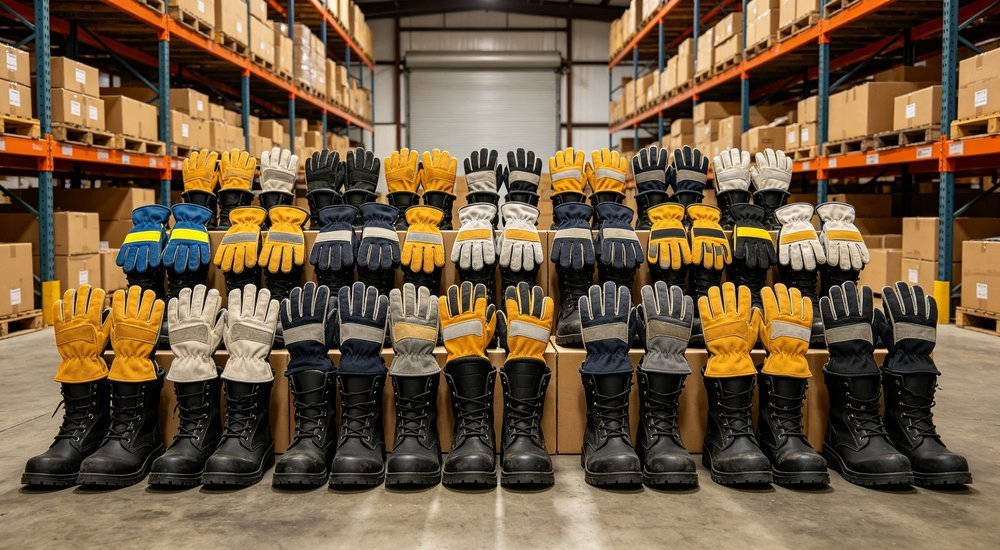
Selecting the right hand and foot protection starts with understanding your work environment, hazard type, and certification requirements. This quick guide helps procurement processs match hand protection and safety footwear to specific use cases across fire, industrial, medical, and tactical operations., including safety shoes, including protective footwear.
Answer these three questions to narrow down the product type, then check the specifications below.
Quick Navigation |
|
| 30-Second Selection Guide |
9 Product Lines |
| Product Comparison |
Protection Standards |
| Scenario Selection |
Interface Compatibility |
|
Sizing and Order Configuration |
Product Bundles and Procurement |
|
Care, Maintenance and Retirement |
Certifications and Documents |
|
Packing, Loading and Quality Inspection |
Related PPE Products |
|
Frequently Asked Questions |
Bulk Quote and Contact |
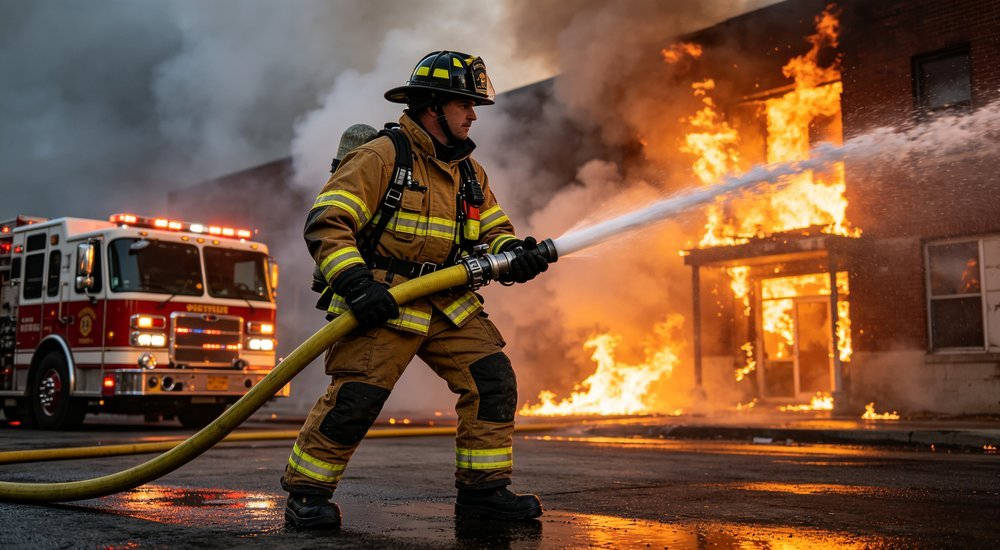
Station duty / daily wear → Station-Duty Shoes
Extended wear → Padded gloves, moisture-wicking lining, cushioned boots
Chemical gloves must work with: chemical suit sleeves, tape/seal, double-glove setup
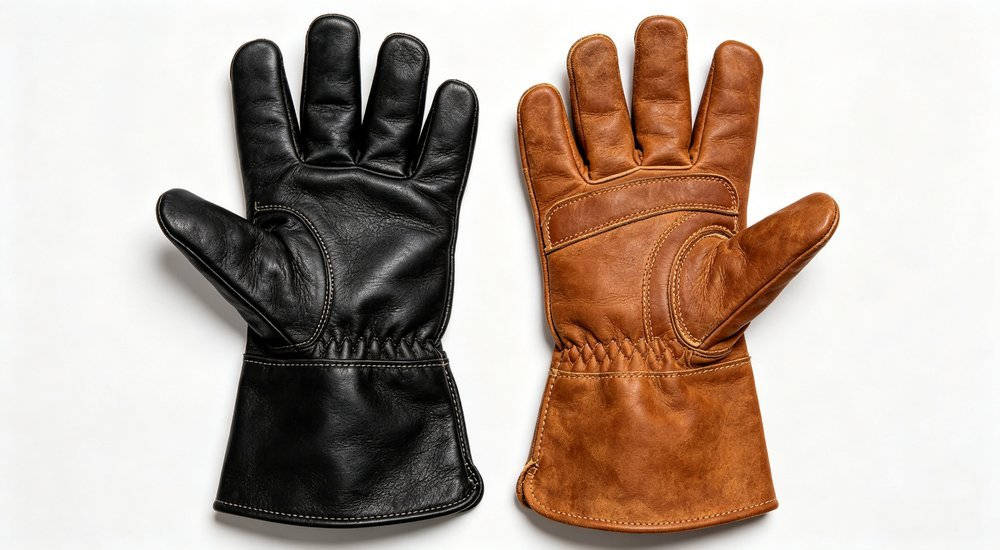
Our hand and foot protection portfolio covers nine specialized product lines designed for different hazard levels and working conditions. From firefighter turnout gloves to chemical-resistant boots, each category is configured to meet industry-specific safety standards and procurement specifications.
Our inventory includes powder free nitrile hand protection for medical environments, bulk safety hand protection hand protection for large procurement orders, and a full range of PPE gloves designed to complement any personal protective equipment gloves program for industrial and emergency response teams.
Our comprehensive range includes nitrile examination hand protection for medical settings, industrial safety footwear for manufacturing environments, medical exam gloves wholesale for healthcare procurement, waterproof safety boots for wet conditions, and steel toe safety shoes for construction sites.
Below are 9 product lines, each with production-verified parameters. Custom sizes, colours and marking are available for wholesale orders.
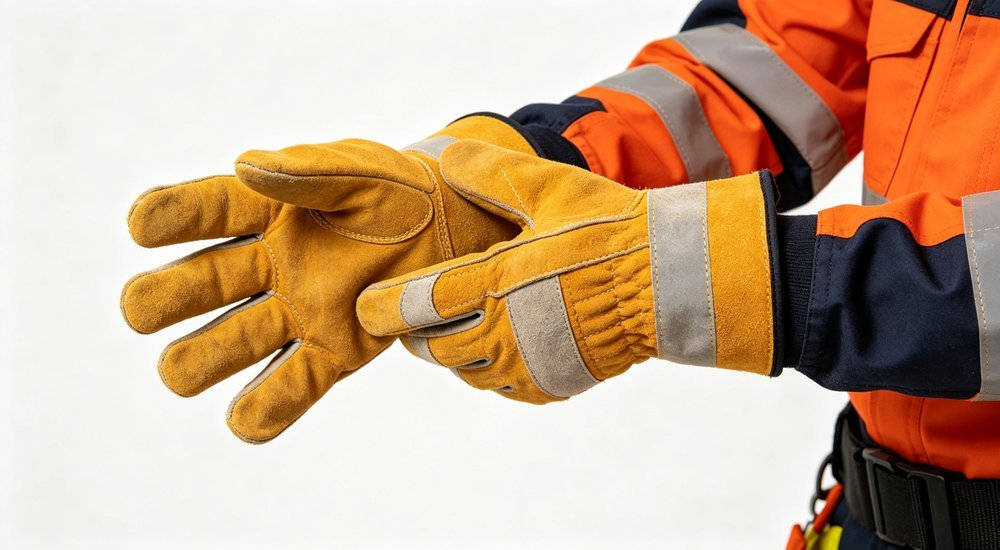
Heavy-duty hand protection for structural fire and high-heat rescue. Top-grain leather with heat-resistant lining, reinforced thumb crotch and extended wrist cuff.
Material: Shell: Top-grain cowhide palm, Kevlar-stitched, heat-resistant back, Lining: Thermal insulating liner, moisture barrier
Standard & Performance: Standard: EN 659 / NFPA 1971, Heat: Contact heat 100°C, convective heat protection, Features: Reinforced thumb crotch, hook-and-loop wrist, extended cuff over coat sleeve, flame-resistant stitching
Dimensions: Length: 28 cm standard or 37 cm extended cuff, Weight: Approx. 428 g per pair
Options: Colours: Black, brown, Sizes: S, M, L, XL
Packing: 1 pair per bag, labelled by size
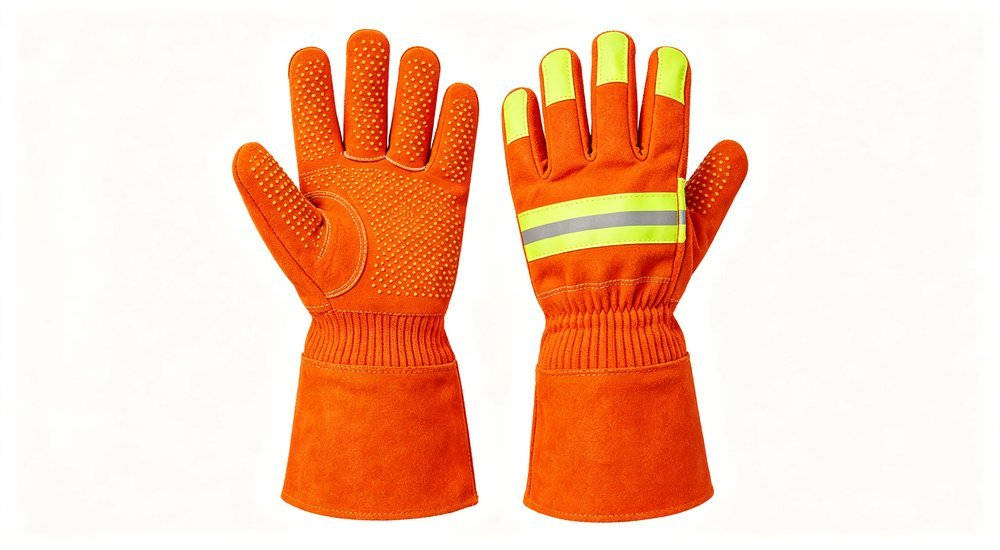
High-visibility heat-resistant hand protection for fire support and low-light operations. Silicone-dotted palm for grip with knitted thermal lining.
Material: Shell: Aramid outer shell, silicone-dotted palm, knitted thermal lining
Standard & Performance: Standard: EN 659 / NFPA 1971, Heat: Contact heat up to 250°C for short-duration handling (specific duration per test report; EN 659 standard contact heat is 100°C/15s), Features: Bright orange for visibility, yellow-green reflective trim, dotted palm grip, extended cuff
Dimensions: Length: Approx. 30 cm, Weight: Approx. 250 g per pair
Options: Colours: Orange with reflective trim, Sizes: One-size-fits-most (check hand circumference for wholesale orders)
Packing: 1 pair per bag
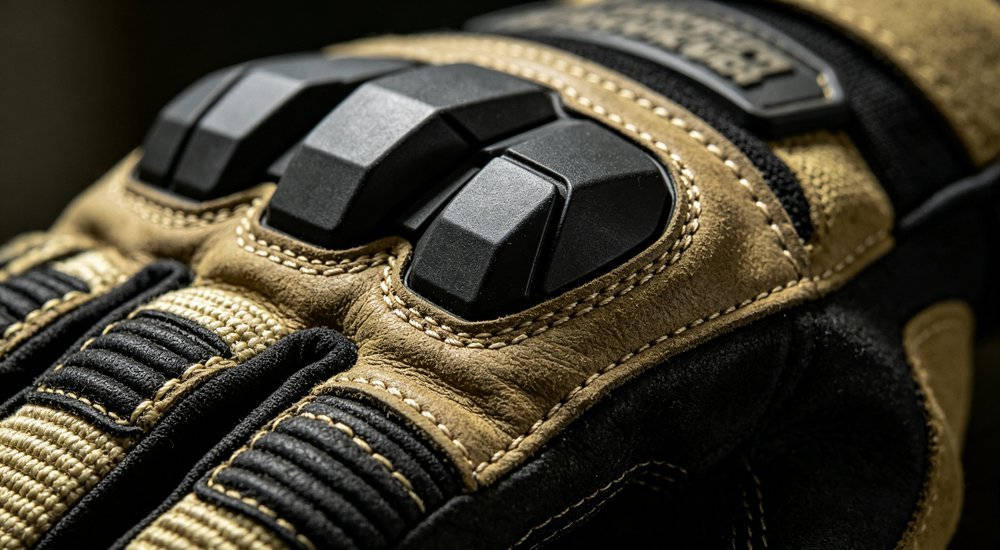
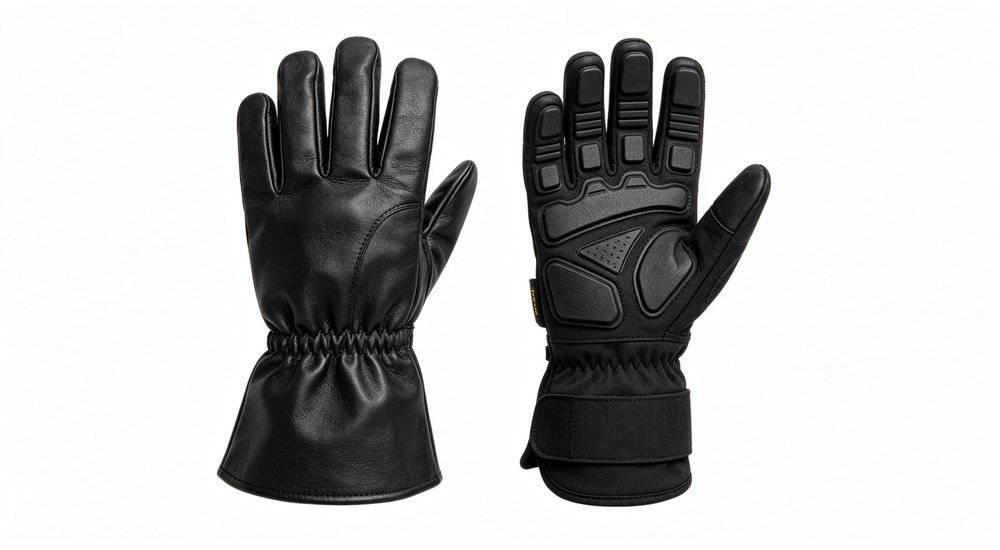
Impact-hand protection hand protection for breaching, vehicle rescue and heavy handling. Segmented TPR knuckle protection with cut-resistant palm.
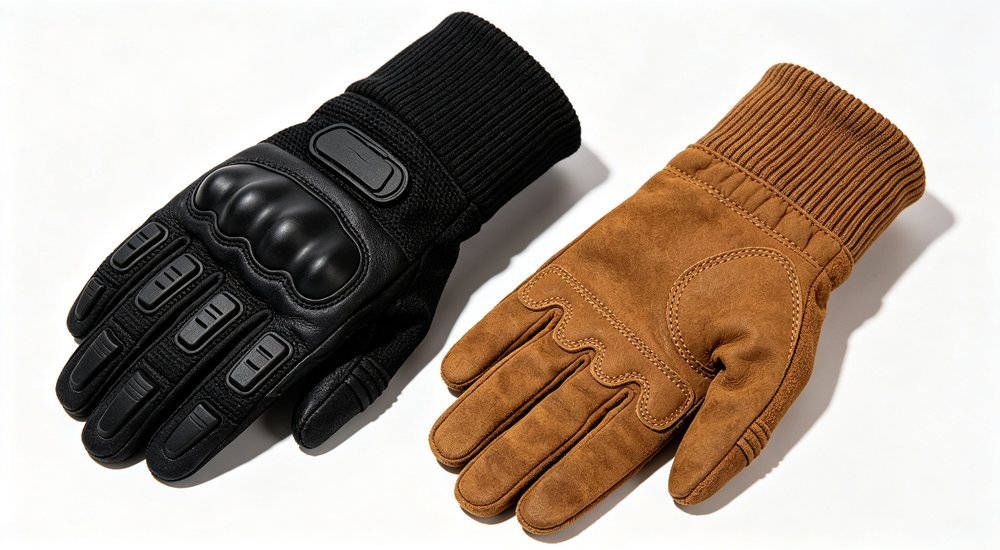
Material: Palm: Synthetic leather with Kevlar cut-resistant layer
Standard & Performance: Standard: EN 388 (cut level 2-4) / EN 13594, Cut: Level A2-A4 (ANSI/ISEA 105), Features: Ribbed wrist, pull tab, touchscreen-compatible fingertips, reinforced thumb crotch
Dimensions: Length: Approx. 25 cm, Weight: Approx. 180 g per pair
Medical facilities often prefer powder free nitrile gloves to reduce allergen exposure, while industrial teams select durable PPE gloves that integrate seamlessly with existing personal protective equipment protocols.
Options: Colours:
Black, brown, Sizes: M, L, XL, XXL
Proper hand protection selection requires matching glove material to specific workplace hazards and exposure durations.
>Packing: 1 pair pe bag
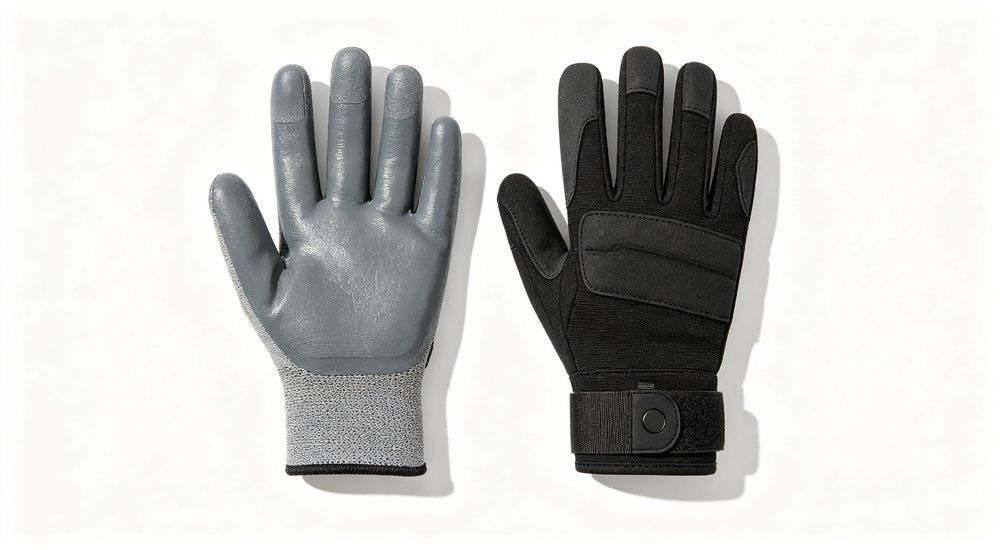
Technical-Rescue and Tactical Cut Gloves
Lightweight high-dexterity hand protection for technical rescue, rope work and sharp-edge handling. HPPE cut-resistant liner with nitrile-coated palm.
Material: Liner: HPPE / Dyneema cut-resistant fibre, Coating: Nitrile micro-foam or sandy finish
Standard & Performance: Standard: EN 388 (cut A5-A7) / ANSI/ISEA 105, Cut: Level A5-A7 (highest cut protection), Features: Double
Safety footwear must meet industry certification standards to ensure adequate protection against impact and compression injuries. thumb reinforcement, hook-and-loop wrist, touchscreen fingertips, breathable knit back

Dimensions: Length: 18-19 cm, Weight: Approx. 100 g per pair
Options: Colours: Grey, black, Sizes: S, M, L, XL
Packing: 1 pair per bag
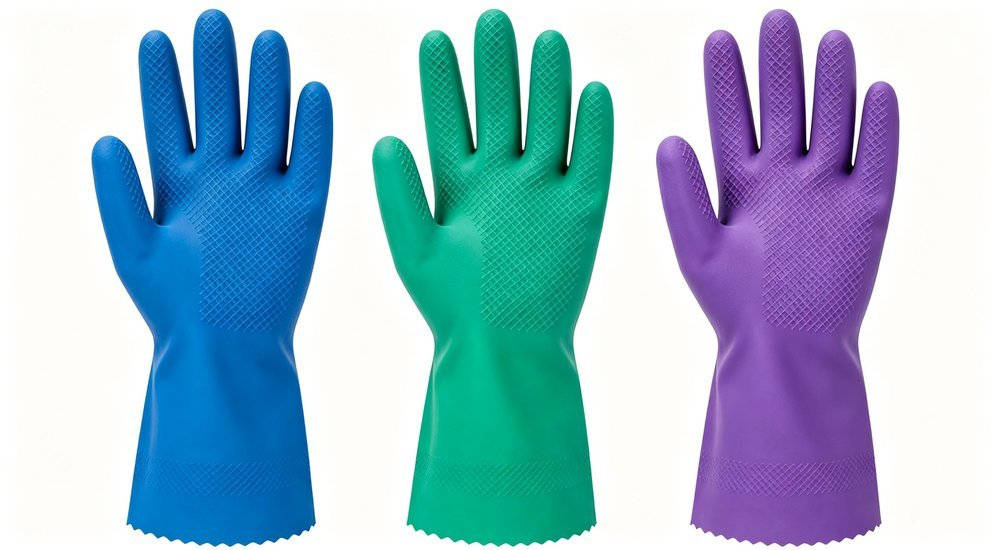
Chemical-Resistant Gloves
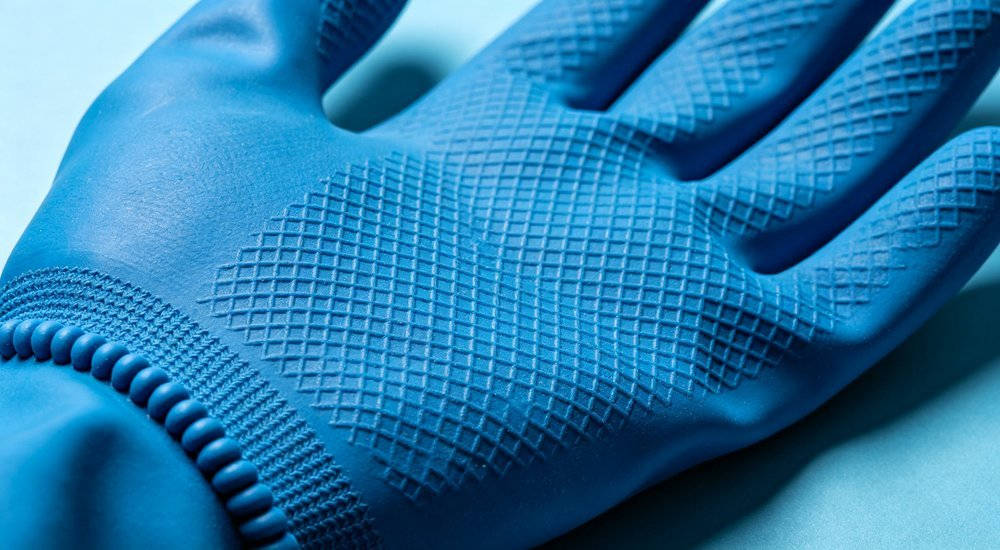
Long-cuff nitrile gloves for chemical handling, decontamination and laboratory work. Diamond-textured palm for wet grip.
Material: material: Nitrile rubber (latex-free)
Standard & Performance: Standard: EN 374 (chemical protection) / EN 420, Chemical: Acids, alkalis, solvents (refer to compatibility chart for specific chemicals), Features: Diamond palm texture, straight cuff for donning, rolled beaded cuff
Dimensions: Length: 33 cm extended cuff, Thickness: 0.38 mm palm, 0.45 mm fingertip
Options: Colours: Blue, green, purple, Sizes: XS, S, M, L, XL
Packing: 1 pair per bag, 50 pairs per carton
Disposable Medical Gloves
Powder-free examination gloves for medical emergency, institutional and industrial use. Latex, nitrile or vinyl options.
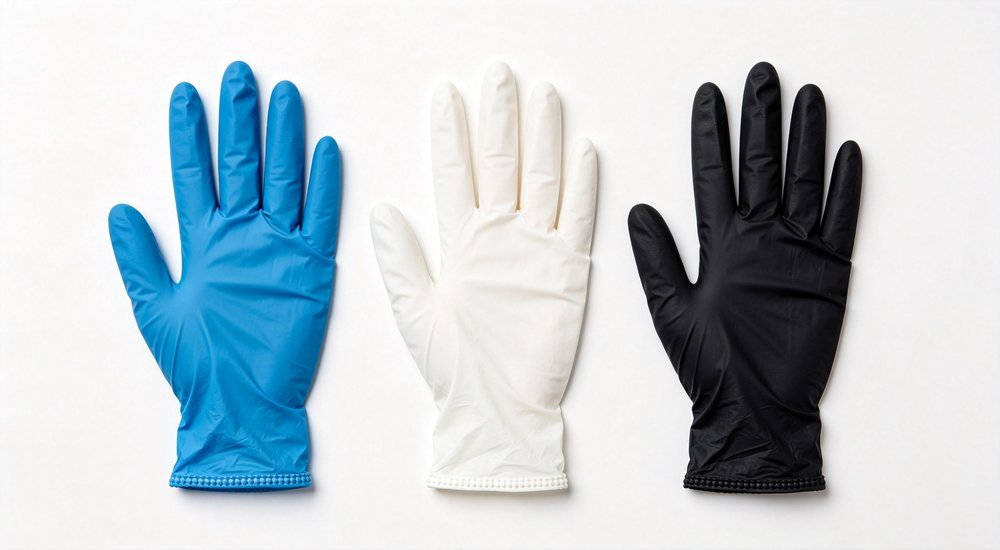
Material: material: Natural rubber latex, nitrile or PVC (specify at order)
Standard & Performance: Standard: EN 455 (medical) / EN 374 / ASTM D6319, Features: Beaded cuff, smooth or textured fingertip, ambidextrous
Dimensions: Thickness: 0.08-0.12 mm
Options: Colours: Natural white, blue, black, Sizes: S, M, L, XL, Powder: Powder-free standard; powdered available on request, Sterility: Non-sterile standard; sterile EO available
Packing: 100 pieces per box, 10 boxes per carton
Medical glove material comparison: 100 pieces per box, 10 boxes per cartonLatex offers best fit and dexterity but causes allergies; nitrile is latex-free, puncture-resistant and suitable for most medical use (most popular for wholesale orders); PVC/vinyl is lowest investment for light-duty examination but less stretch and durability. Specify material at order — they are not interchangeable.
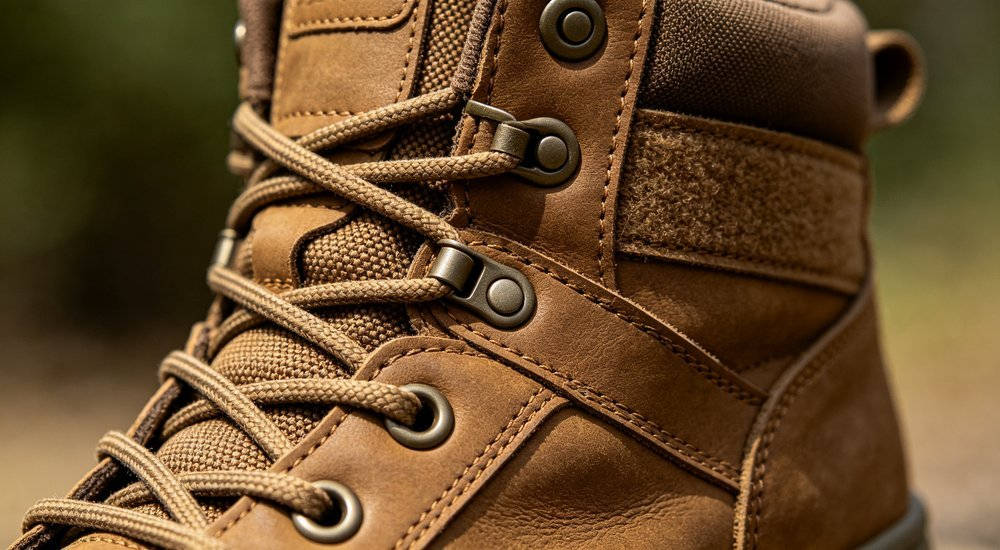
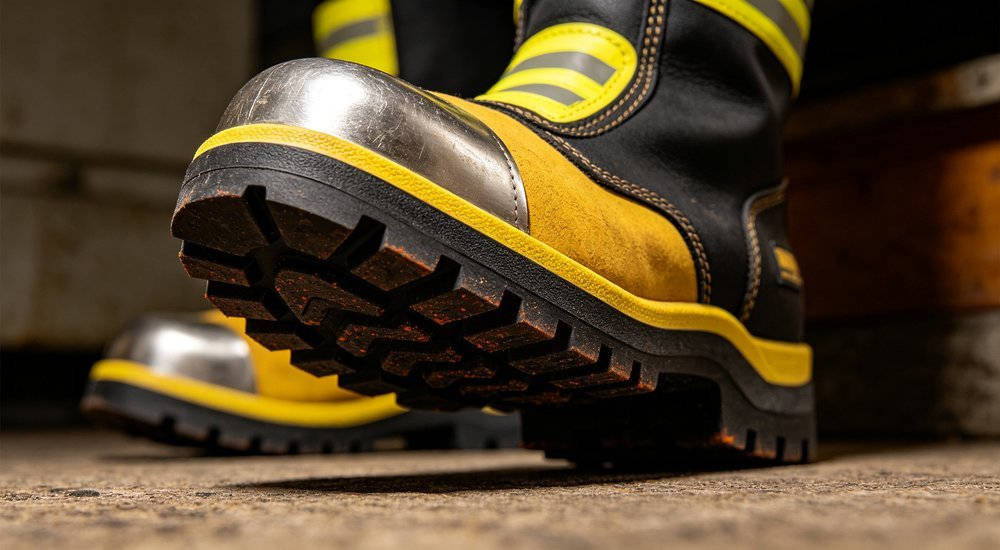
Structural Fire Boots, Firefighter Boots and Rescue Boots
High-cut protective boots for structural firefighting and rescue. Composite or steel toe cap with puncture-resistant midsole and heat-resistant outsole.
Material: Upper: Moulded rubber or stitched leather/rubber composite
Standard & Performance: Standard: EN 15090 / NFPA 1971, Heat: Outsole contact heat 250°C, Toe cap: Steel or composite, impact 200J / compression 15kN, Midsole: Kevlar or steel puncture-resistant, minimum 1100N, Outsole: Heat-resistant rubber, deep tread, SRC slip resistance, Features: Zipper and lace closure, reflective trim, padded collar, moisture-resistant lining (drainage channels on wildland models only)
Dimensions: Shaft: 25-35 cm, Weight: 2.0-2.8 kg per pair
Options: Colours: Black with yellow trim, Sizes: EU 38-47 (US 6-13)
Packing: 1 pair per box with shape support
For detailed boot specifications, sizing charts and boot-only comparison, see our Firefighter Boots page.
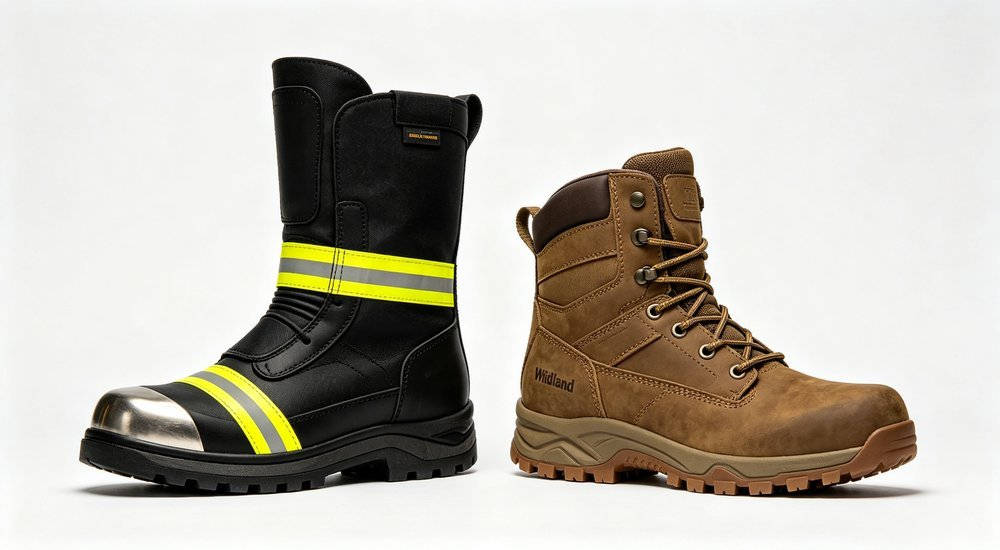
Wildland, Station-Duty and Tactical Boots
Three boot styles for different duties: wildland fire boots for terrain, station-duty shoes for daily wear, tactical boots for mixed ground.
Material: Upper: Full-grain leather with nylon panels (wildland/tactical); leather/mesh (duty)
Standard & Performance: Standard: EN ISO 20345 / ASTM F2413, Slip: SRA / SRB rated, Toe cap: Composite or steel (optional on wildland/tactical), Outsole: Rubber or Vibram-style lug sole, deep tread, Features: Lace-up closure, waterproof lining option, cushioned midsole, shock-absorbing heel
Dimensions: Shaft: 15-20 cm (wildland/tactical); low-cut (duty), Weight: 1.2-1.8 kg per pair
Options: Colours: Black, brown, olive, Sizes: EU 38-47 (US 6-13)
Packing: 1 pair per box
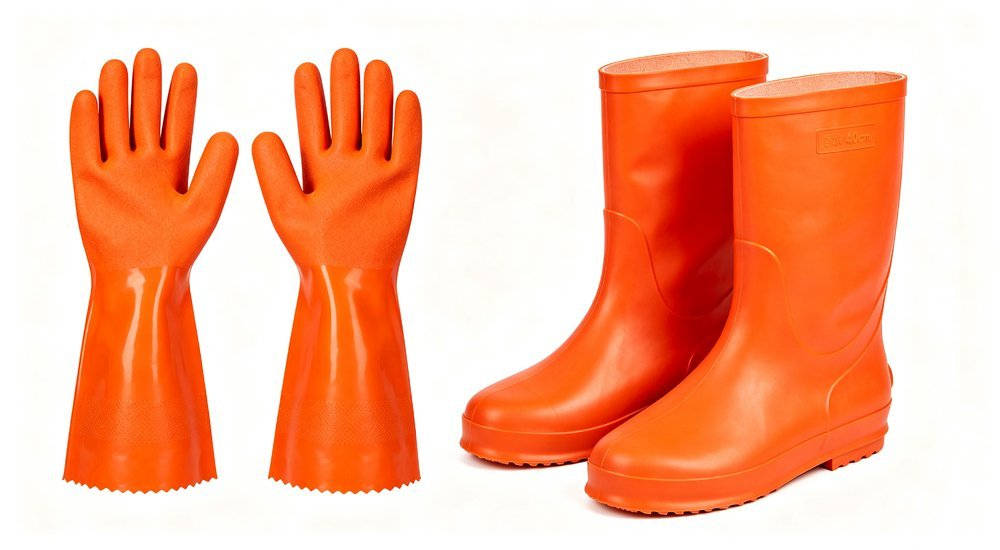
Chemical Glove and Boot-Cover Ensemble
Complete chemical protection set with butyl-rubber hand protection and matching boot covers. Designed for use with Level A/B chemical suits.
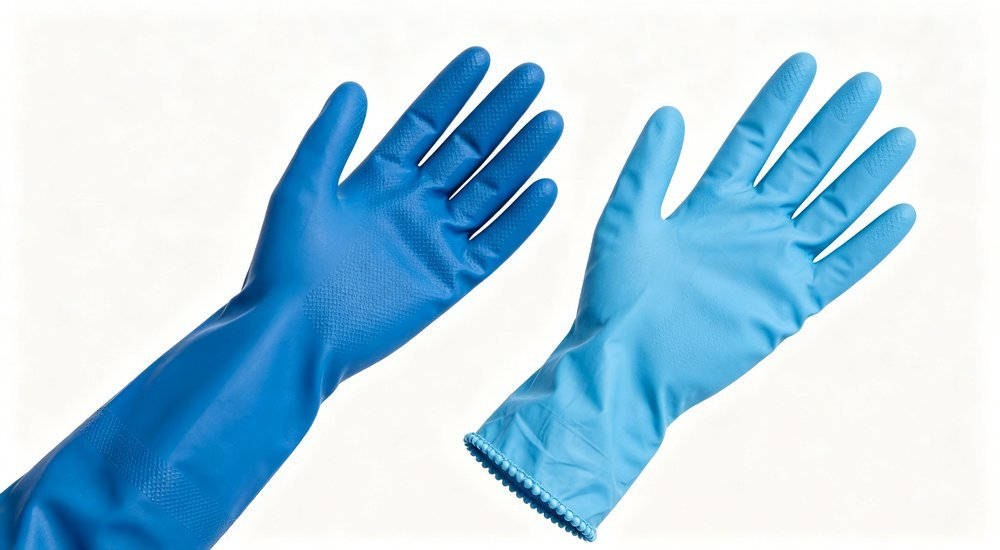
Material: Glove: Butyl rubber, 0.35 / 0.5 / 0.7 mm thickness options, Boot cover: Butyl rubber or multi-layer composite film
Standard & Performance: Standard: EN 374 / EN 943 (chemical suit compatible), Chemical: Aldehydes, ketones, esters and many organic chemicals (refer to compatibility data), Features: Diamond grip palm, wide boot-cover opening, integrated with chemical suit sleeves/legs
Dimensions: Glove length: 33-40 cm extended straight cuff
Options: Colours: Orange, grey, Sizes: Gloves: S-XL; Boot covers: S-XL (match shoe size)
Packing: Gloves by pair, boot covers by pair, kit code for combined orders
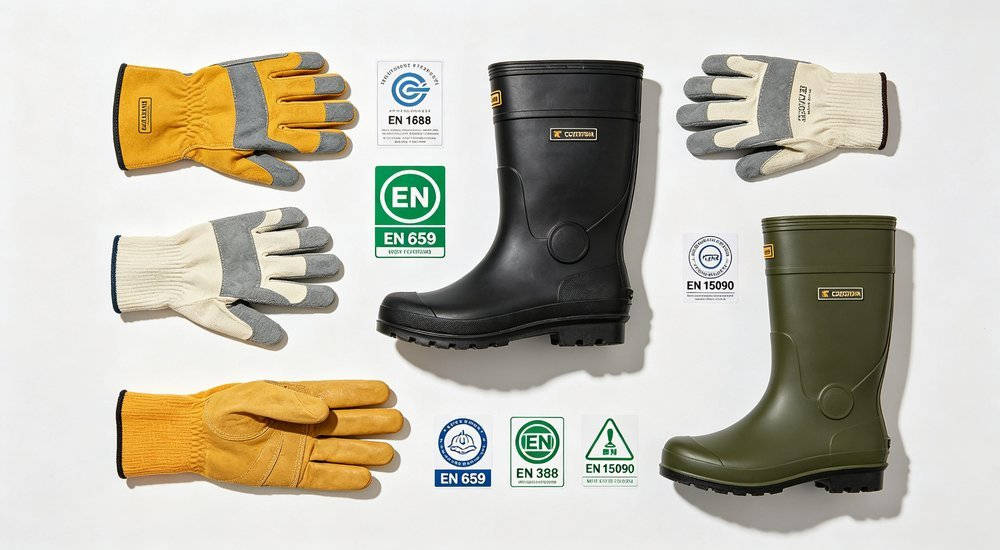
Comparing hand and foot protection options side by side helps buyers understand the trade-offs between material, protection level, comfort, and investment. This comparison section covers nine core product lines with key specifications for fast decision-making.
|
Product Line |
Main Material |
Protection Level |
Key Use Case |
Certification |
|
Firefighter Turnout Gloves |
Leather/Kevlar |
High Heat/Cut |
Structural Firefighting |
NFPA 1971 |
|
Industrial Work Gloves |
Leather/Synthetic |
Cut/Abrasion |
Manufacturing/Construction |
EN 388 |
|
Nitrile Examination Gloves |
Nitrile |
Chemical/Biological |
Medical/Healthcare |
FDA/CE |
|
Chemical Resistant Boots |
PVC/Rubber |
Chemical/Penetration |
Hazmat/Chemical Plants |
EN ISO 20345 |
|
Safety Boots/Shoes |
Leather/Steel Toe |
Impact/Compression |
Industrial/Construction |
ASTM F2413 |
|
Tactical Gloves |
Synthetic/Leather |
Tactile/Dexterity |
Military/Law Enforcement |
MIL-SPEC |
|
Cut Resistant Gloves |
HPPE/Steel Mesh |
Cut Level A1-A9 |
Metal/Glass Handling |
EN 388 |
|
Heat Resistant Gloves |
Aramid/Leather |
Heat up to 500°C |
Welding/Foundry |
EN 407 |
|
Waterproof Safety Boots |
Leather/Gore-Tex |
Water/Impact |
Outdoor/Construction |
ASTM F2413 |
Use this table to compare all lines at a glance. Click any product name for full details.
Regular inspection of protective hand protection and boots extends service life while maintaining optimal safety performance.
What these specs mean for you: EN 659 fire gloves withstand direct flame and contact heat — they are thicker and less dexterous than rescue gloves. EN 388 cut level A7 means the glove resists sharp edges like broken glass and metal. EN 15090 fire boots have heat-resistant outsoles that do not melt on hot surfaces — regular work boots will fail in those conditions. SRC slip resistance means the boot passes both ceramic tile with detergent and steel floor with glycerin tests. Boot weight matters for fatigue: a 2.8kg fire boot is appropriate for short-duration structural fire, while a 1.5kg wildland boot is better for all-day hiking. Choose weight based on typical shift duration.
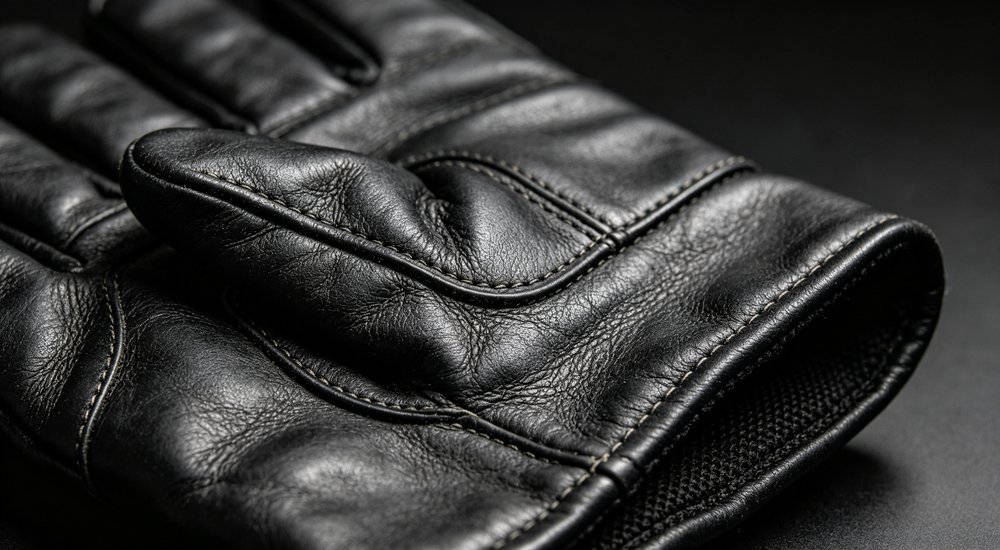
Understanding protection standards is critical for compliant procurement of hand and foot protection equipment. Different industries require different certification levels, and this reference explains the key standards that apply to work gloves, safety boots, and specialized protective footwear.
|
Glove Type |
Material |
Cut Level |
Heat Resistance |
Chemical Resistance |
Best For |
|
Leather Work Gloves |
Cowhide/Goatskin |
A2-A4 |
Up to 100°C |
Limited |
General Construction |
|
Nitrile Gloves |
Nitrile Rubber |
A1 |
None |
Excellent |
Medical/Chemical |
|
Cut Resistant Gloves |
HPPE/Steel |
A5-A9 |
Limited |
Moderate |
Metal/Glass |
|
Heat Resistant Gloves |
Aramid/Leather |
A3-A5 |
Up to 500°C |
Limited |
Welding/Foundry |
|
Chemical Gloves |
Neoprene/Butyl |
A1-A2 |
Limited |
Excellent |
Hazmat/Lab |
|
Tactical Gloves |
Synthetic/Leather |
A2-A3 |
Moderate |
Limited |
Military/LE |
Key point: A glove certified to EN 388 (mechanical) does not protect against chemicals — that requires EN 374. A boot certified to EN ISO 20345 (industrial safety) does not meet fire service heat requirements — that requires EN 15090. Match each product to the exact standard your tender requires.
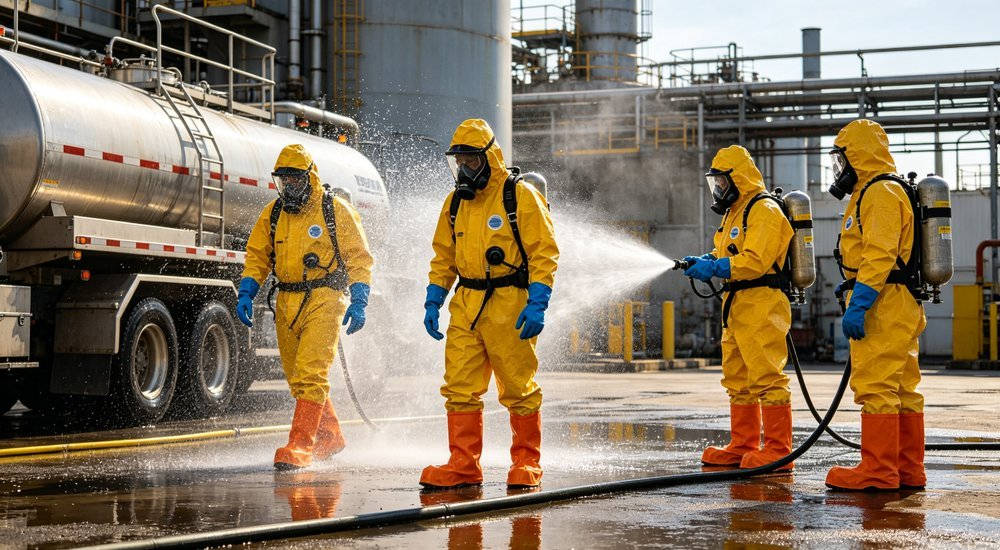
Different operational scenarios require different hand and foot protection configurations. Fire departments need heat-resistant hand protection and structural boots, while industrial teams require chemical-resistant options, and medical facilities need examination-grade hand protection.
|
Scenario |
Recommended Gloves |
Recommended Footwear |
Key Hazard |
Certification Needed |
|
Firefighting |
Turnout Gloves |
Structural Boots |
Heat/Flame |
NFPA 1971 |
|
Construction |
Leather Work Gloves |
Steel Toe Boots |
Impact/Cut |
ASTM F2413 |
|
Medical/Healthcare |
Nitrile Exam Gloves |
Non-Slip Clogs |
Biohazard/Chemical |
FDA/CE |
|
Chemical/Hazmat |
Chemical Gloves |
Chemical Boots |
Chemical Penetration |
EN ISO 20345 |
|
Manufacturing |
Cut Resistant Gloves |
Safety Shoes |
Cut/Abrasion |
EN 388 |
|
Military/Tactical |
Tactical Gloves |
Combat Boots |
Tactile/Durability |
MIL-SPEC |
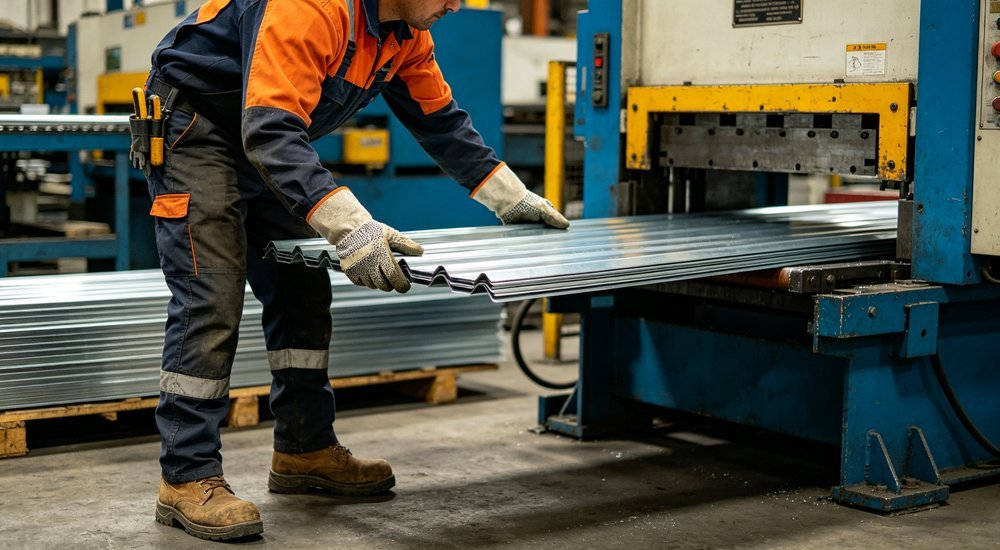
Start with: Structural Firefighting Gloves (EN 659, leather, extended cuff) + Structural Fire Boots (EN 15090, steel toe, SRC grip). One pair per firefighter plus reserve. Confirm glove-cuff overlap with coat sleeve and boot-trouser interface. Add Fire Heat hand protection for high-heat support operations.
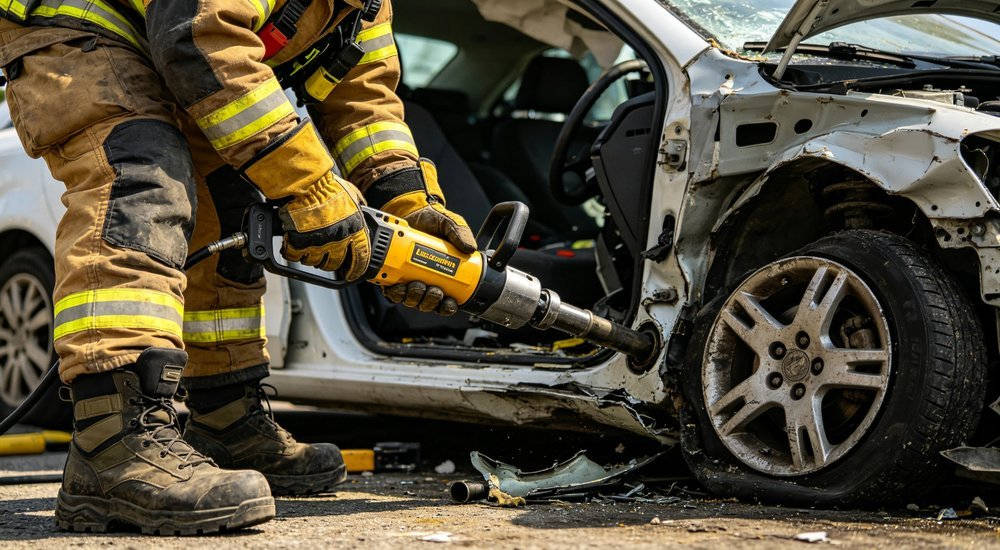
Start with: Heavy Rescue Gloves (TPR knuckle protection, cut A2-A4) + Technical Cut Gloves (A5-A7 for glass/metal) + Tactical Boots (composite toe, lug sole). Two glove types per rescuer — heavy for breaching, cut hand protection for detailed work. Confirm touchscreen compatibility for communication devices.
Bulk procurement of hand and foot protection allows for investment optimization while ensuring consistent inventory levels.
hemical Glove and Boot-Cover Ensemble (butyl rubber) for Level A/B entry. Confirm chemical compatibility with your specific contaminants. Double-glove setup recommended for high-risk entries. Include spare pairs for changeout during decon.
Start with: Disposable Medical Gloves (nitrile powder-free, exam grade) + chemical gloves (nitrile, for cleaning/disinfection). Calculate daily consumption × reserve days. Nitrile preferred for latex-allergy staff. Sterile hand protection for surgical/procedure areas, non-sterile for general examination.
Start with: Fire Heat Gloves (high visibility, silicone grip) + Wildland Boots (leather/nylon, Vibram-style lug sole, 15-20cm shaft). Lightweight gear for long hikes and hot conditions. Ventilated boots preferred for all-day wear. Spare laces and insoles recommended.
Start with: Mixed stock based on regional risk: 25% fire gloves, 20% rescue gloves, 15% chemical gloves, 15% disposable medical gloves, 15% fire boots, 10% tactical boots. Track glove and boot shelf life. Plan 3-5 year rotation for rubber/leather items. Store in cool, dry conditions away from direct sunlight.
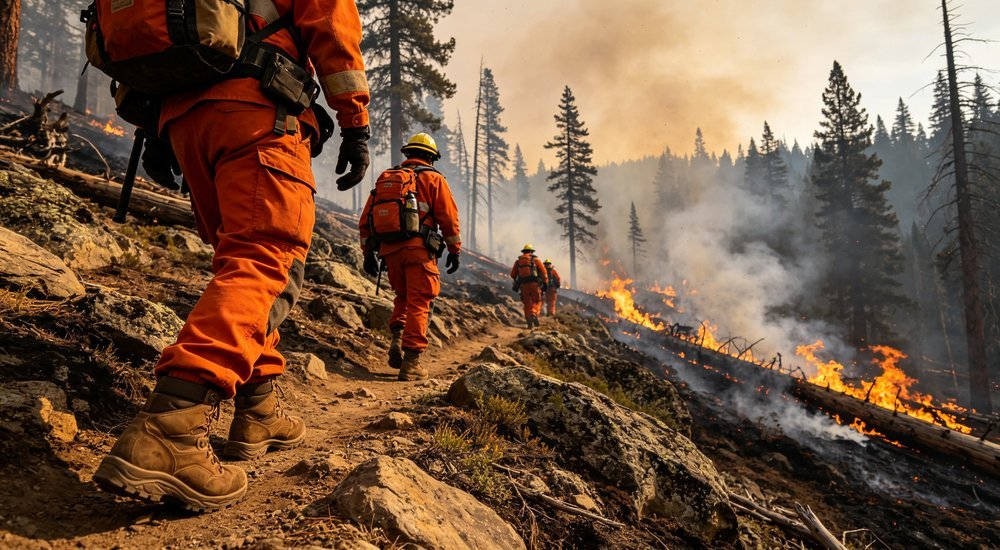
Hand and foot protection must work seamlessly with other personal protective equipment in the field. This section covers how tactical gloves interface with weapons systems, how chemical boots work with hazmat suits, and compatibility considerations for full-body PPE ensembles.
A complete protective ensemble only works if every piece connects properly. Use this checklist before ordering.
Key point: Always test the full ensemble together — gloves, coat, boots and pants — before volume ordering. A glove that fits alone may not work with a coat sleeve. We can provide interface diagrams with every quotation.
---
Proper sizing and fit are essential for hand and foot protection to perform as designed. This guide covers sizing charts, fit considerations, and order configuration options for wholesale procurement of hand protection hand protection and safety footwear.
|
Product Type |
Sizing Method |
Fit Consideration |
Common Issue |
Solution |
|
Work Gloves |
Palm Width (S-XL) |
Finger Length |
Too Tight/Too Loose |
Measure Both Hands |
|
Exam Gloves |
Palm Width (XS-XL) |
Stretch Fit |
Allergy to Latex |
Nitrile Alternative |
|
Safety Boots |
Foot Length (EU/US/UK) |
Toe Box Room |
Break-in Period |
Wear 2 Weeks |
|
Chemical Boots |
Foot Length + Calf |
Calf Circumference |
Difficult to Remove |
Use Boot Hooks |
|
Tactical Gloves |
Palm Width (S-XXL) |
Trigger Finger |
Reduced Dexterity |
Slim Fit Option |
Proper fit is the difference between protection and injury. Measure users before ordering, especially for hand protection and boots.
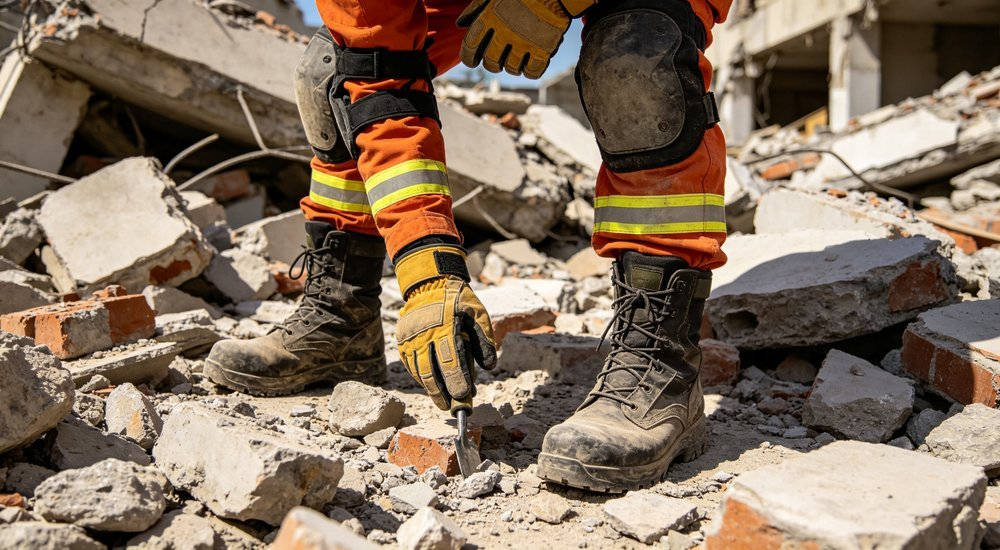
Fit testing: For gloves, test grip on actual tools, finger flexion and wet grip. For boots, wear for at least 30 minutes including walking, climbing and kneeling. We can provide size charts with every quotation.
Below is a typical hand and foot protection order for a 50-person municipal fire department. Use as reference — actual mix depends on roles, shifts and reserve policy.
Final quantities and delivery timing are confirmed per order. Request a custom quote for your specific team size and hazard profile.
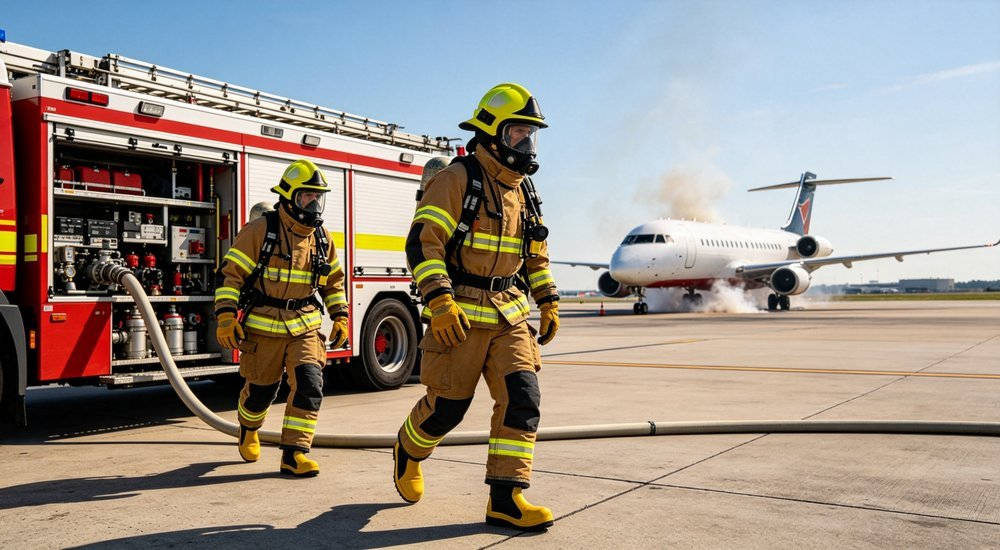
Bulk safety gloves are available for large-volume orders with customized packaging and volume pricing options to support high-volume procurement requirements. for Wholesale hand protection and Safety Footwear
Procuring hand and foot protection in bulk requires careful planning around bundle configurations, stock levels, and delivery schedules. This procurement guide helps buyers optimize their orders for investment efficiency and operational readiness.
For large orders, bulk safety hand protection gloves are available in customized packaging configurations with volume pricing to support high-volume procurement requirements.
These pre-configured bundles simplify ordering for common team types. All items can be adjusted to your size ratio and hazard profile.
Use this checklist when preparing your specification or tender document.

Compatibility between gloves, boots, and other PPE components is essential for complete worker protection in the field.
Different operational environments require specialized hand protection configurations tailored to specific hazard profiles.

Proper care and maintenance extend the service life of hand and foot protection equipment while ensuring ongoing safety performance. This section covers inspection routines, cleaning procedures, and retirement criteria for firefighter turnout gloves and other reusable protective gear.
Storage conditions: Store all rubber and latex items at 5-25°C, below 70% relative humidity, away from direct sunlight, ozone sources and chemical fumes. Leather items should be conditioned periodically. Do not store gloves or boots folded or compressed for long periods.
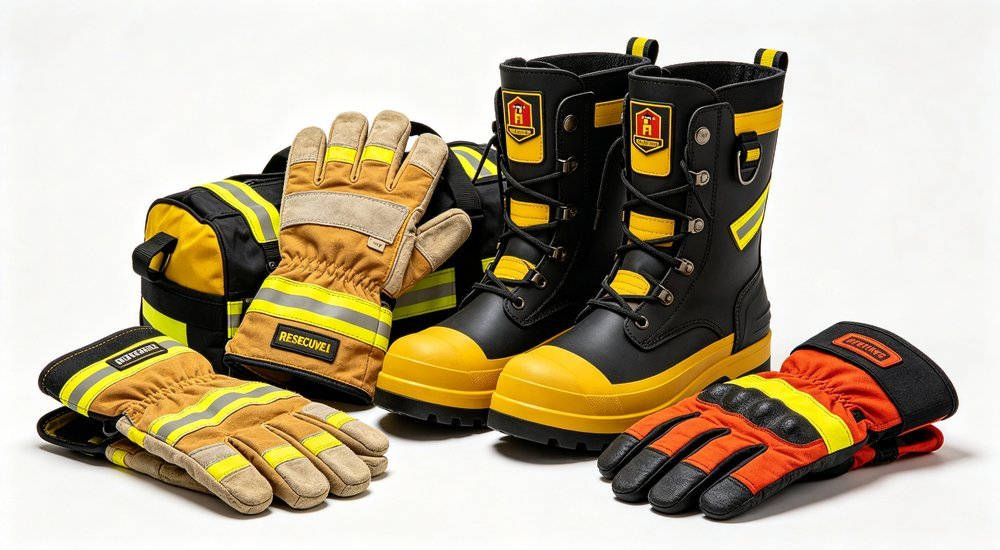
Medical and healthcare settings require specific certifications for hand protection, including examination gloves and infection control protocols. This reference covers the key standards that apply to medical examination gloves, chemical-resistant options, and healthcare-grade protective footwear.
|
Standard |
Region |
Impact Test |
Compression Test |
Additional Tests |
Common Use |
|
ASTM F2413 |
USA/Canada |
75 lbs impact |
2500 lbs compression |
Metatarsal/Conductive |
North America Industrial |
|
EN ISO 20345 |
Europe |
200J impact |
15kN compression |
S1-S5 Ratings |
European Industrial |
|
GB 21148 |
China |
200J impact |
15kN compression |
Ankle/Puncture |
China Industrial |
|
AS/NZS 2210 |
Australia/NZ |
200J impact |
15kN compression |
Type 1-5 |
Australia/NZ |
|
CSA Z195 |
Canada |
125J impact |
11kN compression |
Grade 1-3 |
Canada Specific |
We support third-party test reports based on your project requirements. Not every certificate applies to every product — confirm availability for your selected model before shipment.
Certifications: EN 659, NFPA 1971, EN 388, EN 13594, ANSI/ISEA 105, EN 374, EN 420, EN 455, EN 15090, EN ISO 20345, ASTM F2413, EN 943, ISO 9001:2015, SGS Test Report, CE Marking, Certificate of Origin
Important:Glove and boot certifications apply to specific models and materials. Cut level and chemical resistance are material-specific — a change in coating or thickness changes the rating. Confirm the certificate matches your exact model, size and material.

Wholesale procurement of hand and foot protection requires careful attention to packing configurations, container loading efficiency, and quality inspection protocols. This section covers export packaging standards, container loading calculations, and pre-shipment quality checks.
Loading figures are estimates for standard packing. Mixed orders are optimized to maximize container use.
YRF Textile produces and exports hand and foot protection alongside our other textile and emergency supply lines. Our quality process has four stages:
We support third-party inspection (SGS, BV, or your own inspector) before shipment — arrange the scope and timing in advance.
Training workers on proper use and care of protective equipment maximizes the effectiveness of safety investments.
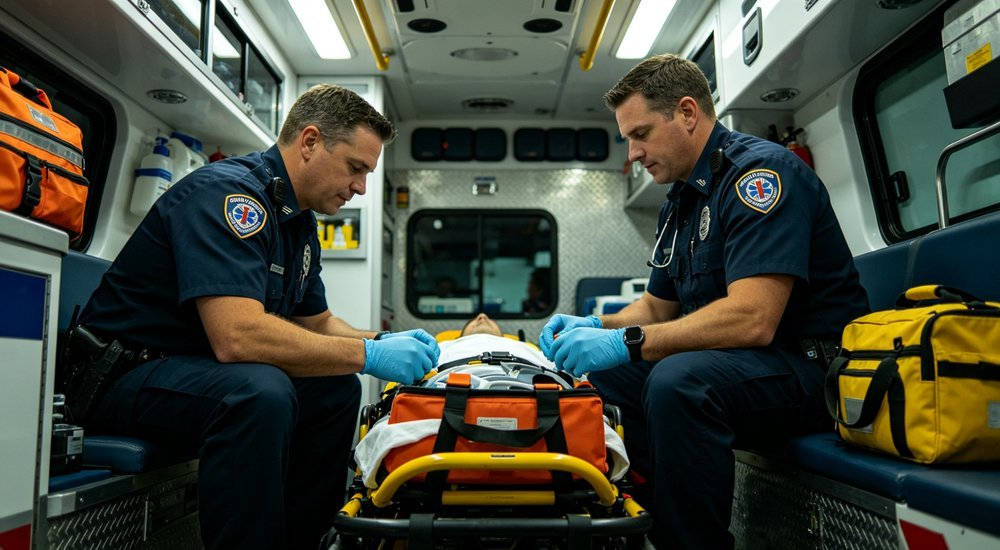
Hand and foot protection is often procured alongside other personal protective equipment for complete operational readiness. This section highlights related PPE categories including rescue gloves, emergency response gear, and complementary protective equipment. Our PPE gloves range complements these product lines for complete protection coverage.
Our PPE gloves collection includes specialized options for fire rescue, industrial safety, medical environments, and tactical operations, all designed to work as part of a complete personal protective equipment system.
Body Protective Clothing — Fire, chemical and medical suits to match your hand protection and boots.
Head & Respiratory Protection — Helmets, SCBA and respirators for complete ensemble.
Fire Safety Equipment — Complete fire ensembles and accessories.
Emergency Survival Gear — Tools, kits and accessories for disaster preparedness.
Relief Tents & Tarps — Shelter systems for decontamination and emergency response.
Emergency Lighting — Portable lights and headlamps for rescue operations.
Body Protective Clothing — Complete protective suits to pair with your hand protection and boots.
Head and Respiratory Protection — Helmets, masks and respirators for full PPE coverage.
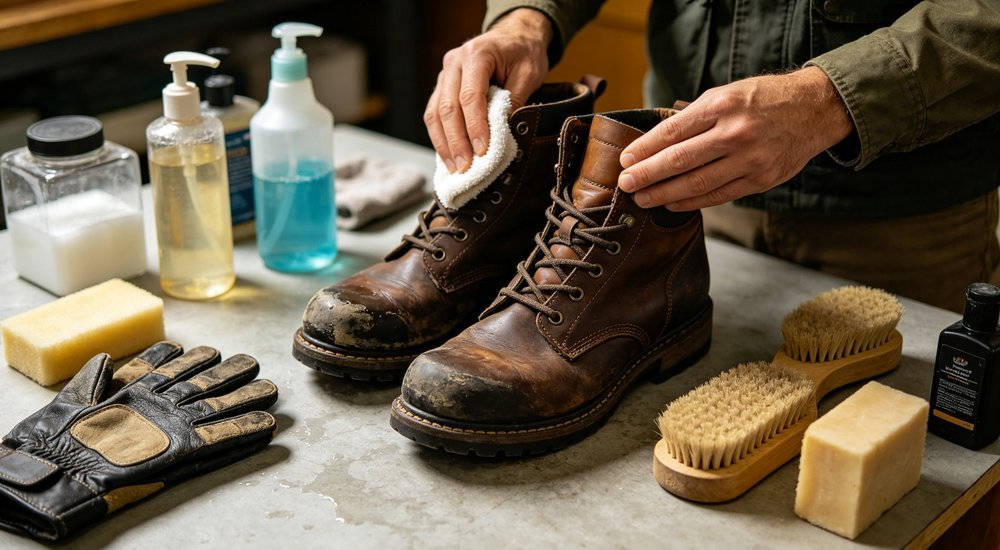
Our wholesale gloves program supports bulk orders with flexible packaging, volume pricing, and customized configurations for procurement teams sourcing hand protection and safety footwear at scale., hand protection gloves and Safety Boots Supplier
This FAQ covers common questions about wholesale hand protection, safety shoes, protective footwear, nitrile examination gloves, chemical resistant boots, waterproof safety boots, steel toe safety shoes, medical exam gloves, industrial safety footwear, leather industrial work gloves, and bulk safety hand protection for procurement processs.
Frequently asked questions about wholesale hand and foot protection cover sizing, certification, customization, project timelines, and procurement configurations. These answers help buyers make informed decisions when sourcing hand protection hand protection and safety footwear in bulk.
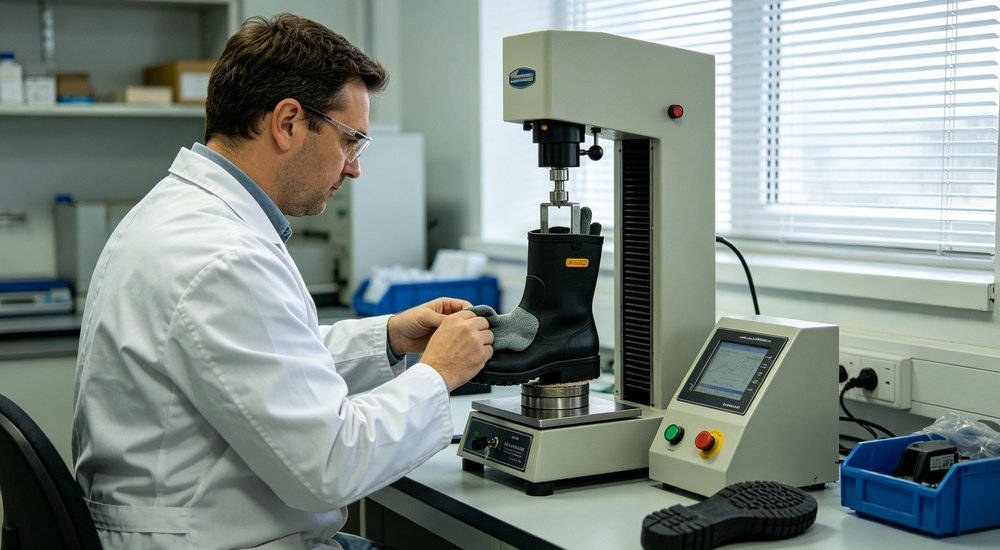
Q: Can firefighting, rescue and cut gloves replace one another?
A: No. Fire gloves (EN 659) protect against heat and flame but are bulky. Rescue gloves (EN 388 with TPR) protect against impact but not high heat. Cut gloves (A5-A7) protect against sharp edges but may not resist heat. Match the glove to the specific hazard — many teams carry two or three types.
Understanding the right hand protection and safety footwear for your team ensures compliance and worker safety across all operational environments.
Q: How do I build a glove size ratio for my team?
A: Measure hand circumference (around knuckles) and hand length for each user. A typical adult team ratio is S:M:L:XL = 1:3:4:2. Fire gloves may run smaller due to thick lining — size up if between sizes. Always test actual tool grip and finger flexion before bulk ordering.
Q: Why is chemical identity required for chemical gloves?
A: No single glove material resists all chemicals. Nitrile handles acids and oils well but breaks down with certain solvents. Butyl rubber resists more chemicals but is stiffer. Provide the chemical name, concentration, temperature and contact time — we match the material and thickness from our compatibility data.
Q: What does cut level A7 mean?
A: ANSI/ISEA 105 cut levels A1 through A9 measure resistance to sharp edges using a TDM-100 test. A7 means the glove withstands approximately 1500-2000 grams of cutting force — suitable for handling broken glass, sheet metal and sharp debris. Higher cut levels generally mean less dexterity.
Q: How do structural-fire and wildland boots differ?
A: Structural fire boots (EN 15090) have heat-resistant outsoles (250°C contact), steel/composite toe caps and puncture midsoles — they are heavy (2-2.8kg) for building fire. Wildland boots (EN ISO 20345) are lighter (1.2-1.8kg) with lug soles for hiking terrain and ankle support for long distances. They do not have the same heat resistance as fire boots.
Q: Steel toe or composite toe — which is better?
A: Steel toe caps meet 200J impact and are durable, but they are heavier (about 200g per boot) and conduct cold/heat. Composite toe caps (fibreglass/kevlar) are 30% lighter, non-conductive and do not set off metal detectors. Both meet the same impact standard. Choose composite for airport/security work or all-day comfort; steel for heavy industrial use.

Q: What is SRC slip resistance?
A: SRC is the highest slip resistance rating under EN ISO 20345. It means the boot passes both SRA (ceramic tile with detergent solution) and SRB (steel floor with glycerin) tests. For fire and rescue work on wet, oily or uneven surfaces, SRC is recommended.
Q: How do powder-free, sterile and examination gloves differ?
A: Powder-free means no cornstarch lubricant (reduces allergy risk). Sterile means individually wrapped and gamma/EO sterilized (for surgical use). Examination (non-sterile) is for general medical use. These are separate attributes — a glove can be powder-free but non-sterile, or sterile but powdered. Specify exactly what your use requires.
Q: How should gloves interface with protective sleeves?
A: Fire gloves should extend under the coat sleeve with at least 5cm overlap — the sleeve covers the glove cuff, not the other way. Chemical gloves may go inside or outside the suit sleeve depending on the suit design; tape or sealing rings are used at the interface. Always test the overlap after arm movement (raising arms, bending elbows).
Q: What is the shelf life of rubber and leather gloves/boots?
A: Natural rubber latex: 3-5 years from production. Nitrile: 5 years. Leather: 5+ years with proper care. Fire boots (rubber): 5-7 years. All assume storage in cool (5-25°C), dry (below 70% RH) conditions away from sunlight and ozone. Inspect before each use regardless of age.
Q: Can logos and markings be added to gloves and boots?
A: Gloves can have printed or embossed logos on the cuff (keep palm and finger grip areas clear). Boots can have logos on the shaft or tongue. Reflective markings on fire boots are standard. Provide authorized artwork and position — we confirm markings do not cover safety-critical areas before production.
Q: What should receiving inspection cover?
A: Check quantity, size ratio, material, stitching/coating, reinforcement, toe cap, midsole, outsole tread, labels and packaging. For gloves: check pair matching, seam integrity, cuff length. For boots: check toe cap shape, sole bonding, tread depth, sizing labels. Record all findings per batch.
Q: What is the typical project timelineline?
A: Standard in-stock items ship within days. Production orders typically take 15-30 working days depending on product, quantity and customization. Certified fire hand protection and boots may require additional testing time. Final timing is confirmed per order.
Q: What information is needed for a quotation?
A: At minimum: hazard type, product type, estimated quantity, size distribution and applicable standard. To speed up the quote, also include: cut level (gloves), toe cap type (boots), chemical list (chemical gloves), material preference, customization needs and project timelineline. The more detail, the fewer follow-up questions.
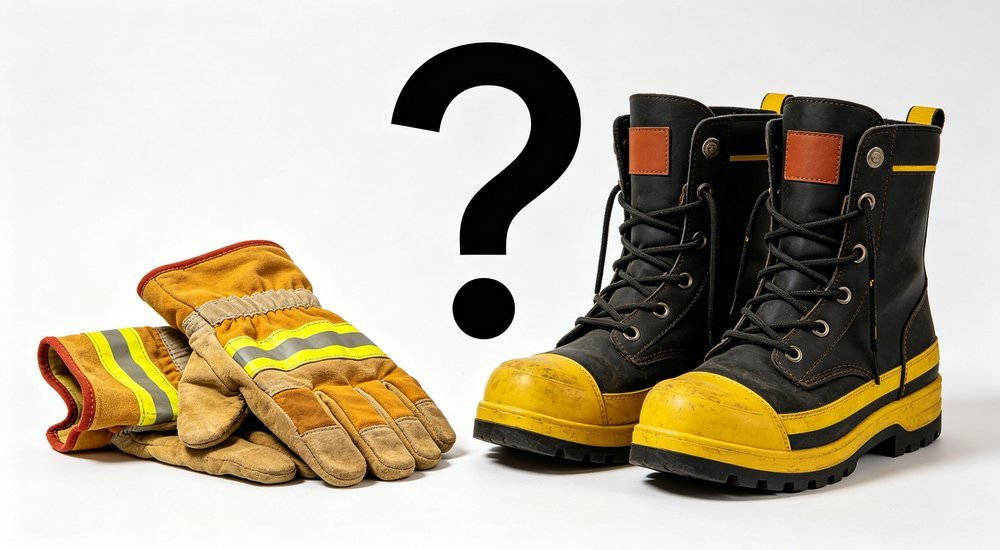
Q: Can I mix sizes in one bulk order?
A: Yes. Most bulk orders include a size ratio rather than one uniform size. Provide your team's hand/foot measurements and we calculate the optimal ratio. Typical adult glove ratio S:M:L:XL = 1:3:4:2; boot ratio EU 40:41:42:43:44:45 = 1:2:3:4:3:2. Mixed-size orders ship in labelled cartons by size.
Q: What warranty do you offer?
A: Production defects in materials and workmanship are covered under our standard quality guarantee. We replace defective units confirmed by inspection. Normal wear, heat damage, chemical degradation and improper use are not covered. Specific warranty terms are confirmed per order based on product type and quantity.
Q: Do you offer private label / OEM?
A: Yes. We support OEM and private label for bulk orders: custom logos on glove cuffs and boot shafts, custom packaging, custom carton marks and branded labels. Provide authorized artwork and we confirm placement does not cover safety-critical areas. Minimum quantities for custom marking vary by product.
Q: How do I choose between leather and synthetic gloves?
A: leather gloves offer better heat resistance and durability for firefighting, while synthetic gloves (nitrile, neoprene) provide better chemical resistance and dexterity for industrial and medical use. Consider the primary hazard when choosing.
Q: What is the difference between examination and surgical gloves?
A: Examination gloves are for general medical use and patient contact, while surgical gloves have stricter quality control, are sterile, and provide better tactile sensitivity for surgical procedures. Both are available in nitrile and latex.
Q: Can I mix different glove types in one bulk order?
A: Yes, you can mix firefighting, rescue, chemical, and medical gloves in one container order. We recommend specifying the quantity ratio for each type and size, and we can pack them separately for easy distribution.
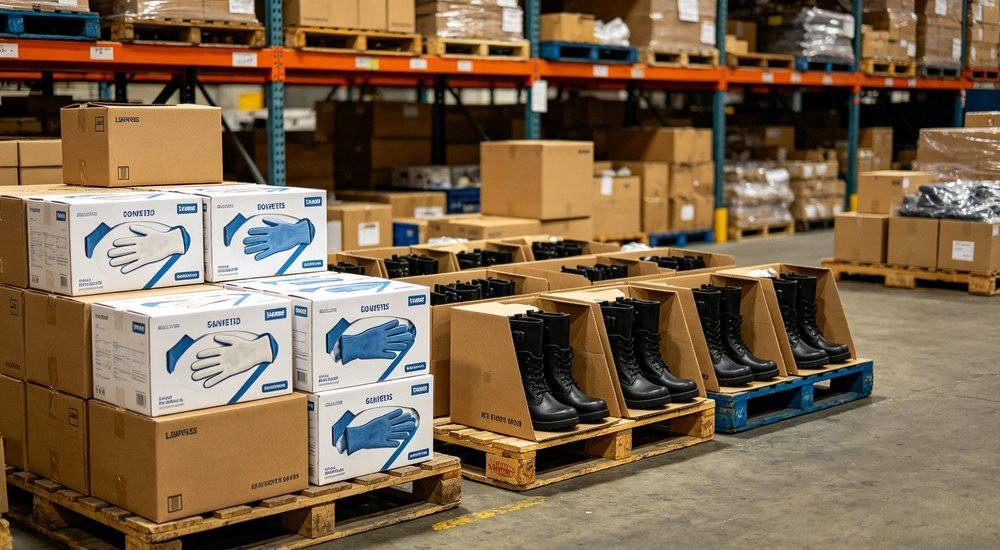
For wholesale hand and foot protection procurement, working with an experienced supplier ensures access to certified products, flexible customization, and reliable global delivery. Contact our team for project-specific quotations and configuration support.
 |
|
Przyjazne linki :
prawa autorskie © Custom Disaster - Relief Bedding: Tents, Sleeping Bags, Blankets Wszelkie prawa zastrzeżone
profesjonalny zespół do obsługi !